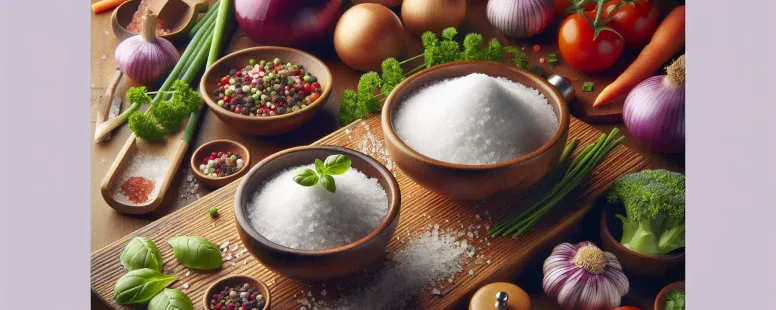
Picture this—you’re in your kitchen, the sizzle of a hot pan fills the air, and you reach for a pinch of salt. But which one do you choose? The coarse, snowy flakes of kosher salt or the fine, almost powdery crystals of table salt? The difference goes far beyond texture or taste; it can transform the way your dishes come alive.
Choosing the right salt isn’t just about flavor—it’s about unlocking hidden depths in every bite. Kosher salt can coax out the natural essence of your ingredients, while table salt brings a sharp, familiar punch. But there’s a world of nuance between these two kitchen staples that most home cooks overlook. Ready to find out how the salt you sprinkle can change your food—and maybe even your cooking style—forever?
What Is Kosher Salt?
Kosher salt refers to a coarse-grained sodium chloride that’s often used by chefs, home cooks, and food processors. You’ll notice something different about these jagged crystals—grab a pinch and it feels like crumbled dry snow between your fingers, not like the tiny cubes you’ll find in that shaker on the diner table. The irregular structure lets it cling to foods better than table salt, so seasoned chefs often choose kosher salt for recipes needing precise control, like dry-brining fish, seasoning steak, or tossing a handful over roasted vegetables. You might even spot it sticking to a chocolate chip cookie, creating those bold savory bites.
Kosher salt gets its name from koshering, the age-old process in Jewish culinary tradition designed for drawing blood from meat. The large crystals help the ritual, but, ironically, the salt itself typically doesn’t have kosher certification unless specifically labeled as such. Isn’t that a curious twist in the story?
Think about an instance when you tried making homemade pickles. Did the cucumber slices stay crisper and less cloudy in brine? Kosher salt helps preserve both texture and color, while table salt—with its added anti-caking agents—can muddle the flavors or cloud your jars (Food52, 2021). In commercial kitchens, brands like Diamond Crystal and Morton Kosher Salt dominate. Their grains are not identical: Diamond feels almost fluffy and dissolves rapidly, while Morton is denser, crunchier, and heavier by volume. This volume-to-weight difference explains why so many recipes ask you to specify the brand or weigh your salt for accuracy (New York Times, 2022).
Are you wondering if kosher salt tastes cleaner or “saltier”? The answer lies in its chemistry and absence of additives—kosher salt typically lacks iodine and anti-caking agents, unlike table salt. It boasts a pure, briny flavor that lets ingredients shine without metallic or chemical notes. Try sprinkling some on fresh tomato slices: the subtle pop lets the tomato’s sweetness sing, while the salt itself disappears with a satisfying crunch.
So, when your recipe writer says “use kosher salt,” they’re inviting you into a tradition of mindful, tactile seasoning. Notice how it dissolves, how the first grains cling to buttered steak or caramel fudge, and ask yourself—what story does your salt tell on your plate?
What Is Table Salt?
Table salt, a refined sodium chloride, lines nearly every kitchen in the United States. You’ll always find those tiny, dense grains sitting in a shaker on restaurant tables, ready to dash flavor onto eggs or fries. Manufacturers refine table salt to strip out trace minerals, leaving a pure crystalline structure—picture each grain like a tiny, identical gemstone. Anti-caking agents, like calcium silicate or magnesium carbonate, get added so the grains pour freely; sometimes, iodine joins the mix, an innovation that began in the 1920s to address widespread iodine deficiency according to the National Institutes of Health.
Chemists, chefs, and linguists can all agree on the molecular structure: each crystal a tight bond of sodium and chloride. Yet, language and culture shape how people describe its taste. Some say it tastes “sharper” or “cleaner” compared to kosher salt. Have you ever looked at a recipe and wondered if using table salt instead of kosher salt would change the outcome? Picture making a batch of classic pickled cucumbers using table salt—soon, you’ll notice a slight cloudiness in the brine, caused by those additives.
Cooks comparing table salt with kosher salt often debate precision. Table salt grains dissolve rapidly in cool water and mingle seamlessly with flour and sugar; if you’ve whipped up cake batters or brines, you probably noticed this. Chopped vegetables absorb table salt quickly, giving you even seasoning in quick salads, though sometimes at the expense of those bright, clean flavors prized in fine cooking.
Would table salt’s story be complete without a look at brands? Morton and Cargill dominate American shelves, each using unique purification and additive processes which may alter the sensory experience. You might wonder, is all table salt exactly the same? Not quite—there are subtle differences. Its universal accessibility, clean appearance, and fortified nutrients make it a pantry staple, but, as the stories of countless home cooks and bakers show, the salt you pick shapes the flavor, texture, and visual appeal of your food.
Key Differences Between Kosher Salt And Table Salt
Kosher salt and table salt change the way you season and taste your food. They’re both sodium chloride but their characteristics, roles, and the sensory experiences they offer stand apart.
Texture And Grain Size
Kosher salt brings large, flaky crystals that cling to food surfaces. These uneven grains provide an intuitive feel when you’re sprinkling them with your fingers. Table salt contains uniformly tiny grains—almost powder-like—which slip through shakers and measure compactly by the teaspoon.
If you rub kosher salt between your fingers, you’ll notice the way the flakes break apart—unlike the seamless, almost invisible nature of table salt. Chefs often favor kosher salt for dry brining meats, as the crystals stick, draw out moisture, and help create a savory crust. Table salt quickly dissolves into whatever it touch, ideal for batters or sauces where texture’s less relevant.
Taste And Flavor
Kosher salt delivers a clean, subtle salinity. Its larger flakes dissolve slower, offering a crunchy, briny hit before blending in (America’s Test Kitchen, 2022). Table salt tastes sharper due to fast dissolution and often leaves a lingering aftertaste from added iodine and anti-caking agents.
Test a pinch on your tongue. You might notice kosher salt’s faint mineral note while table salt feels almost metallic. Bakers sometimes use table salt for a controlled saltiness. For finishing vegetable salads or chocolate chip cookies, you’ll see kosher salt’s spark.
Additives And Ingredients
Kosher salt contains mostly pure sodium chloride. Most brands, like Diamond Crystal, skip anti-caking agents or iodine, resulting in cleaner crystals (FDA.gov, 2020). Table salt almost always includes additives: anti-caking agents stop clumping, and iodine fortifies diets to prevent deficiency.
Read the label. Table salt from Morton or Cargill lists yellow prussiate of soda or calcium silicate, and sometimes dextrose as a stabilizer. Kosher salt rarely lists more than one ingredient unless specified as iodized.
How They Are Used In Cooking
Kosher salt excels in seasoning meat, vegetables, and finishing dishes. Its flakes dissolve gradually, giving you greater control, especially when you season thick steaks or rim cocktail glasses. Table salt dissolves instantly in soups, brines, and baked goods, ensuring evenly distributed salinity.
Think about swapping salts mid-recipe—one teaspoon of table salt packs more sodium than the same spoon of kosher salt because of the density difference. Professional kitchens often standardize recipes by salt type to maintain consistency in taste and texture, according to the Culinary Institute of America. Kosher salt elevates every rub, crust, and sprinkle, while table salt guarantees predictability in your bread, pasta, or dessert recipes.
Pros And Cons Of Each Salt Type
Kosher salt shines in your hand like coarse snow, each crystal shaped by wind and water. Picture a chef’s steady palm, scattering Diamond Crystal over a brisket, those angular grains gripping the surface like tiny climbers. Your senses notice the way kosher salt lingers on your skin. If you’ve ever watched someone salt roast potatoes by feel, you’ve seen this tactile art in motion. That’s its biggest advantage: precision—pinch by pinch, you control the seasoning, taste, and even the story of your meal. Chefs, restaurateurs, and home cooks prefer kosher salt for dry brining meats (try it on chicken for juicy results), seasoning pasta water, and rimming cocktail glasses with its crisp flakes (Bourdain 2016). It’s a pure performer, unburdened by additives or iodine, offering food a clean brine free from bitterness or chemical echoes—picture brined cucumbers, their color never dulled.
Yet there are drawbacks: Kosher salt doesn’t dissolve as fast as table salt. In delicate dressings or cocktails, undissolved flakes hide at the bottom like snowmelt in shade. Use kosher salt in a recipe calling for table salt, and your pie might taste bland if you don’t adjust the amount. Diamond Crystal grains can be nearly half the density of Morton’s, so a teaspoon of one can feel like two of the other—bakers who ignore this find cookies lacking punch (Serious Eats, 2023).
Table salt is the quiet technician in your kitchen—think of it as the microchip of seasonings. Uniform, fine, and ready to vanish the moment it touches a hot soup or a cold pickle brine, it’s always reliable. Sprinkle it into batters, doughs, or pickling jars, and its precision chemistry kicks in—the smoothness lets it flow through salt shakers without frustration. Table salt’s real edge sits in its predictability: if you grab any classic recipe published in America since the 1920s, you’re almost certainly following a formula built around table salt (Morton Salt Company, 2021). Fortified with iodine, it addresses nutritional gaps—one teaspoon a day meets US dietary iodine requirements (CDC, 2022).
Still, table salt brings its downsides. Its flavor isn’t always pure—anti-caking agents like calcium silicate sometimes leave a chemical taste, especially in stocks or infusions. Cloudy jars, odd aftertastes, and occasionally sharper “bite” on the tongue show up, particularly in recipes where salt is a leading star rather than background support. Anecdotally, some home picklers have been disappointed by the cloudy brine after using table salt for homemade cucumber pickles.
Which style fits your kitchen best? If you love recipes that demand accuracy by weight, measure, or chemistry (bread, cake, pickling), table salt keeps surprises at bay. Kosher salt invites intuition—seasoning by touch, eye, and instinct. Picture learning by tasting—a method celebrated on restaurant lines and in home kitchens. Have you ever salted roasted vegetables by hand and felt the difference in flavor and texture? Try both salts side by side in your next meal, and notice how the experience, appearance, and story on your plate changes.
Salt Type
Pros
Cons
Best For
Example Use
Kosher Salt
Precise control, pure clean flavor, easy to pinch
Slow dissolving, inconsistent density, not iodized
Dry brine, seasoning, finishing
Brisket rub, roasted potatoes
Table Salt
Fast dissolving, predictable, fortified with iodine
Harsher flavor, chemical aftertaste, can cloud liquids
Baking, canning, quick dissolving
Cake batter, cucumber pickles
Which Salt Should You Use?
You stand in your kitchen, a pinch of salt glittering on your fingertips. Which do you sprinkle: the soft, flaky grains of kosher salt or the tiny, snow-like table salt crystals? It’s like choosing a paintbrush – some strokes bold, some precise, each shaping a different flavor landscape.
Chefs at Michelin-starred kitchens and home cooks alike reach for kosher salt when they want tactile control; think of those thick-cut steaks raining with salt before the sizzle hits the pan. According to the American Culinary Federation, kosher salt’s broad crystals grip surfaces best. That’s why, if you’re seasoning a chicken for roasting, the crystals cling, coaxing out juices and tenderness. You might wonder why your grilled vegetables—a simple zucchini, a wedge of onion—taste revived at a summer barbecue; kosher salt let’s you distribute flavor intuitively, no measuring spoons required.
Yet, when you bake a delicate sponge cake or pickle green beans for the winter, table salt’s uniformity becomes your ally. Food scientists at Cargill show that those minuscule grains ensure even seasoning throughout dough or brine, where unpredictability can ruin consistency. Additives like iodine and anti-caking agents may seem like interlopers, but for preserves and precise recipes, table salt’s predictability keeps flavors balanced and textures right.
Ask yourself: What story do you want your food telling? When flavor clarity matters most—maybe risotto, or a slow-cooked stew—kosher salt’s clean salinity whispers rather than shouts. Table salt, on the other hand, is a backstage technician: it dissolves seamlessly, supporting the star ingredients without ever stealing the spotlight.
Why do southern grandmothers swear by table salt, measuring it with eyes closed? Tradition, perhaps, but also reliability—when they pickle okra or whip up biscuits, every pinch tastes as expected. Some cooks can’t stand the briny flakes beneath their nails; others savor the crunch of kosher salt on seared caramel. It’s ritual. It’s personal.
Think of moments—your tomato salad on a July afternoon, or crackly focaccia cooling on the counter. Experiment: try a finishing flourish of kosher salt on a dark chocolate tart, or dissolve table salt into your homemade lemonade. Watch how each type changes the story your food tells.
If you crave confident seasoning and textural drama, reach for kosher salt. If your recipe hinges on consistency, especially when canning or baking, let table salt work its magic. Your choice of salt, with every sprinkle, shapes not just flavor but memory. Which salt do you want to taste in your next story?
Conclusion
When you reach for salt in your kitchen, you’re making a creative choice that goes beyond seasoning. The type of salt you use becomes a subtle signature in every dish you prepare.
Let your hands and taste buds guide you as you experiment with kosher salt and table salt. You’ll discover not only new flavors but new ways to connect with your food and the people you share it with.
Trust your instincts and enjoy the journey. The right salt can turn an ordinary meal into something unforgettable.
To provide the best experiences, we use technologies like cookies to store and/or access device information. Consenting to these technologies will allow us to process data such as browsing behaviour or unique IDs on this site. Not consenting or withdrawing consent, may adversely affect certain features and functions.
Functional
Always active
The technical storage or access is strictly necessary for the legitimate purpose of enabling the use of a specific service explicitly requested by the subscriber or user, or for the sole purpose of carrying out the transmission of a communication over an electronic communications network.
Preferences
The technical storage or access is necessary for the legitimate purpose of storing preferences that are not requested by the subscriber or user.
Statistics
The technical storage or access that is used exclusively for statistical purposes.The technical storage or access that is used exclusively for anonymous statistical purposes. Without a subpoena, voluntary compliance on the part of your Internet Service Provider, or additional records from a third party, information stored or retrieved for this purpose alone cannot usually be used to identify you.
Marketing
The technical storage or access is required to create user profiles to send advertising, or to track the user on a website or across several websites for similar marketing purposes.