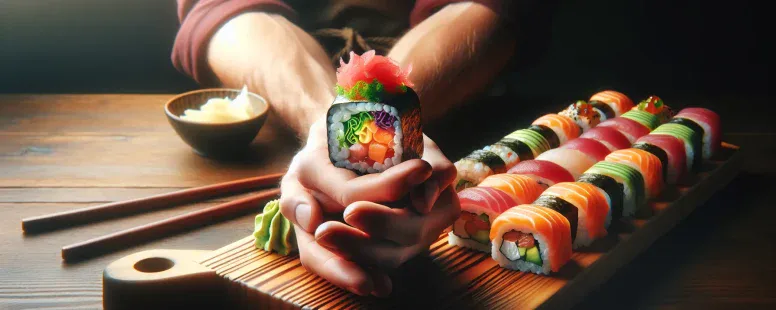
Picture yourself at a lively sushi bar—the aroma of vinegared rice and fresh seaweed fills the air as you scan the menu. Suddenly you spot two tempting options: the elegant sushi roll and the mysterious hand roll. Which do you choose? The answer might surprise you because each offers a unique experience that goes beyond taste.
You might think all sushi is created equal but there’s an art to how it’s crafted and enjoyed. One fits perfectly in your hand like an edible bouquet while the other invites you to share bite-sized pieces with friends. Discovering the difference isn’t just about shape or size—it’s about unlocking new ways to savor every bite and making your next sushi night unforgettable.
Understanding Sushi: An Overview
Sushi, as you might’ve noticed, dasn’t just fill your stomach—it ignites your curiosity. Picture you’re at a sushi bar in Tokyo, chefs slicing glistening tuna, rice molded by hands that tell stories of tradition. Do you ever wondered why some rolls stand tall like skyscrapers, while others hide folded in seaweed, waiting to be discovered? Both forms, including the cylindrical makizushi (sushi roll) and the conical temaki (hand roll), represent a duality at sushi’s heart: artistry and adaptability (source: Japan National Tourism Organization).
You walk into a restaurant with a friend. The waiter ask: “Would you like your sushi cut or rolled into a cone?” Here, choice becomes ritual. Sushi rolls emerge as precise, slices aligned, sharing made easy with multiple bite-sized pieces—think classic California or Dragon roll, each bearing legacies from Osaka to Los Angeles. Hand rolls, on the other hand, sits in your palm, spilling bright salmon roe and crisp cucumber at each corner, ideal for those seeking spontaneity or for those who perhaps, like the famous chef Nobuyuki Matsuhisa, crave direct connection with every bite.
You’ve likely seen nigiri at upscale omakase counters—oval mounds of rice crowned by fish—but rolls and hand rolls perform a different dance. Both use nori (seaweed) as boundaries, both feature seasoned sushi rice, yet their grammar, their syntax in your meal, diverges greatly. Would you rather savor bite-sized harmony from a shared plate, or hold culinary art in your fingers, eating as you talk—no chopsticks needed?
Debates swirl on authenticity. Modern sushi roll varieties, adorned with spicy mayo, tempura bits, or avocado, reflect Western influences—while hand rolls cling closer to centuries-old Edo traditions. Some purists argue that true sushi celebrates simplicity: vinegared rice, raw fish, a brush of shoyu. Others find joy in fusion, much like New York’s bustling sushi spots—where you can see salmon, jalapeño, or even cream cheese filling their rolls.
Sushi adapts to moods and moments. Picnic on the Sumida River? Hand rolls travel well, wrapped like gifts till you’re ready. Hosting friends? Sliced sushi rolls mirror generosity, every circle a shared experience. In every bite, your sushi chooses its voice: whispering tradition or singing innovation, always asking you—how do YOU want to eat this story?
What Is a Sushi Roll?
Sushi rolls put structure, sharing, and precision at the center of your sushi experience. When you see sushi lined up like little edible jewels on a glossy tray, you’re face-to-face with the classic sushi roll—also called maki.
Key Features of Sushi Rolls
Cylindrical Shape: Sushi rolls get wrapped tight in nori (seaweed sheets) and formed with a bamboo mat. Each one sliced into symmetrical rounds that resemble coins. Sushi artistry favors even portions and elegant cuts.
Ingredients Inside: You find vinegared rice, thin fish slices or cooked seafood, and crisp vegetables filling the center. For example, a California roll layers imitation crab, avocado, and cucumber.
Shared Presentation: Rolls usually serve in sets of 6 or 8 pieces on a plate, inviting group eating. Sometimes, a conversation sparks just from deciding which roll to pass next.
Attention to Detail: Chefs arrange rolls with the precision of a jeweler setting stones, turning the plate into a visual story.
Common Types of Sushi Rolls
Maki: Traditional maki rolls wraps seaweed on the outside, with fillings like tuna, cucumber, or pickled radish inside. Simple, classic, always balanced in texture.
Uramaki: The inside-out roll flips convention. Rice coats the outside, with toppings like sesame seeds or tobiko. California rolls and Dragon rolls fall into this playful category.
Futomaki: Thick rolls pack in more ingredients—think shiitake, egg custard, and sweet winter squash. During festivals, families in Japan sometimes make futomaki together.
Temaki: Hand-shaped, cone-style versions that break the sharing rule and go straight into your palm instead of onto a plate.
Notice the subtle drama between neat geometry and creative possibility. how a sushi chef chooses which ingredients goes into a Rainbow roll versus a Spicy Tuna roll? Sometimes, it’s pure tradition; other times, it’s a flash of inspiration or a memory of cherry blossom season in Tokyo.
A sushi roll doesn’t just hold food; it carry tradition, taste, and a hint of artistry with every piece. Explore new combinations or classic favorites and let each bite invite you deeper into Japan’s culinary landscape.
What Is a Hand Roll?
Hand rolls, called temaki in Japanese, blend craft and convenience in your palm. You pick up a cone of nori stuffed with vinegared rice, crisp vegetables, and fresh seafood—every bite feels like a secret made just for you. Unlike sushi rolls meant for dividing, a hand roll’s meant for one. You discover a world of textures, flavors, and stories in each unique cone.
Key Features of Hand Rolls
Cone Shape and Assembly
Hand rolls take a distinct cone form, with crispy nori wrapped around fillings. Chefs craft them à la minute so that nori stays crunchy and rice feels warm against cool fish, for example, salmon, yellowtail, or spicy tuna. You notice how every angle delivers a fresh layer—avocado here, sweet omelet there.
Personal Size and Experience
You get a single serving, about 4 to 6 inches long, sized to fit comfortably in your hand. Diners enjoy them whole and skip the cut—no chopsticks required. If you’ve ever stood at a bustling Tokyo bar, a chef might hand a temaki straight over the counter, urging you to eat it now, before the nori wilts.
Customization and Spontaneity
Every hand roll unlocks room for improvisation. While traditional varieties exist, you may find chefs layering shrimp tempura, shiso, pickled radish, or even spicy mayo. Since each roll’s built to order, allergies or preferences get addressed instantly—few foods at a sushi counter match temaki’s adaptability.
Popular Types of Hand Rolls
Spicy Tuna Temaki
This crowd-pleaser brings chopped tuna tossed with Sriracha and scallions, enveloped by rice and crisp nori. It’s a go-to for many, who crave a kick with their seafood.
Salmon Avocado Temaki
Creamy avocado and rich salmon combine in a roll that highlights both softness and umami. Often, a squeeze of lemon or a dab of wasabi’s added for brightness.
Eel and Cucumber Temaki
Slices of sweet glazed unagi rest beside cucumber strips, offering a sweet-savory contrast that fans of barbecue eel love.
Vegetable Temaki
For vegetarians or plant-based diners, cucumber, pickled plum, and julienned carrots give crunch and zest to a refreshing hand roll.
Did you know, in busy izakayas, chefs sometimes challenge you to invent your hand roll? What happens if you mix grilled mackerel, mint, and yuzu? Maybe you discover an unexpected favorite. Or try asking about the chef’s “secret temaki”—it’s a tradition at some Tokyo counters for guests in-the-know.
Chefs and diners agree: hand rolls’ artistry lies in their immediacy—nori at its crispest, flavors at their boldest, fleeting as the moment you eat them.
Main Differences Between Hand Roll and Sushi Roll
Main differences between hand roll and sushi roll shape how you approach each dish at the sushi counter. These distinctions reveal why your experience with each one feels so unique—whether you’re savoring the personal artistry of a hand roll or sharing the uniform elegance of a sushi roll.
Appearance and Shape
Hand roll and sushi roll show their differences first in appearance and shape. Sushi rolls, or maki, lay on your plate in perfect geometric slices, each a small wheel with its filling on display—like edible jewels lined up for your attention. You notice how sushi chefs layer salmon, avocado, cucumber, and rice then wrap them tight in nori, slicing the roll into even pieces for sharing.
Hand rolls, or temaki, resemble a seaweed cornucopia. Picture the chef crafting each one by scooping vinegared rice, fresh fish, and pickled daikon diagonally along a rectangular nori sheet, then rolling it by hand into a cone. This structure means your hand roll stands as a singular piece—no two cones look identical, and the open end lets you see everything inside, almost like a culinary bouquet. Why do you think chefs choose this asymmetry for hand rolls? According to the Sushi Times (2022), the cone shape helps keep nori crisp and fillings fresh until the moment you eat.
Serving and Portion Size
Serving and portion size for hand rolls versus sushi rolls sets the tone for how diners interact at the table. Sushi rolls always arrive pre-sliced—6 or 8 rounds per roll, each crafted for communal enjoyment. For example, a classic California roll gets cut into eight identical segments, inviting you and your friends to sample, trade, and discuss flavors.
Hand rolls arrive whole—each is an individual meal, handed over the counter straight to you. Sushi chefs, especially in Tokyo’s Tsukiji Market, pack hand rolls with precise care, but never cut them; once the cone leaves the chef’s hands, it’s meant for your hands only. You get the whole portion, savoring every bite yourself. If you’ve ever tried passing a hand roll across the table, you’ve probably noticed how awkward and messy that routine gets. One chef once joked, “Sharing a hand roll is like splitting a letter—something get lost.”
Eating Experience and Tools
Eating experience for hand roll and sushi roll diverges not only in etiquette but in sensation. Sushi rolls demand chopsticks or even your hands when you’re in a casual mood. Those slices balance easily on your chopsticks, layering a bit of wasabi and soy sauce onto the rice edge. There’s a crisp snap as your teeth bite through nori, followed by the interplay of rice, seafood, and vegetables in one mouthful.
You approach hand rolls differently—they demand immediacy. Sushi chefs press the cone into your palm because nori loses its crunch in seconds if you wait. This hands-on style draws you closer to the chef’s intention. The first bite crackles, the filling and textures aren’t mixed throughout evenly, making each mouthful slightly different—sometimes more tuna, sometimes more shiso. Forks and chopsticks aren’t needed, unless you insists on rebelling against custom (but even then, you risk missing the point of temaki’s direct experience).
Which style calls to you—a curated, shareable platter or an individualized craft, ticking down the seconds before crispness fades? Both have their place in the sushi world, and both offer memories worth savoring.
Choosing Between Hand Roll and Sushi Roll
Choosing between a hand roll and a sushi roll transforms a simple meal into a mindful ritual. Each style invites you to to answer a different question: Do you crave solitude or connection?
When to Choose a Hand Roll
Eating a hand roll places art and immediacy in your hands—literally. If you find yourself at a sushi bar, the chef crafts a temaki just for you, sealing vinegared rice and fresh Toro in a crisp cone of nori. Watch as the chef rolls it, hand trembling a little maybe, blades catching the shine under neon. You grasp it before the nori has a chance to wilt, each bite echoing the chef’s process—a fleeting masterpiece.
Hand rolls suit those moments when you want an edible monologue. You’re savoring spicy salmon alone at the counter, or grabbing a late-night eel and cucumber temaki on your way out. Food critic Nancy Singleton Hachisu describes hand rolls (temaki) as “the sushi you choose for the pleasure of originality and boldness.”¹
If impulse guides your order, or if you want to customize what lies inside—extra scallions, a dusting of sesame—this format welcomes improvisation. Think of the hand roll as sushi’s jazz solo: immediate, expressive, ephemeral.
When to Choose a Sushi Roll
Sushi rolls, or maki, create a setting for communal art. Slices line up, like performers taking a bow, each cylinder sharing its stage with crisp cucumber and sweet tamago. Your friends huddle near, chopsticks in hand, debating dip techniques and favorite fillings—should the salmon meet wasabi first or last? Choosing sushi rolls is less about singular experience and more about connection, their even geometry encouraging harmony across palates.
Maki harmonizes group gatherings, date nights, or family celebrations. The National Restaurant Association reports group-dining incidents are “twice as likely to involve platter-style sushi” compared to solo diners.² You pass the platter, exchanging flavors and stories; oishii is muttered before the next round begins.
While sushi rolls follow tradition, creativity still shines. There’s the inside-out uramaki with masago for a crunchy kick, the maximalist rainbow roll—striped with avocado, tuna, shrimp. Sometimes a chef pushes boundaries, blending Philadelphia cream cheese with fatty salmon, drawing gasps from purists. But even when the fillings surprise, the structure remains—precise, balanced, ready to share.
Hachisu, N. S. (2018) “Japanese Foodways in Modern Practice.” University of California Press.
National Restaurant Association, “Trends in Sushi Consumption,” 2022.
Conclusion
Whether you’re craving a quick bite or planning a lively sushi night with friends your choice between hand rolls and sushi rolls shapes the entire experience. Each style offers a distinct way to connect with the flavors and traditions of Japanese cuisine.
Next time you visit your favorite sushi spot consider what kind of dining moment you want to create. Let your mood guide you and enjoy the artistry in every bite.
To provide the best experiences, we use technologies like cookies to store and/or access device information. Consenting to these technologies will allow us to process data such as browsing behaviour or unique IDs on this site. Not consenting or withdrawing consent, may adversely affect certain features and functions.
Functional
Always active
The technical storage or access is strictly necessary for the legitimate purpose of enabling the use of a specific service explicitly requested by the subscriber or user, or for the sole purpose of carrying out the transmission of a communication over an electronic communications network.
Preferences
The technical storage or access is necessary for the legitimate purpose of storing preferences that are not requested by the subscriber or user.
Statistics
The technical storage or access that is used exclusively for statistical purposes.The technical storage or access that is used exclusively for anonymous statistical purposes. Without a subpoena, voluntary compliance on the part of your Internet Service Provider, or additional records from a third party, information stored or retrieved for this purpose alone cannot usually be used to identify you.
Marketing
The technical storage or access is required to create user profiles to send advertising, or to track the user on a website or across several websites for similar marketing purposes.