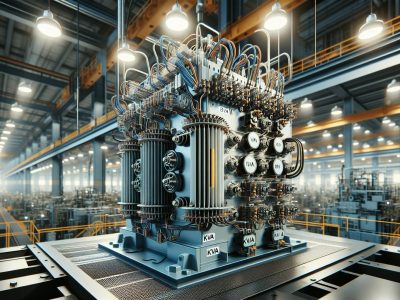
Picture walking into a bustling laboratory or a high-tech manufacturing plant. You’re surrounded by tools, devices, and machinery, each playing a crucial role in the operation’s success. But have you ever paused to wonder—what separates an “equipment” from an “instrument”? These terms might seem interchangeable at first glance, yet they hold distinct meanings that impact how they’re used across industries.
Understanding the difference isn’t just about semantics; it can enhance your ability to communicate effectively in technical fields and make informed choices when selecting tools for specific tasks. Whether you’re navigating scientific research or industrial processes, knowing this distinction empowers you to approach projects with precision and clarity. So what truly sets them apart? Let’s dive deeper into their unique roles and uncover why this differentiation matters more than you’d think.
Understanding Equipment
Equipment refers to tools, machines, or devices used to perform a specific function or task in various industries. It’s typically designed for operational efficiency and can range from simple hand-held tools to complex machinery.
Definition Of Equipment
Equipment encompasses tangible assets, often non-consumable, that aid in executing tasks. Unlike instruments, which focus on measurement and precision, equipment prioritizes functionality and productivity. For example, a hydraulic press is equipment because it applies force for shaping materials rather than measuring any property.
Examples And Applications Of Equipment
Examples of equipment include cranes used in construction sites, conveyor belts in manufacturing plants, and excavators for digging operations. These serve practical purposes like lifting heavy loads or transporting goods efficiently. In healthcare settings, X-ray machines classify as equipment since they produce diagnostic images without quantifying data directly.
Applications span diverse fields such as agriculture (tractors), logistics (forklifts), and energy production (turbines). Specialized sectors rely heavily on tailored equipment; oil rigs use drilling machines specifically engineered for petroleum extraction.
Understanding Instruments
Instruments play a pivotal role in precision-centric fields like laboratories and research facilities. They are designed to measure, monitor, or record data with high accuracy.
Definition Of Instruments
Instruments refer to tools or devices used for measurement, control, or detailed observation. Unlike equipment which focuses on functionality, instruments emphasize accuracy and data precision. These devices often include calibrated components to ensure reliability in quantifying variables such as temperature, pressure, flow rate, or chemical composition.
For instance, a thermometer measures temperature variations precisely while a spectrophotometer analyzes light intensity across wavelengths. The focus is always on obtaining exact measurements necessary for well-informed choice-making processes.
Examples And Types Of Instruments
Examples of instruments span multiple industries where precise metrics are vital:
Scientific Instruments
Devices like microscopes and calorimeters aid researchers in understanding phenomena at micro or molecular levels.
Medical Instruments
Tools such as blood pressure monitors (sphygmomanometers) and ECG machines monitor patient health metrics accurately.
Industrial Measuring Devices
Flow meters measure fluid dynamics; manometers assess gas pressures within industrial systems.
These categories highlight the diverse applications of instruments tailored to specific needs—whether you’re analyzing microorganisms under a microscope or monitoring atmospheric conditions using barometers.
Key Differences Between Equipment And Instruments
Equipment and instruments differ in their purpose, functionality, precision, and industry-specific applications. Understanding these distinctions helps you select the right tools for your tasks.
Purpose And Functionality
Equipment focuses on performing operational tasks efficiently. Its primary role is to aid in productivity and fulfill functional requirements. For instance, cranes lift heavy loads, conveyor belts transport materials, and excavators dig soil.
Instruments prioritize measurement and control for accuracy-driven outcomes. Designed to gather precise data or monitor conditions, instruments like thermometers measure temperature while spectrophotometers analyze light properties. Their purpose lies in delivering exact insights rather than executing physical operations.
Precision And Complexity
Precision defines instruments more than equipment. Instruments cater to meticulous processes requiring exact results; blood pressure monitors provide accurate health readings, ensuring reliable diagnostics.
Equipment leans towards operational complexity instead of precision. Machinery like drilling rigs involves intricate mechanisms but does not aim for detailed measurements—its focus remains on task completion over perfect accuracy.
Common Usage In Industries
Industries rely on equipment for large-scale operations or production workflows; construction uses bulldozers while manufacturing employs assembly lines to enhance output efficiency.
Instruments dominate fields demanding high accuracy levels; laboratories use microscopes for research analysis while medical facilities depend on ECG machines for patient monitoring. Their usage aligns with sectors where correctness directly impacts outcomes or safety standards.
Importance Of Knowing The Difference
Understanding the distinction between equipment and instruments enhances clarity in technical discussions and ensures appropriate tool selection for specific tasks. This knowledge impacts industries where precision, efficiency, or both are critical.
Practical Implications In Various Fields
Recognizing whether a tool classifies as equipment or an instrument directly affects its application. Equipment, such as loaders in construction sites or conveyor systems in factories, focuses on operational functionality. Instruments like gas chromatographs or digital calipers cater to fields requiring precise measurements.
In healthcare, for instance, distinguishing between surgical equipment (scalpels) and diagnostic instruments (stethoscopes) ensures accurate categorization during procurement processes. Similarly, research labs benefit from separating general laboratory setups (centrifuges) from measurement-focused tools (pH meters). Without this differentiation, task-specific outcomes may compromise quality.
Fields like agriculture also demonstrate these implications. Tractors fall under equipment due to their role in productivity enhancement; soil moisture sensors qualify as instruments focusing on data accuracy for informed decisions about irrigation strategies.
Decision-Making Based On The Differences
Making informed choices relies on understanding this difference. If your goal involves executing large-scale operations efficiently—such as building infrastructure—you’d prioritize selecting robust equipment like bulldozers over precision-driven tools. But, when the aim is accurate monitoring or analysis—like ensuring food safety through contamination detection—you’d focus on acquiring sensitive instruments like spectrophotometers.
Procurement teams often face challenges balancing budgets with functional needs; knowing these distinctions mitigates errors by aligning purchases with intended usage scenarios. Misclassifying tools could lead to overspending on features irrelevant to specific tasks—or worse—inadequate performance outcomes jeopardizing projects’ success rates.
By analyzing operational demands against the distinct roles of equipment versus instruments within your industry contextually aligns resources effectively while optimizing overall productivity levels without sacrificing accuracy standards essential across modern sectors today.
Conclusion
Understanding the difference between equipment and instruments is essential for ensuring efficiency and precision in your projects. Each serves a distinct purpose, with equipment driving operational tasks and instruments delivering accurate measurements. By recognizing their unique roles, you can make informed decisions that align with your specific needs.
Whether you’re managing large-scale operations or precision-driven tasks, knowing how to classify tools helps you allocate resources effectively. This clarity not only streamlines processes but also enhances outcomes across industries like healthcare, manufacturing, agriculture, and research.
To provide the best experiences, we use technologies like cookies to store and/or access device information. Consenting to these technologies will allow us to process data such as browsing behaviour or unique IDs on this site. Not consenting or withdrawing consent, may adversely affect certain features and functions.
Functional
Always active
The technical storage or access is strictly necessary for the legitimate purpose of enabling the use of a specific service explicitly requested by the subscriber or user, or for the sole purpose of carrying out the transmission of a communication over an electronic communications network.
Preferences
The technical storage or access is necessary for the legitimate purpose of storing preferences that are not requested by the subscriber or user.
Statistics
The technical storage or access that is used exclusively for statistical purposes.The technical storage or access that is used exclusively for anonymous statistical purposes. Without a subpoena, voluntary compliance on the part of your Internet Service Provider, or additional records from a third party, information stored or retrieved for this purpose alone cannot usually be used to identify you.
Marketing
The technical storage or access is required to create user profiles to send advertising, or to track the user on a website or across several websites for similar marketing purposes.