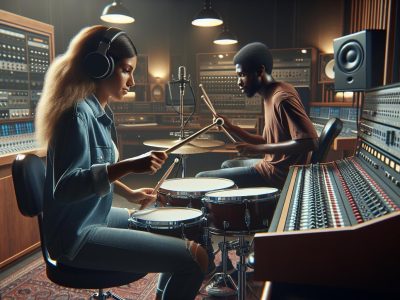
Ever found yourself bobbing your head to a catchy tune at a club, or lost in the rhythm of an electronic beat on your favorite playlist? You’ve got two unsung heroes to thank for that – DJs and music producers. But what’s the real difference between these maestros behind the melodies?
You may think they’re one and the same; after all, both are instrumental (pun intended) in creating those addictive tracks we can’t get enough of. Yet their roles within the music industry differ more than you might imagine.
In this text, we’ll pull back the curtain on these musical wizards’ unique contributions. We’ll jump into how DJs keep dance floors alive with seamless transitions and electrifying remixes while producers craft original compositions from scratch like sonic architects building soundscapes note by note.
Understanding the Roles: DJ vs. Producer
In the vast arena of music, two significant players are DJs and producers. Their roles often intertwine but fundamentally differ in various aspects.
Who Is a DJ?
A Disc Jockey, or more commonly known as a DJ, isn’t just someone who plays songs at parties or on radio stations. They’re skilled craftsmen using their knowledge of rhythm and beats to create an engaging auditory experience for listeners.
Picture yourself at a live event – you’ll likely find them mixing tracks seamlessly from one to another while maintaining consistency in energy levels across multiple genres of music – that’s what makes an exceptional DJ stand out!
Also, some DJs specialize further into areas like Turntablism where they manipulate sounds by scratching vinyl records on turntables creating unique sonic expressions.
They’re also experts in reading audiences’ reactions fine-tuning performances based on crowd responses ensuring every beat hits right where it counts!
Who Is A Producer?
If we look towards other side of spectrum lies Music Producers – these individuals act as sound architects crafting original compositions note-by-note much akin to painting elaborate masterpieces with tones instead colors!
Unlike DJs whose primary focus is performance-oriented through existing tracks selection & manipulation; Producers concentrate primarily composing new melodies potentially featuring vocalists/instrumentalists so birthing entirely fresh pieces!
Producers can be seen behind-the-scenes working painstakingly perfecting each segment even before any notes hit airwaves or club speakers enhancing overall quality piece produced eventually making memorable mark listener’s hearts minds alike!
An example could be your favorite chart-topping track; chances are there was producer involved meticulously arranging components bringing together cohesive musical journey enjoyed by millions globally.
Key Differences Between a DJ and a Producer
Diving deeper into the world of music, let’s explore two distinct roles that often get interchanged – DJs and producers. Understanding these differences equips you with an enriched perspective about this dynamic industry.
Musical Creation
In essence, producers create while DJs curate. Producers are akin to painters working on blank canvases; they generate original compositions from scratch using software or instruments. It’s their job to orchestrate every beat, melody line, bass drop – all elements forming your favorite tracks.
Contrarily, DJs function like art gallery curators selecting pieces for exhibition – in this case those ‘pieces’ being musical tracks created by others (including possibly themselves if they’re also producers). Their skill lies not only in choosing tunes that resonate with audience mood but also sequencing them seamlessly creating unforgettable auditory experiences.
Take note though: some individuals master both skills blurring boundaries between producer and DJ!
Performance Focus
Moving onto performance styles now: while both professionals make use of technical equipment each has different primary objectives during live shows. A DJ’s goal is ensuring continuous entertainment for audiences through track transitions; manipulating tempo or adding effects keeping energy levels high at parties/clubs/festivals etcetera.
On the flip side we find our dear music producer primarily focused backstage shaping soundscapes before release rather than controlling vibes at live events post-release. They invest time perfecting mixes enhancing audio quality striving towards sonic excellence! But remember there are exceptions where many famous musicians perform their own produced work on stage too bringing best of both worlds together!
Skills and Tools Required
In this section, we investigate into the specific skillsets needed for both DJing and music production. The tools used by these professionals will also be addressed.
Skills Needed for DJing
DJing involves a unique blend of skills that set it apart from other roles in the music industry. Firstly, an excellent sense of rhythm is non-negotiable; without it, blending different tracks harmoniously becomes a challenge. Also, technical prowess with mixing equipment forms part of any proficient DJ’s toolkit – knowledge on how to seamlessly transition between songs using various controls such as equalizers or faders.
An understanding of audience psychology plays a crucial role too – DJs must read crowd reactions effectively to adjust their sets accordingly; if they’re not feeling one track style, you’ll need adaptability skills to switch things up quickly.
Also,
Understanding musical structure helps when synchronizing beats during transitions;
Creativity aids in curating exciting mixes that keep listeners engaged;
Patience supports learning complex software interfaces often utilized in digital setups.
Skills Needed for Producing
On the flip side are producers who require distinctly varied abilities compared to DJs. Producers act as architects crafting new soundscapes hence require strong composition capabilities alongside deep familiarity with numerous instruments’ sounds–these can range from traditional drums/guitars through electronic synths/samplers.
Producers might work solo but oftentimes collaborate closely with artists so requiring interpersonal communication proficiency alongside leadership acumen overseeing multiple project aspects simultaneously (e.g., recording sessions). Here are some necessary producer traits:
Musical theory comprehension provides foundation grounding compositions/arrangements;
Proficiency utilizing Digital Audio Workstations (DAWs) enables creation/edit manipulation within studio settings;
-Detail orientation ensures each element receives appropriate attention before final mix-downs occur;
Equipment Used by DJs and Producers
DJs typically use turntables/mixers/headphones—either standalone or integrated within digital setups—plus, specialized software for song cueing/looping/effects application. Vinyl lovers may opt for classic turntable models while modern DJs might gravitate towards all-in-one controller systems.
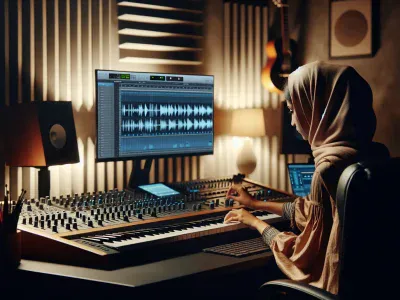
Producers predominantly operate within studio environments utilizing diverse equipment arrays: microphones (for live instrument/vocal recording), MIDI controllers/keyboards (inputting musical notes into DAWs), monitors/speakers alongside acoustic treatment ensuring accurate sound reproduction during mix/master phases.
In essence, their setup could range from a simple laptop with headphones to an extensive home studio filled with various instruments and high-end audio gear depending on budget/experience levels.
Both roles require different skills/tools but share common ground in one crucial aspect – passion for music remains at the heart of both DJing and producing.
How DJs and Producers Collaborate
DJs and producers, though distinct in their roles, often join forces to bring out the best of both worlds. They form a symbiotic relationship where creativity meets technicality.
Working Together in the Music Industry
In the music industry’s dynamic world, collaboration between DJs and producers isn’t just common; it’s integral for growth. DJing skills like rhythm sense or audience understanding merge seamlessly with production traits such as composition expertise or DAW proficiency.
Consider this: A DJ spins tracks at an event based on crowd response while a producer creates those tracks inside a studio using musical theory comprehension. When they collaborate, you get live performances that are not only well-composed but also responsive to real-time audience feedback—a perfect blend!
For instance – renowned electronic artist Skrillex began his career solely as a DJ before expanding into producing by honing additional skills over time. Now he effortlessly switches hats depending upon requirements—blurring lines separating these two professions even further.
Also, technology advancements have made collaborations easier than ever! Software enabling remote sessions means geographical boundaries aren’t barriers anymore—they’re opportunities waiting to be explored!
Famous DJ and Producer Collaborations
There’ve been numerous successful partnerships between DJs & producers who utilized each other’s strengths magnificently—for example:
Calvin Harris (DJ) collaborated with Rihanna (producer/singer) creating chart-topping hit ‘We Found Love’ back in 2011.
Dance-music titan David Guetta has worked alongside singer/producer Sia multiple times—their joint track ‘Titanium’ achieved global recognition!
Conclusion
So, you’ve learned that DJs and producers each bring a unique set of skills to the music industry. They’re two sides of the same coin – one rocking live performances, the other mastering composition in solitude. Their collaboration creates magic with chart-topping hits like those from Calvin Harris/Rihanna or David Guetta/Sia showcasing this synergy at its best. And let’s not forget how technology has become a game-changer! It’s broken down geographical barriers making it easier for these talents to connect and create together no matter where they are on our planet. So next time you’re jamming out to your favorite track remember: it’s likely made possible by both DJing rhythm sense and production expertise working hand-in-hand.
To provide the best experiences, we use technologies like cookies to store and/or access device information. Consenting to these technologies will allow us to process data such as browsing behaviour or unique IDs on this site. Not consenting or withdrawing consent, may adversely affect certain features and functions.
Functional
Always active
The technical storage or access is strictly necessary for the legitimate purpose of enabling the use of a specific service explicitly requested by the subscriber or user, or for the sole purpose of carrying out the transmission of a communication over an electronic communications network.
Preferences
The technical storage or access is necessary for the legitimate purpose of storing preferences that are not requested by the subscriber or user.
Statistics
The technical storage or access that is used exclusively for statistical purposes.The technical storage or access that is used exclusively for anonymous statistical purposes. Without a subpoena, voluntary compliance on the part of your Internet Service Provider, or additional records from a third party, information stored or retrieved for this purpose alone cannot usually be used to identify you.
Marketing
The technical storage or access is required to create user profiles to send advertising, or to track the user on a website or across several websites for similar marketing purposes.