Picture a world where the hum of city lights and the quiet pulse of your phone’s battery tell two very different stories. what invisible forces keep your gadgets alive and your home aglow? There’s a silent dance happening behind every switch you flip—one shaped by the rivalry between direct current (DC) and alternating current (AC).
You might not realize it but the choice between DC and AC shapes everything from the comfort of your morning coffee to the glow of neon signs after dark. Each current has its own rhythm and secret strengths that power the modern world in ways you’d never expect. Get ready to uncover how these two electric lifelines quietly compete and collaborate to energize your every day.
Understanding DC and AC
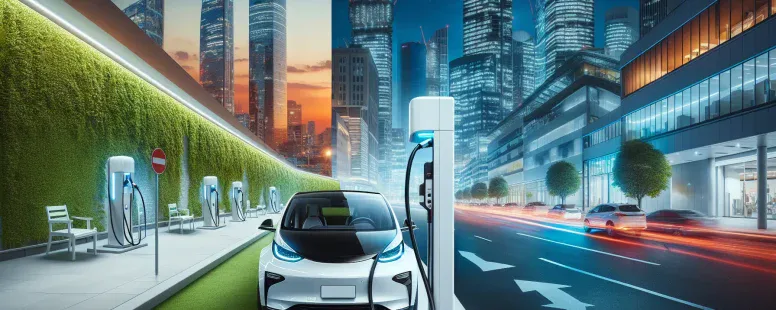
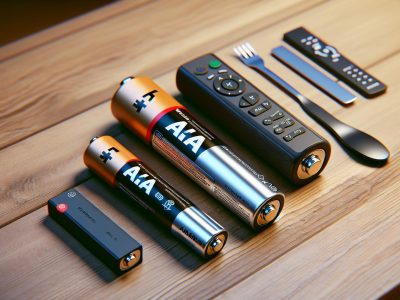
Electricity moves in two main ways—direct current (DC) and alternating current (AC). When you tap your phone’s screen, charge zips one-way through circuits, quietly obeying DC’s rulebook. Nikola Tesla and Thomas Edison, icons of the current wars, fought over these two currents, as their inventions shaped the future of power grids (History.com). DC flows steady, like water down a straight canal, always going in the same direction. You’ll see DC in batteries, solar panels, and electric vehicles—think Tesla cars or the AA cell in your flashlight.
AC, on the other hand, likes to dance. The flow reverses direction many times a second, usually 60 cycles per second in the US, called hertz. When you flick a light switch at home, the bulbs glow because of this alternating rhythm, which helps send electricity over long distances without losing much energy. It’s why city skylines shimmer, thanks to AC power transmission lines.
Picture asking: why are wall chargers needed to convert AC from the grid into DC for your laptop? Your screens, gadgets, and even subway trains rely on DC for efficient, steady performance. Yet, AC wins powering entire neighborhoods or tall buildings, since transformers (those big boxes by the roadside) can change voltage levels easily (U.S. Department of Energy).
Engineers still debate: is the future all-DC, or will AC keep its crown? Data centers often use DC to reduce waste, but household devices lean on AC’s adaptability. If you look around, every powered moment reflects this battle—your morning toast, evening jazz on Bluetooth speakers, even the city’s traffic signals.
Which current speaks to your routine? DC’s reliability or AC’s versatility? Power isn’t just electrons—it’s a story humming under every switch and charge indicator.
Key Characteristics of DC and AC
You interact with two invisible but essential forces every day: DC and AC. Think of them as rivals in a continuous race, sometimes pacing each other, sometimes branching off down their own winding roads. How often do you pause and consider, while flipping on a lamp or charging your phone, which unseen current you’ve just invited into your space?
Definition and Flow of DC
Direct current (DC) sends electrons on a one-way journey, like a disciplined athlete running straight down a track. Current flows in only one direction—from the negative terminal to the positive—in batteries, solar panels, and portable electronics. Your smartphone drinks in DC when charging, its lithium-ion battery storing a steadfast river of energy. In DC circuits, voltage remains constant, so many electric vehicles rely on DC for stable, controlled power delivery (source: Department of Energy). Picture old railroad telegraph lines—some early telegraphs tapped signals using DC, with each pulse marking a clear point along the line.
Definition and Flow of AC
Alternating current (AC) performs a dance, shifting direction at regular intervals (usually 60 times per second in the US). AC reverses its flow periodically, enabling it for efficient transmission over vast distances. Flick on a kitchen light and a pulsing, oscillating flow of electrons travels from a power plant, through substations, right into your fixture. The voltage rises and falls in a sinusoidal pattern. That’s why high-voltage power lines deliver AC: transformers can easily step up or reduce its voltage for safe home use (National Grid Group). Your microwave, TV, and refrigerator depend on this dynamic, swinging current for daily operation.
If every wire in your home could be tugged for its story, which would tell of a single unbroken path and which would hum with oscillating energy? DC and AC both shape your world; their characteristics determine where, how, and why you experience the glow of modern life.
Main Differences Between DC and AC
Understanding the key differences between DC and AC shapes your view of electrical systems. Each current type, like a character in a story, plays a distinct role from power plants to the smallest gadgets in your pocket.
Direction of Current
Direction defines how electrons travel in a circuit. In DC (direct current), electrons move in a single direction, never looking back, like a dedicated runner on a track—think about the steady stream in your phone battery or a solar panel charging under the sun. AC (alternating current), on the other hand, switches direction back and forth, reversing polarity 50 to 60 times a second—picture a dancer quickly changing steps, which is what happens in your wall outlets (IEEE, 2023).
Voltage Levels
Voltage levels in DC circuits typically stay constant. Your battery-powered flashlight emits a stable voltage every time you flip the switch, giving consistent brightness. In contrast, AC circuits fluctuate in voltage—sometimes surging, sometimes falling—like ocean tides responding to the moon, enabling utility companies to step up or step down the power for efficient transmission (National Grid, 2022).
Transmission and Distribution
Transmission highlights one of the most practical differences. Utilities use AC for long-distance energy transmission because transformers can adjust voltage levels up or down with ease—picture power lines stretching across states, delivering light to millions. Sending electricity as DC over long distances creates losses and makes voltage adjustment costly, so it powers local applications better, like transit rail lines or data centers (DOE, 2021).
Applications in Daily Life
Applications show just how omnipresent each type can be. DC powers examples like LED lighting, laptops, and electric cars, providing a direct, reliable flow right where it’s needed. AC dominates household appliances, power tools, and room lighting—its adaptability lets you vacuum the rug, chill your fridge, or cook dinner with reliable power flow. As cities evolve, specialized systems blend both, with DC microgrids growing in tech-forward buildings while AC grids maintain their urban dominance.
Feature
DC Example
AC Example
Direction
Batteries
Home wall sockets
Stable Voltage
Solar panels
Power grid with fluctuating loads
Efficient Transmission
Subway systems
National energy grid
Typical Applications
Smartphones, LEDs
Refrigerators, Ovens
Next time you flip a switch or charge your device, consider which character—DC’s unwavering stream or AC’s dynamic rhythm—powers the moment.
Advantages and Disadvantages of DC and AC
Every device humming in your home or city corner carries a current, drawing you into the ever-relevant current debate: direct or alternating? DC and AC both spark innovation and challenges as you charge your phone, ride an electric bus, or flip on city floodlights. Let’s break down what makes each shine or stumble, and help you see why engineers, city planners, and even solar roof owners keep discussing which current powers the future.
Pros and Cons of DC
Advantages come first with DC—steady, unwavering voltage makes it the favorite for sensitive electronics like your smartphone or laptop (Source: IEEE Spectrum). Reliable energy for electric vehicles, LED bulbs, and solar panels rely on DC because stable delivery reduces wear on tiny internal parts, so your tech lasts longer.
Picture a marathon runner—always moving at the same pace, never backtracking, just like DC. But DC struggles when the race stretches over miles. Transmission loss increases with distance, and bulky infrastructure raises costs for city-wide supply (Source: International Energy Agency). For example, Thomas Edison’s early DC grids powered only a few blocks in New York City, sparking a pivotal challenge for early power networks.
Limits also emerge in the context of voltage transformation. Without transformers, adjusting DC’s voltage becomes complex, using devices like DC-DC converters—typically more costly than AC transformers. That’s why you don’t see DC powering your whole neighborhood, unless it’s a specialized microgrid in a tech-focused office building.
Questions surface: Could solar-heavy districts or vast data centers swing entirely DC? Advocates experiment, but most cities still lean on AC’s easier transmission (Source: National Renewable Energy Laboratory).
Pros and Cons of AC
AC brings versatility—you witness this when household appliances, industrial motors, and the streetlights outside all run on the same supply. Voltage levels easily change with transformers, making long-distance power lines practical. Nikola Tesla’s vision electrified Chicago’s 1893 World’s Fair, a milestone that proved distributing AC for miles kept cities alight and industry buzzing (Source: U.S. Department of Energy).
There’s a rhythm to AC—like a dancer switching directions with perfect timing—allowing large-scale power stability that DC grids often can’t match at distance or scale.
Disadvantages become visible in electronics. Devices needing steady current first convert AC to DC, losing some efficiency along the way. Problems spring from AC’s oscillating nature—some sensitive hospital and laboratory equipment don’t tolerate it well. A power surge or a poorly grounded AC line sometimes disrupts your Wi-Fi router or sensitive amplifier, forcing you to reboot and hope for the best.
Complexity also grows as grid demands spike, sparking concerns about harmonic distortion and electromagnetic interference, especially as modern devices proliferate, says the Institute of Electrical and Electronics Engineers.
With cities evolving and renewable energy expanding, does AC keep pace, or will specialized DC enclaves claim ground? The discussion continues—every innovation tests what current flows into tomorrow’s world.
Current Type
Main Advantages
Main Disadvantages
Noteworthy Applications
DC
Stable voltage, reliable for electronics, batteries, EVs
Costly long-distance transmission, complex voltage shifts
Phones, EVs, solar panels
AC
Efficient long-distance transmission, easy voltage changes
Not ideal for sensitive electronics, harmonic issues
Grids, appliances, industrial tools
Which One to Use: DC or AC?
Choosing between DC and AC often feels like picking sides in a debate with Thomas Edison and Nikola Tesla whispering in your ear. Picture you’re holding your smartphone—DC hums quietly inside, powering the pixels and processor, never wavering. Now picture a sprawling city at night: highways gleaming, streetlights glowing, towers sparkling. That city pulse? It’s AC rushing through wires, surging in rhythmic cycles.
You find DC in everyday objects—think battery-powered toys, laptops, solar-powered garden lights. The steady current lets sensitive microchips thrive, free from voltage surprises. Laptop chargers, for example, convert AC from the wall into smooth DC—without that, your device just sits silent. Why bother with both? AC flows farther with less energy loss, so it’s like a river, easy to redirect and dam with transformers, switching voltages up or down as needed. That’s why your home outlets buzz with AC.
Airplanes use DC for their avionics. Hospitals run MRIs on AC. Some electric cars blend both: Tesla (the company, not the man) fills batteries with DC, but regenerative brakes momentarily send AC, only to be flipped back to DC by power electronics. Ikea’s solar panels collect DC from sunlight, getting switched to AC before joining the city grid. If you live off-grid, you might use DC appliances direct from your solar bank, or you invert it to AC—one extra step.
Ask yourself: Are you looking to power tiny gadgets, or wire an entire city block? Engineers ask this every day when designing microgrids, stadium lighting, or a subway system. Some tech giants, like Google, test DC microgrids in data centers, aiming to skip the AC-DC dance and save energy (source: IEEE Spectrum, 2021). Others say the infrastructure is built for AC, and replacing a century-old network is like swapping the veins out of a living city.
Choosing between DC and AC invites you to weigh legacy against efficiency. Would you ditch ancient highways for a brand-new bullet train? The electrical currents flowing around you echo that question. Start by noticing where electricity hides in your home or street—what current flows there, and why? If you’re designing or building, test both streams. When you travel, spot the domains of both currents, and wonder: Which pulse really keeps your world powered?
Conclusion
As you navigate your daily routines and rely on countless devices it’s worth paying attention to the invisible currents powering your world. Whether you’re charging your phone or flipping on the lights both DC and AC play vital roles behind the scenes.
Understanding the strengths and limitations of each current helps you make smarter choices energy use and technology. The next time you plug in or power up you’ll know there’s a fascinating story of innovation and adaptation flowing through every wire.
To provide the best experiences, we use technologies like cookies to store and/or access device information. Consenting to these technologies will allow us to process data such as browsing behaviour or unique IDs on this site. Not consenting or withdrawing consent, may adversely affect certain features and functions.
Functional
Always active
The technical storage or access is strictly necessary for the legitimate purpose of enabling the use of a specific service explicitly requested by the subscriber or user, or for the sole purpose of carrying out the transmission of a communication over an electronic communications network.
Preferences
The technical storage or access is necessary for the legitimate purpose of storing preferences that are not requested by the subscriber or user.
Statistics
The technical storage or access that is used exclusively for statistical purposes.The technical storage or access that is used exclusively for anonymous statistical purposes. Without a subpoena, voluntary compliance on the part of your Internet Service Provider, or additional records from a third party, information stored or retrieved for this purpose alone cannot usually be used to identify you.
Marketing
The technical storage or access is required to create user profiles to send advertising, or to track the user on a website or across several websites for similar marketing purposes.