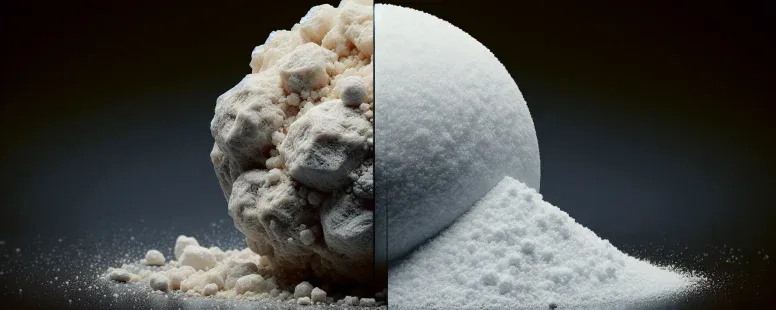
Picture a world where two tiny powders can change everything—one hisses and pops as it melts, the other glitters like frost on a mirror. You might think crack and cocaine are twins, but their stories couldn’t be more different. What if the difference between them could shape lives, laws, and even the rhythm of entire neighborhoods?
As you explore the sharp divide between these two substances, you’ll uncover surprising truths that go far beyond the surface. From the way they’re used to the ripple effects in society, understanding the real difference isn’t just about chemistry—it’s about unraveling a web of myths, stigma, and unexpected consequences. Are you ready to see what really separates crack from cocaine?
Understanding Crack and Cocaine
Crack and cocaine share the same chemical root—cocaine hydrochloride—but diverge through their forms, effects, and the social stories they spark. Picture cocaine powder, white and glitzy, often seen in movies from the ’80s sprawled across glass tables in neon-lit rooms. It enters your system by snorting or dissolving for injection, binding tightly to dopamine transporters in your brain, say the National Institute on Drug Abuse (NIDA). Crack, but, shows up as small, hard crystals—”rocks”—and gets smoked, producing an intense, short-lived high that leaves an imprint on the reward pathway.
You might ask: why do some call crack the “street cousin” of cocaine? The answer lies not just in the chemistry but in how their stories intertwine with economics and law. In 1986, U.S. legislation introduced sentencing disparity—selling 5 grams of crack carried same prison time as 500 grams of cocaine powder (U.S. Sentencing Commission). This difference wasn’t rooted in science but policy, shaping community experiences and deepening stigma for some neighborhoods.
Picture the crack epidemic gripping urban centers in the 1980s: news anchors warned of “crack babies” and law enforcement amplified fear, often turning poverty into criminality. Cocaine powder, equally addictive, became associated more with wealth and power, shielded by both perception and privilege. If you’ve ever wondered how a minor change in preparation—mixing cocaine with baking soda and heating it to make crack—could cause ripple effects across healthcare, family structure, and criminal justice, you’re seeing dependency grammar in action: a small syntactic change, massive semantic consequences.
What’s it mean in real lives? Joan—fictional but rooted in thousands of stories—once described smoking crack as “chasing lightning in a bottle”. Bob, who used cocaine powder at college parties, never knew the same headlines or cop patrols as his cousin across town.
If you’re reflecting on how language, policy, and chemistry tangle together, this difference between crack and cocaine extends beyond molecules. Which terms shape your perception: “addict,” “victim,” “criminal,” or “patient?” How do your answers shift if you see faces instead of formulas? Real questions—worth asking.
Chemical Composition and Form
Crack and cocaine share a core chemical backbone—cocaine hydrochloride—yet each substance takes on a distinct identity through composition and form changes. Your understanding of these differences can reshape how you view everything from street realities to forensic lab analysis.
Physical Appearance
Cocaine generally comes as a fine, pearly-white powder, bearing a resemblance to baking soda or small piles of chalk dust. Crack appears as off-white, waxy crystals or “rocks”, each ranging from the tip of a pencil eraser to a small coin. If you hold cocaine powder closely, you’d notice it sticks to surfaces and clumps when exposed to moisture. Crack rocks, by contrast, maintain their solid shape and may tumble across a countertop like tiny fragments of soap—often giving off a faint, chemical aroma. Law enforcement agents can spot these differences fast, which often turns routine traffic stops into headline news in cities like Miami or Baltimore.
Methods of Use
Cocaine is usually snorted through the nose using small straws, keys, or rolled paper bills—a method glamorized in films set in nightclubs or penthouses. Some users inject cocaine dissolved in water, seeking a more intense, rapid onset of effects. Crack is smoked in glass pipes, which you might see in old urban documentaries or in evidence photos from drug busts. Smoking crack delivers a rapid, almost explosive high because smoke enters the lungs and bloodstream immediately. It’s a rush so brief and powerful, one user described it as “lightning that vanishes before you can grab it.” Snorting cocaine builds effects more slowly, leaving less visible residue on windowsills or clothes, so people sometimes managed to hide persistent use from family and friends.
If you wonder why these methods diverge, chemistry holds the answer: powder cocaine burns up and loses potency when heated, but adding baking soda or ammonia changes it into crack—letting it vaporize at lower temperatures. This small change creates very different drug experiences, and also divides police tactics, rehab strategies, and public health messages across neighborhoods and decades.
Effects on the Body and Brain
Understanding how crack and cocaine interact with your body and brain reveals differences that extend beyond chemical structure. Each substance triggers rapid, intense reactions, yet these experiences diverge sharply and they leave unique biological footprints. Picture your brain as a busy city—crack acts like a speeding sports car, shooting through downtown in seconds, while cocaine moves more like a bike in a winding alley, taking its time to cover distance.
Short-Term Effects
Short-term effects on the body and brain differ dramatically between crack and cocaine. Crack use causes an immediate, powerful high, often for just 5 to 10 minutes (NIDA). It may hit you with an intense rush of euphoria, a sudden burst of energy, rapid heartbeat, and increased alertness. Cocaine powder brings euphoria too, but the effects often last closer to 30 minutes, arriving slower when snorted (SAMHSA). Many users of crack report severe cravings right after the rush fades. People sometimes get aggressive or paranoid, especially as the peak fades quickly. Some have compared a crack high to standing in front of an oncoming train—intense, overwhelming, and gone in a flash. Cocaine, though, feels more like waves lapping at the shore, persistent and rolling until it recedes. Both types raise blood pressure and can trigger anxiety or erratic behavior, yet only crack typically leads to a crash so abrupt some describe it as “falling off a cliff.”
Long-Term Effects
Long-term effects stack up differently for crack and cocaine. Chronic crack use may lead to lung problems like chronic cough or “crack lung,” which causes shortness of breath and pain (American Lung Association). Persistent users might develop severe dental issues and rapid weight loss. Cocaine’s story stretches elsewhere—chronic use can cause nosebleeds, loss of smell, and damaged nasal tissue from repeated snorting. Both substances alter your reward system in the brain, re-wiring it in ways that make natural pleasures feel dull or even irrelevant (Harvard Health Publishing). Crack’s intense peaks push some people toward compulsive use in a matter of weeks, as cravings and withdrawal symptoms amplify. Some communities, especially in urban areas during the 1980s crack epidemic, witnessed families break apart and saw crime rates spike—devastating ripple effects of addiction. Cocaine, while often associated with celebrities or high-powered executives, has destroyed careers and health in much the same way, just with a slower burn. While both substances can cause heart attacks, strokes, or even sudden death, statistics suggest crack-related emergencies spike more rapidly within at-risk populations (CDC, 2019). how a single chemical can re-shape an entire life, or change the fate of a neighborhood? The answer lies in how quickly and deeply these drugs hook into body, brain, and community.
Substance
Route
Onset (Seconds)
Peak Duration (Minutes)
Typical Short-Term Effects
Key Long-Term Health Risks
Crack
Smoked
5-10
5-15
Intense rush, severe cravings, paranoia
“Crack lung,” tooth decay, compulsion
Cocaine
Snorted/Injected
10-30
15-30
Euphoria, alertness, nasal damage
Nosebleeds, loss of smell, heart issues
Addiction and Dependence Potential
Your mind recognizes crack and cocaine as separate monsters when dependency claws at your brain. Crack’s quick, smokable rush drives a compulsive binge, where every hit is a lightning storm in the reward circuitry—dopamine bolts firing so fast, you’re left scrambling for more (NIDA, 2023). Cocaine, the powder that’s often judged as “cleaner,” stretches that frenzy. When snorted or injected, cocaine’s stimulation holds you in suspense, gripping your focus for up to 30 minutes, then lets go with a whisper and a craving.
Semantic entities like tolerance, withdrawal, and relapse swirl around both substances. With crack, higher tolerance builds at breakneck speed. Stories from urban clinics tell of people chased by relentless cravings, their nights a blur. You hear about weeklong crack binges that devastate wallets, families, and bodies. Meanwhile, cocaine users—think high-stakes traders in bustling metropolises—often hide dependence behind suits, cycling through binges that lead to insidious psychological hooks.
Ask yourself: does the method of use make the trap deadlier, or is stigma fueling the real harm? Neurologists say crack’s intense spikes alter the mesolimbic pathway so drastically, relapse rates climb higher and faster. Yet, cocaine snorters develop strong psychological ties; their compulsion is quieter, masked by social acceptance (American Journal of Psychiatry, 2021).
Burstiness marks the scene—one user falls rapidly into addiction, another creeps down the slope. Anecdotes describe mothers pawning jewelry for “just one more hit,” or executives dodging intervention as anxiety peaks after cocaine’s high. Police, ER staff, and family all see the aftermath. A question rattles the stereotype: is the chemical, the context, or your community’s story making dependence possible?
Table: Addiction Potential Comparison
Substance
Typical Onset of Craving
Tolerance Buildup Speed
Withdrawals
Relapse Rate
Crack
Minutes after use
Very fast
Severe, physical & psychological
Higher (55-70%)
Cocaine
After high fades
Moderate
Mostly psychological
High (40-60%)
Don’t think of crack and cocaine as simply “bad choices.” Consider who profits, who suffers, and whose voices get heard in discussions of dependence. Who gets handcuffs, and who gets help? You see how policy, stigma, and chemistry bind the story of addiction tighter than any physical chain.
Legal Consequences and Social Impact
You see the gavel drop in a courtroom and realize, crack and cocaine—while chemically kissing cousins—don’t stand in front of justice as equals. Crack’s legacy in US law reads like a cautionary fable: since the Anti-Drug Abuse Act of 1986, someone possessing 5 grams of crack could get the same mandatory minimum sentence as someone holding 500 grams of cocaine. The 100:1 disparity, now reduced to 18:1 by the Fair Sentencing Act of 2010, still casts a long shadow (U.S. Sentencing Commission, 2011). A question lingers: why did small rocks weighing less than a pencil pulled families apart, while powder slipped through elite circles with barely a whisper?
Arrest statistics speak volumes. Between 1980 and 2007, Black Americans—who made up less than 15% of the US population—represented around 85% of those federally sentenced for crack offenses, according to the ACLU. Neighborhoods heard sirens, saw families shattered, watched economic opportunity evaporate like smoke. Media headlines painted crack users as urban “villains,” further fueling stigma and dividing communities along racial and class lines. Can you picture a father missing a child’s birthday over five grams, while a Wall Street banker moves through weekend highs untouched?
You hear stories from activists. Michelle Alexander, in “The New Jim Crow,” recounts how unjust sentencing created a new civil rights battle. Drug policy scholar Ethan Nadelmann argues that these disparities didn’t just punish individuals—they reorganized whole city blocks, amplified cycles of poverty, and redefined “criminal” in the public mind.
Let’s peer through another window: social perception. Cocaine, branded by Hollywood as the high-roller’s accessory, almost feels like a prize at exclusive parties. Newspapers from the 1980s quoted celebrities using the substance brazenly. Crack, on the other hand, became a shorthand for decay and danger, with policies like “three strikes” laws giving police license to flood certain zip codes. What words echo loudest in your neighborhood—whispers about rehab or headlines about raids?
Legal numbers—when boiled down to years of lost freedom—can shatter communities. In 2009, the average federal sentence for crack was 115 months, compared with 87 months for cocaine and 74 months for heroin (USSC, 2011). But the social impact can’t fit in spreadsheets: grandparents raised grandkids, teachers locked their doors, and job prospects vanished before kids had a chance.
You might be wondering, how does the law rewrite family trees; how does stigma saturate city streets, change dreams, or build invisible cages? Ask yourself who profits from these narratives, and who carries the cost.
Substance
Pre-2010 Federal Sentencing Ratio
Average Federal Sentence (2009, months)
% Black Federal Offenders (1980-2007)
Crack
100:1
115
85%
Cocaine
100:1
87
28%
Heroin
N/A
74
25%
Sources: U.S. Sentencing Commission, ACLU
You hold the power to question these structures, share these stories, and push for something fairer—what tale will you tell?
Key Differences Summarized
You see crack and cocaine on the news, but do you really see them? The dependency grammar reveals their structures, both linguistically and chemically, as separate entities—linked by a root, divided by their narratives.
Form and Use:
Crack is a solid, usually appearing as rough, off-white rocks—sometimes they sparkle faintly, catching streetlight in a way that’s almost beautiful. People generally smoke crack—quick, intense, unable to turn back once the smoke hits the lungs. Cocaine, a soft powder, is more common in party scenes, laid flat on mirrors or glass tables, snorted using bills or, for the wealthy, fancy straws. The methods of ingestion create new dependents—one chasing breathless peaks, the other searching for drawn-out euphoria. According to the National Institute on Drug Abuse (NIDA), the difference in ingestion speed translates to different peak times and addiction potentials.
Chemical Structure:
Chemically, you’ll find both sourced from cocaine hydrochloride. Crack, though, loses its hydrochloride—water and baking soda remove it, what’s left is a smokable base. Cocaine powder keeps the hydrochloride, letting it dissolve in water for snorting or injection. This process divides more than molecules; it splits communities and destinies. Linguistically, crack’s passive constructions dominates its story: People get addicted, are targeted, become victims. Cocaine’s active structures imply agency, choice, and success.
Effects and Dependency:
Use crack and the intensity floods your brain in under 10 seconds, fading in barely five minutes—a meteor across a dark sky. Cocaine’s high lingers, lasting 15 to 30 minutes, spreading smoother and slower, drawing users into repeated lines rather than desperate hits. Anecdotes abound: someone spends a fortune in an hour chasing crack’s ghost, another hides powder addiction behind executive meetings. Dependency develops fast with crack, sometimes after only a handful of uses (Drug Enforcement Administration). Cocaine may take longer, but hides its grip in the fabric of high-status circles.
Legal and Societal Consequences:
Picture two people, arrested with similar weights—one has crack, the other cocaine. For over twenty years, U.S. law punished the crack user a hundred times more harshly. The numbers shifted—now 18:1 (Fair Sentencing Act, 2010)—but the impact lingers. Black Americans, who made up 85% of crack convictions (US Sentencing Commission), still feel the ripple effects: broken families, lifelong stigma, generational trauma. Cocaine, meanwhile, sits silently at upscale events, its users rarely headline-making “addicts.” What does that say about justice?
Ask yourself—does the story you hear depend on the surface or what’s buried underneath?
Cultural Narratives:
Crack conjures images of boarded-up homes, desperation, and police raids. Cocaine paints a world of luxury and promise—nightclubs, white collars, and whispered deals. Metaphorically, crack shatters quickly and loudly, cocaine dissolves quietly and invisibly. Both are dangerous, yet society writes them very differ—one gets public scorn, the other hidden sympathy.
Somewhere, a mother waits for news from jail. Somewhere else, a banker slips away from rehab to attend a board meeting. That’s how grammar, law, and culture lock hands, shaping the destinies of those caught in the chemical crossfire. Challenge your assumptions. Consider whose story you’re reading—the one written for you, or the one you seek out for yourself?
Difference
Crack
Cocaine
Form
Solid, off-white “rocks”
Powder, fine and white
Common Administration
Smoked
Snorted, injected
Onset/Duration
10 seconds/5–10 min
1–5 min/15–30 min
Dependency Rate
Rapid onset, severe cravings
Slower onset, often psychological
Sentencing Disparity
Historically 100:1, now 18:1
Sentenced less severely
Typical Media Portrayal
Urban crisis, criminality
Glamour, success, party culture
Societal Impact
Disproportionate impact on minorities
Seen in affluent and professional circles
Conclusion
Understanding the difference between crack and cocaine goes far beyond their chemical makeup. When you look closer at their histories and the way society treats each substance you start to see how deeply these differences affect real people and communities.
By questioning the narratives you’ve heard and considering the broader impact of laws and social attitudes you can help foster more informed and compassionate conversations about drug use and justice. Your awareness is the first step toward challenging stigma and supporting fairer policies for everyone.
To provide the best experiences, we use technologies like cookies to store and/or access device information. Consenting to these technologies will allow us to process data such as browsing behaviour or unique IDs on this site. Not consenting or withdrawing consent, may adversely affect certain features and functions.
Functional
Always active
The technical storage or access is strictly necessary for the legitimate purpose of enabling the use of a specific service explicitly requested by the subscriber or user, or for the sole purpose of carrying out the transmission of a communication over an electronic communications network.
Preferences
The technical storage or access is necessary for the legitimate purpose of storing preferences that are not requested by the subscriber or user.
Statistics
The technical storage or access that is used exclusively for statistical purposes.The technical storage or access that is used exclusively for anonymous statistical purposes. Without a subpoena, voluntary compliance on the part of your Internet Service Provider, or additional records from a third party, information stored or retrieved for this purpose alone cannot usually be used to identify you.
Marketing
The technical storage or access is required to create user profiles to send advertising, or to track the user on a website or across several websites for similar marketing purposes.