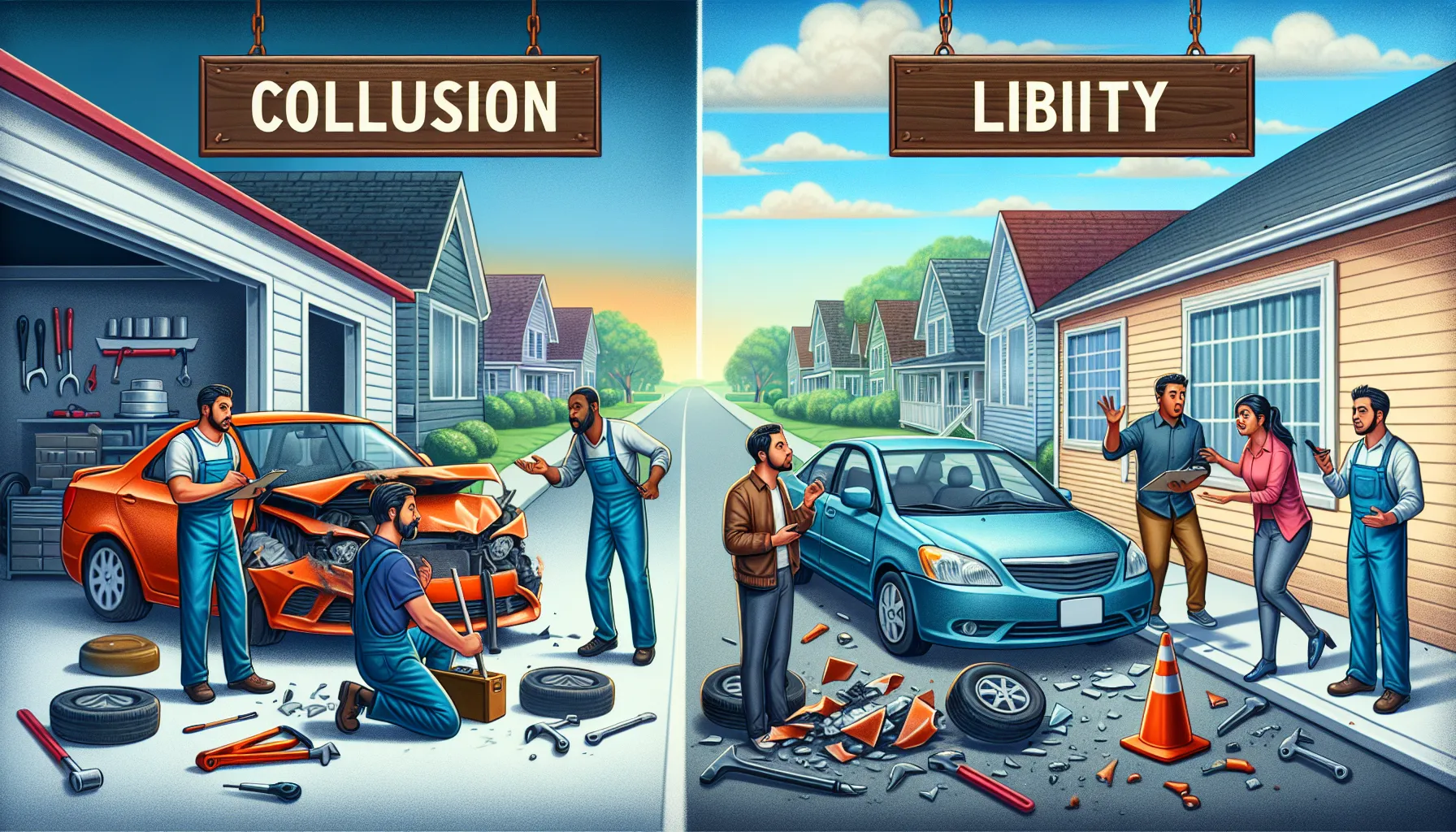
Choosing the right type of car insurance can feel overwhelming, especially with the variety of coverage options available. Two fundamental types, collision and liability insurance, often get mixed up or misunderstood. Each serves a crucial purpose, providing specific protections depending on circumstances and needs. Understanding these differences enables you to make informed decisions tailored to your driving habits, financial situation, and risk tolerance.
Understanding Collision Insurance
Defining Collision Coverage
Collision insurance is designed to cover damage to your own vehicle caused by collisions with other vehicles or objects, regardless of who is at fault. For instance, if you accidentally hit a lamppost or another car, your collision insurance covers the repair costs for your vehicle.
Scenarios Where Collision Insurance Applies
Collision insurance plays a crucial role in accidents where your car sustains damage. This includes single-vehicle accidents, like sliding into a curb during icy conditions, or multi-vehicle collisions where determining fault might take time.
Advantages of Selecting Collision Insurance
Opting for collision insurance ensures you are financially protected from the often substantial repair costs after accidents, providing peace of mind and continuity of vehicle use.
Understanding Liability Insurance
Defining Liability Coverage
Liability insurance covers damage you may cause to other people or their property in an accident where you are at fault. It typically includes bodily injury liability and property damage liability.
Scenarios Where Liability Insurance Applies
This type of insurance becomes essential if you are found responsible for an incident that injures another person or damages their property, like backing into someone’s parked car or causing a multi-car pile-up.
Advantages of Selecting Liability Insurance
Liability insurance is often required by law and provides essential protection for both you and affected third parties. It helps manage the financial burden of covering damages and legal costs.
Key Differences Between Collision and Liability Insurance
Coverage Specificities
Collision insurance focuses on your own vehicle’s repair costs, while liability insurance addresses harm inflicted on others’ property and persons.
Cost Considerations
Generally, liability insurance premiums are lower compared to collision insurance due to the broader but less personal financial risk involved.
Vehicle Age and Condition Impact
Older vehicles may not necessitate collision insurance as their market value may not justify the coverage, whereas liability insurance remains essential for all vehicles, regardless of age.
Making the Right Choice Based on Your Needs
Factors To Consider When Deciding
Assess your vehicle’s value, your risk tolerance, and state requirements when deciding between collision and liability insurance.
Tips for Evaluating Your Options
Consult insurance providers, use online comparison tools, and seek personalized advice to identify the best coverage for your specific situation.
To provide the best experiences, we use technologies like cookies to store and/or access device information. Consenting to these technologies will allow us to process data such as browsing behaviour or unique IDs on this site. Not consenting or withdrawing consent, may adversely affect certain features and functions.
Functional
Always active
The technical storage or access is strictly necessary for the legitimate purpose of enabling the use of a specific service explicitly requested by the subscriber or user, or for the sole purpose of carrying out the transmission of a communication over an electronic communications network.
Preferences
The technical storage or access is necessary for the legitimate purpose of storing preferences that are not requested by the subscriber or user.
Statistics
The technical storage or access that is used exclusively for statistical purposes.The technical storage or access that is used exclusively for anonymous statistical purposes. Without a subpoena, voluntary compliance on the part of your Internet Service Provider, or additional records from a third party, information stored or retrieved for this purpose alone cannot usually be used to identify you.
Marketing
The technical storage or access is required to create user profiles to send advertising, or to track the user on a website or across several websites for similar marketing purposes.