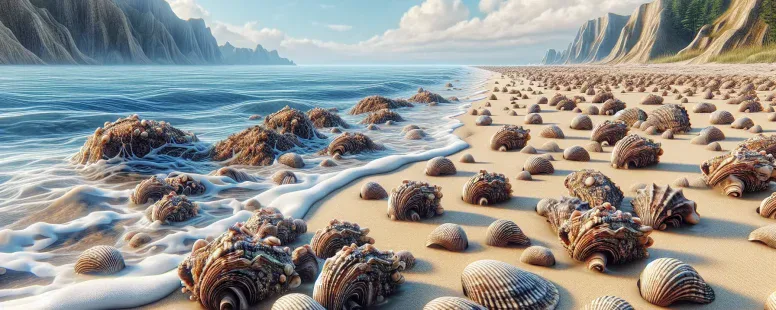
Picture yourself strolling along a rocky shoreline, the salty breeze weaving through your hair as sunlight glimmers on the water. Beneath the surface, hidden in the sand and clinging to stones, two mysterious shell dwellers quietly shape the rhythm of coastal life. You might savor them on a plate or spot their shells scattered along the beach, but what truly sets clams and oysters apart?
Beyond their hard exteriors lies a world of fascinating contrasts—textures that surprise your palate, flavors that evoke the sea, and even secret roles in keeping ocean ecosystems healthy. Unlocking the subtle differences between clams and oysters not only elevates your next seafood feast but also reveals nature’s ingenious designs. Get ready to see these shellfish in a whole new light.
Overview Of Clams And Oysters
Clams and oysters shape the rhythm of coastal life, their shells scattered like pebbled clues across sandy flats and briny inlets. You might scoop up a clam from the shifting mud—its shell smooth, symmetrical, almost like a secret folded hands hidden beneath the waves. Oysters, in contrast, cling to rocks and piers, stacking in craggy clusters that resemble miniature undersea castles. Both bivalves have evolved remarkable ways of thriving where salty water meets land, yet their stories diverge with fascinating twists.
Clams burrow deep, filtering nutrients from sediment. Razor clams in the Pacific Northwest, for instance, dig at up to 10 inches per hour (NOAA), vanishing from sight before your shovel hits the sand. Oysters remain rooted, building reefs that shelter juvenile fish, crabs, and sometimes even seahorses. In Chesapeake Bay, one adult oyster filters as much as 50 gallons of water daily, improving water clarity and health for the entire estuary (Chesapeake Bay Program).
When you pry open a clam, the flesh appears pale and clear, almost ghostly, while oysters reveal a briny, firm body tinted with hints of silver and taupe. Chefs favor clams in chowders and pasta—Manila clam linguine, New England clam chowder—over oysters, which steal the spotlight on raw bars, likely paired with mignonette or lemon wedges. The taste? Clams offer clean, mineral notes. Oysters mimics the ocean’s complexity—salty, sweet, sometimes even like cucumber or melon.
Let’s consider: Why do cultures like the Japanese prize clams’ subtle sweetness in miso soup, while French traditions elevate oysters as a luxurious aphrodisiac? Is it just about flavor or does their ecological partnership with coastlines shape our taste?
If you run your fingers over a clam shell, it feels like weathered pottery. An oyster’s surface is jagged, barnacled—almost prehistoric. Such variety tells the story not just of survival, but of a long-standing dialogue with tides, predators, and people. Aquaculture farms around Long Island and the Gulf of Mexico now cultivate both species, supporting local economies and culinary diversity (NOAA Fisheries).
No one can really predict what you’ll discover next time you wade through tidal beds: ancient legends say oysters create pearls, yet, most clams bury secrets the sun never sees. When you taste them—or hold one in your palm—you’re experiencing more than food. You’re touching a tradition, a piece of marine history suspended between land and sea.
Physical Differences Between Clam And Oyster
You spot a clam or oyster shell along the shore and might wonder—what visual clues reveal their identity? Recognizing physical traits, like shell shape or size, can anchor your understanding of these saltwater wonders and deepen your appreciation for their roles in the ecosystem.
Shell Shape And Texture
Clam shells display symmetry with smooth oval or round outlines, their matte finish hiding subtle growth rings—think of Mercenaria mercenaria or the smooth-shelled Atlantic surf clam. If you run your finger on an oyster shell, though, jagged grooves and flared, uneven edges will snag your touch. Oysters, such as Crassostrea virginica, layer their shells like history books memorialized by tides, producing a calcified fortress that’s rough and heavy. These differences arise from behavior: clams, burrowing quietly in sand or mud, benefit from compact shapes; oysters, stationary and exposed to current, rely on rugged “armor” for defense.
Size And Color Variations
Clam and oyster sizes scatter widely depending on the species you encounter. Many clams, for example the giant geoduck (Panopea generosa), might weigh 3.2 kilograms or more and stretch 15 inches long. In contrast, Littleneck clams rarely top 2 inches. Oysters, although sometimes seeming larger because of their spreading shells, average between 3–6 inches, with some Pacific oysters (Magallana gigas) hitting 8 inches. While clams often reflect neutral sands with pale cream, tan, or gray shells, oysters showcase deeper shades—greens, browns, and even flashes of violet. Oyster interiors sometimes glisten with pearly nacre. Do you notice striations and streaks in their colors? Oyster shells bear these as badges of environmental change, a living diary of water quality and nutrients they filtered. What stories does a clam’s shell, worn but uniform, tell about its quiet time beneath the sand?
By reading these details, you unlock the visual secrets of two pillars of coastal life and start to connect their appearance to their ecological narratives.
Habitat And Distribution
Discover how clams and oysters claim their kingdoms beneath the tide. Each thrives within unique coastal rhythms, shaping distinct underwater territories and narrating stories of survival written in shell and sand.
Natural Environments
Clams nestle underground, pressing their smooth bodies into soft mud or sandy beds. They pull water through their siphons, filtering plankton and tiny particles—like natural vacuums cleaning estuaries and marshes. Oysters, in contrast, cement themselves onto hard surfaces like rocks, dock pilings and even other oyster shells. Stacked together, they create sprawling reefs that resemble bustling city blocks for shrimp, crabs, and small fish.
You might see clams flourish in brackish backwaters, shallow tidal flats, or the muddy banks of quiet rivers. Digging for them at low tide feels like uncovering buried coins, each shell promising both ecological benefit and culinary delight. Oysters, meanwhile, favor intertidal zones—places where salt and fresh waters mix and tides expose their clusters to the open air. This constant dance between water and wind hardens their shells and hones their grit.
Ever wondered why you never find clams stuck to a pier or oysters buried in the sand? Each evolved to master its chosen world, trading mobility for security, or vice versa.
Geographic Range
Clams scatter across vast stretches of temperate and tropical coasts, from New England marshes to the mudflats of Southeast Asia. Soft-shell clams (Mya arenaria) crowd the cool waters of the North Atlantic, while the razor clams (Ensis directus) streak West Coast beaches in the United States. Littleneck clams, famous in chowder recipes, thrive anywhere from muddy inlets in Washington state to Japan’s shallow bays.
Oysters don’t wander far geographically, but their reefs change shorelines. The Eastern oyster (Crassostrea virginica) builds colonies from Canada’s Gulf of St. Lawrence all the way down to the Gulf of Mexico. Pacific oysters (Crassostrea gigas) dominate Japan’s coastal farms, now thriving in Australia and parts of Europe due to aquaculture. Many coastal economies count on these filter feeders for both livelihood and environmental stewardship, it’s probably true.
Researchers from NOAA estimate that the loss of oyster reefs in Chesapeake Bay has reduced critical habitat for many marine species. Meanwhile, intertidal shellfish beds sustained by both wild and farmed clam populations ensure a continuous cycle of nutrient renewal and food production, even though overharvesting or habitat destruction threatening their balance.
If you dig deep and look close enough, you’ll find clam and oyster habitats overlapping in some bays—competition and cooperation shaping an intricate dance of adaptation. The next time you walk a coastal marsh or taste a briny shellfish, ask yourself: what silent battle or alliance might be unfolding just under your feet?
Taste And Culinary Uses
Taste propels your senses into the world of clams and oysters, sharp as that first breeze off a briny shore. Culinary traditions in every coastal town—from Boston to Tokyo—capture surprising twists in these shellfish, making their mark through both simplicity and daring technique.
Flavor Profiles
Clams present a faint sweetness, whispering hints of fresh seawater and sun-warmed sand. When you bite into a Littleneck, the tender chew feels light, nearly snack-like, drawing you back with subtlety rather than force. By contrast, oysters serve a layered bouquet—salty, mineral, sometimes creamy, sometimes exploding with cucumber or melon notes that linger on the palette. Two oysters, even from the same bed, rarely taste the same; terroir, or more precisely, “merroir,” sculpts each shell’s interior with local undertones. Why some people taste metallic tang, while others describe a clean ocean snap? That’s a debate shucked open in every raw bar.
Consider a rainy morning in Arcachon Bay; an old fisherman hands you a Belon oyster pulled from cold depths. When you try it, the briny rush aligns almost poetically with the lapping tide, filling you with a sense of place—terroir truly embodied. Clams, harvested at low tide in Rhode Island, offer a comfort that’s ready for chowder. Their texture and delicate flavors easily take on garlic, wine, and herbs, whereas oysters demand to be noticed, even when swallowed raw.
Popular Dishes
Dishes throughout the world showcase the culinary potential of these bivalves, pushing boundaries and inviting conversation. New England clam chowder, Manhattan red, spaghetti alle vongole in Napoli—each dish relies on the gentle touch of clams to build layers, not dominate them. You find clam strips fried at boardwalk stands, reminding even the most casual diner of these shellfish’s universal charm.
Oysters, meanwhile, create spectacle. Chefs elevate them—think Oysters Rockefeller, adorned with butter, herbs, and breadcrumbs—or Southern-style, chargrilled with parmesan and creole spice. In France, they’re served cold on a silver platter, lemon wedges glistening beside seaweed, calling forth centuries-old rituals. It’s not just about the eating; slurping an oyster becomes a point of pride and heritage. Raw bars in New Orleans or Paris invite you to debate, compare, and discover subtitle differences with every shell.
Next time you peruse a menu, consider what pulls at your memory or draws your curiosity. Will you chase the briny bite of an oyster, or seek the gentle familiarity of clam-laden pasta? Their unique culinary footprints weave a continuous narrative from tide pool to table, always demanding another taste.
Farming And Sustainability
Farming clams and oysters feels a bit like choreographing a slow underwater ballet where farmers guide the tide of nature just enough to encourage shellfish to multiply. You might picture rows of mesh bags, plastic cages, and wooden racks splayed out in cool morning mist—each one cradling a new generation of bivalves. These methodical aquaculture practices shape coastal economies, ecosystems, and your dinner plate in surprisingly different ways.
Harvesting Methods
Clam and oyster farming depends on distinct techniques anchored in their separate behaviors and habitats. Picture harvesting clams: farmers often dig through mudflats, using rakes or shovels, sometimes plunging arms elbow-deep in briny sand. This method, called mechanical or hand-harvesting, reveals species—like soft-shell or quahog clams—waiting patiently beneath the surface. In contrast, oyster farmers favor suspension and bottom culture: deploying spat (baby oysters) in mesh bags, cages, or directly on rocks, then leaving them to filter-feed as the tides wash through, which can minimize soil disruption (NOAA, 2023).
Which method feels most sustainable? Picture this: oyster cages gently bobbing on the surface require little sediment disturbance, whereas diggers churn up the muddy beds in pursuit of clams. Still, wild harvest permits—as seen in Maine’s shellfish industry—help conserve clam populations, balancing economic needs with ecological care.
Environmental Impact
Farming clams and oysters tells a tale of restoration and responsibility. Both act like living water filters, but it’s oysters who wear the superhero cape: a single Eastern oyster filters up to 50 gallons of water per day, clearing nutrients and sediments while creating complex reefs that attract crabs, fish, and sea snails (Nature Conservancy, 2022). Clams also clean water, but burrowing species—such as the geoduck—may offer subtle improvements to sediment oxygenation. Can farms ever replace wild ecosystems? Maybe not exactly. But they slow the slide toward depletion.
Conversely, poorly managed shellfish farms—particularly intensive clam dredging—risk uprooting eelgrass, stirring sediment, and unleashing excess nutrients. The best farms, like those in Washington’s tidelands, now rotate beds and encourage eelgrass regrowth, echoing an old fisherman’s wisdom: “Leave something for the sea.” Should you support these shellfish? If traceability and local stewardship rate high for you, then farmed oysters often bear the badge of environmental ally. Some conservation projects, including Chesapeake Bay’s oyster reef restoration, even invite you to plant oysters by “adopting” spat as part of a living legacy.
Do sustainable choices end at the water’s edge? Maybe ask yourself the next time you order a dozen oysters or a bucket of steamers. Each bite connects you to a vast underwater world—one farmed with care or neglected with consequences.
Nutritional Value Comparison
Comparing the nutritional profile of clams and oysters gives you a glimpse into the hidden stories beneath their shells. Both deliver impressive numbers yet offer differences that catch attention on your plate and in your diet. Clams stack up high in lean protein—3 ounces cooked gives you around 22 grams, great for rebuilding muscles after a workout or a long day. Oysters, while containing less protein at about 7 grams per 3-ounce serving, dazzle with trace minerals like zinc and selenium, according to the USDA FoodData Central. Did you ever notice how quickly oysters leave you feeling more energized? It isn’t just the ocean breeze—zinc levels in just six medium oysters meet over 300% of your daily needs, way more compared to clams.
Here’s a visual breakdown for quick reference:
Nutrient
Clams (3oz, cooked)
Oysters (3oz, cooked)
Calories
126
69
Protein
22g
7g
Iron
24mg
6mg
Zinc
2mg
74mg
Selenium
56mcg
66mcg
Vitamin B12
84mcg
13mcg
Sitting at a raw bar, have you felt curious about why oysters have such a briny punch? Marine biologists suggest that the minerals in an oyster’s body, like manganese and copper, reflect the tidal rhythms of their reef homes, creating unique flavor bursts and nutritional surprises. Clams, nested in sand, turn their iron-rich diet into energy stores, which explains why a single serving provides more than ten times your daily requirement of iron—a significant boost for those who has anemia or follow a plant-based diet.
If you’re pondering heart health, both shellfish emerge as low-fat choices, but oysters carry slightly more omega-3 fatty acids, which the American Heart Association connects to reduced risk of cardiovascular disease. But be warned: sodium content varies wildly, especially with processed or smoked shellfish, making it important reading nutrition labels before you dig in.
Ever questioned whether the nutritional edge sways your next seafood choice? Your answer may change depending on a goal—muscle gains, mineral boosts, or energy renewal. Each shell tells not just an ecological tale but a nutrient-rich saga waiting to be explored, sparking curiosity with every bite.
Conclusion
Whether you’re drawn to the briny complexity of oysters or the subtle sweetness of clams your next seafood experience can become a journey through coastal history and culture. Each bite offers a chance to support sustainable practices while savoring unique flavors shaped by nature.
As you discover the realm of clams and oysters let your curiosity guide you. There’s always something new to discover on your plate and in the waters where these fascinating shellfish thrive.
To provide the best experiences, we use technologies like cookies to store and/or access device information. Consenting to these technologies will allow us to process data such as browsing behaviour or unique IDs on this site. Not consenting or withdrawing consent, may adversely affect certain features and functions.
Functional
Always active
The technical storage or access is strictly necessary for the legitimate purpose of enabling the use of a specific service explicitly requested by the subscriber or user, or for the sole purpose of carrying out the transmission of a communication over an electronic communications network.
Preferences
The technical storage or access is necessary for the legitimate purpose of storing preferences that are not requested by the subscriber or user.
Statistics
The technical storage or access that is used exclusively for statistical purposes.The technical storage or access that is used exclusively for anonymous statistical purposes. Without a subpoena, voluntary compliance on the part of your Internet Service Provider, or additional records from a third party, information stored or retrieved for this purpose alone cannot usually be used to identify you.
Marketing
The technical storage or access is required to create user profiles to send advertising, or to track the user on a website or across several websites for similar marketing purposes.