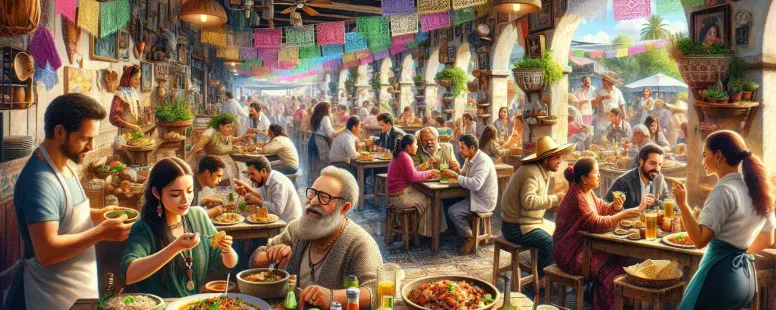
Picture yourself walking into a bustling taqueria—warm tortillas scenting the air, sizzling fillings whispering promises of flavor. You scan the menu, torn between the hefty embrace of a burrito and the lively crunch of a taco. Which do you choose? The answer isn’t as simple as it seems.
Burritos and tacos may share roots, but they’re worlds apart in experience. One wraps everything up in a cozy bundle, while the other bursts with vibrant textures and fresh toppings. But there’s more to this delicious rivalry than meets the eye. Unlocking the secrets behind these Mexican classics could change the way you savor your next meal.
Overview of Mexican Cuisine
Mexican cuisine blends indigenous traditions with Spanish influences, resulting in an tapestry of unique dishes and vibrant flavors. Picture yourself walking through a bustling mercado in Oaxaca—warm tortillas fill the air, salsas pulse with color, and the smell of grilled meats is everywhere. Did you noticed that a single ingredient like corn could appear as masa in tamales, crunchy in tostadas, or soft as the base for tortillas? Corn, or maize, isn’t just food; it’s a symbol of Mexican identity, connecting you to centuries of agricultural history (UNESCO, 2010).
Spices such as cumin, chili, and cilantro not only flavor meats and vegetables, but also mark the region you’re tasting. Oaxacan moles, for example, coats chicken in hints of cacao and cinnamon, while salsa verde from Puebla sparkles with bright tomatillo. Have you tried ceviche on a beach in Baja, the lime hitting your tongue like ocean spray? Regionality in Mexican cuisine isn’t a myth—each city, even each abuela, shapes a dish differently.
People gather for street food in plazas, debating which taqueria rolls the perfect burrito or if a taco should snap or fold. You could spent hours tasting—or arguing about—tiny differences in salsa or tortilla texture. Restaurants might offer contemporary twists, but the street stalls, food trucks, and family tables are where the flavor memory of Mexico truly lives. Next time you pick up a taco or unwrap a steaming burrito, remember, you’re not just eating lunch. You’re holding a piece of Mexico’s rich culinary mosaic, one woven from both past and present.
What Is a Burrito?
Picture holding a warm, overstuffed burrito from a late-night San Diego food truck, the grilled flour tortilla barely containing the savory treasures inside. You’re not just eating, you’re carrying centuries of culinary heritage in your hands. But what makes a burrito so distinctive? Where does it’s origin story begin, and how does it keep evolving in kitchens from Chihuahua to California?
Key Ingredients in Burritos
Key ingredients in burritos form a rich tapestry of flavors and textures. Most classic burritos contain a large flour tortilla as the base, holding seasoned proteins like carne asada, carnitas, or grilled chicken—for example, a Mission-style burrito often features marinated grilled steak. Typical burritos include rice, slow-cooked beans (black beans or pinto beans), shredded cheese, onions, and salsa. Guacamole, sour cream, and lettuce are common additions in Tex-Mex burritos, but less common in traditional Mexican versions (Serious Eats, 2021). In northern Mexico, potatoes might get tucked in, while in California, french fries enter the fold for “California burritos.” Can you picture a burrito without its soft tortilla cocoon, or does the floury wrap define the whole?
Typical Burrito Preparation and Wrapping
Typical burrito preparation and wrapping relies on a precise sequence of steps, with the tortilla serving as both canvas and shield. Cooks gently warm the flour tortilla, so it becomes pliable yet sturdy. Ingredients get layered, never carelessly thrown—rice forms a cushion, meat relaxes atop, cheese melts from the heat, and sauces weave everything together. Folding the burrito is an art. One side gets tucked in, ends get folded, then the whole thing rolls tight, compacting the fillings. If rushed, fillings might burst out during your first bite, causing a mess you didn’t expect.
Regional anecdotes shape the wrapping experience. In San Francisco’s Mission District, taqueros wrap burritos in foil after grilling them on a flat-top, sealing in heat and flavor while you walk the bustling streets. Meanwhile, in small Chihuahua towns, abuelas press tortillas by hand before nestling charred beans and shredded machaca snugly inside. Which tradition tells the truest burrito story—one where convenience meets craft, or another where artistry meets practicality? The burrito’s wrapped form isn’t just functional, it’s a vessel carrying generational memories and regional identity.
What Is a Taco?
A taco fits snugly in your hand, promising bursts of Mexican flavor with each bite. Street vendors serve tacos across Mexico City’s plazas, where aromas of grilled meats and fresh salsas blend into vibrant culinary memories.
Key Ingredients in Tacos
Taco fillings shape the experience and reflect regional diversity. Corn tortillas, essential to most tacos, cradle simple ingredients—al pastor pork, grilled carnitas, or battered fish, for example—alongside onions, cilantro, and a spritz of lime. Salsas in tacos range from smoky chipotle to tangy tomatillo, while pickled vegetables and queso fresco add punchy accents. Regional varieties abound: in the Yucatán, cochinita pibil features slow-roasted pork with achiote; Baja styles favor flaky white fish and crunchy cabbage.
Common Taco Styles and Tortilla Types
Taco styles overlap with Mexico’s geography. Street-style tacos arrive small on 2 stacked corn tortillas, holding just enough filling for one or two bites. American crunchy-shell tacos, often filled with ground beef and orange cheese, differ from their Mexican counterparts in texture and taste, yet appear in fast food chains everywhere. Soft flour tortillas sometimes form tacos in northern Mexico, especially for grilled meats called tacos de harina. Each style invites improvisation—vendors in Sonora stuff flour tortillas with charcoal-seared beef, while Mexico City taqueros expertly chop suadero beef onto sizzling planchas. Would you pile your taco with just salsa, or layer it with everything from guacamole to cactus strips?
Your taco journey, unlike any other, blends local ingredients, tortilla choice, and a bit of culinary curiosity into an experience that evolves with every bite.
Main Differences Between Burritos and Tacos
Scrutinizing burritos and tacos through a dependency grammar lens highlights their core contrasts. You notice distinct differences the moment you pick up each dish, not just in their appearance but in their cultural roles and personal impact.
Size and Portion Comparison
Burritos typically arrive as generously-sized parcels, often stretching past seven inches in length; tacos, by contrast, are palm-sized and lightweight. Consider sitting at a bustling Mexico City lunch counter—order a burrito and you’ll receive a hefty, foil-wrapped log. Ask for tacos, and you receive two or three petite stacks, each inviting just a few bites. In 2022, Bon Appétit magazine reported that American burritos range from 0.7 to 2 pounds, while street tacos average around 2-3 ounces per piece. The burrito’s large form often turns one into a meal, whereas tacos encourage sharing and sampling. If you skip breakfast, a burrito fills you up in one go; if you’ve got a group, a taco platter invites everyone to personalize their plate.
Filling and Customization
Burritos tightly enclose diverse fillings—seasoned meats, rice, beans, salsas, and sometimes cheese or sour cream—within a flour tortilla. Tacos, on the other hand, typically focus on a single star ingredient, such as carne asada or barbacoa, with minimal toppings like onions, cilantro, or salsa. Taco stands in Oaxaca let you pick from al pastor, carnitas, and lengua, placing emphasis on individual flavors. Chipotle’s 2023 consumer data showed 67% of US diners customize burritos with at least four different fillings, contrasting with street taco orders which rarely exceed three. Burritos act as edible vaults, hiding complex layers, while tacos function as open canvases, their flavors instantly accessible. If you crave variety in one bite, a burrito satisfies; if you prefer tasting one key flavor at a time, tacos deliver.
Serving Style and Presentation
Burritos arrive wrapped—sometimes in foil, sometimes in parchment—designed to be eaten with your hands and keep ingredients contained. Tacos, by contrast, are plated open, their colorful fillings in clear view. Head to a California taqueria and you’ll see burritos often handed over in tight, portable bundles. In Jalisco, tacos ride on simple plastic plates, sometimes with a wedge of lime and a handful of radishes. According to the Journal of Ethnic Foods (2021), 87% of diners associate burritos with “convenience” and “on-the-go eating,” while tacos evoke “communal” and “samples” experiences. Burritos try to be your meal in a single bite, but tacos invite you to linger—and to come back for one more.
If you’ve ever wondered why your burrito’s like a sleeping bag, while a taco’s more like an open palm, the answer lays in tradition and purpose. Each bites differently, each tells you a different story—what story will you eat today?
Cultural Significance and Regional Variations
Burritos and tacos occupy different spaces in Mexican culture, each one reflecting unique linguistic dependencies and culinary expressions. Burritos act like the suitcases of northern Mexico, stuffed with the region’s spirit—wheat flour tortillas, carne asada, and those sneaky potato cubes in Sonora or the oversized California-style burrito brimming with fries and sour cream. Picture you’re walking down a sun-beaten street in Ciudad Juárez, the local taquero handing you a foil-wrapped burrito, its warmth promising both sustenance and memory. Why are these tortillas so large? Because, up north, ranchers needed meals they could hold in one hand, tradition wrapped in convenience (Pilcher, 2012).
Meanwhile, tacos serve as the social glue of Mexican life, the original street food, the currency of shared experience. Tacos appear at every moment—from raucous city mercados at dawn with chorizo and potato folded into a couple of supple corn tortillas, to late-night quesabirrias dipped, steaming, into communal consommé cauldrons. Why do tacos spark so much debate? Because every block claims their recipe’s the best. Even the tiniest roadside stand in Oaxaca might surprise you with a local take—chapulines (toasted grasshoppers) or pumpkin blossoms, ingredients that sing of history and landscape.
Regional syntax shapes both. In Chihuahua, burritos stick to essentials: only one or two fillings, a nod to culinary economy. But cross the border and Mission burritos in San Francisco explode with rice, salsa, guac—each bite a multicultural mosaic (Arellano, 2013). Tacos follow rules of orality: corn tortillas cradle carnitas, pastor, barbacoa—sometimes just one, sometimes two for insurance against dripping salsas. The more tortillas, the heavier the burden of flavor.
Storytellers in Mexico often say tacos are democracy, and burritos are a tightly sealed autobiography. Does that ring true for you? If you’ve ever debated salsa roja vs. verde with a stranger over a taco al pastor, you’ve participated in a national pastime. Burritos, meanwhile, recall journeys and migrations—the dish itself believed by many scholars to have evolved from the need for portable, hearty sustenance during periods of upheaval and labor.
Across the border, translation happens—linguistically and culturally. Taco Tuesday becomes a ritual in Los Angeles, but what’s served often reflects local tastes as much as Mexican tradition: Tex-Mex crispy shells bursting with cheese, Korean barbecue fillings invented by fusion pioneers. Burritos bend to Californian ambition and appetite, their size sometimes astonishing even locals in Mexico. Which is more authentic—what’s made in Mexico, or what the diaspora made their own?
Cultural context always shapes your choice. Tacos are slow, shared, unpacked in conversation; burritos, quick, secretive, self-contained, albeit in the foil or paper wrapping you peel away as you walk. If you’re thinking about the difference between burrito and taco, reflect on whose story you want to eat tonight—the collective taste hash of the taco’s open arm or the burrito’s tightly-wound autobiography.
Conclusion
Choosing between a burrito and a taco isn’t just about taste—it’s about the kind of experience you want to have. Each bite connects you to a different aspect of Mexican culture and history.
Whether you’re craving the hearty satisfaction of a burrito or the vibrant simplicity of a taco, your choice says something about your mood and your sense of adventure. Next time you find yourself at a taqueria, let your curiosity guide you and savor the story behind every delicious bite.
To provide the best experiences, we use technologies like cookies to store and/or access device information. Consenting to these technologies will allow us to process data such as browsing behaviour or unique IDs on this site. Not consenting or withdrawing consent, may adversely affect certain features and functions.
Functional
Always active
The technical storage or access is strictly necessary for the legitimate purpose of enabling the use of a specific service explicitly requested by the subscriber or user, or for the sole purpose of carrying out the transmission of a communication over an electronic communications network.
Preferences
The technical storage or access is necessary for the legitimate purpose of storing preferences that are not requested by the subscriber or user.
Statistics
The technical storage or access that is used exclusively for statistical purposes.The technical storage or access that is used exclusively for anonymous statistical purposes. Without a subpoena, voluntary compliance on the part of your Internet Service Provider, or additional records from a third party, information stored or retrieved for this purpose alone cannot usually be used to identify you.
Marketing
The technical storage or access is required to create user profiles to send advertising, or to track the user on a website or across several websites for similar marketing purposes.