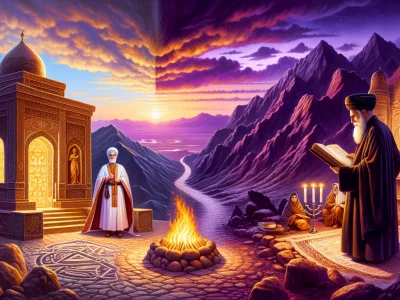
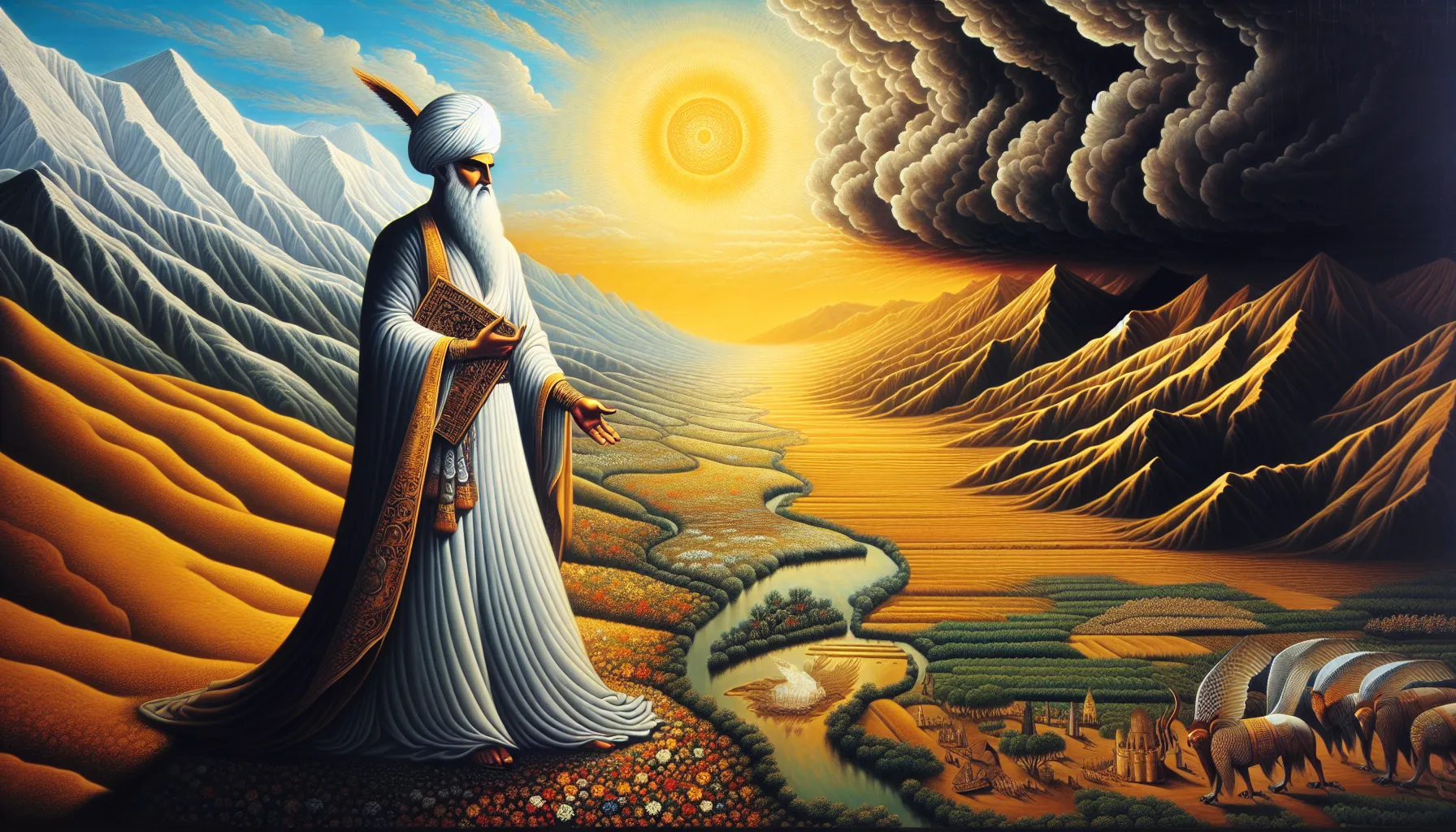
Picture walking into a room where ancient melodies echo off the walls and the air hums with stories passed down for centuries. You catch the scent of candle wax and old parchment and sense the weight of tradition in every corner. What connects the people here and what sets them apart? Christianity and Judaism both trace their roots to the same rugged landscapes yet their paths diverge in ways that might surprise you.
You might think these faiths are simply two branches from a common tree but the differences ripple through beliefs rituals and even daily life. Unraveling these contrasts doesn’t just satisfy curiosity—it opens doors to understanding history culture and even your own worldview. Jump into the nuances and you’ll find unexpected insights that can shift how you see the world and those who share it with you.
Historical Background of Christianity and Judaism
Explore the tangled roots of Christianity and Judaism, and you’ll find a story written in exile, empire, and debate. Judaism traces your spiritual ancestors back to the stories woven through the Torah—the Exodus, the kings of Israel, and the Babylonian exile. Concrete evidence, like the Dead Sea Scrolls and ancient synagogue ruins, shows Judaism’s presence shaping societies from Jerusalem to Alexandria by the first century BCE. You might ask, why did this community persist even as foreign rulers tried stamping out its rituals? The answer sits in the enduring covenant described in Genesis and carried on by prophets like Isaiah.
Christianity emerges within this Jewish context. Picture first-century Judea, buzzing with messianic expectations under Roman rule. In this setting, Jesus of Nazareth preached about the “Kingdom of God,” gathering followers, many from Jewish backgrounds. After his crucifixion, the movement didn’t vanish but instead crystallized around the belief in his resurrection. Early Christians debated among themselves and the wider Jewish community, as seen in letters from Paul the Apostle around 50 CE, over what belonging meant. Did you need to follow Mosaic Law, like circumcision? Paul’s epistles, documented in the New Testament, reveal these fierce arguments.
Rome’s might shaped both faiths. When Jerusalem’s Second Temple fell in 70 CE, Jewish religious life pivoted toward synagogue and rabbinic tradition—you see this shift in texts like the Mishnah. Christianity, meanwhile, spread along Roman roads, assimilating Greek philosophical terms (for example, “logos” in John’s Gospel) and drawing in non-Jews. Constantine’s conversion in the 4th century redefined the religion’s status, creating new institutions and cementing rifts with Judaism.
How would your worldview shift if you lived in medieval Europe, where church bells marked time and laws often reflected biblical codes? Or, picture a marketplace in ancient Babylon, where rabbis debated the finer points of dietary law while Roman soldiers patrolled the streets. These stories of adaptation and survival aren’t just relics; they echo in holidays, legal codes, and social norms today.
Consider: Do you see Christianity as a dramatic new chapter, or as an unfolding commentary on Judaism’s ancient questions? Source materials like the Hebrew Bible, New Testament, Mishnah, and Roman records offer proof and provoke more questions, encouraging you to look deeper.
Historical Period
Key Events/Entities
Christianity Context
Judaism Context
2nd millennium BCE
Patriarchs (Abraham, Isaac, Jacob)
Not yet distinct
Covenant origins
~6th century BCE
Babylonian exile
No Christian presence
Temple destroyed, exile
1st century CE
Roman occupation, Jesus of Nazareth
Jesus’s ministry, Paul’s missions
Second Temple period
70 CE
Destruction of Second Temple
Early church formation emerges
Shift to rabbinic Judaism
4th century CE
Constantine’s conversion
Christianity legalized, expands
Diaspora, continued tradition
Core Beliefs and Doctrines
Christianity and Judaism share origins but distinct beliefs and doctrines mark each tradition. Grasping their core concepts helps you see how faith shapes culture, values, and identities across time.
Understanding God and the Trinity
Christianity affirms monotheism yet describes God as a Trinity—Father, Son, and Holy Spirit. This doctrine means Christians see Jesus as divine, not just a prophet or teacher. Judaic tradition maintains absolute monotheism: God (YHWH) is a singular, indivisible being. Jews pray the Shema—“Hear O Israel, the Lord our God, the Lord is One”—every day (Deuteronomy 6:4). In contrast, you might hear Christians reciting creeds that detail three persons in one essence (cf. Nicene Creed). For example, in a Catholic mass, worshippers invoke all members of the Trinity together, but a synagogue yahrzeit prayer addresses only God as One.
Salvation and the Afterlife
Christian doctrines emphasize faith in Jesus as the path to salvation and eternal life (John 3:16). Paul of Tarsus articulates that salvation comes by grace through faith, not by strict law adherence (Ephesians 2:8–9). In contrast, Jews focus on righteous actions, repentance, and adherence to Torah. Concepts of the afterlife vary: many Jews concentrate on this-worldly deeds, with beliefs in Olam Ha-Ba (“the World to Come”) and bodily resurrection debated among denominations. The Christian vision typically centers on heaven and hell, with judgment linked to acceptance of Jesus as Messiah. These different paths make you wonder—how do definitions of justice and mercy shift when law or faith takes center stage?
Scriptures and Sacred Texts
Judaism reveres the Tanakh—the Hebrew Bible—and the Talmud, which guides daily life and law. Christians base teachings on the Bible, consisting of the Old Testament (largely the same books as the Tanakh, though ordered differently) and the New Testament (writings about Jesus and early Christian communities). Jewish tradition relies on centuries of rabbinic commentary, such as the Mishnah and Gemara; Christian worship often focuses on the Gospels, Pauline Epistles, and revelation literature. If you flip through a Jewish siddur and a Christian prayer-book, you’ll notice distinct liturgies and readings. Texts help both communities remember their past and navigate the present, yet the boundaries and vocabulary of “scripture” differ sharply.
Religious Practices and Rituals
Religious practices and rituals in Christianity and Judaism shape your daily life and connect you to centuries-old traditions. By observing sacred times and spaces, you join communities who carry forward stories, melodies, and a sense of belonging.
Worship Services and Observances
Christian worship services tend to center on the church, with Sunday chosen because, it’s said, Jesus rose from the dead on this day. Think about stained-glass windows, choir music echoing in vaulted halls, and the ceremony of taking communion—bread and wine symbolizing Christ’s sacrifice. Each service blends readings from the Bible, hymns sung in unison, and often, a sermon unpacking spiritual or ethical lessons. Catholic, Protestant, and Orthodox churches vary in structure—Orthodox chants sometimes fill the air for hours, while Evangelical gatherings might resemble concerts more than rituals.
Jewish worship, bound by halacha—Jewish law—features synagogue prayers that follow a set liturgy found in the siddur (prayer book). Most Jews gather on Shabbat (Friday sunset to Saturday sunset) for services, reciting prayers like the Shema and the Amidah. Picture the cantor chanting Hebrew verses, the Torah scrolls being paraded, and the communal responses echoing through the sanctuary. In Orthodox settings, men and women often sit separately, while Reform synagogues allow for more egalitarian practices. Attendance isn’t only about obligation; it weaves you into the ongoing tapestry of the Jewish people, echoing the rhythms of diaspora and homeland alike.
Holidays and Festivals
Christian and Jewish calendars both burst with festivals, yet the meaning and practice of these take you in different directions. Christmas and Easter stand out for Christians, marking the birth and resurrection of Jesus. Midnight mass, nativity plays, Easter egg hunts, and sunrise services give these seasons a communal and symbolic flavor. According to Pew Research Center, 90% of Americans celebrate Christmas in some form—a testament to its broad cultural reach.
Judaism’s festival cycle follows the lunar calendar, anchoring moments like Passover—when families retell the story of liberation from Egypt at the Seder table, taste bitter herbs, and hide Afikoman for the children. Yom Kippur, the Day of Atonement, invites deep personal reflection, fasting, and ancient melodies chanted from leather-bound prayerbooks. Hanukkah, less religious but culturally vibrant, shines with menorah lights and the crackle of fried latkes. Sociologists have observed a growing trend of interfaith families blending these traditions, sometimes creating new rituals altogether (Fishman, 2004).
Have you ever noticed, how the sounds and scents of a ritual linger long after the moment ends? What stories do your own celebrations echo, and whose memories do they keep alive? Your presence in these rituals—whether lighting candles or singing carols—connects you to generations past and future, shaping personal and collective identity.
Key Figures and Prophets
You see Moses standing atop Mount Sinai, wind ripping through his beard as he holds the tablets. Moses embodies the prophet archetype in Judaism, leading the Israelites from Egypt and receiving the Torah according Exodus 20. On your journey through Christian narratives, you encounter figures such as Paul, Peter, and the Virgin Mary, each one weaving your understanding of faith and sacrifice.
You might asked—Who connects both traditions most deeply? Abraham. Both Jews and Christians cite Abraham as a patriarch, as shown in Genesis 12:1-3 and Romans 4:1-3, symbolizing unwavering faith. Yet for Jews, Abraham underscores lineage and covenant; for Christians, he prefigures living by faith, paving a theological bridge to the New Testament.
Judaism features prophets like Isaiah, Jeremiah, and Ezekiel. Isaiah’s visions of peace illuminate hope during crisis; Jeremiah warns Jerusalem before exile, personal responsibility (Jeremiah 7:1-15); Ezekiel envisions restoration in Babylonian captivity, highlighting resilience and community (Ezekiel 37:1-14). You might recall the stories, these voices called their contemporaries to repentance and justice, still echoing in daily synagogue readings.
Christianity centers on Jesus of Nazareth. Christians see Jesus not just as a prophet, but as divine Savior—Messiah prophesied in Isaiah and Psalms (Luke 24:44)—whose life, death, and resurrection reframe the meaning of prophecy.* Early Christians like Paul reinterpret Hebrew scripture, seeing fulfillment in Christ; for example, Paul connects Isaiah’s suffering servant to Jesus in Romans 10:16-21, shifting the trajectory of sacred text.
Contrast emerges here: mainstream Judaism doesn’t recognize Jesus as a prophet or messiah, instead awaiting an anointed leader who’ll fulfill prophecies of peace on earth. This divergence shapes the languages, rituals, and holidays you experience in each faith community. Many Christian art and literature, from Michelangelo to Pascal, dramatize scenes of annunciation, crucifixion, and resurrection, fueling centuries of cultural dialogue.
Questions spark reflection—What is it about these figures that give meaning millions of lives? Could a voice from antiquity, wrapped in mystery, still shape the rituals you observe, the justice you pursue?
Key Figure
Judaism Status
Christianity Status
Example Text
Abraham
Patriarch, covenanted
Patriarch, model of faith
Genesis 17, Romans 4
Moses
Greatest Prophet, Lawgiver
Foreshadow Christ, Lawgiver
Exodus 20, Matthew 5:17
Isaiah
Prophet, social critic
Prophet, prefigured Jesus
Isaiah 53, Luke 4:17-21
Jesus of Nazareth
Not a prophet, not messiah
Messiah, Son of God, Prophet
Gospel of Matthew, John 3:16
Mary (Mother of Jesus)
Not recognized
Revered as Mother of Jesus
Luke 1:26-38
Paul the Apostle
Not recognized
Founder of early churches, theologian
Acts 9, Romans
As you navigate these traditions, you encounter stories crossing deserts, bridging centuries, and inspiring fresh questions. Who, beyond these famous names, might be considered a pivotal figure in emerging interfaith conversations? Voices from antiquity—Miriam, Deborah, Elizabeth—all contribute to an ever-growing narrative linking your past and present.
Major Denominations and Movements
Christianity splits into hundreds of denominations, each chapter unfolding like a different verse in a global hymn. Protestant congregations—Baptist, Lutheran, Methodist, Pentecostal, and United Church of Christ—thrive across North America and Africa, each echoing with different interpretations of scripture (Pew Research Center, 2015). Catholicism traces its roots directly to the Apostle Peter, reigning from the Vatican since the fourth century and remains the largest Christian tradition worldwide. Orthodox branches, like Greek Orthodox and Russian Orthodox, preserve ancient rituals and speak to the mystical heart of Eastern Europe. Sometimes, a single city block hosts all three, their bells and liturgies weaving together like musical counterpoint.
Judaism, unlike Christianity, sketches its diversity in finer lines. Orthodox synagogues—think Chabad or Young Israel—follow halacha (Jewish law) strictly, wearing prayer shawls and tefillin during daily prayers. Conservative congregations, especially prominent in North America, gently adapt rituals while honoring tradition and debate topics from gender roles to dietary rules. Reform Judaism, which started in 19th-century Germany, meets in modern sanctuaries where Hebrew melodies mix with progressive stances on social justice. In Israel, Sephardic and Mizrahi Jews blend centuries-old customs from Spain, North Africa, and the Middle East, serving challah flavored with za’atar and memories. These diverse streams demonstrate that even within a single house of worship, you might hear prayer in five languages and see Torah scrolls wrapped in fabric from two continents.
Which movement speaks most to you: the ancient order of a Catholic mass, the vibrant melodies of Reform services, or the mystical Friday evening of Hasidic tradition? Sometimes, denominations split over seemingly small matters—like the Anglican dispute on female clergy, or the Conservative debate over driving on Shabbat. Spirit and letter, culture and scripture, history and reinvention—these struggles binds communities, challenge faith, and spark change.
Curious how these differences affect daily life? Just ask mixed-faith families navigating Christmas trees and Hanukkah candles. Wonder what makes a tradition last? Watch a bar mitzvah in a Conservative synagogue or a baptism in a small-town Methodist church. Next time you pass an unfamiliar house of worship, what questions flicker: How are their prayers different from your own, and what do their stories reveal about the beliefs you’ve inherited?
Conclusion
When you explore the differences between Christianity and Judaism you gain a deeper appreciation for the traditions that shape so many lives around the world. These faiths offer unique insights into history belief and community—reminding you that every ritual and story carries meaning beyond its origins.
By learning about both religions you open yourself to greater understanding and empathy. Whether you’re curious about your own roots or interested in the broader human experience this knowledge enriches your perspective and encourages thoughtful dialogue in a diverse world.
To provide the best experiences, we use technologies like cookies to store and/or access device information. Consenting to these technologies will allow us to process data such as browsing behaviour or unique IDs on this site. Not consenting or withdrawing consent, may adversely affect certain features and functions.
Functional
Always active
The technical storage or access is strictly necessary for the legitimate purpose of enabling the use of a specific service explicitly requested by the subscriber or user, or for the sole purpose of carrying out the transmission of a communication over an electronic communications network.
Preferences
The technical storage or access is necessary for the legitimate purpose of storing preferences that are not requested by the subscriber or user.
Statistics
The technical storage or access that is used exclusively for statistical purposes.The technical storage or access that is used exclusively for anonymous statistical purposes. Without a subpoena, voluntary compliance on the part of your Internet Service Provider, or additional records from a third party, information stored or retrieved for this purpose alone cannot usually be used to identify you.
Marketing
The technical storage or access is required to create user profiles to send advertising, or to track the user on a website or across several websites for similar marketing purposes.