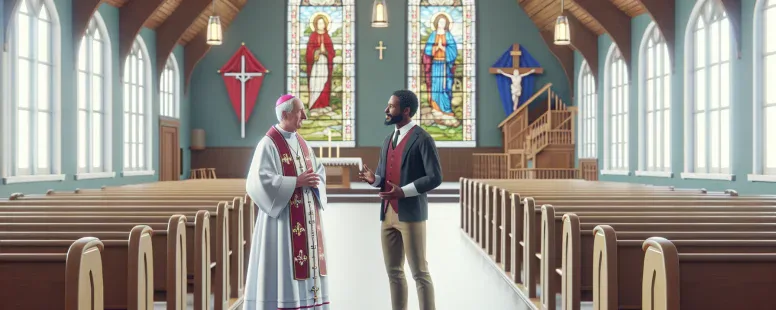
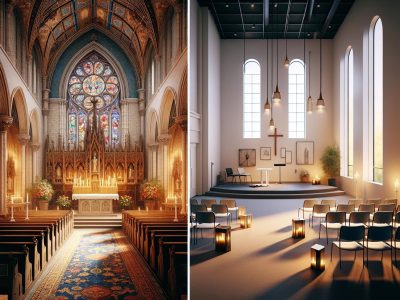
Picture stepping into two churches on a Sunday morning. One is filled with the scent of incense and the echo of ancient chants, while the other pulses with lively hymns and heartfelt prayers. Both spaces invite you in, yet each tells a different story—one shaped by centuries-old tradition, the other by a spirit of renewal.
You might think all Christian churches are more alike than different, but the contrasts between Catholic and Methodist beliefs can surprise you. From the way each celebrates communion to how they view authority and grace, these differences offer fresh perspectives that can deepen your own spiritual journey. Discovering what sets them apart isn’t just about theology—it’s about understanding the rich tapestry of faith that weaves through communities and lives.
Historical Background of Catholicism and Methodism
Historical roots shape both Catholicism and Methodism, revealing how each tradition navigates faith and community. Understanding these journeys lets you see why their gatherings feel distinct and how tradition guides practice.
Origins of Catholicism
Catholicism traces its lineage directly to Jesus Christ and the twelve apostles, centering the bishop of Rome (the Pope) as spiritual authority. Early Christians, gathering secretly in Roman catacombs, shared stories while risking their lives. Emperor Constantine’s Edict of Milan in 313 CE, established Christianity as a legal faith, rewriting Rome’s spiritual landscape (Britannica). Gothic cathedrals, medieval councils, and ornate rituals symbolize this long development. Have you ever noticed how Catholic Masses echo ancient prayers, or wondered why incense floats through the nave? Each moment links to millennia-old events—Constantine’s baptism, the Council of Nicaea, Charlemagne kneeling in St. Peter’s. This institutional memory permeates everything from liturgy to iconography.
Emergence of Methodism
Methodism emerged later, sparked by John and Charles Wesley at Oxford University in the 18th century. These brothers, dissatisfied with spiritual apathy, formed “Holy Clubs” for disciplined worship (BBC Religions). The name “Methodist” began as an insult—critics mocked their methodical faith practices—but the Wesleys transformed it into a badge of identity. Revival meetings lit up fields across England, gathering miners and merchants alike beneath stormy skies. Picture a circuit preacher, riding horseback from village to village, Bible in hand, singing hymns like “Love Divine, All Loves Excelling.” Methodism spread to America, fueling camp meetings and abolitionist movements. The drive for social reform, group singing, and open-air services runs deep in today’s Methodist churches. Ever asked what draws crowds to a Methodist potluck or why their hymns echo down the street? That’s the legacy of a movement born in search of both heart-felt faith and social justice.
Core Beliefs and Doctrines
Catholic and Methodist traditions anchor you in different spiritual frameworks, so each belief system shapes the lives and values of its followers in unique ways. Doctrines inform how you interpret scripture, approach salvation, and connect with church authority.
Authority of Scripture and Tradition
The authority for what you believe comes from distinct sources in each tradition. Catholics recognize both the Bible and Sacred Tradition as sources of faith, with the Magisterium—meaning the teaching office of bishops and the Pope—serving as the final interpreter (Catechism of the Catholic Church, nos. 80-82). Every Catholic Mass echoes this balance, as prayers and readings flow from both scripture and centuries-old traditions.
Methodists prioritize the primacy of Scripture, shaping doctrine through the “Wesleyan Quadrilateral”: Scripture, tradition, reason, and experience. Picture a Wesleyan preacher pacing a wooden floor, Bible in hand, weaving together passages with personal stories—emphasizing how faith must resonate with both ancient teachings and modern understanding. You might ask, where do you find ultimate religious truth: in a lineage of church authority, or through experiences and study of the Bible?
Aspect
Catholic Church
Methodist Church
Source of Authority
Scripture, Tradition, Magisterium
Scripture with tradition, reason, experience
Final Interpreter
Pope and Bishops
Community and individual interpretation
Example
Catechism, Papal Encyclicals
Sermons, Bible study, Charles Wesley hymns
View of Salvation and Grace
Beliefs about salvation shape how you view transformation and your place in the world. Catholics understand salvation as a process involving faith, good works, and the sacraments. Picture a teenager learning catechism, preparing for Confirmation, each sacrament forming a path to grace, guided by parish life and confession (Council of Trent, Session VI). Catholics hold to the doctrine of original sin, echoing Augustine, and teach that grace flows through the sacraments—from baptism to the Eucharist.
Methodists, inspired by John Wesley, believe salvation’s gift comes through God’s prevenient grace that calls you first, justified by faith alone, and then sustained by sanctifying grace that urges you toward ongoing spiritual growth. Methodists often describe being “born again,” sharing testimonies at revivals about transformation through a personal relationship with Christ. Grace isn’t a one-time event, it’s a lifelong journey—picture a congregation singing “Amazing Grace,” celebrating each member’s unique path.
Topic
Catholic Church
Methodist Church
Salvation
Faith plus works, sacraments, ongoing process
Faith alone, assured by grace, personal response
Grace
Received in sacraments and good works
Prevenient, justifying, and sanctifying grace
Example
Confession, Eucharist, Confirmation
Testimony, altar calls, hymn singing
Do these divergent paths alter your view on faith’s role in everyday life or change how you engage with your church community? Both frameworks challenge you to reflect on the sources of spiritual authority and the meaning of grace—questions as pressing now as in centuries past.
Worship Practices and Sacraments
Worship shapes your experience in both Catholic and Methodist churches, coloring your senses with traditions that echo centuries of faith. Every moment, from familiar hymns to solemn rituals, becomes a point where theology breathes through acts of devotion.
Structure of Worship Services
Catholic worship, centered around the Mass, immerses you in a tapestry of ritual and symbolism. Incense drifts through the nave, Latin phrases or English prayers echo, and priests in vestments reenact the Last Supper—this choreography, unchanged for centuries, ties you to a global community. You might genuflect, cross yourself, or kneel during prayer, each movement meaning a chapter in a story that’s unfolding. The order—Liturgy of the Word and Liturgy of the Eucharist—dictates the flow, and even the slightest deviation can feel dissonant.
Methodist worship, in contrast, pulses with rhythmic hymns, spontaneous prayers, and a strong scriptural focus. You probably hear Wesleyan hymns like “O For a Thousand Tongues to Sing” ring out, the congregation’s voice rising up together in unity. The service flows from singing to scripture reading to the sermon, which often anchors the experience and challenges you to apply faith practically. Flexibility marks Methodism: you may encounter sermons woven with personal stories or congregational readings that invite dialogue. Communion, while sacred, does not always occupy the center but appears regularly—sometimes monthly, sometimes weekly, depending on local custom.
Ask yourself—where do you sense belonging: in the constancy of ritual patterns or the embrace of a living, adaptive faith?
Number and Nature of Sacraments
The Catholic Church recognizes seven sacraments—Baptism, Eucharist, Confirmation, Reconciliation, Anointing of the Sick, Matrimony, and Holy Orders—as tangible signs of invisible grace (Catechism of the Catholic Church, 1131). Each, with distinct ceremonies and sacred objects, yokes community and divinity. For example, you watch an infant baptized with holy water in a font, or see a couple kneel as rings become symbols of lifelong covenant. The Eucharist, believed to literally transform bread and wine into Christ’s body and blood, forms the heartbeat of Catholic spirituality.
Methodists usually embrace two sacraments—Baptism and Communion—affirmed by John Wesley’s principles and the Articles of Religion (Book of Discipline, United Methodist Church). Baptism, practiced by sprinkling, pouring, or immersion, admits all ages; it marks your entry into Christian fellowship. Communion, open to all baptized believers, invites everyone to share in Christ’s presence as spiritual nourishment, without requiring the doctrine of transubstantiation. For Methodists, sacraments are “means of grace”—beloved rituals, but symbols rather than absolute necessities for salvation.
Consider: If ritual actions anchor your sense of the sacred, Catholicism’s sacramental universe might beckon. If, but, you find mystery in simplicity, the Methodist table—open wide, with bread and grape juice passed from hand to hand—can feel like a celebration that welcome everyone in.
Does these differences transform your view of sacred practice, or does the search for grace unite you, regardless of tradition?
Church Leadership and Organization
Church leadership, both in Catholic and Methodist traditions, shape your experience of community and spiritual guidance in deeply different ways. These structures reflect centuries of evolution, power dynamics, and community needs—sometimes they feel rigid, sometimes flexible, often surprising.
Role of Clergy in Catholicism
In Catholic churches, you’d notice the clergy form a hierarchical lattice: popes lead globally, bishops steward regions, priests nurture parishes, and deacons serve at local levels. This pyramid, dating from apostolic succession, isn’t just organization—it’s spiritual authority. Picture stepping into a cathedral where stained glass bathes ancient ritual, and every word channels two millennia of tradition.
For instance, a parish priest in Manila receives guidance from the local bishop, who themselves abide by Vatican decisions. The Pope, as bishop of Rome, wields papal infallibility in certain teachings, echoing across continents from Notre Dame to São Paulo. This global chain of command means your priest’s sermons and sacraments connect to beliefs shaped in councils like Trent or Vatican II (National Conference of Catholic Bishops, 1979).
Mechanisms of power and service intertwine—have you wondered how confession’s privacy feels sacred when the confessor answers both to God and Rome? Every clerical action gets detailed in Canon Law, which acts as the Church’s constitution.
Role of Clergy in Methodism
Methodist leadership, on the other hand, emerges from a connectional system rather than a strict hierarchy. Pastors shepherd congregations but they’re appointed by bishops during annual conferences, allowing one voice to lead for a time before another brings new ideas. You might attend a rural Methodist church in Georgia today, only to see your pastor reassigned to an urban church in Detroit next year. Such transitions can felt both abrupt and revitalizing.
Lay participation runs deep—a Methodist might teach Sunday school or serve communion, unlike their Catholic counterpart constrained by ordination rules. The General Conference (highest legislative body) sets doctrine through debates open to Methodists globally, so your voice could echo in decisions shaping the entire denomination (United Methodist Church Book of Discipline, 2016).
Take, for example, the lively questions during ‘Charge Conferences’ where members openly challenge leadership on budgets or mission. These moments, more town hall than throne room, create a dynamic, adaptive community that sometimes makes unity difficult, especially on hot topics.
, what would faith look like if you shaped its direction, not just received it? In Methodism, such agency isn’t hypothetical—it’s expected.
Leadership Aspect
Catholicism Example
Methodism Example
Top Authority
Pope (Rome)
General Conference
Local Leadership
Priest (parish)
Pastor (appointed annually)
Decision-Making
Hierarchical, centralized
Democratic, connectional
Lay Involvement
Limited to certain roles
Extensive, teaching, leading
Foundational Law
Canon Law
Book of Discipline
Clergy roles shape not just worship but the way power, tradition, and your own faith identity find expression. These contrasting patterns invite you to ask: where do you find meaning, in ancient stability or living conversation?
Social and Ethical Teachings
You notice that Catholic and Methodist churches—two big branches of Christianity—bring unique values to the table social and ethical teachings.
Catholic social teaching pivots around seven core principles. These pillars, like the dignity of the human person and the option for the poor, shape policies on topics from poverty to the sanctity of life. why Catholic hospitals or schools exist in so many cities globally? They spring from the Church’s commitment to serve the vulnerable (USCCB, 2023). When you hear Catholics protest for worker rights or against abortion, it’s not just activism—it’s doctrine in action.
Methodist social principles, rooted in John Wesley’s legacy, take a slightly different road. Every four years, delegates from all over the world revise the United Methodist Church’s Social Principles to respond to current challenges. Methodists emphasize “personal holiness linked with social holiness,” a phrase echoed in urban soup kitchens and environmental rallies (UMC Discipline, 2016). They’ll often ask, “How does faith change my neighborhood?” This question leads to advocacy on climate change, gender equality, and fair wages.
Let’s paint a picture. Picture two neighbors: one Catholic, one Methodist. The Catholic wakes early for Mass, prays for the unborn, then volunteers at a food pantry. The Methodist joins a prayer breakfast, petitions for clean energy, then teaches English in immigrant communities. Both are motivated by faith, but their focus on issues like birth control or same-sex marriage reflect divergent tradition-based positions: Catholics strictly oppose artificial contraception (Humanae Vitae, 1968) and same-sex marriage, while many Methodist communities have open debates and even affirm LGBTQ+ inclusion, as seen at recent General Conference votes.
You sit in either pew, and you’ll hear stories that challenge and comfort at the same time. “How do I love my neighbor?” is answered differently, depending on scripture, tradition, and those around you. Why does a church speak up about fairness or family? The answers are woven into the tapestry of each denomination’s priorities.
Yet, common ground exists. Both traditions engage in disaster relief and global missions, raising millions for hunger and development projects. Both encourage ethical living, honest work, and peacemaking. But if you dig deeper and you’ll find the flavors are as distinct as coffee and tea—related, but never the same.
The next time your friend from another tradition disagrees about a hot-button topic, ask, “What story or teaching shaped your view?” Maybe that’s where understanding—and genuine dialogue—begins.
Key Differences Between Catholic and Methodist
Authority takes center stage in the Catholic tradition, with the Pope standing like a lighthouse guiding worldwide beliefs. what it’d feel like to join hands spiritually with a billion others, all looking to Vatican City for direction? In contrast, Methodist authority looks more like a vast network, with leadership spread horizontally among annual conferences, laity, and appointed clergy, almost resembling a patchwork quilt stitched from thousands of unique church communities. Academic studies (e.g., Pew Research Center, 2023) highlight this structural difference, showing that Catholics experience top-down governance while Methodists often vote on church matters.
Sacraments anchor Catholic life—seven, rich with symbolism and mystery, from Baptism and Confession to Holy Orders and Matrimony. Think of them as keys to spiritual doors: opening grace’s flow at life’s pivotal moments. Methodists cherish just two sacraments—Baptism and Holy Communion—viewed as signs pointing toward God’s grace rather than infallible channels. Can you picture a dusty village chapel where a single cup of grape juice binds a congregation in hope, while across the globe, Catholic parishioners kneel before gilded altars to receive what they believe to be the very Body and Blood of Christ?
Scripture rings out in both churches, but Catholics weave together Bible, Sacred Tradition, and doctrines issued by the Magisterium, forming a tapestry centuries in the making. Methodists turn first to the Bible, then listen for echoes from tradition, reason, and experience, almost like tuning a radio to catch the clearest signal—sometimes static, sometimes symphonic. Would you trust an ancient map alone or mix its wisdom with your own lived stories on the road?
Salvation stories unfold differently, too. In Catholic life, faith and works are entwined like threads in a rope, with sacraments marking progress. A Methodist might answer, echoing John Wesley, that grace flows freely; people leap bravely toward faith knowing God’s embrace catches them, not because they climbed a sacramental ladder. Both pursue holiness, but the routes reveal much about the landscapes of their hearts.
Ethical engagement reveals another vivid contrast. Picture a Catholic parish organizing a pro-life vigil, its stance rooted in centuries-old guidance from Rome, while a Methodist church plants a community garden, carrying forward John Wesley’s charge to serve and reform. You’ll find both feeding the hungry after a tornado, yet their manifestos and mission statements draw from different wells—one canonical, one connectional.
As you reflect, ask yourself: what kind of spiritual authority resonates with you—ancient and hierarchical, or flexible and discussion-based? Do rituals as solid as cathedrals inspire awe, or do songs sung in sunlit chapels call you home? Stepping into both worlds, let these differences spark curiosity rather than division, and seek the wisdom each path’s journey has unfolded through centuries of living tradition.
Conclusion
Exploring the differences between Catholic and Methodist traditions gives you a deeper appreciation for the diverse ways Christians seek connection with God. By understanding what sets these communities apart, you gain insight into your own spiritual preferences and values.
Let this knowledge inspire you to engage more thoughtfully with others on their faith journeys. Whether you’re drawn to ancient rituals or vibrant community action, there’s always room to grow and learn from each tradition’s unique strengths.
To provide the best experiences, we use technologies like cookies to store and/or access device information. Consenting to these technologies will allow us to process data such as browsing behaviour or unique IDs on this site. Not consenting or withdrawing consent, may adversely affect certain features and functions.
Functional
Always active
The technical storage or access is strictly necessary for the legitimate purpose of enabling the use of a specific service explicitly requested by the subscriber or user, or for the sole purpose of carrying out the transmission of a communication over an electronic communications network.
Preferences
The technical storage or access is necessary for the legitimate purpose of storing preferences that are not requested by the subscriber or user.
Statistics
The technical storage or access that is used exclusively for statistical purposes.The technical storage or access that is used exclusively for anonymous statistical purposes. Without a subpoena, voluntary compliance on the part of your Internet Service Provider, or additional records from a third party, information stored or retrieved for this purpose alone cannot usually be used to identify you.
Marketing
The technical storage or access is required to create user profiles to send advertising, or to track the user on a website or across several websites for similar marketing purposes.