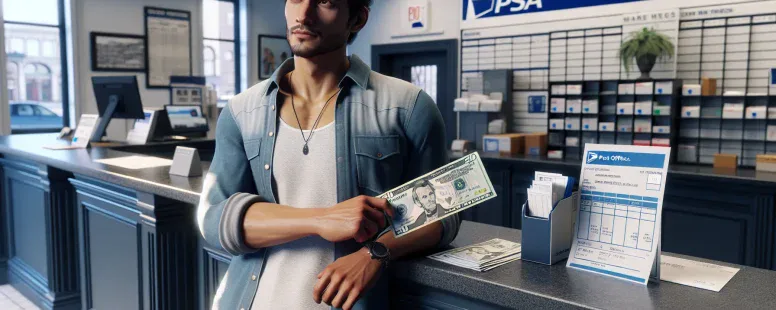
Picture this: you’re standing in line at a bustling post office, the scent of fresh paper and ink swirling through the air, clutching a payment you need to send safely across town. The clerk asks if you’d like a bank check or a money order. Suddenly, the choice isn’t so simple—each option carries its own weight, like two sides of the same coin.
You might think a check and a money order work the same magic, but their differences can shape your financial journey in unexpected ways. One offers a sense of tradition and trust, while the other promises security and accessibility, even if you don’t have a bank account. Curious which fits your needs best? Understanding these subtle distinctions could save you time, money, and headaches down the road.
Overview of Payment Instruments
Payment instruments, including bank checks and money orders, shape how you transfer funds securely, especially in situations where cash doesn’t offer enough proof or guarantees. Each option act as a tool with distinct roles—picture them as passports that let your money travel safely from your hands to another’s, but with different stamps and screening processes.
Bank checks represent personalized authorizations. Your name sits right on that paper, linking you—and, by extension, your entire financial credibility—to the transaction. For example, if you write a check to your landlord, the landlord deposits it and their bank verifies your account’s balance before transferring any money. Any insufficient funds noticed by the bank, results in a bounced check, possibly subjecting you to fees (FDIC resource). This chain of dependency means the bank check process involves the payer’s direct authorization and the banking institution’s participation at every step.
Money orders resemble prepaid tickets you purchase for someone else’s benefit. You pay up front—think of it as buying a concert ticket and handing it to a friend. That ticket is cashed by your recipient, who need not wonder whether your account holds enough funds. For instance, if you buy a money order at the post office, gas station, or Western Union, you hand over cash or card, get the instrument, and the recipient redeems its value, usually without delay or rejection. Unlike checks, money orders guarantee the amount because the issuer already has your money.
Maybe you’ve faced this: A landlord says, “Don’t bring checks, bring a money order,” certain they’ll get paid. Or perhaps you noticed businesses refusing checks after too many bounced payments. Both scenarios reflect trust—rooted in how each instrument is secured.
Why do some people hesitate before accepting one instrument or the other? Maybe, it’s traceability—bank checks always display your details, while money orders favor privacy. Or, perhaps, it’s about size limits—money orders often cap amounts around $1,000, limiting them for larger purchases. A single question—how much risk tolerance do you and your payee accept—guides your best choice.
Real-world usage tracks closely with dependency: businesses often require checks for purchase records, while individuals prefer money orders when privacy or upfront assurance matters. According to the Federal Reserve’s 2022 Payments Study, paper check use fell 7% per year from 2015-2021, as money orders and electronic payments rise (Federal Reserve).
Have you ever weighed the satisfaction of handing over a check with your signature—your financial handshake—against the relief of knowing a money order can’t bounce? These everyday decisions reflect more than routine—they reveal your attitude to risk, privacy, and trust in financial relationships.
What Is a Bank Check?
A bank check feels almost like a handshake with your bank, linking your account directly to a transaction. Your signature travels with it, acting as a quiet promise—backed by your financial institution.
How Bank Checks Work
Banks process checks as payment authorizations. When you write a check, you instruct your bank to transfer a specific amount of money from your account to the payee’s once it is presented. You’ll see the transaction recorded on your bank statement, timestamped and unique to each recipient. Many people use checks to pay rent, make charitable donations, or cover bills—think about that moment when you handed a crisp check at a closing table, knowing paper would soon become property. Some banks may offer digital check imaging, letting you see a scanned copy online, which can be useful during disputes.
Key Features of Bank Checks
Bank checks connect multiple features through banking institutions.
Personalization: Each check draws funds from your own account, showing your name, address, and account numbers—try noticing how often recipients glance at this info for reassurance.
Traceability: Every check carries a transaction trail. Banks keep digital records, which help settle disputes or clarify payment dates, especially for landlords or small business owners.
Security: Checks require physical signatures and can include security features like watermarks or microprinted text. These can block many types of check fraud, though crooks sometimes still try their luck, according to the FTC.
Processing Speed: Banks process checks in 1–3 business days, but, delayed deposits occur if the payer’s balance is low or the check triggers holds above $5,525 (see Reg CC guidelines).
Acceptance: Some businesses or government agencies prefer checks for large payments because they associate them with higher security and reliable records, while others say checks can bounce and are old-fashioned.
Bank checks can leave a strong audit trail and allow personalized notes, but mistakes in writing can bounce the payment—remember that friend who misspelled the numeric amount and called in a panic? If you’re weighing bank checks against other instruments, consider their personalization and trackability.
What Is a Money Order?
You’ve probably seen the words “money order” printed on a sheet behind the counter at your local post office, convenience store, or grocery chain. Curious about what makes this prepaid instrument stand apart from a bank check? If you’ve ever needed to send cash securely but don’t have a checking account—or you simply don’t want your bank details revealed—a money order offers a direct yet discreet solution that’s accepted almost anywhere.
How Money Orders Work
Money orders act as fixed-value payment slips you can buy from authorized issuers like USPS, Western Union, MoneyGram, or local retailers. They require you to pay the full amount upfront, plus a small fee—think $1.25 at the post office in 2024, according to the USPS Money Order Fees. The issuer prints both your name (payer) and the recipient, as well as a unique serial number to track the transaction.
Unlike bank checks, there’s no need to worry about bounced payments; funds have already changed hands before you hand over the instrument. When the recipient deposits or cashes the money order, the process don’t involve any risk of insufficient funds or overdrafts. It’s pretty much like sending pre-packaged cash—guaranteed and untraceable back to your bank.
For example, many tenants pay rent with money orders because some landlords refuse to handle paper checks or they may prefer the upfront certainty. Meanwhile, travelers often rely on international postal money orders to bypass foreign bank fees and currency issues.
Key Features of Money Orders
Prepayment Assurance: Every money order represents funds paid in advance. The issuer holds the money until redemption, eliminating nonsufficient funds risks.
Accessibility: You don’t need a bank account or credit history to purchase a money order. Many unbanked individuals and recent immigrants rely on this flexible payment method.
Fixed Limits: Most money orders cap single transactions at $1,000 (USPS, 2024). Need to pay more? You’d need multiple money orders, which sometimes just looks suspicious in large numbers.
Tracking and Receipts: Every money order includes a receipt and serial number—handy if something goes missing or you need to check cashing status online. But, if you loose your stub, reclaiming funds might be tricky.
Widespread Acceptance: Recipients can usually cash or deposit money orders at banks, credit unions, or retail counters—though policies vary and some places might decline third-party or altered money orders.
Privacy Levels: Money orders don’t require you to print checking account numbers, so your banking information remains private; an advantage when mailing sensitive payments or remittances abroad.
Fraud Protection: Fraudsters occasionally target money orders, but security features like watermarks, multi-part stubs, and anti-alteration designs make counterfeiting difficult (Federal Trade Commission, 2023). why some employers insist on payment by certified money order for high-value purchases? It comes down to instant credibility and payment assurance; the counter-clerk won’t hand you a money order unless they see your payment in full. Questions about where to get one or how to prevent mistakes often arise—especially when mailing rent hundreds of miles away. That’s why comparison with bank checks is so revealing: money orders, those prepaid tickets, give both sender and recipient a sense of closure before the envelope even leaves your hands.
In situations where privacy, speed, or simple access matters, money orders frequently become the tool of choice, filling the gap between cash convenience and the guarantees banks provide.
Main Differences Between Bank Check and Money Order
Key differences between bank checks and money orders shape how you pay, prove identity, and safeguard funds. Recognizing these can steer your choice in volatile, high-stakes, or confidential payments.
Issuing Process
Obtaining a bank check often means walking into your bank, filling a slip, and watching a teller scrutinize your account in real time. The bank authenticates your identity and links the check directly to your checking account—your name’s printed, your balance’s checked, and your financial reputation gets tied to the payment. For example, you might hand a landlord a check bearing your address and account data.
By contrast, grabbing a money order means handing cash, a debit card, or sometimes a credit card to a clerk at the post office, supermarket, or convenience store. Money orders, unlike checks, won’t attach your full financial persona. You give the payee name, but your account’s not revealed. It makes money orders ideal for buying a used bike online or paying rent when privacy matters.
Security and Fraud Risks
Transactions involving checks rely on trust, yet they’re a playground for forgers. According to the Federal Trade Commission (FTC), check fraud schemes cost victims over $90 million in 2022. Checks can get altered, signatures can be faked, and information’s visible to anyone holding the document. If someone swipes your checkbook, they might clean your account out before you spot it.
Money orders, since they require upfront cash, can’t bounce. There’s no risk of insufficient funds, but counterfeit money orders exist too—fraudsters sometimes print fake Western Union slips and try to cash them at banks. Smart money? You’ll keep a receipt and verify authenticity before accepting a money order from strangers, especially for items sold online.
Limits and Fees
You’ll probably notice—banks usually don’t cap the value of checks. Pay $10 or $10,000, so long as your account covers it. But, banks charge modest fees for cashier’s checks, often $8-$15, while personal checks might be free for account holders.
Money orders set strict upper limits, generally $1,000, by issuers like USPS or Western Union. Senders split big payments into multiple money orders, stacking fees from $1.25 up to $10 each. If you’re buying a $2,500 used car, you’d split the amount into three separate instruments.
Instrument
Typical Maximum Value
Typical Fee Range
Bank Check
No standard limit
$0–$15
Money Order
$1,000 per order
$1.25–$10 per order
Acceptance and Use Cases
Landlords, courts, and businesses sometimes only accept payment by check, because it ties directly to your identity and financial trail. Mortgage companies and auto dealers prefer checks for traceability and audit records.
Money orders, meanwhile, cater to unbanked users, gig workers, or anyone seeking anonymity. For instance, a tenant without a checking account might buy a money order at Walmart to pay rent. Many immigration offices or government agencies demand money orders for application fees; they won’t accept personal checks due to bounced payment risks.
Ask yourself: what’s more important—maintaining privacy, moving large sums, or ensuring immediate funds? When you answer, the right payment tool’s suddenly clear.
When to Use a Bank Check vs. a Money Order
Choosing between a bank check and a money order plays out a bit like picking the right gear for a road trip. Sometimes you crave the reliability of a trusted vehicle, other times, you want the nimbleness of something lighter. If you’re buying a used car from a dealership—for example—dealers may only accept a bank check because it’s tied directly to your account and loaded with security features, such as watermarks and signatures. The bank’s stamp acts almost like a passport, reassuring the recipient that you’re good for the money.
But—flip the script—you’re paying a landlord who’s wary of bounced checks. Money order’s prepaid nature means you can hand it over without fearing insufficient funds issues. This is why many property managers, especially in urban areas like New York City, ask new tenants for money orders. It makes them sleep better at night.
Consider this: You need to make a down payment over $5,000 on a real estate purchase. Bank checks, carrying no standard transaction cap, become your go-to tool. In constrast, you want to mail a $400 payment to an out-of-state utility. A money order, available at grocery stores, offers privacy since it don’t broadcast your bank details across the page. This makes it ideal if you’re concerned about identity theft (Federal Trade Commission, 2023).
People sometimes overlook the visibility that comes with a personal check. Every detail, from your name to your account number, lives on the paper. If you value discretion, a money order lets you veil your financial information. This can matter to those sending support payments to family members or paying off small debts discreetly.
Safety’s another player in this game. Bank checks, backed by the full faith of your bank, rarely bounce. Still, they’re not immune to fraud or alteration. It’s a scenario famously exploited in check-kiting schemes that rocked some US banks in the 1990s. Money orders, pre-paid and limited in value, remain less attractive to large-scale fraudsters—but the existence of counterfeits prompted USPS and MoneyGram to step up watermark and serial-tracking protections.
Let’s not ignore the convenience angle. If you don’t have a checking account, or you’ve been turned down by banks—statistics from the FDIC say about 5.9 million US households are “unbanked” (2021)—money orders keep the world spinning for you. They’re simple: cash in, proof out, transaction done.
Ask yourself: “Who am I paying, how much, and what risks am I okay with?” For large, high-trust transactions needing proof and customization, reach for a bank check. For privacy, prepaid security, or if you’re operating outside the world of traditional checking, grab a money order. Context decides the cameo.
Every payment method tells a story. Sometimes, the script is clear. Sometimes, it needs translating with a bit of financial literacy.
Conclusion
Choosing between a bank check and a money order isn’t just about sending money—it’s about matching your payment method to your needs and preferences. When you understand the strengths and limitations of each option you can confidently handle any transaction that comes your way.
Think about what matters most to you—privacy, speed, security, or convenience. By weighing these factors you’ll be able to pick the right tool for the job and avoid unnecessary hassles. Your financial decisions today set the tone for smoother transactions in the future.
To provide the best experiences, we use technologies like cookies to store and/or access device information. Consenting to these technologies will allow us to process data such as browsing behaviour or unique IDs on this site. Not consenting or withdrawing consent, may adversely affect certain features and functions.
Functional
Always active
The technical storage or access is strictly necessary for the legitimate purpose of enabling the use of a specific service explicitly requested by the subscriber or user, or for the sole purpose of carrying out the transmission of a communication over an electronic communications network.
Preferences
The technical storage or access is necessary for the legitimate purpose of storing preferences that are not requested by the subscriber or user.
Statistics
The technical storage or access that is used exclusively for statistical purposes.The technical storage or access that is used exclusively for anonymous statistical purposes. Without a subpoena, voluntary compliance on the part of your Internet Service Provider, or additional records from a third party, information stored or retrieved for this purpose alone cannot usually be used to identify you.
Marketing
The technical storage or access is required to create user profiles to send advertising, or to track the user on a website or across several websites for similar marketing purposes.