Picture yourself peering through a microscope, where an unseen world pulses with life more ancient than dinosaurs and stranger than fiction. You might expect all those tiny cells to be cut from the same cloth, but the truth is far more fascinating. What if the air you breathe and the deepest ocean vents both hide microscopic titans—each thriving in their own secret ways?
You’ll find bacteria and archaea everywhere, from your kitchen counter to boiling geysers, yet they’re as different as night and day. Unlocking their differences isn’t just a science lesson—it reveals hidden superpowers, from cleaning up oil spills to surviving in places nothing else can. Get ready to explore a microscopic rivalry that shapes the planet in ways you’ve never imagined.
Overview Of Bacteria And Archaea
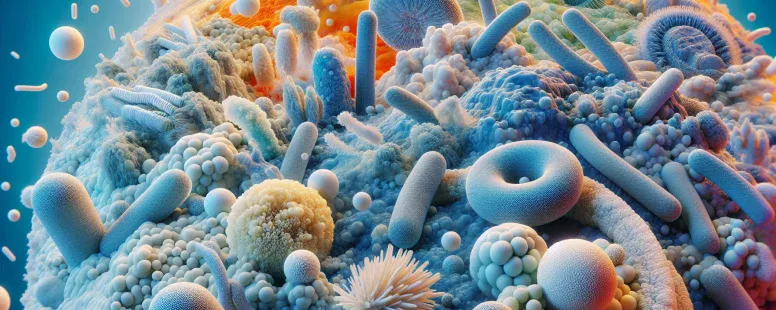
Bacteria and archaea represent two extraordinary domains of prokaryotic life, their structures revealing deep evolutionary secrets once microscopes let humans gaze into hidden worlds. You often find bacteria on your skin, in your yogurt, or swirling through soil and water—ubiquitous, adaptable, and essential. Archaea, by contrast, created headlines after being discovered in boiling hot springs and deep-sea vent chimneys, thriving where you’d think nothing could survive.
Every domain comes with its own molecular toolkit. Bacteria builds peptidoglycan cell walls, which gives shape and shields against outside threats; this feature forms the foundation of Gram staining, used in doctors’ offices and science labs alike. Archaea doesn’t bother with peptidoglycan—instead, they invent cell walls from unique molecules like pseudopeptidoglycan or protein S-layers. Picture them as the expert engineers of the molecular world.
Did you ever asked why antibiotics rarely touch archaea? Your answer lies in the ribosomal RNA sequence—bacteria and archaea have ribosomes that operate differently, making antibiotics that target bacterial ribosomes mostly useless against archaea (Woese et al., 1990). This difference lets scientists quickly distinguish one microbe from another.
Both domains share a lack of nucleus or membrane-bound organelles, but their metabolic flexibility stuns even veteran biologists. Bacteria ferment sugars in your gut while others, like Actinobacteria, decompose dead wood. Archaea, including methanogens, produce methane in cow stomachs and rice paddies—reminding you that hidden microbes help shape global climate.
Think about how bacteria swarm wounds with Staphylococcus aureus, prompting immune battles, or support you by helping digest fiber. Picture archaea in Yellowstone geysers, where Thermoproteus sp. turn boiling, acidic pools into sustainable homes. What possibilities lurk in such diversity?
Researchers, from Carl Woese (1977) to today’s genomics pioneers, debate how these domains first diverged. Are archaea more closely related to eukaryotes—that’s you and all plants and animals—than to bacteria? Ribosomal and genetic studies push this radical notion (Eme et al., 2017).
Reflect next time you drink a glass of milk or stand near a steaming volcanic vent: invisible communities of bacteria and archaea work, unseen, shaping ecosystems and rewriting what you thought possible about life.
Cellular Structure And Composition
Cellular structure and composition separate bacteria and archaea at a fundamental level. Your exploration of their differences uncovers patterns hidden within their cell walls and plasma membranes.
Cell Wall Differences
Cell wall structure dramatically distinguishes bacteria from archaea. You find peptidoglycan as the defining feature in bacterial cell walls, seen in Staphylococcus aureus infections or yogurt cultures like Lactobacillus bulgaricus. This mesh-like molecule lends rigidity, making bacteria vulnerable to antibiotics like penicillin, which attack the peptidoglycan directly (Silhavy et al., 2010).
Archaea completely lack peptidoglycan. Instead, many rely on pseudopeptidoglycan or S-layer proteins. Sulfolobus acidocaldarius, living in acidic hot springs, weaves tough S-layers from glycoproteins, allowing survival in boiling acid. If you sampled mud from a volcanic pool, archaea’s cell wall chemistry would protect them while most bacteria perish.
Why didn’t archaea adopt peptidoglycan like bacteria? Evolution split their molecular toolkit long ago. Your antibiotic routine for bacterial infections, for example, can’t touch an archaean, showing just how deep that chemical rift runs.
Membrane Lipids And Proteins
Membrane lipids tell a story of adaptation. You see bacteria assemble membranes from straight-chain fatty acids linked by ester bonds—a trait seen in bacteria from soil, lakes, or your digestive tract. This makes bacterial membranes more familiar, compositionally, to those of eukaryotes.
Archaea, but, craft their membranes from branched isoprenoid chains attached with ether bonds. This unique lipid signature, seen in thermophiles living in deep-sea vents or halophiles from salt flats, lets archaeal cells resist heat and chemical extremes. If you ever wondered how microbes survive in 113°C hot springs, credit goes to these ether-linked phospholipids for their heat resistance (Koga, 2012).
Bacterial proteins float freely in the membrane like ships in a harbor, performing tasks from nutrient uptake to waste export. Archaeal membrane proteins, on the other hand, interact with ether-lipids to stabilize the cell. Some archaea even form lipid monolayers instead of bilayers—an elegant adaptation for high-pressure and high-temperature habitats.
When you look at how these two groups build their boundaries, you see evolution’s ingenuity at work. Peering through an electron microscope, what else might you discover? Every detail—chemical or structural—expands your understanding of life’s resilience in the microbial world.
Genetic And Metabolic Differences
Genetic and metabolic features distinguish bacteria from archaea in ways that shape their role in earth’s biosphere. Your journey through genetic landscapes and metabolic highways uncovers key adaptations that drive survival in every known environment.
Genomic Organization
Genomic organization differs between bacteria and archaea at several levels. Bacterial chromosomes exist as a single circular DNA molecule, typically with plasmids—tiny rings of DNA that transfer antibiotic resistance between cells, as seen in Escherichia coli in hospitals (Madigan et al., 2022). Archaeal genomes sometimes combine circles and linear elements, with compact intron-free gene structure reminiscent of bacteria but DNA-related proteins—like histones—mirroring those in eukaryotes (Sandman & Reeve, 2006).
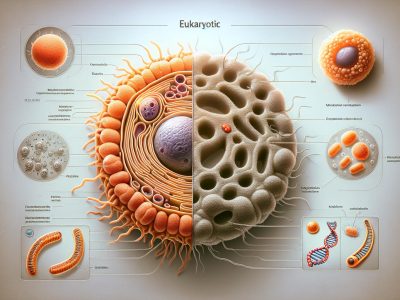
Transcription and translation machinery sets archaea apart from bacteria. You find that archaea transcribe genes with a complex RNA polymerase and eukaryote-like transcription factors, hinting at a shared ancestor with plants and animals. Does this molecular signature suggest you and archaea are kin, even though your distance on the tree of life?
Mobile genetic elements, for example, viruses or transposons, pepper genomes of both domains but show varying integration strategies. If you compare horizontal gene transfer events in bacteria and archaea, high frequency in the former accelerates adaptation, while more controlled integration in archaea maintains genome integrity (Nelson-Sathi et al., 2015).
Metabolic Pathways
Metabolic pathways enable adaptation and environmental mastery, with striking domain-specific innovations. Bacteria perform glycolysis and respiration, with some like Cyanobacteria harvesting sunlight through oxygenic photosynthesis. In contrast, no known archaea carry out true photosynthesis (Bryant & Frigaard, 2006). Instead, archaea thrive using methanogenesis, a metabolic pathway absent from bacteria and crucial for global methane production in wetlands and guts (Thauer et al., 2008).
Carbon and nitrogen cycling depends on bacterial diversity—Rhizobium binds nitrogen in legumes’ roots, while Nitrosomonas drives ammonia oxidation. Archaea called ammonia-oxidizing archaea, dominate nitrification in oceans, successfully outcompeting bacteria at low nutrient levels (Könneke et al., 2005).
Extreme conditions inspire clever solutions. Sulfolobus solfataricus, an archaeon from hot springs, oxidizes sulfur and survives acidic environments where no bacteria persist. Questions arise: Could you design a life form to withstand boiling acid, or do only ancient genes give such power?
Both domains show metabolic versatility—bacteria ferment yogurt, archaea transform salt flats red with halophilic pigments. If you explore Earth’s most peculiar niches, metabolic toolkits reveal whether bacteria or archaea prevail, hinting at ancient evolutionary gambits that continue to shape the unseen life all around you.
Environmental Adaptations
You encounter bacteria and archaea nestled in every corner of the world. Certain species dominate ordinary habitats, while others exceed extremes where most life falters. Their resilience shapes their ecosystems and drives innovation in fields like biotechnology and climate science.
Habitats Of Bacteria
You find bacteria thriving in places as familiar as your kitchen counter or the soil beneath your shoes. For instance, Lactobacillus species convert milk into yogurt, and Nitrosomonas bacteria cycle nitrogen in your garden. Hospitals, oceans, glaciers—each hosts unique bacterial communities, like Cyanobacteria that produce Earth’s oxygen or Pseudomonas that digest oil spills (ScienceDirect, 2022).
Bacterial diversity becomes most vivid in biofilms—those slimy layers you see on rocks and even your bathtub. Some strains, like Deinococcus radiodurans, withstand intense radiation, meaning bacteria’s evolutionary toolbox equips them for nearly every environment. Yet, most bacteria prefer moderate conditions, making them reliable partners in human health, agriculture, and waste cleanup.
Habitats Of Archaea
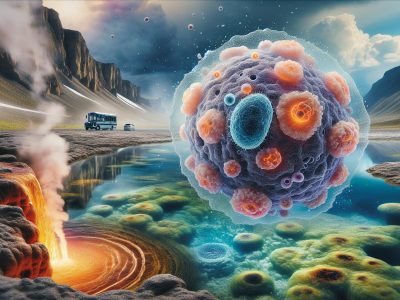
You meet archaea in places where few other organisms would even dream of enduring. Picture the boiling geysers of Yellowstone, where Sulfolobus species thrive at temperatures greater than 80°C. Or the salty Dead Sea, where Halobacterium turns the water pink under searing sun. You’ve probably never realized, but methanogenic archaea live right inside your gut, helping break down food without oxygen (Nature Reviews Microbiology, 2020).
Legend tells of Archaea surviving acid pools, hydrothermal vents, and ancient permafrost. Many endure pH swings, extreme pressure, and temperatures from subzero to over 100°C. Some researchers suggest archaeal adaptations may have fueled the rise of complex life, staking ancient claims to life’s most hostile frontiers. If you poked the mud at the bottom of a swamp, you’d likely disturb unseen archaea releasing methane into the air—a process shaping climate even as you read this.
Bacteria and archaea, partners and rivals, carve their niches with unique molecular tools and adaptive strategies, painting the world with invisible, persistent color.
Role In Ecosystems And Human Health
Bacteria and archaea, often unseen and underestimated, continuously transform worlds from deep-sea vents to your gut. These microscopic engines—carving out niches, cycling nutrients, and influencing global trends—bridge ecosystems and health with surprising complexity.
Bacterial Impact
Bacteria shape environments every second. They decompose organic matter—think of fallen leaves breaking down in a damp forest—fueling soil fertility and agricultural cycles (Fierer & Jackson, 2006). Nitrogen-fixing bacteria, including Azotobacter and Rhizobium, convert atmospheric nitrogen into usable forms, making plant growth possible even in poor soils. Picture turning air into food: without them, crops would wither, and global hunger risk soars.
Human health—your own included—relies on 30 trillion bacterial cells living in and on your body (Sender, Fuchs, & Milo, 2016). Friendly gut microbes like Bifidobacterium and Lactobacillus digest fiber, produce vitamins, and train your immune system. When this microbial orchestra falls out of tune—after antibiotics for example—digestive issues and diseases like C. difficile infection may erupt. Are you hosting the right guests?
Bacteria’s bad side emerge under the right circumstances. Pathogens such as Streptococcus pneumoniae (pneumonia) and Escherichia coli O157:H7 (food poisoning) exploit weaknesses, moving from harmless stowaways to dangerous invaders. Moments like a cut or contaminated spinach recall their unpredictability. Yet, antibiotics, a discovery less than 100 years old, changed this fight—sometimes tipping the balance, sometimes sparking resistance.
Archaeal Significance
Archaea, meanwhile, rewrite the rules of survival. Methanogens—specialists in producing methane—power wetland ecosystems, enable cattle to digest cellulose, and contribute roughly 75 million metric tons of methane yearly (Conrad, 2009). That greenhouse gas was warming the atmosphere, so how will targeting archaeal metabolism transform climate science?
Most people never met a halophile or thermophile, but these archaea dominate salt flats, hydrothermal vents, and acidic hot springs. In Yellowstone’s boiling pools, their vibrant pigments paint an alien landscape—one you could never walk through. New PCR-based approaches let scientists discover novel archaea in Antarctic ice, asking: what else have we missed?
Archaea rarely cause disease; but, researchers recently uncovered links between Methanobrevibacter smithii abundance and human gut metabolism, especially in conditions like constipation and obesity (Samuel et al., 2007). What if tuning archaeal communities could someday treat metabolic disorders?
Industrial biotechnologists tap archaeal enzymes, leveraging their stability at extreme temperatures for PCR, biofuel production, and novel drug synthesis. Archaea’s evolutionary story—straddling a line between bacteria and eukaryotes—provokes the question: what ancient secrets do your own cells whisper because of these microbial survivors?
Conclusion
When you look beyond the microscope you’ll find that bacteria and archaea are more than just tiny life forms—they’re vital players in the story of our planet. Their unique adaptations and molecular differences drive essential processes in nature and industry shaping everything from soil health to climate patterns.
By understanding these remarkable organisms you’re better equipped to appreciate their impact on daily life and the environment. As research continues you’ll uncover even more about their roles and the hidden connections that bind all living things.
Published: July 25, 2025 at 8:55 am by Ellie B, Site owner & Publisher
To provide the best experiences, we use technologies like cookies to store and/or access device information. Consenting to these technologies will allow us to process data such as browsing behaviour or unique IDs on this site. Not consenting or withdrawing consent, may adversely affect certain features and functions.
Functional
Always active
The technical storage or access is strictly necessary for the legitimate purpose of enabling the use of a specific service explicitly requested by the subscriber or user, or for the sole purpose of carrying out the transmission of a communication over an electronic communications network.
Preferences
The technical storage or access is necessary for the legitimate purpose of storing preferences that are not requested by the subscriber or user.
Statistics
The technical storage or access that is used exclusively for statistical purposes.The technical storage or access that is used exclusively for anonymous statistical purposes. Without a subpoena, voluntary compliance on the part of your Internet Service Provider, or additional records from a third party, information stored or retrieved for this purpose alone cannot usually be used to identify you.
Marketing
The technical storage or access is required to create user profiles to send advertising, or to track the user on a website or across several websites for similar marketing purposes.