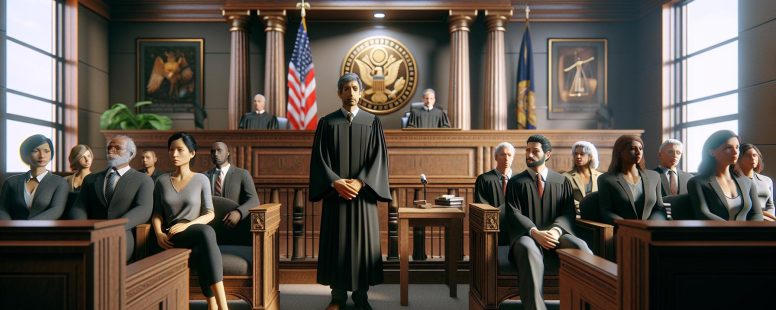
Imagine standing in a courtroom, the weight of justice hanging in the air. The rights you hold in this moment could mean the difference between fairness and failure. But have you ever wondered how those rights are shaped by the Constitution? The 6th and 7th Amendments play pivotal roles in safeguarding justice, yet their differences often go unnoticed.
While both amendments focus on your rights in legal proceedings, they serve distinct purposes. One ensures a fair trial in criminal cases, while the other protects your access to a jury in civil disputes. These nuances might seem subtle, but they’re critical to understanding how justice operates in America.
By exploring the unique protections offered by each amendment, you’ll gain a deeper appreciation for how they uphold fairness in different corners of the legal system. Ready to uncover the key distinctions that define these constitutional safeguards? Let’s immerse.
Overview Of The Bill Of Rights
The Bill of Rights, ratified in 1791, outlines the first ten amendments of the U.S. Constitution. These amendments protect individual freedoms and limit government power, forming the foundation of American democracy. By defining specific rights, they ensure a balance between authority and citizen liberties.
It contains key protections, such as freedom of speech, religion, and press under the First Amendment. The Second Amendment provides for the right to bear arms, while the Fourth guards against unreasonable searches. Each amendment serves a distinct role in safeguarding justice and personal security.
Crucial legal aspects, like due process and fair trials, are embedded in these amendments. The 6th and 7th Amendments, for example, address legal proceedings. The 6th focuses on criminal cases, ensuring public trials, an impartial jury, and access to legal representation. Conversely, the 7th upholds the right to jury trials in civil cases involving claims exceeding $20. This distinction reflects the Bill of Rights’ depth in addressing varied legal issues.
Historical context emphasizes their importance. Crafted as a response to British colonial overreach, they were designed to prevent abuses like unlawful imprisonment and censorship. These measures resonate even today in discussions on legal and societal ethics.
The 6th Amendment: Rights In Criminal Cases
The 6th Amendment ensures fairness in criminal legal proceedings by protecting critical rights. It establishes fundamental guarantees for individuals accused of crimes, promoting justice and accountability.
Right To A Speedy And Public Trial
The amendment grants defendants the right to a trial that occurs without unreasonable delays. A speedy trial prevents prolonged detention and protects your reputation from unnecessary harm. Public trials ensure transparency by allowing the community to observe proceedings, reducing potential judicial abuses. For example, in Barker v. Wingo (1972), the Supreme Court outlined factors to assess whether a trial’s delay violated the defendant’s rights. Factors include the delay’s length, reasons, the defendant’s demands for a trial, and the case’s outcome.
Without these protections, courts might excessively postpone cases, jeopardizing fairness in the criminal justice system. Maintaining timely public trials strengthens societal trust in legal processes.
Right To An Impartial Jury
An impartial jury ensures a fair assessment of evidence by unbiased individuals. Jurors must represent a cross-section of the community, excluding those with conflicts of interest or preconceived opinions about the case. In re Oliver (1948) reaffirms this principle by emphasizing the importance of unbiased jurors in upholding justice.
For example, cases involving high-profile defendants highlight the challenges of seating impartial juries due to extensive media coverage. Courts address these challenges through careful jury selection processes, including voir dire questioning and sometimes changing trial venues to reduce bias risks.
Right To Legal Representation
The right to legal counsel ensures defendants can adequately defend themselves. When facing criminal charges, access to a qualified attorney protects your interests, even if you can’t afford one. This principle became a landmark precedent in Gideon v. Wainwright (1963) when the Supreme Court ruled that states must provide legal representation to indigent defendants facing serious charges.
Legal representation levels the playing field between defendants and prosecutors, who possess significant legal resources. For instance, public defenders play a vital role in criminal courts by offering fair representation to those unable to hire private attorneys, ensuring the justice system remains equitable regardless of socioeconomic status.
The 7th Amendment: Rights In Civil Cases
The 7th Amendment addresses rights in civil legal disputes and emphasizes the importance of jury trials. It provides protections distinct from the 6th Amendment’s criminal case provisions while reinforcing fairness in the judicial process.
Right To Trial By Jury In Civil Cases
The 7th Amendment guarantees your right to a jury trial in federal civil cases where the dispute involves monetary claims exceeding $20. This protects individuals from having sole reliance on potentially biased judges and permits community involvement in decision-making processes.
For example, if a property owner accuses a contractor of breach of contract for damages surpassing this financial threshold, the contractor can demand that a jury examines the evidence and determines liability. This ensures that complex civil disputes, like contractual issues or personal injury claims, aren’t resolved exclusively by an individual judge.
Threshold For Jury Trials
The $20 threshold set by the 7th Amendment establishes the baseline for jury trials in civil cases. Although not adjusted for inflation, this amount reflects historical value and preserves the balance between court efficiency and individual rights. Lawsuits exceeding this sum allow parties to request a jury trial, distinguishing minor claims typically handled in small claims courts.
In cases like Feltner v. Columbia Pictures Television, Inc. (1998), the Supreme Court reaffirmed this right, stating juries could resolve damages in civil trials. This highlights the enduring significance of the 7th Amendment in ensuring accessible pathways to justice, even for disputes originating from seemingly trivial sums.
Key Differences Between The 6th And 7th Amendments
The 6th and 7th Amendments address different facets of legal proceedings in the U.S. Constitution. While the 6th Amendment focuses on criminal trials, the 7th Amendment pertains to civil cases. These distinctions affect the type of justice sought, the application of jury rights, and the scope of protections.
Criminal Vs. Civil Proceedings
The 6th Amendment governs criminal cases, which involve offenses against the state or public order. Crimes such as theft, assault, and murder fall under its jurisdiction. Defendants are afforded rights like a speedy trial, impartial jury, and legal counsel. For instance, in the highly publicized Miranda v. Arizona (1966), the Supreme Court upheld the right to legal representation during police interrogations.
In contrast, the 7th Amendment applies to civil disputes, where private individuals or entities resolve conflicts like contract breaches or property disputes. A homeowner suing a contractor for substandard work exemplifies this. The amendment guarantees jury trials for cases exceeding $20 in dispute, protecting litigants from judicial bias. The Supreme Court decision in Feltner v. Columbia Pictures (1998) affirmed this principle, underscoring how civil proceedings rely on community judgment.
Jury Rights And Application
Jury rights differ significantly between the two amendments. Under the 6th Amendment, criminal defendants have the right to a jury trial to safeguard impartiality. This ensures that guilt or innocence is determined by unbiased citizens, reflecting societal norms. A high-profile example is the O.J. Simpson trial (1995), where the jury played a decisive role in the verdict amidst intense media scrutiny.
The 7th Amendment limits jury rights to federal civil cases with specific monetary thresholds. While anyone can request a jury, judges may still decide questions of law, leaving juries to focus on factual disputes. This balance aims to streamline court efficiency while preserving the litigants’ rights. But, some complex cases, like corporate lawsuits involving intricate financial transactions, may be better suited to bench trials due to technicalities.
Scope And Limitations
The 6th Amendment’s scope extends to all criminal prosecutions, covering misdemeanors, felonies, and treason. Its limitations are reflected in cases involving lesser offenses where jury trials may not always be guaranteed, like petty traffic violations. In Duncan v. Louisiana (1968), the Supreme Court clarified that jury rights apply to “serious offenses.”
The 7th Amendment’s protections remain bound to federal civil cases, excluding state courts unless civil procedures incorporate similar provisions. The $20 threshold, set in 1791, remains unchanged even though inflation’s impact. This creates ambiguity in modern civil litigation, with courts often interpreting the threshold alongside evolving legal contexts.
Importance Of Understanding These Amendments
Understanding the 6th and 7th Amendments is essential to grasp how they shape legal protections in different situations. The 6th Amendment, focusing on criminal trials, safeguards individuals from unfair prosecution. It ensures your rights to a fair, speedy, and public trial, enabling a balance between society’s interest in justice and the defendant’s freedoms. You gain the assurance of impartiality through jury selection processes designed to minimize bias. These protections ensure accountability in criminal proceedings while promoting a fair assessment of guilt or innocence.
The 7th Amendment, governing civil cases, protects your access to a jury trial for disputes exceeding a $20 threshold. This guarantees impartial resolutions in civil matters, safeguarding against arbitrary judicial decisions. In scenarios like a contract disagreement or personal injury lawsuits, involving community members in jury decisions strengthens trust in the legal system. Even though the unchanged monetary threshold from 1791, the principles underlying this amendment remain pivotal in securing equitable outcomes.
If you neglect to differentiate their contexts, you risk misinterpreting their scope and application. These amendments target distinct legal areas—criminal for the 6th and civil for the 7th—each addressing specific challenges. Both demonstrate the constitutional commitment to fair trials under varying circumstances, enhancing public confidence in the justice process. Recognizing their individual and collective impacts sharpens your understanding of rights within legal frameworks.
Being informed on these amendments reinforces the values of participatory justice embedded in American democracy. Familiarity with their provisions empowers you in legal proceedings, while illustrating the enduring relevance of the Bill of Rights’ safeguards against potential abuses of power.
Conclusion
Understanding the 6th and 7th Amendments helps you appreciate their distinct roles in safeguarding justice. These amendments highlight the balance between individual rights and societal interests, ensuring fairness in both criminal and civil legal proceedings.
By recognizing their unique protections and historical significance, you can better grasp how they contribute to the broader framework of American democracy. Their enduring relevance underscores the importance of participatory justice and the protection of fundamental freedoms in the legal system.
To provide the best experiences, we use technologies like cookies to store and/or access device information. Consenting to these technologies will allow us to process data such as browsing behaviour or unique IDs on this site. Not consenting or withdrawing consent, may adversely affect certain features and functions.
Functional
Always active
The technical storage or access is strictly necessary for the legitimate purpose of enabling the use of a specific service explicitly requested by the subscriber or user, or for the sole purpose of carrying out the transmission of a communication over an electronic communications network.
Preferences
The technical storage or access is necessary for the legitimate purpose of storing preferences that are not requested by the subscriber or user.
Statistics
The technical storage or access that is used exclusively for statistical purposes.The technical storage or access that is used exclusively for anonymous statistical purposes. Without a subpoena, voluntary compliance on the part of your Internet Service Provider, or additional records from a third party, information stored or retrieved for this purpose alone cannot usually be used to identify you.
Marketing
The technical storage or access is required to create user profiles to send advertising, or to track the user on a website or across several websites for similar marketing purposes.