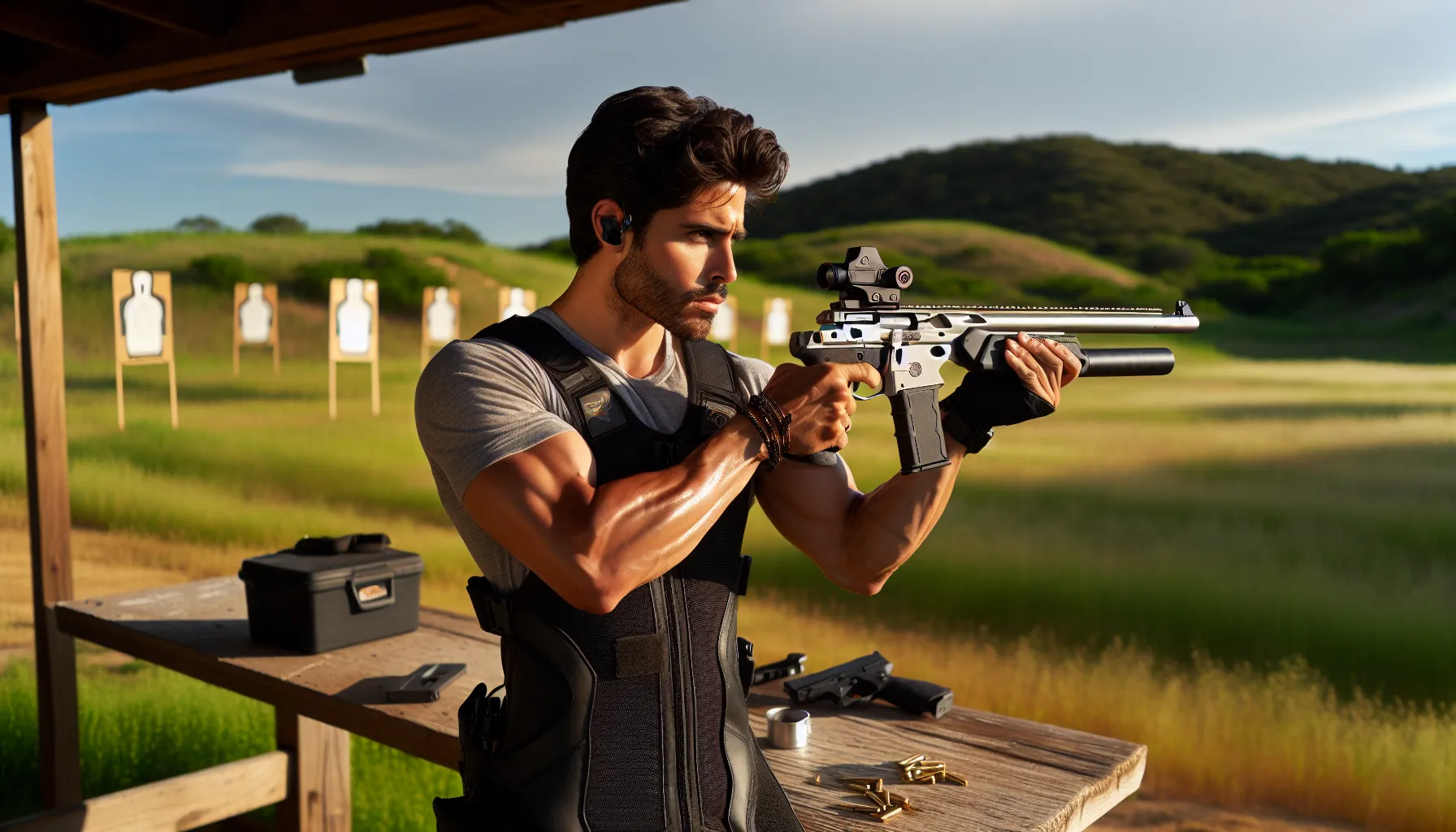
Picture yourself at the gun range—the air crackles with anticipation as brass casings glint beneath the fluorescent lights. You grip a compact pistol and wonder: does the caliber in your hand really make a difference, or is it just a number stamped on metal? The debate between .380 ACP and 9mm is more than a technical comparison; it’s a crossroads where comfort, performance, and personal security collide.
Your choice shapes everything from recoil to stopping power, yet the real differences often hide behind myths and assumptions. What if the .380 ACP offers something the 9mm can’t? Could the 9mm’s reputation overshadow its practical benefits for everyday carry? Explore the surprising nuances between these two popular calibers and discover which one might just tip the scales in your favor.
Overview of .380 ACP and 9mm Cartridges
.380 ACP and 9mm cartridges belong to the family of semi-automatic handgun ammunition, yet they create noticeably different shooting experiences. You’ll hear stories from range regulars who started with a .380 ACP—maybe a compact Smith & Wesson Bodyguard—because it fits in a pocket and doesn’t bang your hand with harsh recoil. That’s comfort meeting practicality. People often picture the .380 ACP in discreet personal defense pistols; Glock 42 and Ruger LCP pop up in these conversations because they pair low recoil with tiny frames.
By contrast, the 9mm (or 9x19mm Parabellum) sits as the default for law enforcement agencies—think Glock 19 or SIG Sauer P320. Why so popular? The 9mm’s higher pressure results in velocities above 1,100 fps and energy often topping 350 ft-lbs (Federal Premium, 2023), which delivers distinct stopping power for real-world scenarios. A 9mm also accepts a broader array of bullet types, from hollow points to full metal jackets, giving you more options for both training and defense.
You’ll notice that while both .380 ACP and 9mm rounds look similar at a quick glance, the details inside the case change everything. .380 ACP uses a straight-walled, rimless case and has less powder, making it subsonic with most loads. The 9mm, meanwhile, packs higher pressures and longer cases, turning it into a wild stallion that some first-time shooters find energetic, maybe even intimidating, until they discover a pistol like the soft-shooting CZ Shadow 2.
Gun owners sometimes debate if a .380 ACP can stop a threat as effectively as a 9mm. FBI ballistic tests (FBI Ballistics Research Facility, 2019) show 9mm rounds typically exceed 12 inches in gel penetration, the accepted minimum for reliable self-defense; most .380 rounds measure between 8-11 inches, which might not meet that benchmark reliably. Does this change your choice? The answer depends on your balance of control, comfort, and intended use.
Have you ever weighed concealment against raw power? That’s the heart of choosing between these two. The weight of a .380 pocket pistol may vanish beneath a summer shirt, while a full-size 9mm, loaded with 17 rounds, promises firepower but prints under tighter clothes. Consider: Would you rather carry all day in comfort, or feel assured you carry a round backed by decades of military and police service?
These cartridges spark lively debates, from home defense circles to online forums—Reddit threads overflow with CCW anecdotes and gel test results. See, the .380 ACP and 9mm are more than just numbers—they tell stories about your needs, your comfort, and eventually, your safety.
Historical Development and Popularity
You step into a gun shop in the early 1900s—could you picture seeing the birth of the .380 ACP? John Moses Browning designed this cartridge in 1908, aiming for an easier-shooting round for small, concealable pistols. Europe’s police forces quickly adopt it, finding comfort in its manageable recoil and compact platforms like the Walther PPK. Hollywood immortalizes the PPK, making the .380 ACP almost a symbol of spy intrigue—James Bond’s quiet signature, right? But was it always reliable for self-defense? Critics have long pointed to its limited penetration compared to bigger calibers, yet thousands trusted it to get the job done in close quarters.
Next, contrast the .380’s gentle rise with the relentless march of the 9mm Parabellum—born in 1902 and soon, it conquers battlefields and police holsters alike. Georg Luger’s invention, originally intended for military sidearms, spread to civilian shooters worldwide through robust, reliable, high-capacity pistols. By the late 20th century, police departments from NYPD to LAPD switched to 9mm, citing FBI ballistic tests that favored its penetration and expansion (see FBI Ballistic Testing Report, 1986). European armies swapped their .380s for the power and proven combat record of the 9mm—think of the iconic Beretta 92 carried by US Armed Forces.
Here’s a table for context:
Cartridge
Year Introduced
Notable Use
Cultural Reference
.380 ACP
1908
Walther PPK, police
James Bond films
9mm Parabellum
1902
Beretta 92, military
Die Hard, Lethal Weapon
Have you noticed how trends in ammo often circle back? Ammunition shortages or new concealed carry laws sometimes send shooters scrambling for whatever’s available, and both .380 ACP and 9mm keep reappearing—like old jazz standards remixed for modern playlists. Gun forums today buzz with debates: “Will .380 really stop an attacker?” or “Isn’t 9mm recoil too much for new shooters?” You might’ve seen these questions swirling under YouTube gun reviews or echoed at the range.
Over time, advances in bullet technology blur the lines. Modern .380 ACP defensive loads nearly match early 9mm’s performance, narrowing the debate. Still, 9mm’s popularity keeps rising, with manufacturers releasing dozens of polymer-framed pistols every year (Handgun Sales Data Report, 2023).
So, when you pick up a .380 ACP or 9mm, you’re not just choosing a caliber. You’re holding a century of evolution, preference, and a dash of cinematic legend. Which story will your choice tell?
Key Technical Differences
.380 ACP and 9mm cartridges differ in measurable and practical ways, shaping your experience at the range or during concealed carry. These differences affect not just performance, but also how comfortably you carry and shoot.
Cartridge Dimensions and Specifications
.380 ACP cartridges have a shorter case length and overall length than 9mm cartridges. The .380 ACP measures 17mm in case length and 25mm in overall length, while the 9mm measures 19mm and 29mm respectively. Diameter stays close, with both bullets sitting at about 9mm, but the .380 ACP runs slightly smaller overall. For example, Colt Mustang pocket pistols use .380 ACP for a slim frame and lighter feel, enabling easier concealment than most 9mm handguns.
You’ll find that the .380 ACP fits best in compact pistols—think Smith & Wesson Bodyguard or Ruger LCP models. But, the dimensional advantage of 9mm allows more powerful loads and higher magazine capacity, making it the go-to cartridge for defense pistols like the Glock 19 and Sig Sauer P320.
Cartridge
Case Length (mm)
Overall Length (mm)
Common Uses
.380 ACP
17
25
Concealed carry, backup guns
9mm
19
29
Service pistols, self-defense
Ballistic Performance
Ballistic differences between .380 ACP and 9mm cartridges come from variations in pressure and velocity. Standard .380 ACP rounds usually reach muzzle velocities between 900 and 1,000 feet per second (fps) with bullet weights of 90 to 100 grains (Federal Premium, 2023). Contrast that to the 9mm, which achieves 1,100 to 1,250 fps with 115 to 147-grain bullets. Law enforcement agencies, including the FBI, favor 9mm for its higher velocity and proven penetration, especially when paired with modern hollow points.
Ask yourself: would stopping power or discreetness tip your scale? While .380 ACP offers enough energy for self-defense (especially at close range), the 9mm delivers more reliable expansion and penetration in real-world shootings, as revealed in ballistic gel tests from Lucky Gunner Labs.
Cartridge
Velocity (fps)
Typical Bullet Weight (grain)
Noted Strengths
.380 ACP
900–1,000
90–100
Low recoil, concealability
9mm
1,100–1,250
115–147
Stopping power, penetration
Recoil and Handling
Recoil differences can feel dramatic, especially when you’re firing similar-sized handguns. .380 ACP generates low-to-moderate recoil, making rapid-fire strings more controllable, which means you’ll spend less time reacquiring your sights after each shot. For instance, first-time shooters or those with arthritis often choose .380 ACP—like the Ruger LCP Max—citing easier handling and less fatigue.
But, though 9mm pistols have more felt recoil, modern ergonomics and weight balancing reduce its impact. Glock 43X and Sig P365 balance power and manageability, showing the trade-off isn’t as severe as some claim. More recoil sometimes leads to tighter follow-up shot groups once you’ve trained with purpose.
Consider: Is reduced recoil worth sacrificing potential stopping power? Or does the 9mm’s sharper snap feel like confidence in your grip? Critical shooter’s question, because your comfort with a gun decides accuracy more than numbers alone.
Mixing these technical vectors—dimensions, ballistics, recoil—builds the real picture of .380 ACP and 9mm. Match your needs, preferences, and scenarios to the specs, because what fits another’s holster might not fit your own story.
Practical Applications and Use Cases
Explore real-world scenarios where .380 ACP and 9mm shape outcomes for self-defense, daily carry, and critical duty. Each caliber presents unique advantages tailored for specific needs, and your choice impacts comfort, effectiveness, and peace of mind.
Concealed Carry Considerations
Concealed carry demands a balance between discretion, comfort, and reliable performance. The .380 ACP, with its compact dimensions, fits ultra-slim pistols (examples: Ruger LCP, Smith & Wesson Bodyguard 380) that slip into pockets or purses without printing. Short recoil and simple control make it approachable for novice shooters or those with limited hand strength. You might find that repeated draw-and-fire drills with a .380 better suits stressful encounters, where fast target acquisition matters more than absolute stopping power.
By contrast, 9mm pistols (examples: Glock 43, Sig Sauer P365) generally deliver more force and deeper penetration. Recoil, while greater, stays manageable with modern subcompact designs. Law enforcement agencies like NYPD and LAPD, cited by the FBI [source: FBI Ballistics Report, 2014], endorse 9mm for everyday carry, demonstrating that advanced ergonomics and high-capacity magazines can offset the larger frame. Would your personal defense plan benefit from higher round count and increased terminal ballistics, or is comfort and concealment paramount? Consider both the type of clothing you wear and the environments you navigate—a .380 vanishes under athletic wear, while a single-stack 9mm conceals well under jackets but prints in lighter fabrics.
Home Defense and Law Enforcement
Home defense events introduce different grammar to the equation. Instead of prioritizing concealment, users focus on stopping threats quickly. The 9mm’s higher energy, flat trajectory, and barrier penetration offer tactical advantages. Military and police units in over 25 countries (e.g. Italy, Germany, United States) standardize the 9mm due to its ability to incapacitate targets with less overpenetration risk than larger calibers, according to the United States Army Ballistics Testing 2019.
For home defenders worried about overpenetration into neighboring rooms, certain .380 ACP loads may seem appealing. Frangible or hollow-point .380 bullets tend to expand quickly, reducing the risk of stray projectiles. But, defenders ought to examine local ballistic gel tests to see if penetration remains sufficient—some .380 rounds may fail to meet the FBI minimum of 12” penetration in tissue simulant, which can affect reliability against threats.
What if your family includes less-experienced shooters? The lighter recoil and smaller profile of a .380 ACP pistol could inspire confidence and faster follow-up shots under adrenaline. Yet, a 9mm’s extra energy often compensates for imperfect shot placement, giving wider margin in high-stress situations.
While .380 ACP tells a story of discretion and accessibility, 9mm speaks with authority in duty and defense contexts. Where a .380 served diplomats and detectives seeking stealth, a 9mm answered the call for reliable, standardized defense worldwide. Which narrative matches your needs, and does your home setup reflect evolving threats or traditional comfort? Expand your preparation through scenario-based training, choosing calibers that align with your routine, environment, and skill—an well-informed choice changes the story before it’s ever written.
Cost and Availability
Comparing .380 ACP and 9mm cost and availability highlights the practical side of cartridge selection. Try walking into a local gun store on a busy Saturday, shelves lined with shiny boxes—9mm occupies more real estate than cereal brands at a supermarket. 9mm, being NATO standard and used by militaries worldwide, remains the most abundant centerfire pistol ammo (source: Ammo.com, 2023). Even during ammo panics, lucky shoppers still spot a forgotten 9mm box in some dusty corner.
Take a look at the cost data below:
Cartridge
Average Price per Round (USD)
Most Common Configurations
Typical Shelf Presence
9mm
$0.20–$0.35
115gr FMJ, 124gr JHP
High (always present)
.380 ACP
$0.30–$0.60
95gr FMJ, 90gr JHP
Medium (sometimes limited)
You’d notice the .380 ACP fetches a higher premium—sometimes nearly double the price of 9mm. This premium traces back to lower production volumes and niche demand (source: The Firearm Blog, 2023). Think about buying in bulk. Many online retailers place 9mm in their weekly sales, but .380 ACP lags, both in discount frequency and inventory depth.
Picture a friend who’s just started training with a .380 ACP subcompact. After a few months, they wonder why they can’t find ammo for practicing as easily as the countless 9mm shooters at the range. With global surges or government contracts, factories focus most resources on the highest demand: 9mm. If you travel to rural areas or hit up a last-minute match, hunting for .380 ACP might feel like discovering a rare collectible.
Consider the used market. Most used pistols in gun shops are chambered in 9mm, reflecting its mainstream appeal and constant turnover. You stumble on old .380 ACP pistols now and then, often with a story attached—grandpa’s backup, or a vintage personal defense piece from the ’60s.
Cost and access are more than numbers; they’re about consistency and peace of mind. You question, do you want to rely on easy-to-find, wallet-friendly 9mm? Or does the premium for .380 ACP’s compact stature matches your personal defense vision? Both options steer the journey, but 9mm continually supports you with convenience and savings, which, in a crunch, might be the difference between range time and watching someone else make progress.
Which Should You Choose?
Selecting between .380 ACP or 9mm shapes your everyday carry, training habits, and how confidently you move through uncertain enviroments. Do you sometimes wonder if a smaller pistol could hide under anything—maybe even your favorite summer tee? That’s the .380 ACP’s world: Smith & Wesson Bodyguard 380, Ruger LCP II, and Walther PPK bring ultra-concealment and barely-there recoil. If your grip is weaker or you want a firearm for discreet backup, .380 ACP stands out as the low-profile ally, offering near-effortless operation for people of varying hand strengths.
Picture, though, you’re responsible for guarding your family and need more than comfort—you require performance under stress. The 9mm’s legacy glimmers here, with Glock 19, SIG Sauer P320, and Beretta 92 shining as reliable protectors. Police officers, military personnel, and home defenders across the globe choose 9mm for its energy, magazine capacity, and bullet technology that keeps evolving (see FBI Ballistics Report, 2014). If stopping threats efficiently and hitting targets consistently matters most, 9mm delivers, though the snap in your hand feels sharper and the gun frame typically bulkier.
Picture the ammunition aisle in your local gun store: rows of 9mm boxes, price tags a bit lower, and always in stock. Range time gets friendlier to your wallet and training remains steady when ammo stays plentiful. .380 ACP, while celebrated for its niche versatility, often comes in smaller selections and at a premium; rare, yes, but probably worth it if your pistol only fits .380. Ever thought of how the ammo market’s tides can change carry preferences overnight?
Recoil, concealment, stopping power—these don’t exist in a vacuum. Maybe you’ve watched dramatic movie moments when James Bond draws his elegant Walther PPK, every ounce of confidence wrapped in .380 legend. Or maybe you’ve fired both at your local range and felt the adrenaline, assessing control and accuracy with every shot. What matters isn’t just numbers or heritage. It’s the peace of mind you carry long after the range bag is unzipped.
Choosing a caliber means drawing the line between subtlety and certainty. Your physical comfort, strength, and daily surroundings all shape what firearm secures your world. Should seasons change, confidence remains, provided you’ve matched reliability with your needs.
If the right cartridge feels elusive, ask: will practice time, concealment needs, or ammo cost matter most for you next year? Test both on the range, weigh their grip in your palm, and let that real-world comfort and confidence guide your next step.
Conclusion
Choosing between .380 ACP and 9mm really comes down to your priorities and lifestyle. Think about what matters most—comfort, concealment, stopping power, or cost—before making your decision.
Your confidence and safety depend on how well your firearm fits your needs and routine. Take time to handle both calibers, train regularly, and weigh all the factors that matter to you. The right choice is the one that gives you peace of mind every day.
To provide the best experiences, we use technologies like cookies to store and/or access device information. Consenting to these technologies will allow us to process data such as browsing behaviour or unique IDs on this site. Not consenting or withdrawing consent, may adversely affect certain features and functions.
Functional
Always active
The technical storage or access is strictly necessary for the legitimate purpose of enabling the use of a specific service explicitly requested by the subscriber or user, or for the sole purpose of carrying out the transmission of a communication over an electronic communications network.
Preferences
The technical storage or access is necessary for the legitimate purpose of storing preferences that are not requested by the subscriber or user.
Statistics
The technical storage or access that is used exclusively for statistical purposes.The technical storage or access that is used exclusively for anonymous statistical purposes. Without a subpoena, voluntary compliance on the part of your Internet Service Provider, or additional records from a third party, information stored or retrieved for this purpose alone cannot usually be used to identify you.
Marketing
The technical storage or access is required to create user profiles to send advertising, or to track the user on a website or across several websites for similar marketing purposes.