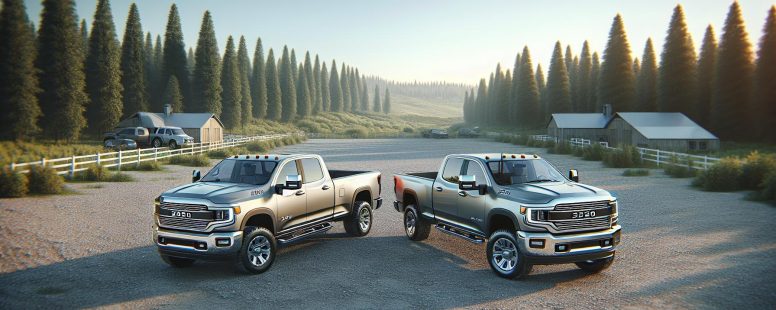
Ever found yourself wondering about the real difference between 2500 and 3500? Maybe you’re considering a new truck purchase, or perhaps it’s related to power ratings in your line of work. It might seem like just numbers, but there’s more than meets the eye.
In this text, we’ll investigate into what sets these two apart – be it payload capacities for heavy-duty trucks or performance metrics in various industries. We’re not talking mere hundreds here; the implications run deeper! So buckle up as we unravel some intriguing distinctions that could impact your decisions significantly.
Overview of 2500 and 3500 Series
Moving from the broad context, let’s investigate into specific series – the 2500 and the 3500. They’re not just numbers; they embody unique characteristics that define their purpose in diverse sectors.
Key Features of 2500 Series
The story begins with the powerful yet versatile2500 series. With these trucks on your side, hauling heavy loads becomes a breeze. The feature-rich design emphasizes durability with reinforced chassis components that stand up to rigorous tasks day-in-day-out without compromising comfort or performance.
For instance, you’ll find engines boasting power outputs around 400 horsepower coupled with sturdy transmissions for optimal torque delivery under load conditions[1]. That equates to substantial towing capacity – typically upward of 13,000 pounds[2]!
But it doesn’t stop there: Convenience features such as advanced infotainment systems come standard —providing entertainment during long hauls— while safety enhancements like stability control ensure you remain confident even when dealing with challenging road scenarios [3].
These factors contribute towards making the “versatile workhorse” tag associated frequently within industry circles aptly deserved by this resilient breed known as ‘the’ – Series-25oo Trucks.
Key Features of 35000 Series
On flipping over to the robust heavyweight, series-35oo, we see another set entirely playing out here! These machines are built specifically for enduring extreme weight handling situations comfortably [4].
Typically furnished sporting potent diesel-powered engines outputting well above 500 Horsepower means having enormous pulling capability at disposal anywhere northwards near about impressive figures viz., 20 thousand pounds worth trailer weights towable behind them [5] .
Plus , even though being beasts designed primarily targeting industrial usage areas including construction sites etc., maintaining creature comforts isn’t ignored either : modern navigation aids together along enhanced driving assists form part of standard features-list across majority models within this category [6] .
Hence, it’s not surprising that they’ve earned themselves a reputation for being the “industrial powerhouse” – commanding respect and trust from sectors where superior power and unyielding durability are prime requirements. That’s what makes Series-3500 Trucks stand apart.
Performance Comparison
As you investigate into the specifics of performance between 2500 and 3500 series trucks, it’s crucial to break down key aspects. Consider factors like engine power capabilities along with towing and payload capacities.
Engine and Power Capabilities
In terms of raw muscle, both series pack a punch but operate differently under the hood. For instance, many models in the 2500 lineup sport V8 engines that generate around 400 horsepower while also providing commendable fuel efficiency for their class. Conversely, most variants within the robust world of 3500 vehicles run on diesel-powered motors capable of producing over an impressive figure — about or above than five hundred horses.
When examining these facts further:
A gasoline-engine model from Chevrolet Silverado’s heavy-duty line (part of the “2500” segment) churns out approximately 401 horsepower.
Ram’s mighty pickup truck – classified as “3500”– roars with its Cummins turbo-diesel reaching up to 420 hp when properly equipped
These figures underscore how varying power outputs cater uniquely to diverse industry needs — offering options ranging from daily tasks requiring agility through versatility or heavyweight operations demanding brute strength.
Towing and Payload Capacities
While talking about hauling potential – another critical parameter affecting your choice might be ‘how much weight can this vehicle move?’ In relation to numbers we’re discussing here:
The versatile workhorse-type ‘250’ range typically offers substantial capacity surpassing 13k pounds in towing ability.
Industrial-strength beasts belonging under ’35’ bracket consistently manage incredible limits nearing 20k lbs, given correct configurations are met.
Just by taking Chevy & GMC’s reputable HD pickups as examples:
Truck Model
Max Towing Capacity
Chevrolet Silverado/GMC Sierra 2500HD
Around ~18K Lbs
Chevrolet Silverado/GMC Sierra 3500HD
Roughly ~35K Lbs
You’ll notice the significant leap in towing capacity when moving from a ’25’ to a ’35’ vehicle. It’s important to bear in mind that while both trucks offer substantial power, your choice should depend on specific needs – whether it’s for frequent heavy-duty tasks or more balanced everyday uses.
Design and Build Differences
Diving deeper into the design differences between 2500 series trucks and their 3500 counterparts, it becomes clear that these distinctions extend beyond raw power capacities. Let’s examine both exterior designs variations as well as interior comfort and technology.
Exterior Design Variations
In terms of exterior design, there are noticeable contrasts to consider when comparing a truck from the 2500 series with one in the same lineup from the 3500 class. For instance, take Chevrolet Silverado models: The Silverado HD (heavy-duty) variant often carries distinct features compared to its lighter counterpart. Typically found on a bigger wheelbase measuring around an average length of about 266 inches for some trims in contrast with roughly approximately under or equal to ~240 inches present within most versions of your typical Silverado LD (light duty). Also, certain external features such as dual rear wheels usually appear only among larger variants like those found within GMC Sierra Denali range falling under our discussed superior category – adding another dimension towards visual differentiation while also improving stability during heavy towing conditions.
Interior Comfort and Technology
Shifting focus onto interiors brings us face-to-face again with numerous subtle yet significant dissimilarities varying by specific needs catered towards passenger comfort vs utilitarian purposes across different model ranges. Taking a glimpse inside any standard RAM truck reveals immediately recognizable disparities concerning internal layouts where extra space provided by extended cabins featured prominently amidst higher-end versions prioritizes user-comfort even during demanding journeys associated traditionally more so along work-oriented vehicles rather than everyday commute focused ones so broadening appeal substantially over versatile use scenarios including but not limited exclusively towards hauling goods long distances involving less fatigue due frequent breaks minimized significantly through better ergonomics achieved via thoughtful cabin-designs incorporating state-of-the-art technologies alongside plush seating arrangements elevating overall driving experience exponentially upon comparison versus barebones configuration prevalent especially amongst lower end choices aimed primarily at fulfilling commercial obligations sans luxurious amenities.
Applications and Use Cases
Let’s jump into the practical applications of these robust vehicles. The context behind choosing between a 2500 series or a 3500 series truck often lies in their use cases.
Best Uses for 2500 Series
The suitability of the 2500 series trucks generally lies within its blend of power and versatility. You’d find this line ideal if you’re seeking balance – solid performance that doesn’t compromise on comfort.
Towing Smaller Trailers: Equipped with considerable towing capacities, it handles travel trailers, boat trailers, or small fifth-wheel campers efficiently.
Commercial Utilities: Many businesses prefer them due to their ample payload capacity for transporting goods without overextending capabilities.
Everyday Driving Comforts: Unlike most heavy-duty pickups designed solely for work purposes only; here style meets functionality making daily commutes smoother while still being able to tow significant loads when necessary.
Best Uses for 3500 Series
On the other hand, tasks demanding extreme pulling strength are where the prowess of the mighty beast -the ‘3500’ shines brightest:
1 .Heavy Duty Towing: If your needs include hauling large horse trailers or substantial construction equipment regularly then consider nothing less than a high-performing rig like this one.
2 .Huge Payload Capacities: With an emphasis on maximum load-bearing capability they cater well to industries requiring massive transportation demands such as farming or landscaping operations delivering everything from hefty hay bales to big machinery parts effortlessly.
3 .Dual Rear Wheels Option (DRW): This unique feature offers increased stability during heavy towing —an indispensable advantage particularly beneficial in commercial sectors dealing with extensive haulage requirements frequently providing enhanced safety measures along long journeys.
Cost and Value Considerations
Understanding the cost implications associated with your choice of truck is crucial. This section aims to break down both immediate purchase costs as well as long-term value considerations.
Initial Purchase Price
Comparing the initial prices, it’s clear that a 3500 series truck generally has a higher price tag than its 2500 counterpart. For example, if we take popular brands into account like GMC or Chevrolet:
Series
Average Price
2500
$38,000
3500
$50,000
These numbers are merely averages; actual prices can vary based on factors such as brand model year and additional features.
Long-Term Value and Costs
While analyzing costs, one mustn’t overlook ongoing expenses including maintenance fees and fuel economy. Though similar in many aspects, there are distinct differences between these two series when considering running costs over time:
Fuel Economy: Fuel consumption rates tend to be higher for heavier vehicles so you’d expect slightly more visits to gas stations owning a 3500.
Maintenance Costs: Given its heavy-duty nature compared to the lighter duty of the smaller pickup trucks (like those from the “150” range), regular upkeep may demand deeper pockets.
Depreciation Rates: Depreciation could also play an important role in determining long term vehicle value – typically bigger trucks retain their resale values better because they’re built for tougher tasks which translates into longer lifespans.
Conclusion
So there you have it. When choosing between the 2500 and 3500 series trucks, your decision should hinge on what you need from your vehicle. If towing smaller trailers or commercial utilities is your game, the balanced power and versatility of a 2500 might be just right for you. But if extreme pulling strength with high payload capacities tops your list, then don’t look past a hardworking powerhouse like the 3500 series truck.
Remember though – initial costs are only part of this story! Be sure to factor in ongoing expenses such as fuel economy, maintenance bills and depreciation rates into your calculations before making that all-important purchase choice.
The key here isn’t about picking ‘the best’ truck – it’s about selecting ‘your perfect’ truck based on individual needs and budget constraints. So weigh up these factors carefully because at the end of day who doesn’t want value for their money?
To provide the best experiences, we use technologies like cookies to store and/or access device information. Consenting to these technologies will allow us to process data such as browsing behaviour or unique IDs on this site. Not consenting or withdrawing consent, may adversely affect certain features and functions.
Functional
Always active
The technical storage or access is strictly necessary for the legitimate purpose of enabling the use of a specific service explicitly requested by the subscriber or user, or for the sole purpose of carrying out the transmission of a communication over an electronic communications network.
Preferences
The technical storage or access is necessary for the legitimate purpose of storing preferences that are not requested by the subscriber or user.
Statistics
The technical storage or access that is used exclusively for statistical purposes.The technical storage or access that is used exclusively for anonymous statistical purposes. Without a subpoena, voluntary compliance on the part of your Internet Service Provider, or additional records from a third party, information stored or retrieved for this purpose alone cannot usually be used to identify you.
Marketing
The technical storage or access is required to create user profiles to send advertising, or to track the user on a website or across several websites for similar marketing purposes.