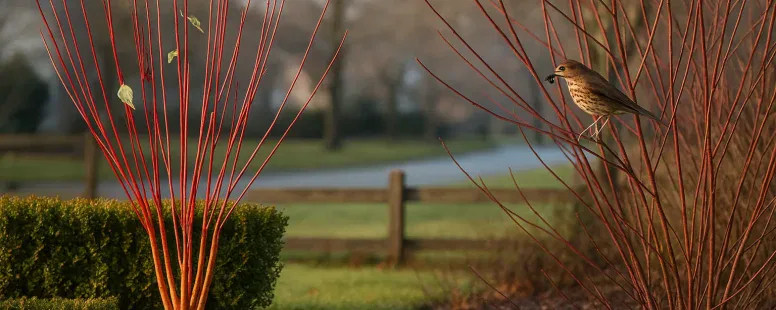
You can pick a shrub for winter color or one that offers subtle multi-season interest, but which Cornus will deliver for your yard? Cornus alba and Cornus sanguinea both bring vivid stem color to otherwise gray months, yet they behave differently in leaf, habit, and maintenance. Picture a hedge that glows like embers in January versus a native shrub that feeds birds and spreads quietly: each has clear strengths.
This comparison gives you the quick facts up front, then shows how to identify, plant, and care for each species so you choose the right one for your goals, whether you want a low-fuss screen, a specimen with red stems, or a wildlife-friendly thicket. Read on to match plant traits to your garden needs and climate.
Quick At‑A‑Glance Comparison: Key Differences And Similarities
Fact: Cornus alba (Siberian dogwood) and Cornus sanguinea (common dogwood) both show brightly colored winter stems, but they differ in native range, growth habit, and fruit.
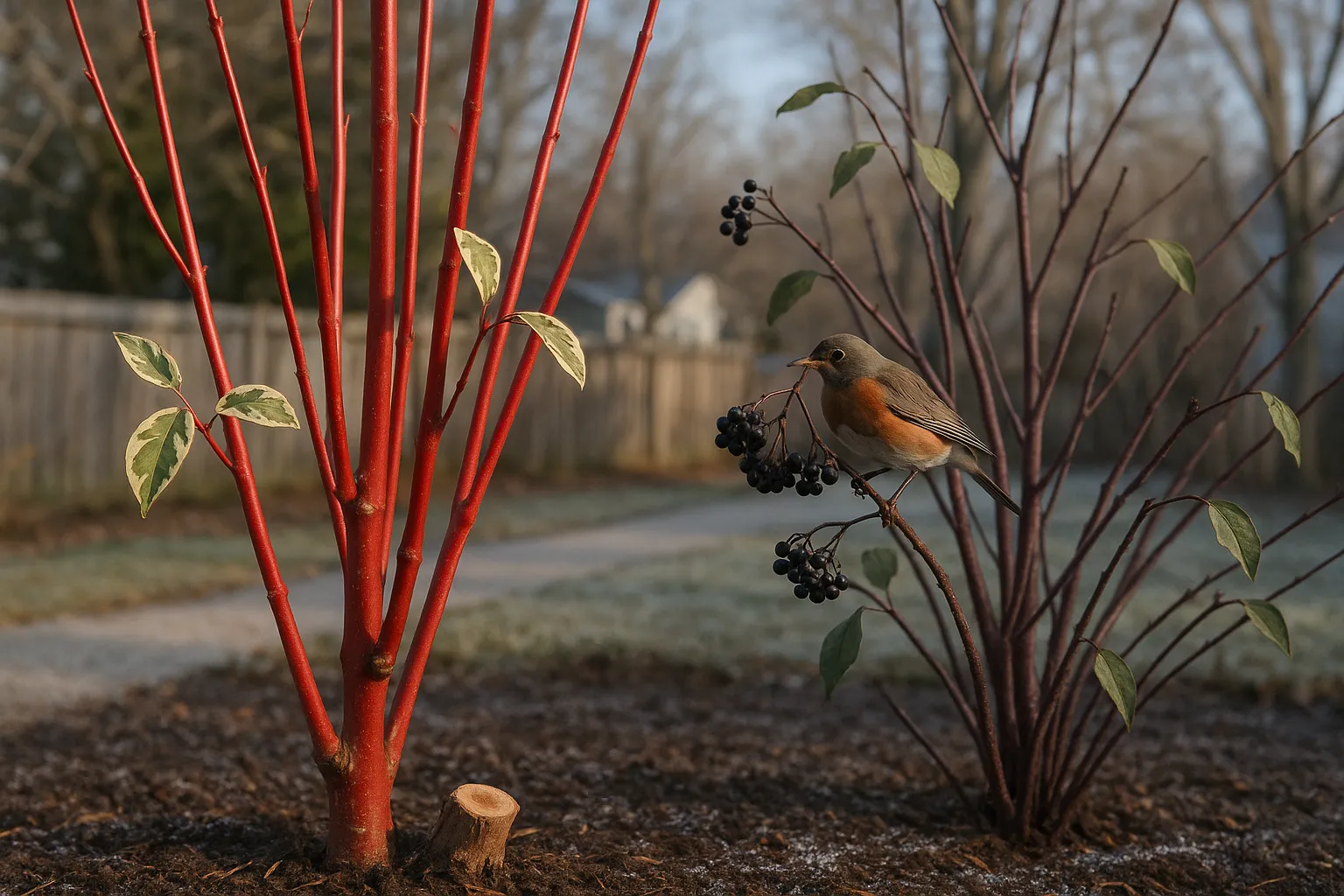
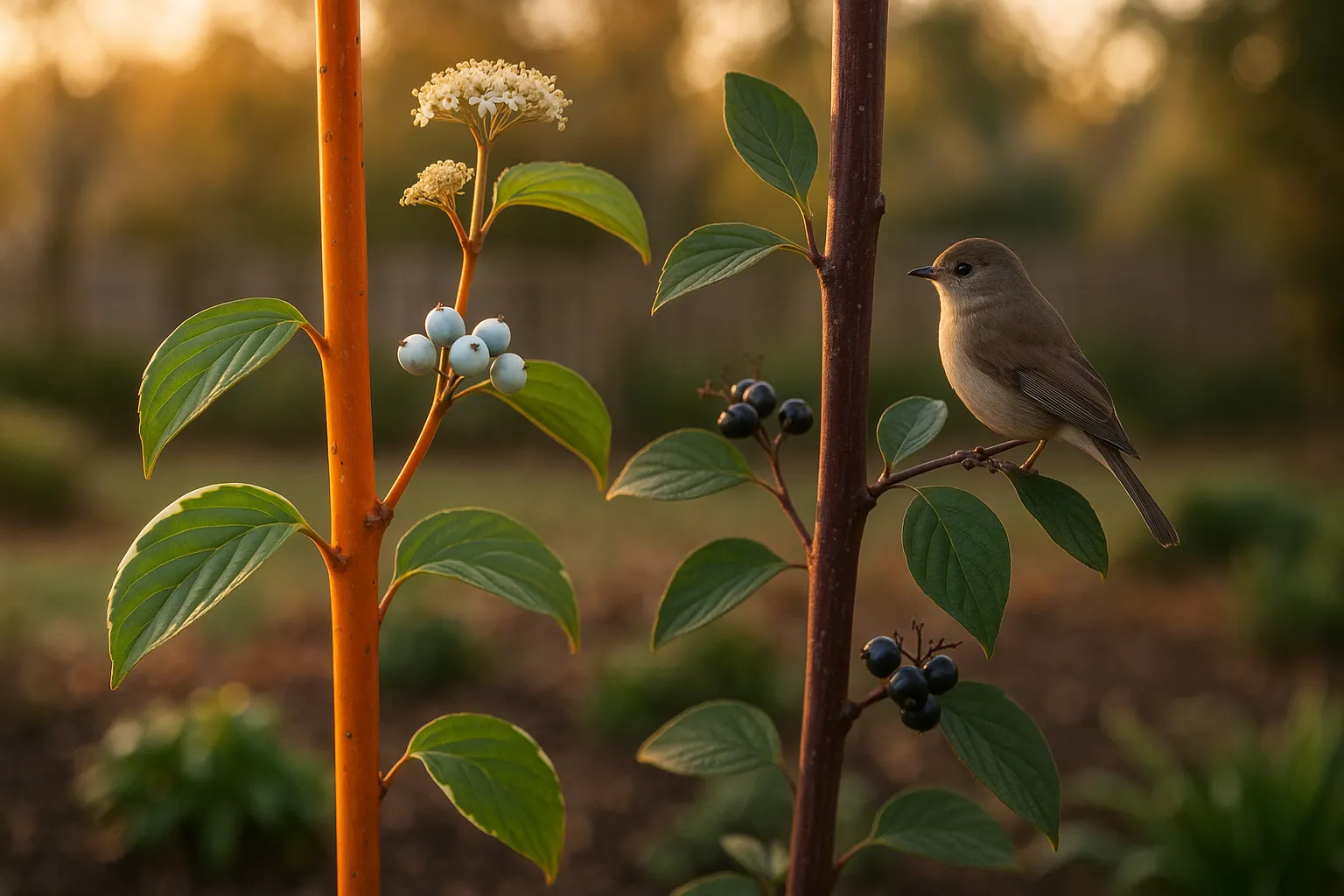
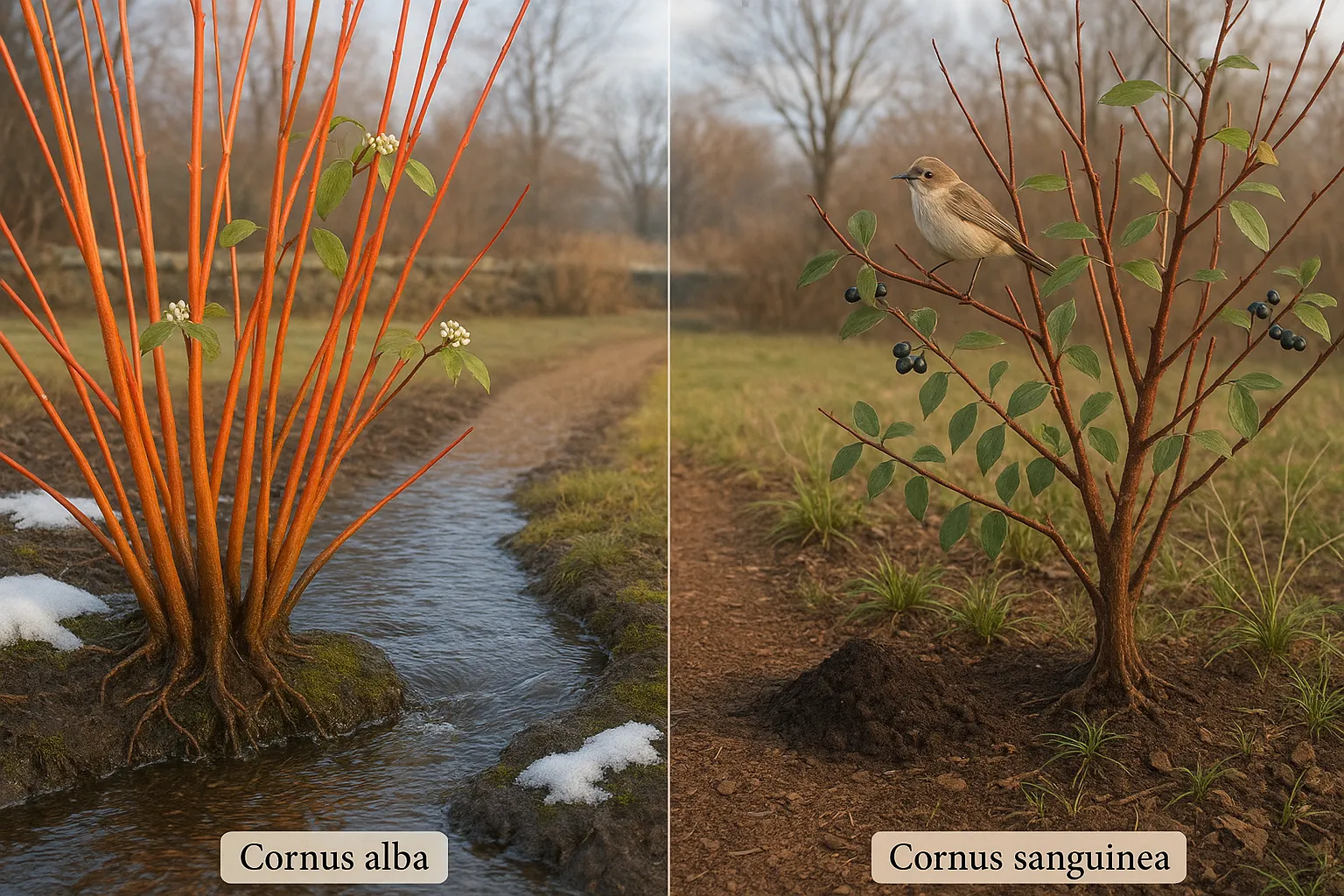
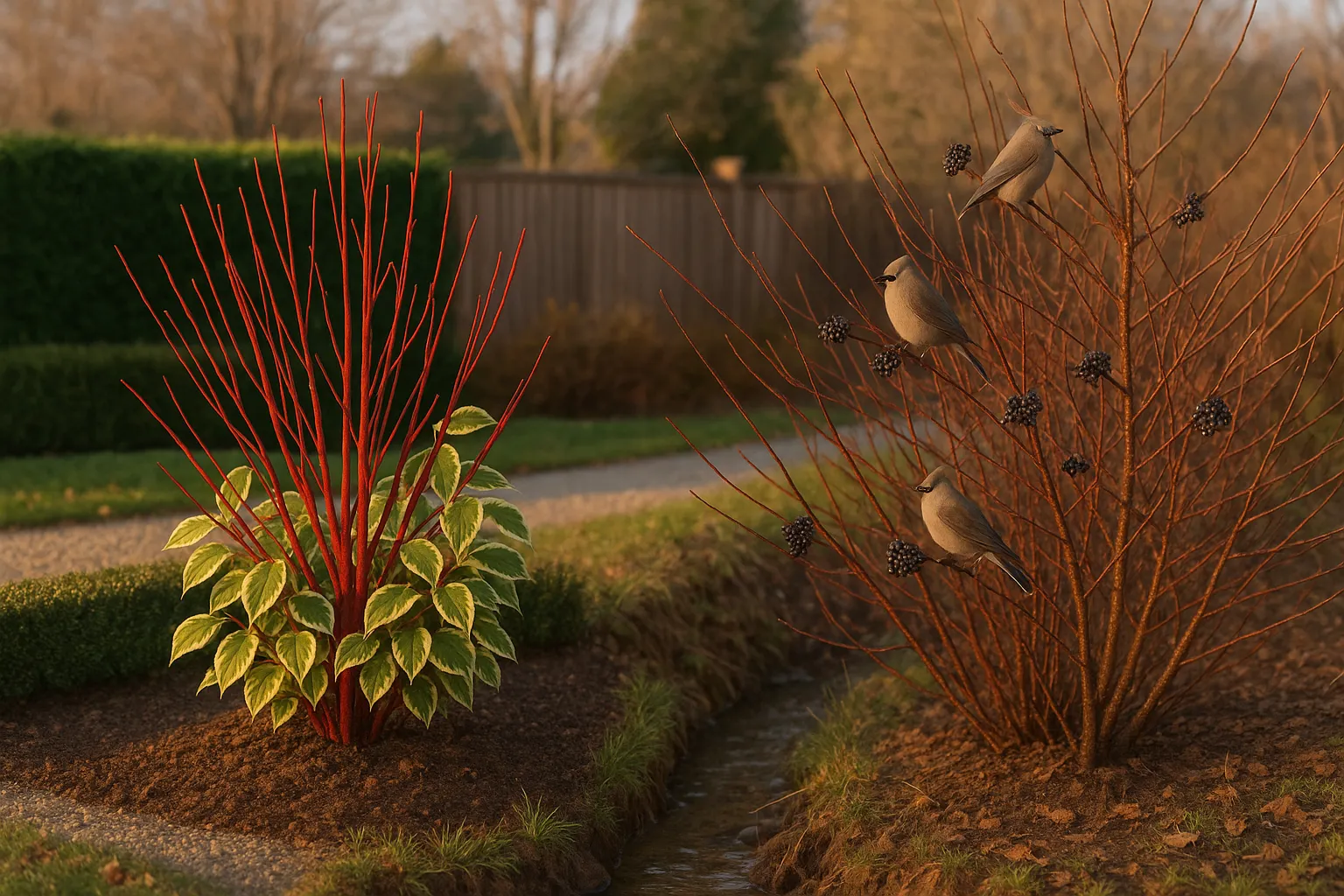
Appearance: Cornus alba usually has stronger, often bright-red stems and variegated-leaf cultivars (e.g., ‘Ivory Halo’). Cornus sanguinea tends toward darker red to purple stems and simple green leaves.
Native range: Cornus alba is native to Siberia, northeastern Asia and introduced widely: Cornus sanguinea is native to Europe and western Asia.
Size and habit: Alba commonly reaches 8–12 feet and forms dense multi-stemmed clumps. Sanguinea is often 6–10 feet with a more arching, sometimes suckering habit that forms thickets.
Fruit and wildlife: Sanguinea produces small blackish drupes that feed birds more reliably. Alba also fruits, but birds prefer sanguinea in many regions.
Hardiness: Both are cold-hardy, with Cornus alba hardy to USDA zone 2–3 and sanguinea hardy to around zone 4–8 depending on cultivar.
Similarity: Both species tolerate a range of soils and full sun to part shade, and both respond well to coppicing (renewal cutting) to maintain vivid stem color. If you want winter stem color, either will work: your choice depends on scale, native-plant goals, and maintenance willingness.
Distinctive Identification: How To Tell Them Apart
Fact: Identification centers on stems, leaves, and fruit: start there and you’ll get it right most of the time.
Cornus Alba: Appearance And Varieties
Cornus alba shows bright red to orange-red stems in winter. Leaves are opposite, simple, 2–4 inches long, with smoother edges than some other dogwoods. Some cultivars, like ‘Sibirica’ and ‘Elegantissima’, give you intense stem color or attractive variegation. ‘Sibirica’ is prized for intense crimson stems: ‘Ivory Halo’ offers green leaves edged in cream. Flowers are small, white, in flat-topped clusters in late spring, followed by small white to pale blue drupes. Habit is upright and clump-forming: some cultivars grow less vigorously and work well in smaller gardens.
Cornus Sanguinea: Appearance And Varieties
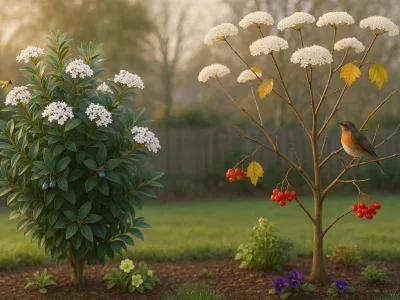
Cornus sanguinea has darker red to purple-brown stems, often less neon than alba but richly colored when backlit. Leaves are opposite, 1.5–3 inches long, and sometimes have a slightly coarser texture. Varieties include ‘Midwinter Fire’ (a hybrid often listed under sanguinea traits) which shows layered color from orange to purple on stems and good fall foliage color. Sanguinea’s flower clusters are similar, small, white, and the fruit are black drupes that persist into autumn, making it valuable for birds. The species can sucker and form informal hedges if unchecked.
Habitat, Hardiness, And Soil Preferences
Fact: Both species are adaptable, but cornus alba tolerates colder climates while cornus sanguinea is more often used where wildlife value and native status matter.
Light, Moisture, And Temperature Tolerances (Side‑By‑Side)
Light: Both do best in full sun to part shade. Full sun gives the brightest stem color for alba: sanguinea tolerates deeper shade but may lose some stem vibrancy.
Moisture: Both prefer consistent moisture. Alba tolerates wetter soils better and is often used near streams. Sanguinea tolerates periodic dryness once established, though it prefers moist, well-drained sites.
Temperature: Cornus alba tolerates very low temperatures (USDA zones 2–3 for many cultivars). Cornus sanguinea is reliably hardy in zones 4–8. If you have severe winter cold, choose alba: if you want a native species in temperate regions, sanguinea fits better.
Soil Type, pH, And Drainage Considerations
Fact: Both species prefer fertile, well-drained soils but accept a range of pH.
Soil type: Loam to clay-loam suits both. Alba handles heavier, wetter soils better than sanguinea.
pH: Both tolerate pH from slightly acidic to neutral (pH 5.5–7.5). They will survive outside that range but growth may slow.
Drainage: Avoid standing water for extended periods. Alba tolerates occasional wetness: sanguinea requires good drainage to prevent root issues. Amending with organic matter improves structure and moisture retention.
Practical Care: Planting, Watering, And Fertilizing
Fact: Both species are low- to moderate-care plants: correct planting and early season maintenance ensure long-term vigor.
Best Planting Practices And Timing
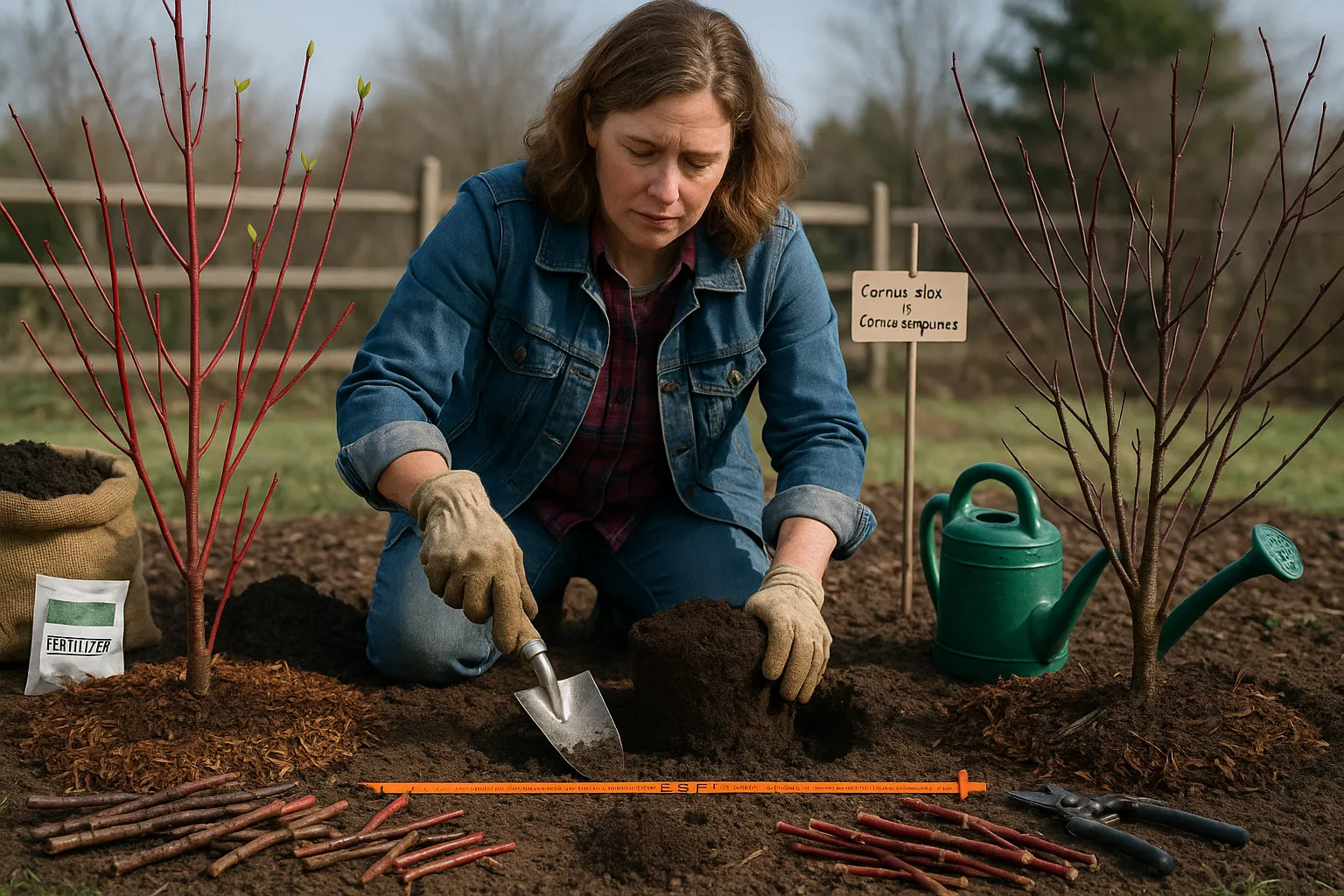
Plant in early spring or fall. Dig a hole twice as wide as the root ball and set the plant so the root flare sits level with the soil surface. Backfill with native soil mixed with compost: avoid over-amending the backfill only in the hole. Space alba plants 4–8 feet apart for hedges: space sanguinea 3–6 feet if you want a dense thicket.
Water well after planting and keep the root zone evenly moist for the first two growing seasons. Mulch 2–3 inches over the root zone, keep mulch away from the stem. Stake only if necessary: both species develop strong root systems quickly.
Pruning Techniques And Timing For Stem Color And Health
Fact: Renewal pruning (coppicing) every 2–4 years produces the brightest stems.
Coppicing: In late winter or very early spring, cut one-third of the oldest stems to the ground to encourage new, colorful growth. For Alba, cut older, brown stems to allow red new shoots to dominate. For Sanguinea, thin the oldest stems and remove crossing branches to prevent disease and open the shrub to light.
Hard pruning: Both tolerate hard cuts: alba is especially forgiving and responds with vigorous new stems.
Shaping: Light summer pruning maintains form. Remove suckers for controlled spacing if you don’t want a thicket. Prune after flowering if you want to preserve that season’s fruit display.
Landscape Uses And Wildlife Value
Fact: Cornus alba is prized for ornamental winter color and formal uses: Cornus sanguinea scores higher on native wildlife support and naturalistic plantings.
Ornamental Uses: Color, Structure, And Seasonal Interest
Use Cornus alba as a focal winter-interest specimen, in mixed borders for color contrast, or as a structured hedge. Variegated alba cultivars add summer leaf interest. Sanguinea works well in naturalized settings, cottage gardens, and mixed native hedgerows where you want fall berries and softer form.
Functional Uses: Hedging, Screening, Erosion Control
Both species form dense sticks-effective hedges when coppiced annually. Alba suits formal hedging and stream-bank stabilization due to tolerance for wetter soils. Sanguinea spreads by suckers and is effective for quick informal screens and stabilizing slopes in temperate regions.
Wildlife Benefits: Pollinators, Birds, And Fruit Use
Sanguinea’s fruits are more attractive to birds like thrushes and waxwings: the shrub also provides nesting cover. Alba provides nectar to pollinators during bloom but is less relied upon for fruit by birds in some regions. Both offer autumn food and winter shelter, but if you prioritize bird forage, choose sanguinea.
Pests, Diseases, And Common Problems
Fact: Both species are generally resilient, but you must watch for scale, borers, leaf spot, and bacterial diseases.
Typical Pests And How To Manage Them
Scale and aphids: These sap feeders can appear on new growth. Manage with horticultural oil sprays in dormant season and encouraging predators like lady beetles.
Borers: Rare on healthy plants but attack stressed specimens. Maintain vigor through proper watering and pruning: remove infested wood promptly.
Spider mites: Can affect plants in hot, dry conditions. Increase humidity around plants or apply insecticidal soap when needed.
Fungal And Physiological Diseases, Prevention, And Treatment
Leaf spot and anthracnose: These fungal diseases cause brown spots and premature leaf drop. Prevent with good air circulation, avoid overhead watering, and rake fallen debris. Fungicides can be used on severe, recurring outbreaks.
Bacterial canker: Rare but serious. Remove affected stems and sanitize tools. Avoid wounding plants during wet weather.
Winter desiccation and sunscald: Occurs on south-facing stems in extreme winters. Plant with some shelter or use anti-desiccant sprays in exposed sites. Proper mulching reduces root stress and disease susceptibility.
Keep plants healthy to reduce pest pressure: correct siting, balanced fertilization, and timely pruning make most problems manageable.
Selecting The Right Species For Your Garden
content starts with clear recommendation: Choose Cornus alba when you want vibrant winter stems and cold hardiness: choose Cornus sanguinea when you favor native wildlife value and informal thickets.
Decision Factors: Size, Color Goals, Maintenance Level, And Climate
Size: If you need taller, more upright shrubs, alba typically reaches larger statures. For tighter spaces or informal groups, sanguinea’s smaller habit may suit better.
Color goals: For neon-red winter stems and variegated foliage, pick alba and cultivars like ‘Sibirica’ or ‘Ivory Halo’. For subtle, layered stem color and persistent fruit for birds, pick sanguinea or hybrids like ‘Midwinter Fire’.
Maintenance: Alba tolerates hard pruning and rewards coppicing with bold color: sanguinea can require more sucker control. If you want lower maintenance, plan coppicing for alba every few years rather than constant trimming.
Climate: In very cold northern climates, alba is the safer bet. In temperate regions where native planting is a priority, sanguinea supports local ecosystems better.
Recommended Cultivars And Where They Excel
Cornus alba ‘Sibirica’, excellent for winter stem color and cold climates (RHS-recognized selection). Use in mixed borders and as a specimen.
Cornus alba ‘Ivory Halo’, variegated leaves add summer interest: good in formal gardens.
Cornus sanguinea (species), best for wildlife hedges and naturalized plantings across Europe and similar climates.
Cornus x sanguinea ‘Midwinter Fire’, a hybrid often chosen for multi-hued stems and fall foliage: excellent where seasonal color variety is desired.
Match cultivar to garden goals and local hardiness maps (check USDA zones and local extension recommendations).
Propagation, Maintenance Schedule, And Longevity Expectations
Fact: Both species propagate easily by hardwood cuttings and root suckers: correct maintenance extends their useful life for decades.
Propagation Methods: Cuttings, Division, And Seed
Softwood cuttings: Take in late spring to early summer: use a rooting hormone and keep cuttings humid. Success is good for many alba cultivars.
Hardwood cuttings: Highly effective for both species in late fall or winter: insert 6–12 inch cuttings in free-draining mix and expect roots by spring.
Division and suckers: Sanguinea often produces suckers you can lift and transplant in early spring. Division of clumps works for alba if centers are mature.
Seed: Seed-grown plants may vary from the parent and take longer to flower: use seed when you want genetic diversity rather than cultivar reproduction.
Annual And Multi‑Year Maintenance Checklist
Spring: Inspect for winter damage: coppice one-third of old stems every 2–4 years to refresh color. Feed with a balanced slow-release fertilizer if growth is slow.
Summer: Monitor moisture, remove crossing branches, and control pests like aphids. Mulch and weed control helps root health.
Fall: Leave some fruiting stems for birds: cut back dead wood. Clean up fallen leaves to reduce fungal inoculum if you have recurring leaf spot.
Multi-year: Rejuvenate overgrown stands by hard coppicing in late winter every 3–5 years. Expect a healthy coppiced shrub to live 20+ years: unmanaged thickets can persist longer but may become woody and less colorful.
If you follow straightforward planting and pruning routines, these Cornus species will reward you with winter color, seasonal interest, and ecological benefits for many seasons.
To provide the best experiences, we use technologies like cookies to store and/or access device information. Consenting to these technologies will allow us to process data such as browsing behaviour or unique IDs on this site. Not consenting or withdrawing consent, may adversely affect certain features and functions.
Functional
Always active
The technical storage or access is strictly necessary for the legitimate purpose of enabling the use of a specific service explicitly requested by the subscriber or user, or for the sole purpose of carrying out the transmission of a communication over an electronic communications network.
Preferences
The technical storage or access is necessary for the legitimate purpose of storing preferences that are not requested by the subscriber or user.
Statistics
The technical storage or access that is used exclusively for statistical purposes.The technical storage or access that is used exclusively for anonymous statistical purposes. Without a subpoena, voluntary compliance on the part of your Internet Service Provider, or additional records from a third party, information stored or retrieved for this purpose alone cannot usually be used to identify you.
Marketing
The technical storage or access is required to create user profiles to send advertising, or to track the user on a website or across several websites for similar marketing purposes.