Shallots bring a soft, sweet onion note and a milder bite that lifts sauces, vinaigrettes, and sautés. When you don’t have them, the right swap keeps the dish balanced instead of noisy or flat. This guide gives clear, practical swaps for different uses, raw, cooked, pickled, and regional recipes, so your food tastes the way you intended. You’ll find single-ingredient options, compound blends, exact ratios, and simple tricks to recreate shallot flavor and texture with ingredients you likely already have.
Quick Recommendations By Use Case
Fact: Choose your substitute based on how you use shallots. Below are fast picks, followed by short notes so you can grab the nearest onion and keep moving.
Raw Use (Salads, Vinaigrettes, Garnishes)
Use red onion (finely diced) or green onion whites for raw applications. Red onion gives color and crispness: its sharpness softens if you soak it briefly in cold water. Use about half the volume of red onion for raw-facing recipes because it’s stronger.
Cooked Use (Sautés, Sauces, Risottos)
Use yellow or sweet onion when cooking. They brown well and become sweet, similar to shallots. Use a 1:1 volume swap but reduce initial heat slightly so they soften before browning.
Pickling And Preserving
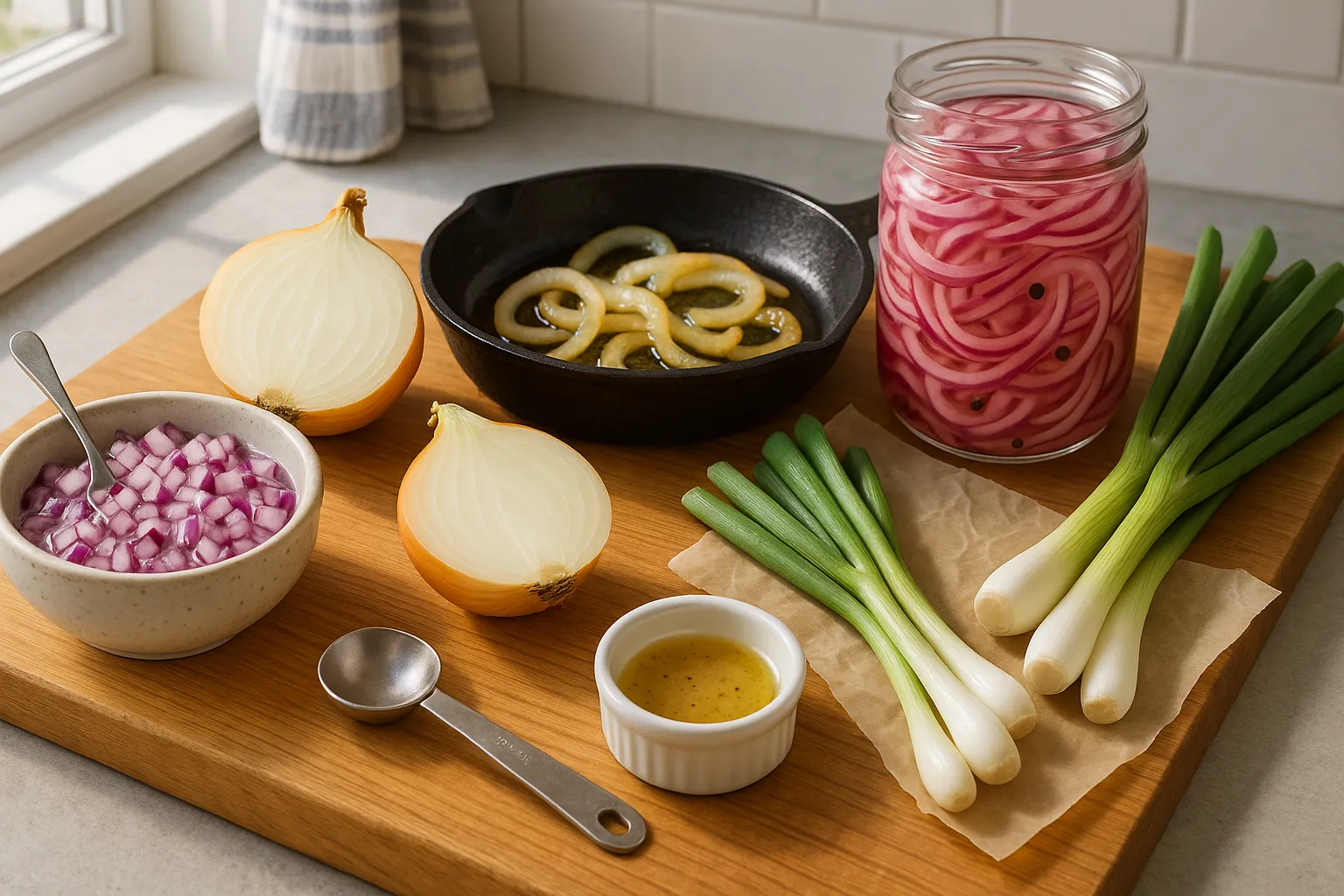
Use red onion or small pearl onions. Red onion picks up brine quickly and keeps pink color. Slice thin and follow the same pickling time as you would for shallots.
Asian And Delicate Recipes
Use green onion (scallion) whites or leek for subtle, layered flavor. Scallion white has the sharpness: green tops add freshness. Use equal parts scallion to shallot when cooked, but increase slightly when raw for brightness.
Why Shallots Matter In Recipes
Fact: Shallots contribute both mild sweetness and aromatics that shape a dish’s background flavor.
Flavor Profile And Culinary Functions
Shallots taste like a mix of onion and garlic with a gentle sulfur note and floral-sweet undertones. They add base aromatics to stocks, sauces, and dressings without overwhelming other ingredients. French and Southeast Asian cuisines often use them for that reason. The shallot’s sugar content caramelizes quickly, which gives sauces a rounded finish.
When A Substitute Really Needs To Match Texture Versus Flavor
Texture matters when shallots are raw (salads, finishing garnishes) or pickled. Flavor match matters in cooked bases where the aromatics dissolve into the sauce. If your recipe lists thin slices or raw minced shallot, prioritize a substitute with similar crunch and bite (red onion or scallion). If the shallot is sweated or caramelized, choose an onion with good sugar content (yellow or sweet onion) and give it time to soften.
Best Single-Ingredient Substitutes
Fact: One ingredient often gives the closest practical result: choose based on whether you need bite, sweetness, or mildness.
Red Onion, When To Use And How To Prepare
Red onion matches raw uses best. Mince very small or soak in cold water for 5–10 minutes to cut sharpness. Use roughly half the volume of minced shallot when raw. Example: for 2 tablespoons minced shallot, use 1 tablespoon minced red onion if you want milder flavor.
Yellow/Sweet Onion, Strengths, Weaknesses, And How To Tame Them
Yellow or sweet onions work for cooked dishes because they caramelize well. They can be more pungent raw. To tame them: cook low-and-slow, add a pinch of sugar to speed caramelization, or sweat under a lid. Use a 1:1 volume swap for cooked uses.
Green Onion (Scallion), Which Part To Use And Best Applications
Use the white and lower pale-green parts for savory depth: use green tops for garnish. Scallion whites can replace shallots in Asian sauces and stir-fries at a 1:1 ratio when cooked, and use 1.5x when raw to keep brightness.
Leek, When Mildness And Texture Matter
Leeks offer gentle sweetness and a tender bite after cooking. Use the white and light-green parts, slice thin, rinse to remove grit. Use 1:1 by volume in cooked dishes, but increase cooking time to soften.
Garlic, When A Little Garlic Can Stand In
Garlic will not taste like shallots, but a small amount adds needed aromatics when paired with a mild onion. Use a light hand: 1/8 to 1/4 teaspoon minced garlic added to 1 tablespoon mild onion mimics the savory edge of shallots without dominating.
Compound Substitutes And Exact Ratios
Fact: Blends often recreate shallot complexity better than single ingredients.
Onion Plus Garlic Blend, Ratios For Raw Versus Cooked Uses
For raw use (dressings, garnishes): mix 3 parts red onion to 1 part garlic, minced very fine. For cooked use (sauces, risottos): mix 4 parts yellow onion to 1 part garlic, sweat until soft. Example: to replace 2 tablespoons minced shallot raw, use 1.5 tablespoons minced red onion + 1/2 teaspoon minced garlic.
Shallot Powder And Dehydrated Alternatives, Conversion Guide
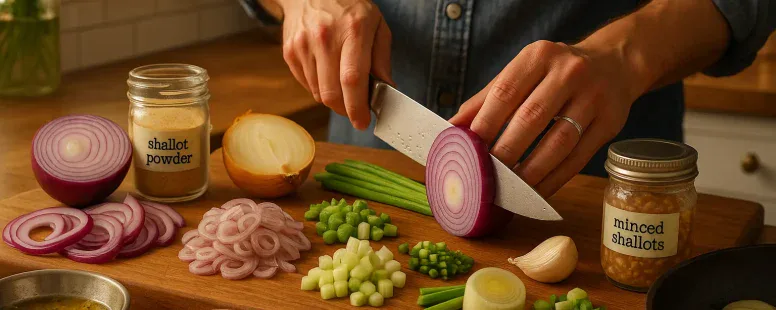
Dried shallot or shallot powder is concentrated. Use 1/2 teaspoon powder rehydrated with 1 teaspoon water to replace 1 tablespoon fresh minced shallot. If a jarred minced shallot is available, follow label conversions: typically 1 tablespoon jarred equals 1 tablespoon fresh.
Chives, Shallot Oil, And Pickled Onions, Specialized Replacements
Chives add oniony brightness for final garnish but won’t stand in for cooked shallots. Shallot oil (infused oil) gives aroma in dressings: use sparingly. Pickled small red onions give the acidity and crunch you want in pickled shallot roles.
How To Choose The Right Substitute For Your Recipe
Fact: Match intensity, texture, and cooking method when you pick a substitute.
Assessing Flavor Intensity And Sweetness
Decide if you need mild or assertive flavor. Red onion and scallion whites are higher in sharpness: yellow and sweet onions are higher in sweetness after cooking. Taste a small raw sample before adding large amounts.
Matching Texture And Cooking Time
If a recipe calls for minced raw shallot, choose a crisp substitute (red onion or scallion) and cut very small. For sweated bases, choose an onion that softens quickly: cut size affects cook time, so adjust accordingly.
Considering Availability, Cost, And Dietary Restrictions
Leeks and scallions often cost more per pound than common onions but need less volume. Garlic is inexpensive but strong: use less if low-FODMAP or sensitive. Frozen shallots or jarred minced onion can be handy for limited access. If you have allergies or on a low-FODMAP diet, consider garlic-infused oil for garlic flavor without FODMAPs: the US Food and Drug Administration and many dietitians note that oils can carry flavor without the sugars that trigger symptoms.
Practical Tips For Recreating Shallot Flavor And Texture
Fact: Technique often matters more than exact ingredient.
Sautéing And Caramelizing Tricks To Soften Strong Onions
Slice or mince substitutes uniformly. Start on low heat with oil, salt lightly to draw moisture, and cover to sweat for several minutes. Increase heat to finish browning. Adding a teaspoon of butter near the end deepens flavor. For risottos, add onion earlier so it melts into the rice.
Balancing Acidity, Salt, And Sweetness To Mimic Shallots
Shallots balance sweetness and sharpness. If your substitute is too sharp, add a splash of acid (vinegar or lemon) and a pinch of sugar to tame it. Taste as you go. Example: if red onion tastes too raw in a vinaigrette, add 1/2 teaspoon white wine vinegar and 1/4 teaspoon sugar for every tablespoon of onion.
Storage, Prep, And Quick-Fix Hacks (Frozen Shallots, Powder, Minced Jarred)
Keep jarred minced shallots in the fridge for quick use: they lose some brightness but hold well in cooked dishes. Frozen diced shallots work well for cooked bases: toss them in frozen. Shallot powder is shelf-stable and handy for dry rubs and sauces, rehydrate for salads. If you forget shallots entirely, use a small amount of sweet onion plus a drop of garlic oil for aroma.
Vulnerable note: I once substituted raw yellow onion for minced shallot in a lemon-herb dressing and the result nearly ruined a dinner party. I fixed it by soaking the onion and adding honey and extra lemon. You’ll learn by small experiments: little tweaks save dishes more often than a perfect ingredient.
Published: March 7, 2026 at 11:13 am by Ellie B, Site owner & Publisher
To provide the best experiences, we use technologies like cookies to store and/or access device information. Consenting to these technologies will allow us to process data such as browsing behaviour or unique IDs on this site. Not consenting or withdrawing consent, may adversely affect certain features and functions.
Functional
Always active
The technical storage or access is strictly necessary for the legitimate purpose of enabling the use of a specific service explicitly requested by the subscriber or user, or for the sole purpose of carrying out the transmission of a communication over an electronic communications network.
Preferences
The technical storage or access is necessary for the legitimate purpose of storing preferences that are not requested by the subscriber or user.
Statistics
The technical storage or access that is used exclusively for statistical purposes.The technical storage or access that is used exclusively for anonymous statistical purposes. Without a subpoena, voluntary compliance on the part of your Internet Service Provider, or additional records from a third party, information stored or retrieved for this purpose alone cannot usually be used to identify you.
Marketing
The technical storage or access is required to create user profiles to send advertising, or to track the user on a website or across several websites for similar marketing purposes.