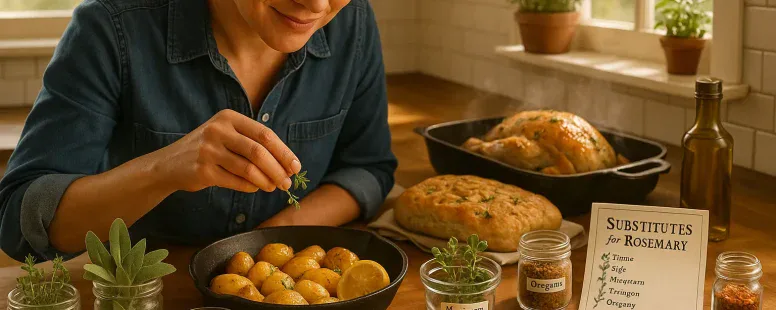
Rosemary gives food a sharp, piney lift that brightens roasted meats, focaccia, and tomato sauces. But you don’t always have it on hand, or its resinous bite might clash with a recipe. Knowing the best substitute for rosemary saves a meal and sharpens your cooking instincts. This guide shows clear, practical swaps, fresh and dried, plus blends and technique tweaks so your dish keeps the aroma and balance you intended.
When And Why You Might Replace Rosemary
Fact: You replace rosemary when its flavor or availability doesn’t fit the dish. Fresh rosemary is strong, with pine, camphor, and citrus hints. It pairs well with lamb, chicken, potatoes, and breads. But sometimes you need a softer herb, a pantry-friendly option, or a flavor that won’t compete with citrus or delicate fish.
Context: If you’re out of rosemary, allergic to it, cooking for kids who dislike its resinous note, or making a dish where the needle-like leaves would be texturally awkward (like smooth soups), substitution makes sense. Also, rosemary can overpower quick-cooked vegetables: you might prefer a milder herb.
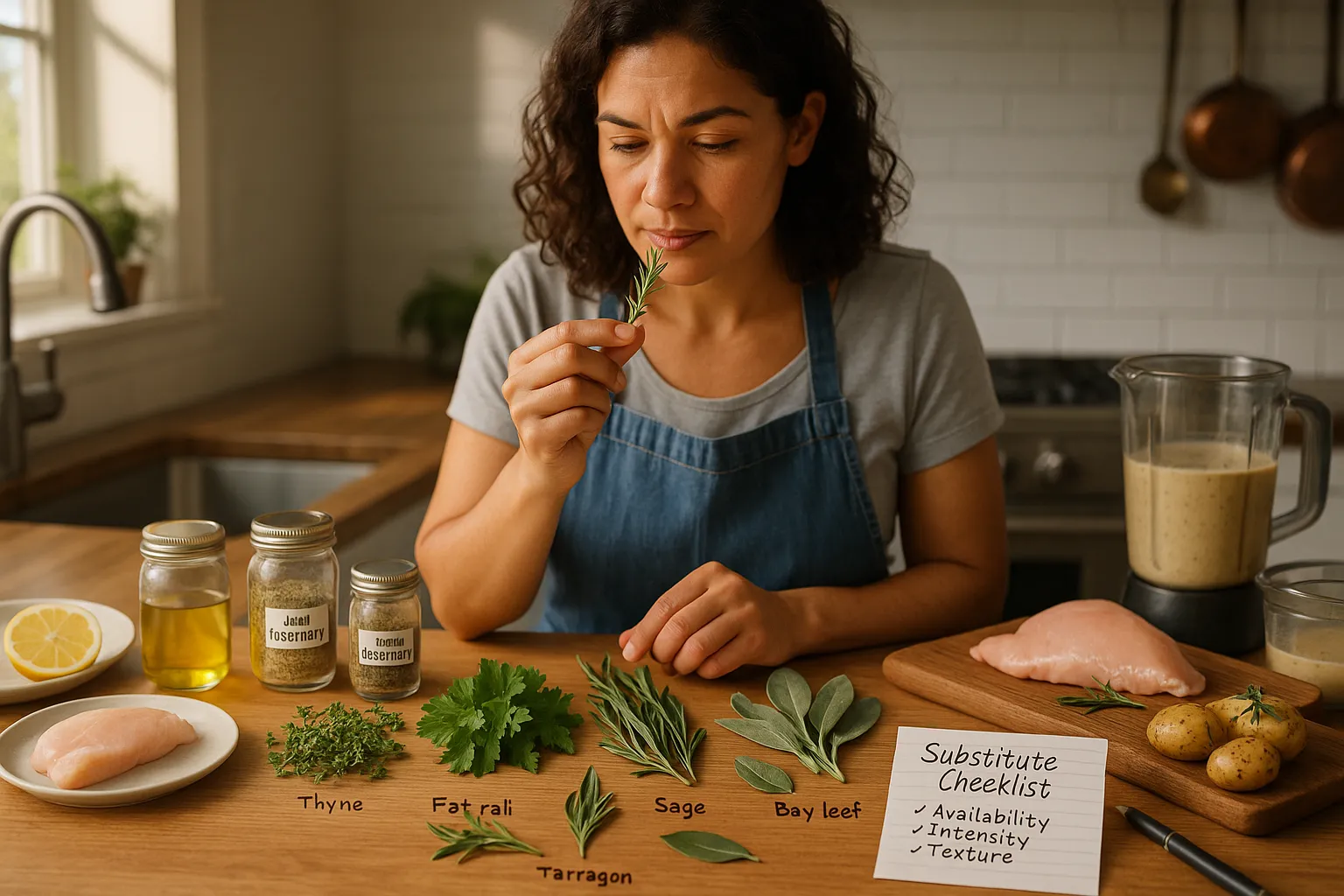
Quick checklist to decide: availability (do you have fresh or dried?), intensity (do you want a strong piney note?), texture (will leaves be bothersome?), and pairing (what protein or produce are you serving?). These questions direct you to the right substitute below.
Top Fresh Herb Substitutes
Fact: Fresh herbs often replace rosemary best because they add bright, complex oils that dried herbs can’t fully mimic. Use these fresh swaps when you want live green flavor and aroma.
Thyme, Flavor Match And Best Uses
Thyme matches rosemary’s herbal backbone without the same piney resin. It has earthy, lemony notes and stands up to long cooking. Use thyme for roasted meats, stews, and vegetables. Ratio: substitute 1:1 for fresh sprigs: if using dried, use one-third the quantity. Example: swap a few sprigs of rosemary for a handful of thyme when roasting chicken with lemon and garlic.
Sage, Earthy Alternative For Roasts And Stuffing
Sage offers a savory, slightly peppery profile that works well with pork, stuffing, and browned butter sauces. It’s less piney and more leathery: use it when you want warmth rather than brightness. Use 2–3 sage leaves to replace one rosemary sprig in roasts.
Marjoram, Milder, Sweeter Swap For Lighter Dishes
Marjoram is soft, floral, and a bit sweet. It suits lighter dishes, vegetable sautés, tomato-based sauces, and egg dishes, where rosemary would be heavy. Use marjoram in equal fresh-volume or reduce if using dried.
Tarragon, Anise Notes For Poultry And Fish
Tarragon brings a licorice/anise edge: it won’t mimic rosemary but provides an aromatic lift that pairs beautifully with chicken, fish, and cream sauces. Use sparingly, half the amount of rosemary, and taste as you go.
Oregano, Robust Substitute For Mediterranean Dishes
Oregano replaces rosemary’s savory presence in Mediterranean dishes like tomato stews and grilled vegetables. It’s earthier and stronger on the pepper scale. Use a little less oregano than you would rosemary when fresh: if dried, use one-third of the fresh amount.
Best Dried And Pantry-Friendly Substitutes
Fact: Dried herbs and pantry items give reliable flavor when fresh herbs aren’t available. They’re more concentrated, so measure down and adjust cooking time to coax out aroma.
Dried Thyme And Oregano, Direct Dried Swaps And Ratios
Dried thyme and oregano are the most direct pantry swaps. Use 1 teaspoon dried thyme or oregano for every 1 tablespoon fresh rosemary called for (a 3:1 fresh-to-dried conversion). Tip: crumble dried leaves between your fingers to release oils before adding to hot oil or stock.
Herb Blends (Italian Seasoning, Herbes de Provence), When To Use Them
Italian seasoning and Herbes de Provence contain thyme, oregano, marjoram, and sometimes lavender. Use blends in tomato sauces, roasted vegetables, and focaccia when you want the general Mediterranean profile of rosemary without its specific piney note. Use blends at about half the quantity of fresh rosemary: they can be stronger because of concentrated dried herbs.
Crushed Red Pepper Or Lemon Zest, When Flavor Contrast Works Better Than Herb Match
Fact: Sometimes a flavor contrast serves better than imitation. Crushed red pepper adds heat to grilled lamb when you’d otherwise use rosemary for bite. Lemon zest brightens fish and potatoes where rosemary’s pine would weigh things down. Use zest sparingly, tastes vary: start with 1/2 teaspoon for a family-sized dish.
Using Herb Combinations To Mimic Rosemary
Fact: You can recreate rosemary’s complex profile by combining herbs that hit its woody, piney, and citrus dimensions. Mixes often yield a closer match than any single herb.
Simple Mixes To Recreate Rosemary’s Piney, Resinous Notes
Try this basic blend: 2 parts thyme, 1 part marjoram, 1 part oregano. The thyme gives structure, marjoram adds sweetness, and oregano brings savory depth. Use fresh herbs when possible: if dried, reduce quantity by two-thirds.
Blends For Roasting Versus Soups/Stews
For roasting: add crushed garlic and a touch of lemon zest to the simple mix, this emulates rosemary’s affinity for roast aromatics. For soups and stews: skip the zest and add bay leaf plus a heavier hand of thyme to hold up to long simmer times.
How To Build A Substitute Blend From Pantry Herbs
Start with thyme as your base. Add small amounts of oregano and marjoram. Smell as you mix. If you want more pine, add a tiny pinch of crushed juniper berry (used in gin and game recipes). Juniper is potent: a little goes far. Keep notes so you can replicate a mix that you prefer.
Choosing Substitutes By Dish Type
Fact: Select substitutes based on the dish’s cooking method and flavor goals. Different herbs behave differently under heat.
Roasted Meats And Vegetables, Best Options And Techniques
Use thyme, sage, or a thyme-oregano blend for roasting. Rub herbs with olive oil and garlic, then massage onto meat or vegetables. For potatoes, nest fresh thyme sprigs under the skin or toss with oil and crushed dried thyme. Timing: add delicate herbs late in roasting to keep aroma bright.
Potatoes, Breads, And Focaccia, Texture And Timing Notes
For breads and focaccia, use fresh thyme or oregano for a pleasant herb fleck without needle texture. Chop leaves finely and fold into dough or press into oil before baking. If you want the pine note, add 1 teaspoon lemon zest per batch to mimic rosemary’s lift.
Soups, Sauces, And Marinades, Mild Versus Strong Herb Choices
In soups and slow sauces, thyme and bay leaf replace rosemary without dominating. For quick marinades, use tarragon or marjoram for lift. Taste early: dried herbs can assert bitterness if overcooked.
Measurement, Flavor Intensity, And Cooking Adjustments
Fact: Dried herbs are roughly three times as potent as fresh by volume. Adjust both quantity and timing to control intensity.
Fresh-To-Dried Conversion Ratios And Potency Tips
Use 1 tablespoon fresh = 1 teaspoon dried. When substituting dried thyme or oregano for fresh rosemary, start with one-third of the fresh amount. Remember: crush dried herbs between your palms to release volatile oils before adding to hot fat.
Adjusting Timing And Quantity To Avoid Overpowering A Dish
Add robust herbs early during long cooks so they mellow. Reserve delicate herbs like marjoram and tarragon for the final 5–10 minutes. If a dish tastes too bitter or sharp, add acid, a squeeze of lemon or a splash of vinegar, to balance and soften herb bitterness.
Practical Storage, Sourcing, And Availability Tips
Fact: Proper storage preserves herb flavor: poor storage kills aroma quickly. Fresh herbs wilt in about a week: dried herbs lose potency over months.
How To Store Fresh Herbs And Extend Shelf Life
For soft herbs (marjoram, tarragon): trim stems, place in a jar with an inch of water, cover loosely with a plastic bag, and refrigerate. For woody herbs (thyme, sage, oregano): wrap lightly in a damp towel and store in the fridge. Snip leaves as you need them. Use within 5–10 days for best flavor.
Buying Dried Herbs: Labels, Quality, And When To Replace Them
Look for whole leaves or coarsely crushed herbs: they retain aroma longer than fine powders. Check harvest or packed dates when possible. Replace dried herbs every 6–12 months, if they smell weak, they are past their prime. Brands like McCormick, Simply Organic, and Penzeys list pack dates on labels: use that to judge freshness.
Practical tip: grow thyme or oregano in a small windowsill pot. They’re forgiving and give you a near-constant fresh substitute for rosemary, close at hand, and cheap over time.
To provide the best experiences, we use technologies like cookies to store and/or access device information. Consenting to these technologies will allow us to process data such as browsing behaviour or unique IDs on this site. Not consenting or withdrawing consent, may adversely affect certain features and functions.
Functional
Always active
The technical storage or access is strictly necessary for the legitimate purpose of enabling the use of a specific service explicitly requested by the subscriber or user, or for the sole purpose of carrying out the transmission of a communication over an electronic communications network.
Preferences
The technical storage or access is necessary for the legitimate purpose of storing preferences that are not requested by the subscriber or user.
Statistics
The technical storage or access that is used exclusively for statistical purposes.The technical storage or access that is used exclusively for anonymous statistical purposes. Without a subpoena, voluntary compliance on the part of your Internet Service Provider, or additional records from a third party, information stored or retrieved for this purpose alone cannot usually be used to identify you.
Marketing
The technical storage or access is required to create user profiles to send advertising, or to track the user on a website or across several websites for similar marketing purposes.