Peanut butter is a pantry staple, but you may need a substitute for allergies, flavor variety, or simply because the jar ran out. Picture the smell of toasted oats and a warm slice of bread that still satisfies without peanuts, that’s possible. This guide shows practical, tasty alternatives that match texture, flavor, and nutrition so you can keep recipes and snacks on track. Expect clear comparisons, real-use tips, and simple recipes you can try tonight.
Why You Might Need A Peanut Butter Substitute
Fact: People replace peanut butter for allergy, taste, or availability reasons. Allergies to peanuts affect about 1–2% of children in the U.S., and schools often ban peanuts to prevent severe reactions. You may also want a different flavor profile, lower omega-6 fats, or a spread that blends better in a smoothie.
Practical reasons you’ll seek a substitute:
Allergy or cross-contact risk at school or childcare.
Dietary preferences like low-omega-6 or higher monounsaturated fat.
Recipe compatibility, some spreads work better in baked goods or sauces.
Budget or seasonal availability, peanuts can spike in price.
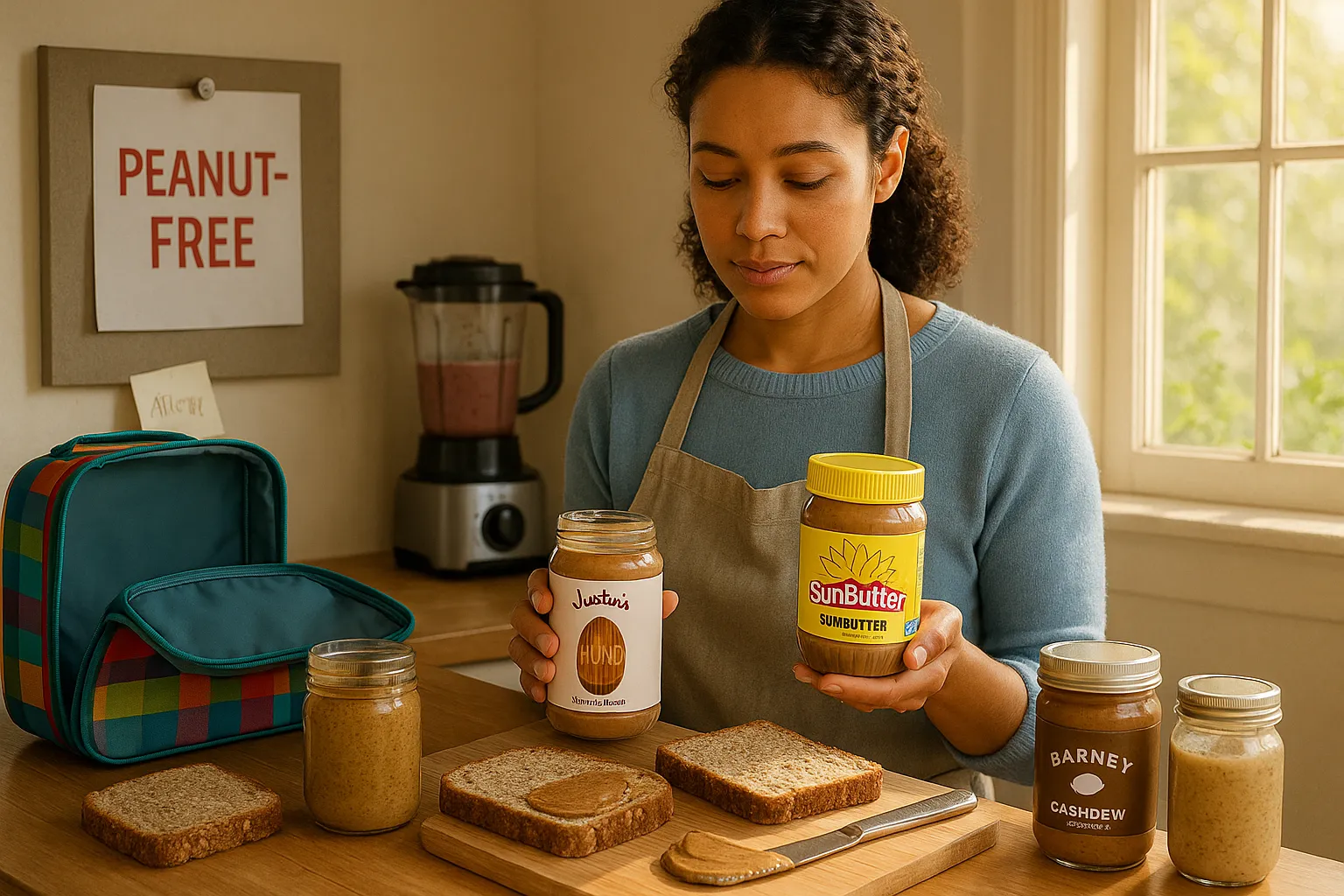
Vulnerable moment: I once packed a peanut-butter sandwich for my child, unaware the daycare had a strict no-peanut policy. We learned quickly: always check labels and policies first. That mistake cost a lunch and taught us better alternatives.
This article uses clear examples (brands like Justin’s, Barney Butter, and SunButter) and tested swaps so you can pick what fits your need.
Top Nut- And Seed-Based Substitutes
Fact: Nut and seed butters usually match peanut butter’s fat profile and texture, making them the easiest direct swaps.
Almond Butter: Flavor, Uses, And Nutrition
Almond butter tastes mildly sweet and slightly toasted. It contains more monounsaturated fat than peanut butter and tends to be higher in vitamin E. Use almond butter on toast, in smoothies, or as a frosting base. Brands to try: Justin’s, MaraNatha, and Thrive Market’s almond butter. Tip: stir many natural jars, oil separates.
Cashew Butter: Texture And Best Applications
Cashew butter is creamy and neutral. It blends smoothly into sauces and desserts. Use it in ganache, vegan alfredo, or cookie dough where you want richness without strong nutty notes. It’s lower in fiber than almond butter but higher in iron.
Sunflower Seed Butter: Allergy-Friendly Alternative
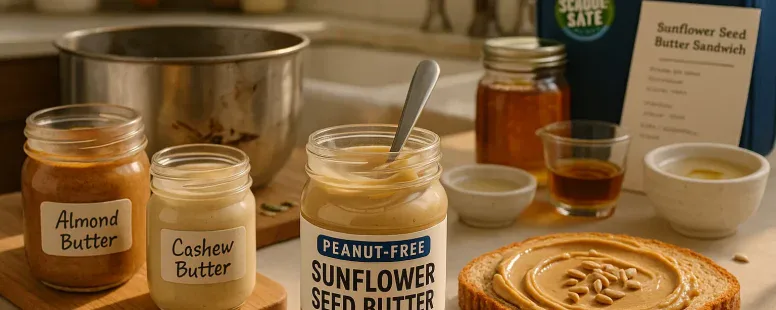
Sunflower seed butter (e.g., SunButter) is peanut-free and mimics the texture of peanut butter well. It’s a top choice for schools and camps. Sunflower seed butter has more vitamin E and often a slightly earthy taste. Warning: cross-contact can occur in facilities that process both peanuts and seeds, read labels.
Tahini (Sesame Paste): Savory And Baking Uses
Tahini offers a bold, slightly bitter sesame flavor. It works great in savory sauces (like hummus), dressings, and some cookies (e.g., tahini chocolate chip). Tahini is high in calcium and makes a smooth binder in baking. It’s less sweet, so add honey or maple in desserts.
Soy Nut Butter: Peanutlike Texture Without Peanuts
Soy nut butter resembles peanut butter in texture and taste and keeps similar protein levels. It’s made from roasted soybeans and is a good option if you tolerate soy. Brands: Sun-Pat (UK) and Crazy Richard’s make soy-based spreads. Note: soy allergies are common too, so confirm safety.
Legume And Dairy Alternatives
Fact: Legume and dairy options shift the flavor to savory and the nutrition toward protein and moisture rather than plant fats.
Hummus And Other Legume Spreads For Savory Uses
Hummus (chickpea-based) gives a creamy, savory substitute on sandwiches and toast. Use black bean or white bean spreads for variety. They add fiber and protein but lack the richness of nut butters. Try a mash of white beans, olive oil, lemon, and garlic as a sandwich spread, works well with veggies and cheese.
Greek Yogurt And Cottage Cheese For Smoothies And Baking
Greek yogurt and cottage cheese add protein and tang. They thin smoothies less than nut butter and can act as a fat-and-protein boost in pancakes or muffins. For baking, use Greek yogurt to replace part of the fat: expect a softer crumb and slightly tangy flavor. Use full-fat for richer results.
Shelf-Stable Sweet Alternatives
Fact: Sweet spreads offer shelf stability and kid-friendly flavors but vary widely in sugar and nutrient content.
Seed And Chocolate-Based Sweet Spreads (Sunflower Chocolate, Cookie Butter)
Sunflower chocolate spreads (sunflower + cocoa) and cookie butter (Lotus Biscoff spread) mimic peanut-chocolate combos. They’re great on toast and in snacks. Cookie butter is high in sugar and has a crisp spice note. Use sparingly when watching calories.
Honey, Maple, And Fruit Butter Options For Toast And Snacks
Honey and maple syrup are fluid sweeteners for toast: fruit butters (apple butter, peach butter) add fruit flavor and lower fat. Fruit butter pairs nicely with cream cheese or ricotta for a quick snack. They won’t provide the protein of nut butters, pair them with yogurt or cheese to balance macronutrients.
Choosing The Right Substitute For Your Needs
Fact: Choose a substitute based on allergy risk, recipe role, and nutrition priorities.
Selecting For Allergies And Cross-Contamination Concerns
If you need a peanut-free option, pick single-ingredient sunflower seed butter made in a peanut-free facility. Read labels for “processed in the same facility” warnings. Ask manufacturers or check company allergen policies online when in doubt. Schools often accept SunButter but not peanut products.
Matching Texture And Flavor For Spreads, Baking, Or Cooking
For spreading, choose creamy almond or sunflower butter. For baking where fat is needed, cashew or almond butter replicates moistness. For savory sauces, tahini or cashew works best. If you need a close peanut-like taste, soy nut or sunflower seed butter comes closest.
Comparing Nutritional Profiles And Calorie Considerations
Nut butters are calorie-dense (about 90–100 kcal per tablespoon). Sunflower and cashew fall in the same range. Use portion control if calories matter. For higher protein, Greek yogurt or soy nut butter offers more per serving. For more vitamin E, choose almond or sunflower seed butter.
How To Use Substitutes In Common Recipes
Fact: You can swap most substitutes at a 1:1 ratio, but baking and sauces may require tweaks.
Swapping Ratios For Sandwiches, Smoothies, And Sauces
Sandwiches and smoothies: 1:1 swap works for almond, sunflower, cashew, and soy nut butters. Sauces: start with 3/4 the amount, then thin with water or oil to match viscosity.
Adjustments For Baking: Moisture, Fat, And Binding
Baking adjustments: if the substitute is less oily (e.g., tahini), add 1 tablespoon of oil per cup to maintain moisture. If it’s wetter (Greek yogurt), reduce other liquid by 2–3 tablespoons per cup. For binding in cookies, add an extra egg or 1–2 tablespoons of ground flax mixed with water.
Flavor Tweaks To Mimic Peanut Butter Taste
To approximate peanut flavor: add 1/4 teaspoon toasted sesame oil or 1/8 teaspoon peanut-style seasoning (a pinch of smoked paprika and a touch of sugar) to sunflower or almond butter. A small dash of molasses deepens color and flavor in cookies.
Quick Homemade Recipes For Peanut Butter Alternatives
Fact: Homemade spreads are easy, cheaper, and let you control salt, sugar, and allergens.
Simple Sunflower Seed Butter (Stovetop Or Food Processor)
Method: Toast seeds lightly in a pan to deepen flavor. Cool slightly. Process in a food processor for 3–7 minutes, scraping sides. Add oil for creaminess and honey for sweetness. Store in fridge. This makes a school-safe, peanut-free spread.
Easy Tahini-Based Cookie Or Sauce Mix
Ingredients: 1/2 cup tahini, 1/4 cup brown sugar, 1 egg white (or 2 tbsp water for vegan), pinch salt.
Method: Whisk until smooth. Use as a cookie base or stir with lemon and garlic for a quick dressing. Tahini gives a savory, rich backbone.
Method: Blend seeds until smooth, add cocoa and sweetener, process to combine. Chill slightly for spreading. Kids love this on crackers and apple slices.
Label Reading And Cross-Contact Prevention For Allergies
Read labels for: peanuts, tree nuts, soy, and sesame declarations. Look for “made in a peanut-free facility” if cross-contact matters. Check company websites for allergen policies. If you need a certification, search for “Allergen Control” pages from companies like SunButter or Justin’s.
Best Practices For Storing Homemade And Store-Bought Spreads
Store unopened jars in a cool pantry. Refrigerate natural spreads after opening to slow oil separation and rancidity. Homemade spreads last about 2–3 weeks refrigerated: use clean utensils to avoid contamination.
Where To Buy Specialty Alternatives And What To Look For
Buy at Whole Foods, Trader Joe’s, Walmart, or online retailers like Amazon and Thrive Market. Look for minimal ingredients, transparent labeling, and ideally no added sugar for savory uses. When buying for school, choose a brand that explicitly states peanut-free processing.
Practical closing nudge: Try one substitute this week, make a sunflower seed butter sandwich or swap tahini into a sauce, and observe how recipes change. Small swaps keep your meals varied and safe, and they might reveal a new favorite.
To provide the best experiences, we use technologies like cookies to store and/or access device information. Consenting to these technologies will allow us to process data such as browsing behaviour or unique IDs on this site. Not consenting or withdrawing consent, may adversely affect certain features and functions.
Functional
Always active
The technical storage or access is strictly necessary for the legitimate purpose of enabling the use of a specific service explicitly requested by the subscriber or user, or for the sole purpose of carrying out the transmission of a communication over an electronic communications network.
Preferences
The technical storage or access is necessary for the legitimate purpose of storing preferences that are not requested by the subscriber or user.
Statistics
The technical storage or access that is used exclusively for statistical purposes.The technical storage or access that is used exclusively for anonymous statistical purposes. Without a subpoena, voluntary compliance on the part of your Internet Service Provider, or additional records from a third party, information stored or retrieved for this purpose alone cannot usually be used to identify you.
Marketing
The technical storage or access is required to create user profiles to send advertising, or to track the user on a website or across several websites for similar marketing purposes.