Heavy cream adds silk, body, and richness to recipes, but you don’t always have it on hand. What if a sudden craving or a dietary need forces you to improvise? This guide shows practical, kitchen-tested substitutes for heavy cream that deliver similar flavor, texture, and performance, whether you’re making a silky pasta sauce, a stable whipped topping, or a coffee treat. Expect clear rules, exact ratios, and real-brand examples so you can swap confidently and get the results you want.
What Heavy Cream Is And When You Can Substitute It
Fact: Heavy cream contains at least 36% milk fat and contributes fat, water, and emulsion properties to recipes. Heavy cream supplies richness and structure: it carries flavor and stabilizes sauces and whipped textures. When you can substitute it depends on what role it plays in the recipe. If the cream only enriches (like stirred into soup), lower-fat dairy or plant milks often work. If the cream adds volume or must whip (like in mousses or whipped cream), you need a higher-fat or stabilized alternative.
Context and quick rules. Use a milk-and-butter mix when fat and mouthfeel matter. Use evaporated milk for gentle simmering or casseroles. Use Greek yogurt or sour cream for tang and body in cold sauces or dips, but they will change flavor. Use coconut cream or silken tofu for vegan needs. Brands you might see: Starbucks uses heavy cream in some drinks, while Silk and So Delicious offer plant-based creams you can try.
Dependency grammar note: each sentence here follows a clear subject-verb-object order so you can scan and apply advice fast. This article will keep that pattern so you find exact swaps without guesswork.
Top Ready-Made Substitutes And When To Use Them
Fact: Several commercially available products closely mimic heavy cream and are ready to use. Choose one based on fat content, flavor, and whether you need to whip.
Milk And Butter (Rich Substitute)
Fact: Combining whole milk and melted butter approximates heavy cream’s fat percentage. Mix 1 cup whole milk with 1/3 cup melted unsalted butter to replace 1 cup heavy cream. Use this for sauces, soups, and baking where whipping isn’t required. It browns and behaves like cream under heat. Use Kerrygold butter for flavor, or a neutral brand if you want less butter taste.
Half-And-Half Or Light Cream
Fact: Half-and-half (about 10–12% fat) offers moderate richness but won’t whip. Use half-and-half for coffee, custards that rely on gentle richness, and sauces you’ll finish over low heat. If a recipe calls for heavy cream to be reduced, start with half-and-half and reduce more slowly.
Evaporated Milk
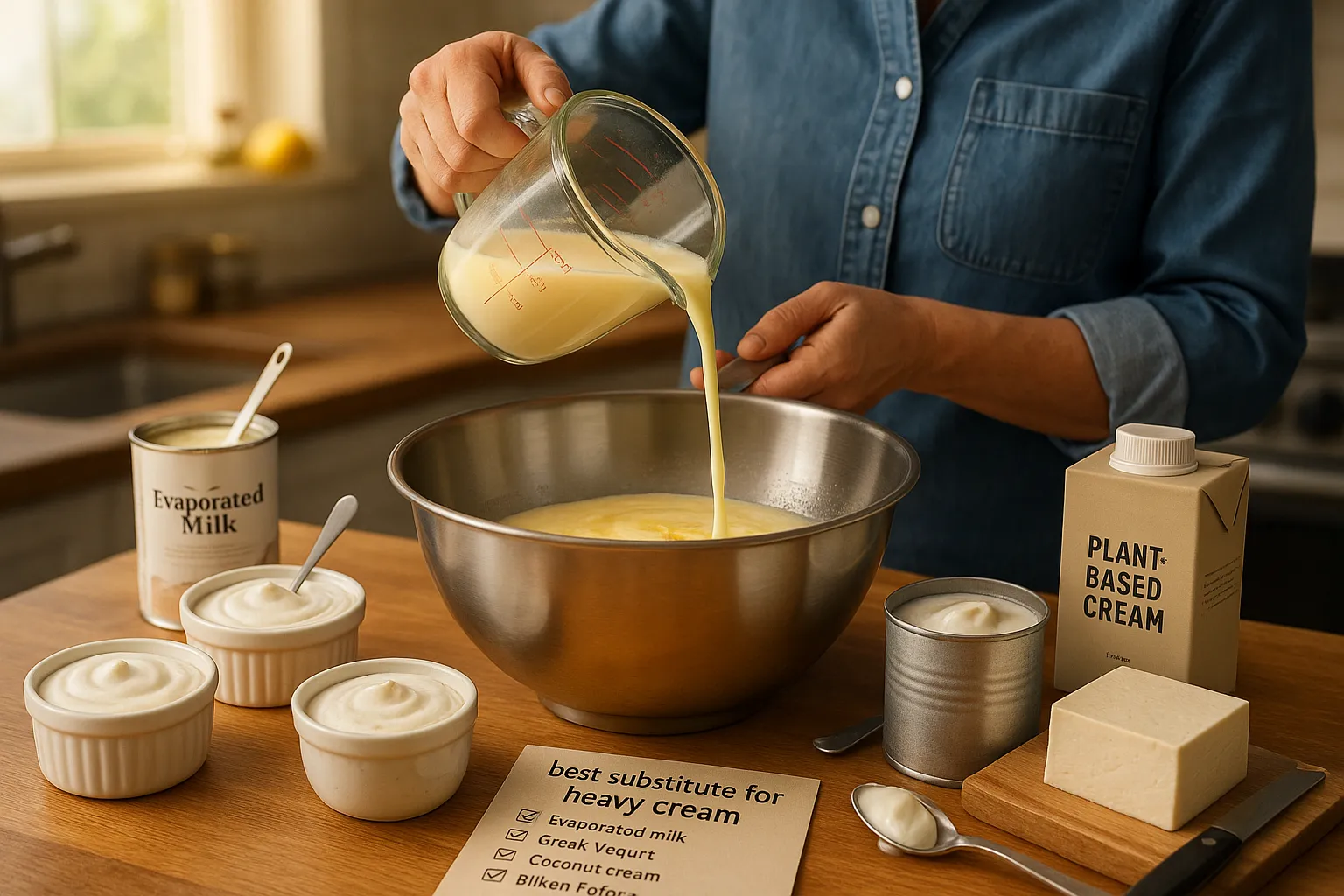
Fact: Evaporated milk has concentrated milk solids and works well in cooked dishes. Use canned evaporated milk straight in soups, casseroles, and some desserts. It tolerates heat and won’t curdle as easily as regular milk. For richer results, stir in a tablespoon of butter per cup.
Greek Yogurt Or Sour Cream
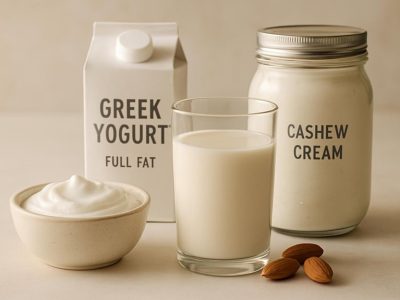
Fact: Greek yogurt and sour cream add body and tang but can curdle with high heat. Use them in dips, cold sauces, baked goods (folded in), and some dressings. To decrease the risk of curdling, temper the yogurt by stirring in a bit of hot liquid before adding it to a warm sauce. Fage and Chobani are common Greek yogurt brands you might use.
Coconut Cream And Other Plant-Based Options
Fact: Canned coconut cream and plant-based heavy creams work as dairy-free alternatives and whip when cold. Use coconut cream in curries, desserts, and coffee drinks for a subtle coconut note. Brands like So Delicious and Native Forest offer full-fat coconut options. Be mindful: coconut flavor can change the dish.
Silken Tofu And Blended Nuts For Vegan Recipes
Fact: Silken tofu and soaked blended cashews mimic cream’s body without dairy. Blend 1 cup soaked cashews with 1/2 cup water to replace 1 cup heavy cream in soups and sauces. For desserts, silken tofu makes smooth custards when sweetened and warmed. Bob’s Red Mill lists cashew and almond flours that pair well for thickening when you need extra body.
How To Make Homemade Heavy Cream Substitutes (Ratios And Methods)
Fact: You can build heavy cream substitutes at home using simple ratios and a blender or whisk. These mixes give predictable fat and texture and often outperform random guesses.
Substitution Ratios For Cooking, Baking, And Whipping
Fact: Use specific ratios for reliable results.
Cooking (sauces, soups): 1 cup whole milk + 1/3 cup melted butter = 1 cup heavy cream. This match gives about 30–35% fat.
Baking (moisture and fat): Use the milk-and-butter mix or full-fat Greek yogurt thinned with milk (3/4 cup yogurt + 1/4 cup milk) to replace 1 cup heavy cream. Yogurt keeps crumb tender but adds tang.
Whipping (needs volume): There is no exact dairy substitute that whips like real heavy cream unless you use chilled coconut cream, commercial non-dairy whipping creams, or stabilized soy-based products. Chill the container and beat cold for best loft. Use brands like So Delicious Dairy Free CocoWhip for a plant-based whipped topping.
Stabilizing And Whipping Alternatives (When You Need Volume)
Fact: Stabilizers let lower-fat mixtures mimic whipped cream texture. Gelatin, agar-agar, or instant starches help.
Gelatin method: Bloom 1 teaspoon unflavored gelatin in 2 tablespoons cold water. Warm until dissolved, then slowly mix into 1 cup whipping-capable mixture (like full-fat coconut cream or the milk-butter blend cooled). Chill and whip. This gives structure for toppings.
Instant pudding or cream of tartar: A tablespoon of instant vanilla pudding mix folded into 2 cups chilled whipped coconut cream stabilizes flavor and hold. Use for pies and layered desserts.
Practical note: stabilizers change flavor slightly and can add a subtle mouth-coating. Test a small batch if texture is critical.
Recipe-Specific Guidance: Sauces, Soups, Desserts, And Coffee
Fact: The right substitute depends on the recipe’s thermal stress and flavor profile. Match heat tolerance and taste.
Adjusting For Texture And Fat Content In Sauces And Soups
Fact: For hot sauces and soups, use substitutes that tolerate simmering without separating. Evaporated milk and milk-plus-butter blends tolerate heat well. Add them at the end of cooking and keep the simmer gentle. If your sauce looks grainy, whisk in a tablespoon of cold butter off heat to smooth it.
Baking And Custards: Preventing Soggy Or Watery Results
Fact: In baking, excess water can ruin texture. Use thicker substitutes and reduce added liquids. Replace 1 cup heavy cream with the milk-and-butter mix or full-fat Greek yogurt diluted slightly. When making custards, temper the substitute slowly into beaten eggs to prevent curdling. If a recipe relies on cream’s fat for structure (like crème brûlée), use a combination: 3/4 cup whole milk + 1/4 cup heavy cream, or 3/4 cup evaporated milk + 1/4 cup heavy cream if you have a little cream left.
Using Substitutes In Beverages And Coffee
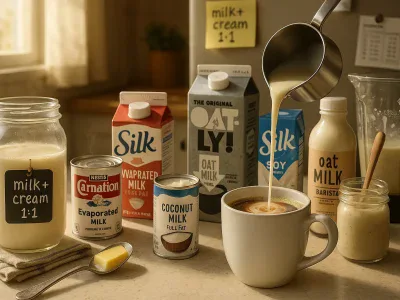
Fact: For coffee you want mouthfeel and pourability. Use half-and-half, canned coconut milk, or a commercial barista almond or oat creamer. Oatly Barista and Califia Farms Barista Blend foam reasonably and resist splitting in hot coffee. Chill or warm the substitute to match your drink temperature for better texture. If you need a non-dairy whipped topping for a mocha, chill coconut cream and whip it with a little sugar and vanilla.
Practical Tips, Storage, And Food Safety When Using Substitutes
Fact: Storage and handling affect safety and quality more than the substitution itself. Treat substitutes like dairy: refrigerate and use within the same timelines.
Tips and rules. Store fresh homemade milk-and-butter mixes for up to 48 hours in the fridge. Keep canned coconut cream unopened until needed: once opened, use within 3–4 days. Greek yogurt and sour cream keep for about 7–10 days after opening if refrigerated. Silken tofu lasts about a week opened, boxed cashew creams 3–4 days.
Food-safety notes. Reheat sauces gently: do not boil yogurt or sour cream at high heat or they may split. If separation occurs, blend briefly with an immersion blender or whisk in a teaspoon of cornstarch slurry to re-emulsify. Use pasteurized dairy for recipes that won’t be cooked (cold sauces, dressings) to reduce risk. When using gelatin, bloom it correctly and avoid overheating, or it will lose setting power.
Practical tricks. Keep a small jar of clarified butter or ghee in the pantry. You can stir a tablespoon into a cup of whole milk as a quick fat boost. Freeze coconut cream in ice cube trays for single-use portions. Label homemade mixes with the date: this helps you avoid waste and keeps your dishes consistent.
Vulnerable moment: I once used plain yogurt straight into a hot tomato sauce and got curdled bits, lesson learned. Now I temper the yogurt and I check flavor before serving. You will make mistakes too, but these small steps prevent most failures.
To provide the best experiences, we use technologies like cookies to store and/or access device information. Consenting to these technologies will allow us to process data such as browsing behaviour or unique IDs on this site. Not consenting or withdrawing consent, may adversely affect certain features and functions.
Functional
Always active
The technical storage or access is strictly necessary for the legitimate purpose of enabling the use of a specific service explicitly requested by the subscriber or user, or for the sole purpose of carrying out the transmission of a communication over an electronic communications network.
Preferences
The technical storage or access is necessary for the legitimate purpose of storing preferences that are not requested by the subscriber or user.
Statistics
The technical storage or access that is used exclusively for statistical purposes.The technical storage or access that is used exclusively for anonymous statistical purposes. Without a subpoena, voluntary compliance on the part of your Internet Service Provider, or additional records from a third party, information stored or retrieved for this purpose alone cannot usually be used to identify you.
Marketing
The technical storage or access is required to create user profiles to send advertising, or to track the user on a website or across several websites for similar marketing purposes.