If you open your pantry and find no all-purpose flour, you still can make a great cake, a crispy batter, or a smooth gravy. Knowing the best substitute for flour saves meals and keeps you calm during last-minute baking emergencies. This guide gives clear choices, exact swaps, and practical fixes so you can pick the right substitute for your recipe, your diet, and your taste, fast.
How To Choose The Right Flour Substitute
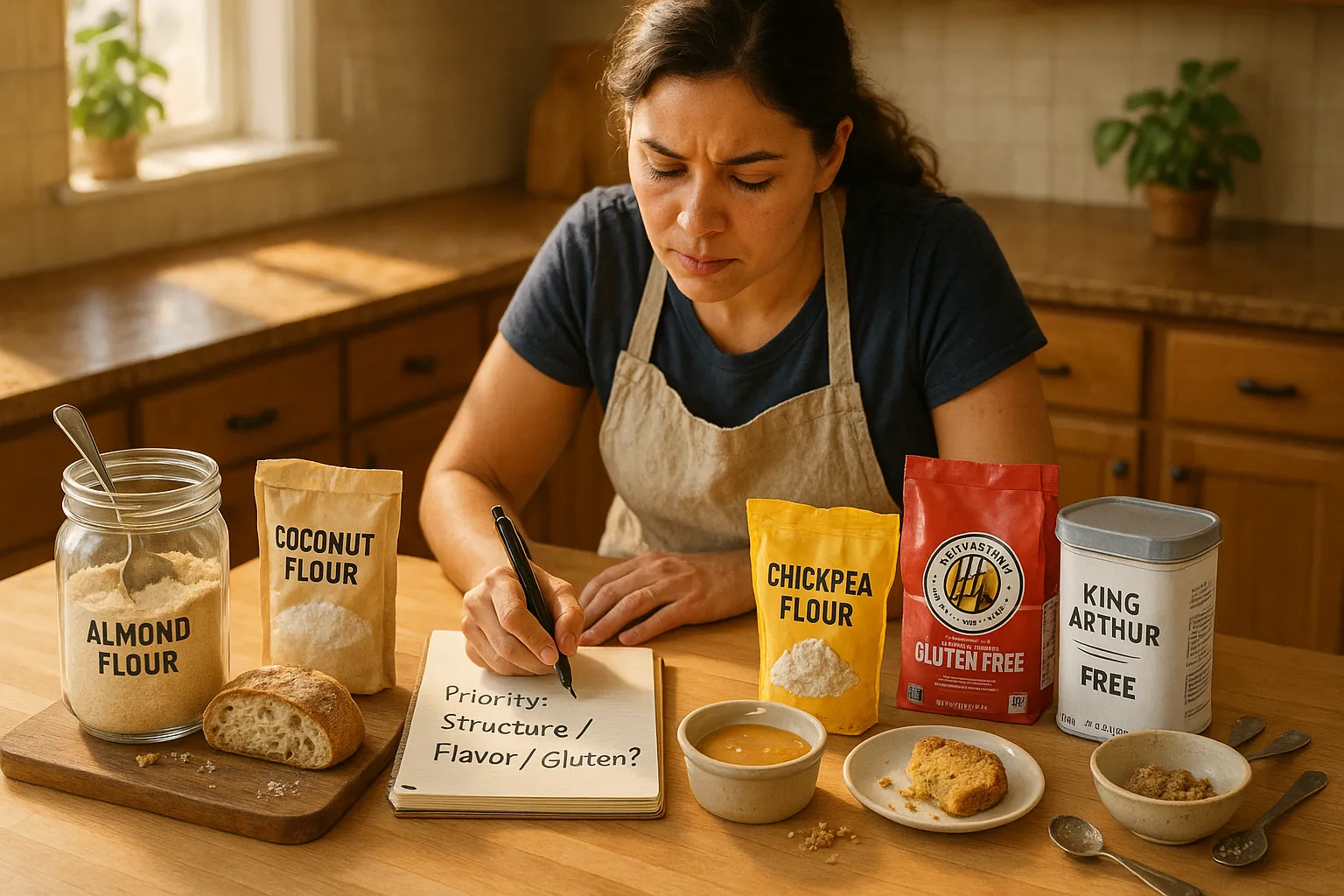
Fact: Choose a substitute by matching the role flour plays, structure, fat absorption, or thickening. Start by asking: does your recipe need gluten for chew? Does it need a neutral flavor? Is it a binder or a thickener? Write your priority down before swapping.
Assess the role: for bread you need structure and elasticity: for cakes you need lightness and tenderness: for sauces you need thickening power.
Consider dietary limits next. If you or a guest have celiac disease, pick certified gluten-free brands like Bob’s Red Mill or King Arthur’s gluten-free blends to avoid cross-contamination. If you follow low-carb or keto, almond flour or coconut flour typically fit better.
Think about flavor and texture. Almond flour adds a nutty note, coconut flour gives a dry crumb, and chickpea flour brings a savory backbone, each will change the final product. When you first experiment, change only one ingredient at a time. That way you learn what the flour substitute does. Be honest: some swaps will fail. I once used straight coconut flour in cookies without extra eggs: the cookies fell apart. You’ll learn faster by trying and adjusting.
Top Substitutes And When To Use Them
Fact: Different alternative flours have distinct textures and flavors: choose by use case below.
Almond Flour
Almond flour is ground blanched almonds. Use it for moist cakes, quick breads, and dense cookies. It gives a tender crumb and rich flavor. It can’t replace wheat 1:1 because it lacks gluten and is higher in fat. Brands to try: Bob’s Red Mill Super-Fine Almond Flour and King Arthur Almond Flour. Tip: add an extra egg or binder when you want more structure.
Oat Flour
Oat flour is mild and slightly sweet. It works well in pancakes, muffins, and as a partial swap in cookies. It adds chew and moisture. You can make it at home by grinding rolled oats. Oat flour contains more soluble fiber, which often yields softer crumb. Note: some oats are contaminated with gluten during processing, so choose certified gluten-free oats for sensitivity.
Coconut Flour
Coconut flour is highly absorbent and fibrous. Use it sparingly for dense baked goods and pancakes, often at 1/4 the amount of wheat flour, with more liquid and eggs. It adds a faint coconut flavor. If you use it without adjusting liquids, expect dry, crumbly results.
Chickpea (Gram) Flour
Chickpea flour (besan) is made from ground chickpeas. It gives savory depth and browning: it’s great for flatbreads, fritters, and some batters. It has high protein and binds relatively well, so it works in savory cakes and some gluten-free breads. It has a distinct bean-like taste, pair with bold spices.
Gluten-Free All-Purpose Blends
Pre-mixed gluten-free blends combine rice flour, potato starch, tapioca, and xanthan gum. They aim for a 1:1 swap for many recipes. Brands include King Arthur Gluten-Free Measure for Measure and Cup4Cup. They are convenient for cakes, cookies, and quick breads but can be expensive. Check for added xanthan gum: if absent, you may need to add it for structure.
Cassava/Tapioca Flour
Cassava and tapioca flours come from the cassava root. They give elasticity and chew similar to wheat in some recipes, and they work well in flatbreads, tortillas, and thickening. Cassava is higher in carbs but neutral in flavor. Tapioca starch is a strong thickener and a good addition to mixes to improve chew and sheen.
Substitution Ratios And Practical Tips
Fact: Most flours are not 1:1 replacements: adjust ratios, liquids, and binders.
Common Conversion Ratios
Almond flour: use 1:1 by weight, but reduce by 20–25% by volume compared to wheat. Example: if recipe calls for 1 cup all-purpose, use about 1 cup almond flour but add 1–2 extra eggs or a binder.
Oat flour: use 1:1 for pancakes and muffins. For yeast breads, use up to 25–30% substitution only.
Coconut flour: use about 1/4 to 1/3 cup coconut flour for every 1 cup wheat flour, and increase liquid and eggs.
Chickpea flour: start with 3/4 cup chickpea for 1 cup wheat in savory recipes: expect denser texture.
Gluten-free blends: many are 1:1: follow package instructions and add xanthan gum if missing.
Cassava/tapioca: use in combination with other flours: tapioca starch works at about 1:2 ratio for thickening compared to wheat flour.
Adjusting Liquids, Binders, And Leavening
Fact: Alternative flours change hydration and binding needs. Add binders like xanthan gum (1/4–1/2 tsp per cup), psyllium husk (1 tsp per cup), or extra eggs for structure. Increase liquid slowly, start with 10–20% more in recipes that use oat or almond flours. For coconut flour, increase eggs by at least one per cup of coconut flour.
Leavening interacts differently. You may need slightly more baking powder (about 1/8–1/4 tsp extra per teaspoon) when using dense flours like chickpea or almond to lift the crumb.
Texture And Flavor Fixes
Fact: You can mask off flavors and fix dryness with simple additions. Add 1 tablespoon of neutral oil or an extra egg to fix dryness from high-absorbency flours. Use vanilla, citrus zest, or ground spices to balance bean-like notes from chickpea flour or the nuttiness of almond flour. For grainy textures, sift the flour or use a food processor to finer grind.
Best Substitute By Use Case
Fact: Match substitute to final product for best results.
Baked Goods (Cakes, Cookies, Muffins)
Use gluten-free all-purpose blends for closest 1:1 swaps in cakes and cookies. Almond flour works great in cookies and denser cakes: oat flour gives chew in muffins: coconut flour can make dense, moist quick breads if you increase liquids and eggs.
Practical tip: for light cakes, use a mix of rice flour and tapioca starch with 1/4 tsp xanthan gum per cup to mimic gluten’s airy lift.
Bread And Pizza Dough
Use vital wheat gluten for better rise if you want to keep most wheat properties. For gluten-free loaves, mixes that include xanthan gum and psyllium husk give best structure (try King Arthur Gluten-Free Bread Flour). Cassava can substitute in flatbreads and pizza crusts when combined with tapioca for stretch.
Sauces, Gravies, And Thickening
Use cornstarch or tapioca starch for clear, glossy sauces. Use rice flour for gentle thickening that tolerates simmering. For gluten-free gravy, mix 1 tablespoon cornstarch with cold water to replace 2 tablespoons all-purpose flour: simmer until glossy.
Frying, Breading, And Pancakes
Use chickpea flour for crisp, savory batters (pakoras, socca). Rice flour creates extra crispiness in tempura. For pancakes, oat flour or a blend of oat and almond flours give tender results. If you want a neutral batter, use rice flour plus a bit of potato starch.
Troubleshooting Common Problems
Fact: Most problems come from wrong ratios or forgetting binders: fix them by adjusting liquids and adding binding agents.
Dense Or Crumbly Results
If your bake is dense, you likely used too much heavy substitute or not enough binder. Add an extra egg, 1–2 tablespoons oil, or 1/4–1/2 teaspoon xanthan gum per cup and beat batter longer to add air. For crumbly cookies, chill dough briefly or add a teaspoon of honey to improve cohesion.
Off Flavors Or Excess Moisture
If you taste strong bean notes from chickpea flour, balance with spices, citrus, or a little sweetener. If product is too moist from almond flour, reduce liquid by 10–15% and increase dry binder, or roast the almond flour lightly to reduce fat impact.
Allergy And Dietary Considerations
If you have nut allergies, avoid almond flour and use oat, rice, or chickpea flour instead. For low-FODMAP or specific diets, check ingredients: some blends use inulin or dried milk. Always read labels for cross-contamination warnings. If you cook for someone with celiac disease, buy certified gluten-free brands like Bob’s Red Mill, King Arthur, or Cup4Cup.
Buying, Storing, And Cost Considerations
Fact: Alternative flours vary widely in price and shelf life: store them correctly to keep flavor and function.
How To Shop For Alternative Flours
Buy from reputable brands for consistency. King Arthur, Bob’s Red Mill, Cup4Cup, and Honeyville are reliable. Read ingredient lists for added gums or starch. Check the packaging date when buying in bulk: fresher is better. If price matters, buy in 2–5 lb bags rather than small specialty packs.
Storage Tips And Shelf Life
Nuts-based flours (almond) go rancid faster. Store almond and coconut flours in the fridge for 3–6 months or freeze for up to a year. Oat and chickpea flours keep about 6–8 months in a cool, dark pantry. Always use airtight containers and label with purchase date.
Budget-Friendly Swaps And Homemade Options
Make oat flour at home by processing rolled oats, cheap and effective. Grind chickpeas into flour in a high-speed blender for a budget gram flour. For cassava, if you can’t find it, use tapioca plus a bit of rice flour to mimic texture.
Vulnerable note: I sometimes buy the cheapest almond meal and regret it, the texture is grainy and the fat oxidizes fast. Spending a little more on a fine grind saves time and fixes later. Try small tests before committing to a full recipe change, and your baking will improve steadily, not overnight.
Published: March 9, 2026 at 8:53 am by Ellie B, Site owner & Publisher
To provide the best experiences, we use technologies like cookies to store and/or access device information. Consenting to these technologies will allow us to process data such as browsing behaviour or unique IDs on this site. Not consenting or withdrawing consent, may adversely affect certain features and functions.
Functional
Always active
The technical storage or access is strictly necessary for the legitimate purpose of enabling the use of a specific service explicitly requested by the subscriber or user, or for the sole purpose of carrying out the transmission of a communication over an electronic communications network.
Preferences
The technical storage or access is necessary for the legitimate purpose of storing preferences that are not requested by the subscriber or user.
Statistics
The technical storage or access that is used exclusively for statistical purposes.The technical storage or access that is used exclusively for anonymous statistical purposes. Without a subpoena, voluntary compliance on the part of your Internet Service Provider, or additional records from a third party, information stored or retrieved for this purpose alone cannot usually be used to identify you.
Marketing
The technical storage or access is required to create user profiles to send advertising, or to track the user on a website or across several websites for similar marketing purposes.