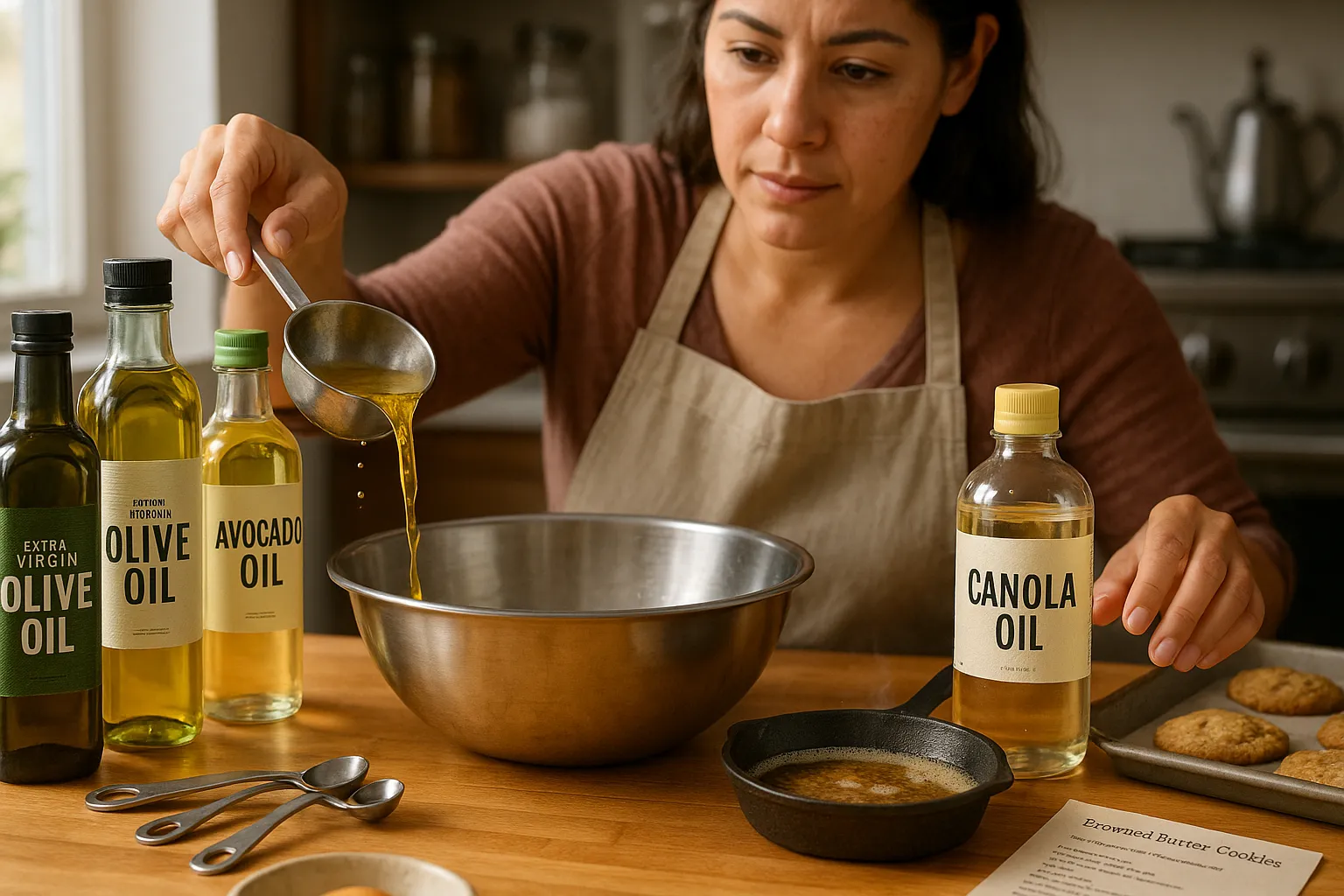
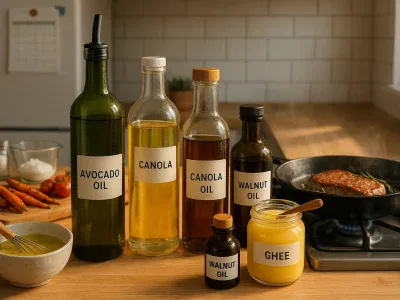
Canola oil is cheap, neutral, and easy to find, but it’s not always the best choice. Maybe you want a richer flavor, higher smoke point, or a cleaner ingredient label. Maybe you’re avoiding industrial seed oils or you ran out while the oven is preheating. Whatever the reason, you can swap canola oil without wrecking your recipe. This guide gives clear, practical alternatives, explains when each works best, and shows exact swap rules so your cakes rise, your fries crisp, and your dressings sing.
Why Replace Canola Oil? When It Makes Sense
Fact: you replace canola oil when flavor, health concerns, or cooking method demand it. Canola often wins on price and neutrality, but it lacks in flavor and sometimes in perceived nutritional benefits. You should swap it when you want a more pronounced taste, a higher smoke point, or fewer processed ingredients.
Canola oil is low in saturated fat and contains omega-6 and omega-3 fats. But some people avoid it because of concerns about heavy processing or because they prefer oils with more monounsaturated fat, like olive or avocado. Other practical reasons to switch include allergies, pantry shortages, or recipe-specific needs, for example, a buttery note in baking or a stable fat for high-heat frying.
Vulnerable moment: I once used canola in a browned butter cookie recipe and the cookies tasted thin. I switched to melted butter and the flavor came back. You might have similar surprises: small swaps can change outcomes dramatically, for better or worse.
Top Practical Substitutes and When To Use Them
Fact: different oils serve distinct culinary roles: choose by heat tolerance and flavor. Below are reliable alternatives and situations where each shines.
Olive Oil, Extra-Virgin And Light Uses
Fact: extra-virgin olive oil adds flavor: light (refined) olive oil tolerates more heat. Use extra-virgin for dressings, low-heat sautés and foods that benefit from fruity, grassy notes. Use light olive oil for roasting and medium-heat pan work. Note that extra-virgin can become bitter if overheated.
Avocado Oil, High Heat And Neutral Flavor
Fact: avocado oil has a high smoke point and mild taste. Use it for searing, pan-frying, and when you want a neutral oil that won’t mask ingredients. It contains monounsaturated fat and suits people who prioritize heart-healthy choices.
Coconut Oil, Baking And Flavorful Cooking
Fact: coconut oil brings coconut aroma and solid fats at room temp. Use refined coconut oil when you want neutral flavor in baking. Use virgin coconut oil when you want a tropical note in cookies, granola, or certain curries. Remember, it will change texture in some batters because it solidifies when cool.
Butter And Ghee, Baking And Searing For Richness
Fact: butter and ghee add flavor and help with browning. Use butter in baked goods for tenderness and deep flavor. Use ghee for higher-heat searing since it has less milk solids and a higher smoke point. If you substitute butter for canola oil in cakes, melt and cool it first: this keeps batter texture consistent.
Sunflower And Safflower Oils, Neutral, High-Heat Options
Fact: sunflower and safflower are neutral and often have high smoke points. Use them for frying, roasting, and recipes that need a blank canvas. They work well when you need a budget-friendly neutral substitute with decent stability.
Vegetable Or Corn Oil, Budget-Friendly Direct Replacements
Fact: vegetable and corn oil behave similarly to canola in most recipes. Use them when you want a like-for-like swap without changing flavor or texture. They’re cheap and widely available, but they share the same concerns about processing for some people.
How To Choose The Right Substitute For Your Recipe
Fact: pick a substitute by matching smoke point, flavor, nutrition, and cost to your recipe. Below are hard rules and practical considerations.
Match Smoke Point To Cooking Method
Fact: smoke point determines safety and taste. For high-heat frying choose oils with smoke points above 400°F (204°C), like avocado, refined sunflower, or ghee. For low-heat cooking or dressings you can use extra-virgin olive oil or walnut oil.
Consider Flavor Impact And Aroma
Fact: flavor changes matter. Use strong oils sparingly in delicate recipes. For a vinaigrette you can choose extra-virgin olive oil for brightness. For a light cake, use refined oils or melted butter to avoid off-notes.
Compare Nutritional Profile And Dietary Needs
Fact: oils differ in fat composition. If you want more monounsaturated fat, pick olive or avocado oil. If you need dairy-free options, choose oils or ghee alternative. If you follow keto, prefer saturated or monounsaturated-rich fats like coconut or avocado.
Think About Availability, Cost, And Shelf Life
Fact: pantry reality shapes choices. Olive and vegetable oils usually last longer on the shelf. Avocado oil can be pricier. Use what you can store and rotate: oils with higher polyunsaturated content (sunflower, safflower) can go rancid faster, so buy smaller bottles if you use them slowly.
Conversion Tips And Practical Substitution Rules
Fact: most oil swaps are 1:1, but some recipes need tweaks for texture and flavor. Use the rules below to avoid surprises.
Simple Measurement Substitutions (1:1 And Adjustments)
Fact: for most cooking and baking, replace canola oil with another liquid oil at a 1:1 ratio. If you substitute solid fats (butter, coconut oil), melt them and use slightly less: start at 3/4 to 7/8 of the oil volume because solids contain less water than liquid oil.
Example: a recipe calls for 1 cup canola oil. Use 1 cup avocado oil or 3/4 cup melted butter plus 1 tablespoon water to match moisture.
Adapting For Texture In Baking And Emulsions
Fact: emulsions and baked goods depend on fat behavior. Use neutral oils in cakes for fine crumb. Use butter in cookies for chew and browning. When making mayonnaise or dressings, stick with neutral oils for smooth emulsions: strong-flavored oils can make the emulsion taste odd. If your batter seems heavy after swapping fats, whisk in a tablespoon of milk or an extra egg white to lift it.
Recipe-Specific Recommendations And Examples
Fact: different meals ask for different oils. Below are direct recommendations you can try immediately.
Baking (Cakes, Muffins, Cookies), Best Picks And Notes
Fact: use neutral or solid fats based on desired texture. For moist cakes and muffins choose avocado or refined sunflower oil 1:1. For cookies and pastries choose butter or a butter–oil blend for flavor and structure. If you use coconut oil, expect slightly denser crumb and a hint of coconut. Tip: chill cookie dough briefly when using oil to prevent spreading.
Frying And Searing, High-Heat Choices And Safety Tips
Fact: choose oils with high smoke points. Use avocado oil, refined sunflower, safflower, or ghee for frying. Preheat the pan and use a thermometer for deep frying: keep oil below its smoke point to avoid bitter off-flavors and harmful compounds. Dispose of oil safely: don’t pour it down drains.
Dressings, Marinades, And Low-Heat Uses, Flavor-Forward Options
Fact: opt for flavor. Use extra-virgin olive oil, walnut oil, or toasted sesame oil for dressings and marinades. Combine oils for balance: 2 parts neutral oil to 1 part flavored oil when you want subtle aroma without overpowering the dish.
Common Mistakes And How To Avoid Them
Fact: common errors include using a strong oil in delicate recipes and ignoring smoke points. Avoid these pitfalls with a few simple checks.
Using Strong-Flavored Oils In Delicate Recipes
Fact: strong oils overpower delicate flavors. Don’t use extra-virgin olive oil, coconut, or toasted sesame in light cakes or subtle sauces. If you accidentally used a strong oil, balance it with a neutral oil or increase sweeteners and spices as corrective measures.
Ignoring Smoke Point And Overheating Oils
Fact: overheating spoils flavor and safety. Always match the smoke point to your method. If oil smokes, lower the heat and discard any oil that smells burnt. When in doubt choose a higher smoke point oil like avocado or refined sunflower for pan work.
To provide the best experiences, we use technologies like cookies to store and/or access device information. Consenting to these technologies will allow us to process data such as browsing behaviour or unique IDs on this site. Not consenting or withdrawing consent, may adversely affect certain features and functions.
Functional
Always active
The technical storage or access is strictly necessary for the legitimate purpose of enabling the use of a specific service explicitly requested by the subscriber or user, or for the sole purpose of carrying out the transmission of a communication over an electronic communications network.
Preferences
The technical storage or access is necessary for the legitimate purpose of storing preferences that are not requested by the subscriber or user.
Statistics
The technical storage or access that is used exclusively for statistical purposes.The technical storage or access that is used exclusively for anonymous statistical purposes. Without a subpoena, voluntary compliance on the part of your Internet Service Provider, or additional records from a third party, information stored or retrieved for this purpose alone cannot usually be used to identify you.
Marketing
The technical storage or access is required to create user profiles to send advertising, or to track the user on a website or across several websites for similar marketing purposes.