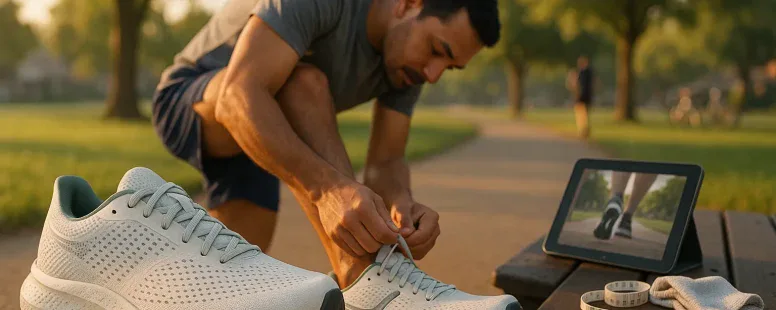
Choosing your first jogging shoes matters. The right pair cushions your joints, guides your stride, and keeps small problems, like blisters and knee pain, out of your week. Think of good jogging shoes like a reliable friend: they support you when you push, forgive small mistakes, and quietly help you improve. In this guide you’ll learn what to look for, which types suit different needs, and specific models to try. Expect clear steps, honest warnings drawn from real mistakes, and practical tips so you can lace up with confidence.
What Beginner Joggers Need From A Shoe
Fact: A beginner shoe must balance cushioning, support, fit, and durability. If one of these fails early, your training stalls.
Cushioning And Support
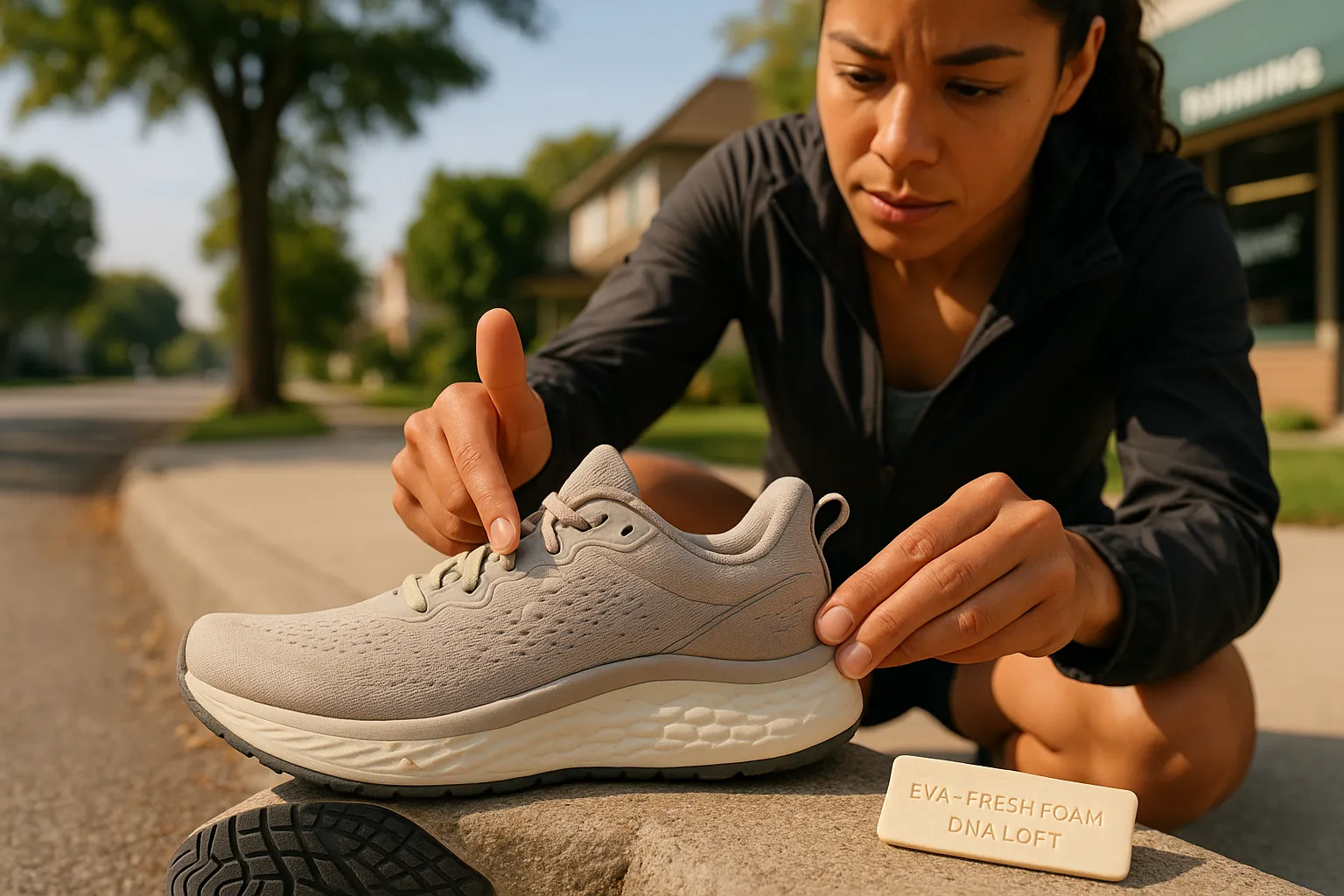
You need cushioning that absorbs impact without feeling mushy. Cushioning protects knees and hips on repeated strides. Look for midsole foams like EVA, Fresh Foam (New Balance), or DNA Loft (Brooks). These foams compress under load and rebound: they reduce shock and let you run longer without soreness. Be aware: too soft a midsole can make you unstable on turns, so test for firmness when you try them on.
Stability And Motion Control
Stability matters if your foot pronates (rolls inward) or you overstride. Stability shoes add medial posts or denser foam on the inner midsole. Brands with reliable stability tech include ASICS (Guidance Line), Brooks (GuideRails), and Saucony (ST2). Start with mild stability, aggressive motion control can cause new aches if your muscles are unprepared.
Fit And Comfort
Fit is essential. Your toe should have a thumb’s width of space at the front when standing. The heel must lock without pinching. Breathable meshes like engineered knit reduce friction and heat. Try shoes later in the day when feet swell. Note: sizing differs by brand, New Balance often runs wide: Nike can run narrow.
Durability And Traction
Durability predicts how long the shoe keeps cushioning and shape. Rubber outsole patterns affect grip on pavement, trails, or wet surfaces. If you plan to run on mixed surfaces, choose a shoe with a carbon rubber outsole and a tread pattern that sheds water. Durability varies: budget shoes may show midsole compression by 200–300 miles: premium foams often last longer.
Types Of Jogging Shoes For Beginners
Fact: You’ll pick between neutral, stability, and lightweight trainers based on gait and goals.
Neutral Cushioned Shoes
Neutral shoes suit runners with a balanced gait or underpronation. They focus on shock absorption and smooth transition. Examples: Brooks Ghost, Nike Pegasus, ASICS Gel-Nimbus. These shoes let your foot move . If you don’t have pain or inward roll, start here.
Stability Shoes
Stability shoes help control mild to moderate pronation. They include firmer materials on the medial side to limit inward roll. Examples: ASICS GT-2000, Brooks Adrenaline GTS, Saucony Guide. You’ll reduce stress on the inner ankle and knee when you wear them correctly.
Lightweight Trainers
Lightweight trainers reduce mass and feel more responsive for short, faster runs. They are not minimal shoes: they still offer cushioning, but less. Examples: Nike Zoom Fly, New Balance FuelCell Rebel, Saucony Kinvara. Choose these if you plan tempo runs or races under 10K, but avoid them for high-mileage base building when you are brand-new.
How To Choose The Right Shoe (Step-By-Step)
Fact: Follow a clear sequence, assess, measure, then match to mileage and terrain.
Assess Your Foot Type And Gait
Step 1: Check foot type. Do a wet test: wet your sole, step on cardboard, and inspect the imprint. A full imprint suggests low arch (likely pronation): a narrow band indicates high arch (supination). Step 2: Watch your gait. Film a short video of your feet from behind when you jog on a treadmill. Observe whether your heel lands evenly or rolls inward. Many running stores offer gait analysis: you can also compare to common patterns from brand guides.
Measure Fit And Try-On Tips
Step 3: Measure feet. Stand while someone measures length and width. Step 4: Try shoes on with the socks you’ll wear running. Lace them fully and run lightly in the store or on a treadmill for 5–10 minutes. Pay attention to toe-room, midfoot lockdown, and heel slip. Tip: don’t buy the tightest size, shoe comfort often improves over first 10–20 miles.
Consider Mileage, Terrain, And Goals
Step 5: Define goals. Are you aiming for 3 runs a week at 20–30 minutes, or preparing for a half marathon? Higher weekly mileage favors more cushioning and longer-lasting midsoles. Step 6: Match terrain, pavement needs flat treads: light trails need sticky rubber and toe protection. Choose a model that aligns with your expected use, not just what looks good.
Top Picks For Beginners (Categories And Examples)
Fact: Certain models consistently work well for new joggers because they blend comfort, price, and durable cushioning.
Best Overall
Brooks Ghost (recent iterations) often balance comfort and durability. The midsole gives forgiving cushioning while the fit suits many foot shapes. Runners with mild pronation may still be comfortable in it.
Best For Budget
ASICS Gel-Contend or New Balance 680 deliver acceptable cushioning at a low price. They cost less, and they keep you safe during early weeks. Expect faster wear than premium foams, but they’re fine for building a base.
Best For Wide Feet
New Balance 990 and Brooks Glycerin (wide versions) offer roomy toe boxes and robust support. New Balance includes 2A–4E widths on some models: that helps you find the right match without painful pinching.
Best Lightweight Option
Saucony Kinvara and Nike Pegasus Turbo light variants are responsive and lively. Use these for tempo sessions or when you want a snappier feel. Don’t expect maximum cushioning for long, slow runs.
Best Stability Option
ASICS GT-2000 and Brooks Adrenaline GTS shine for mild to moderate overpronation. They add structure without feeling clunky. If you’ve had inner-knee pain while running, these may help reduce strain.
Breaking In, Care, And When To Replace Your Shoes
Fact: Proper break-in and maintenance extend shoe life and keep you running injury-free.
Breaking-In Tips
Start by wearing new shoes for short, easy runs, about 10–20 minutes for the first week. Increase time gradually. If you feel hotspots or blisters, use thin liners, adjust lacing, or try different socks. I once ignored a subtle heel rub and ended with a week off, learn from me and fix small issues early.
Cleaning And Maintenance
Wipe shoes after muddy runs and let them air dry: never use a dryer. Remove insoles and wash separately if needed. Treat the mesh with a soft brush and mild soap. Rotate two pairs if you run more than 20 miles weekly, this gives foam time to rebound between runs and prolongs life.
Signs You Need New Shoes
Replace shoes when cushioning feels flat, when you notice uneven outsole wear, or when you develop recurring aches. Most shoes last 300–500 miles depending on weight and terrain. If your runs start to feel harsher or you develop new niggles, that’s a clear sign to shop for a fresh pair.
Buying Tips And Common Mistakes To Avoid
Fact: Common mistakes include buying by style alone, ignoring fit, and skipping a test run.
Online Shopping Tips
If you buy online, use the brand size chart and read recent reviews about fit. Order two sizes if you’re unsure and return the worse fit. Check retailer return policies for trial runs. Look for retailers that offer free returns within a 30-day window and keep your original box.
What To Avoid As A Beginner
Avoid chasing the lightest or most expensive shoe without testing it. Don’t switch models frequently during your first 100 miles, your body needs consistent feedback. Don’t ignore pain: small aches can become injuries. Also avoid minimal shoes until you build strength: they demand different mechanics and can cause calf or Achilles strain if you jump in too fast.
Practical call-to-action: pick one model from the categories above, test it for two weeks with short runs, and track comfort and any pain. If a shoe creates pain that persists past three easy runs, swap it. Start simple, be patient, and your legs will reward you.
To provide the best experiences, we use technologies like cookies to store and/or access device information. Consenting to these technologies will allow us to process data such as browsing behaviour or unique IDs on this site. Not consenting or withdrawing consent, may adversely affect certain features and functions.
Functional
Always active
The technical storage or access is strictly necessary for the legitimate purpose of enabling the use of a specific service explicitly requested by the subscriber or user, or for the sole purpose of carrying out the transmission of a communication over an electronic communications network.
Preferences
The technical storage or access is necessary for the legitimate purpose of storing preferences that are not requested by the subscriber or user.
Statistics
The technical storage or access that is used exclusively for statistical purposes.The technical storage or access that is used exclusively for anonymous statistical purposes. Without a subpoena, voluntary compliance on the part of your Internet Service Provider, or additional records from a third party, information stored or retrieved for this purpose alone cannot usually be used to identify you.
Marketing
The technical storage or access is required to create user profiles to send advertising, or to track the user on a website or across several websites for similar marketing purposes.