Best Amplifier On a Budget
You can get surprisingly great sound without blowing your budget. The best amplifier on a budget gives you clear power, useful features, and long-term value, not just cheap volume. Think of an amp as a translator: it takes a recording or instrument and makes it breathe in your room or car. Choose wisely and you’ll hear tighter bass, clearer mids, and dynamics that reveal details you missed before. Below you’ll find practical criteria, real product suggestions by use case, setup tricks, and buying advice so you spend less and get more.
How To Choose A Budget Amplifier
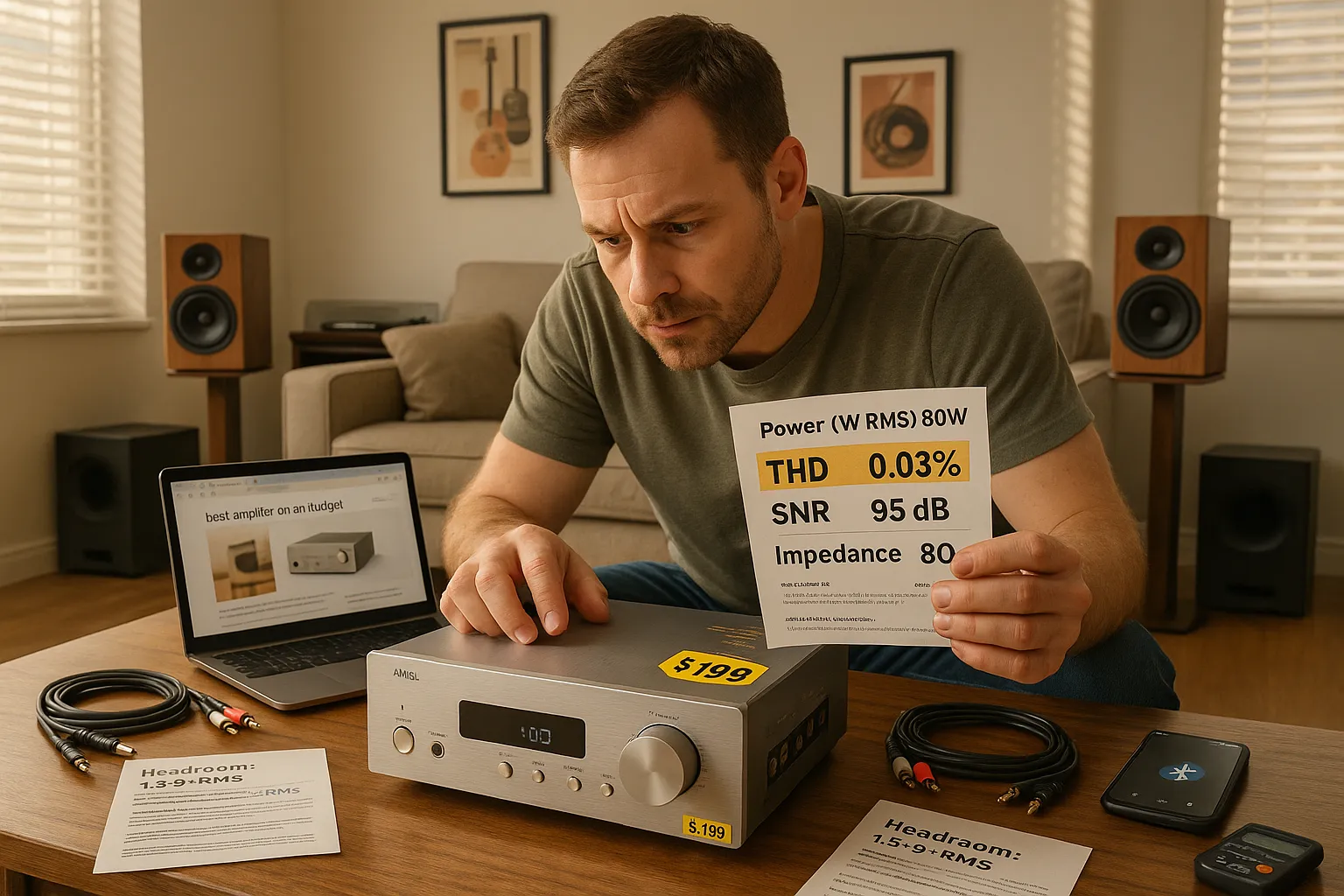
Fact: Prioritize matching the amp to your use and speakers before chasing specs alone.
Start by defining the role. Will you drive floorstanders in a living room, power a guitar for bedroom practice, or boost a car sub? The right amplifier type and power range depend on that simple answer.
Key Specifications To Prioritize (Power, THD, SNR, Impedance)
Fact: Power rating and speaker impedance determine usable loudness and headroom.
- Power (watts RMS): Choose an amp that delivers roughly 1.5–3× the continuous power your speakers list for safe headroom. This avoids clipping and keeps transient peaks clean.
- THD (Total Harmonic Distortion): Lower is better. Under 0.05% at typical listening levels is fine for budget gear. Don’t obsess on ultra-low numbers, real-world sound depends on design too.
- SNR (Signal-to-Noise Ratio): A higher SNR (90 dB+) means less audible hiss, useful for quiet listening and high-sensitivity speakers.
- Impedance: Most home speakers are 4–8 ohms. Ensure the amp lists stable operation at your speakers’ impedance.
These specs give you a technical baseline. Use them to filter options quickly.
Types Of Budget Amplifiers And When To Pick Each (Integrated, Power, Guitar, AV, Car)
Fact: Pick the amp type that matches the source and speakers to avoid wasted features.
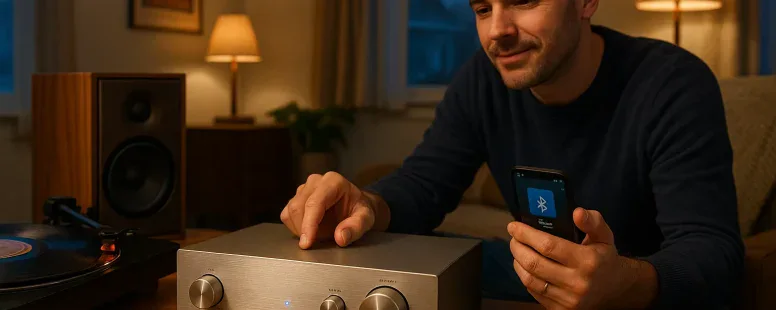
- Integrated amps: Choose these for compact home listening. They combine preamp and power sections, so you get simple hookups and often a headphone output. Brands like Yamaha and Cambridge Audio often have strong budget entries.
- Power amps: Use these to upgrade a system where you already have a capable preamp or DAC. They focus on clean muscle.
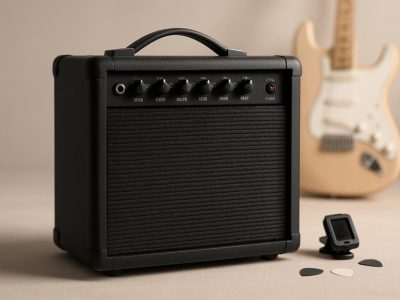
- Guitar amps: Pick a practice amp for small rooms and a small tube or solid-state combo for gigs under 50 people. Fender, Boss, and Orange offer good budget models.
- AV receivers/amplifiers: Choose these for home theater. They add surround processing and streaming features. Look for good stereo performance too if you plan music listening.
- Car amplifiers: Match RMS power per channel to speakers and subs. You want conservative gain settings and a stable amp that handles 2–4 ohm loads.
Connectivity, Features, And Expandability To Look For
Fact: Useful features increase long-term value more than extra watts.
Look for these practical items:
- Multiple inputs: RCA, optical/coax for digital sources, and a phono stage if you own a turntable.
- Preamp outputs or bridgeable channels for future upgrades.
- Headphone output and tone controls for daily use.
- Built-in Bluetooth or network streaming if you prefer wireless sources.
- Protection circuitry and a clear limiter to prevent damage.
Opt for an amp that lets you add a DAC, subwoofer, or external preamp later. That keeps your system flexible without forcing a full replacement.
Top Budget Amplifiers To Consider By Use Case
Fact: A few standouts give the best balance of sound, features, and price for each use case.
Best Budget Stereo Integrated Amplifier (Compact Home Listening)
Fact: Integrated amps combine simplicity with good sound for most listeners.
Recommendation: Yamaha A-S301 or Cambridge Audio AXA35 (depending on regional pricing). These amps give clean midrange, solid bass control, and built-in DACs on some models. You get good headphone outputs and phono inputs on many budget integrated units. They deliver musicality without fuss.
Best Budget Power Amp For Upgrading Existing Systems
Fact: A dedicated power amp raises headroom and reduces distortion from clipping.
Recommendation: Crown XLS models (for PA/active speakers) or NAD power modules for hi-fi setups. These units provide reliable current delivery and low noise. Use them when your preamp or DAC is already doing the tone work.
Best Budget Guitar Amplifier (Practice And Small Gigs)
Fact: Small combos win for practice while tube combos add warmth for small gigs.
Recommendation: Boss Katana 50 for versatility and effects, Fender Champion 20 for clean tones, and a used small tube Fender or Vox for warmth. Boss gives many voices and online patches: Fender gives classic Fender cleans.
Best Budget Car Amplifier Options
Fact: RMS-matched amps protect speakers and ensure usable bass.
Recommendation: Alpine R-Series for reliable car amplification and Rockford Fosgate Prime line for subwoofers. Dayton Audio also makes affordable class-D options for budget builds. Match RMS to speaker specs and add a proper low-pass filter for subs.
Best Budget AV Receiver/Amplifier For Home Theater On A Budget
Fact: Look for room correction and good stereo fidelity in an AV receiver.
Recommendation: Denon AVR-S Series and Yamaha RX-V series balance movie features with decent stereo sound. They include Dolby/Atmos support at lower price tiers and basic room EQ to improve clarity.
Setup And Optimization Tips For Maximum Value
Fact: Proper setup multiplies the value of any amp.
Matching Amplifier Power To Speakers And Room Size
Fact: Room size dictates the power you need.
For small rooms (under 200 sq ft) 20–50W per channel often suffices. For medium rooms aim for 50–120W. Big rooms or inefficient speakers may need 120W+. Use power conservatively: more power reduces clipping risk.
Placement, Cabling, And Grounding Tips To Reduce Noise
Fact: Proper grounding and cable routing remove hum and hiss.
- Keep power cables separate from signal cables to cut induced noise.
- Use short, quality speaker cables and well-shielded interconnects for long runs.
- Ground loop hum often comes from mixed components. Use a single chassis ground point or a ground loop isolator if needed.
- In cars, ensure the amp ground attaches to bare metal close to the amp.
Basic Tone, EQ, And Gain Settings For Different Uses
Fact: Start with unity gain and small tone adjustments.
Set gain so loud passages don’t clip. On guitar amps set channel gain to taste and use amp EQ sparingly: roll back highs to reduce harshness and add low-mid for warmth. For home stereo, use flat EQ for most music and raise highs slightly for detail in lossy tracks.
Common Trade-Offs And How To Prioritize Them
Fact: You will trade features, power, or build quality on a tight budget: prioritize audible benefits.
Sound Quality Vs. Power And Features: What Matters Most
Fact: Sound quality and headroom usually matter more than raw feature count.
Choose clearer sound and reliable power before chasing exotic inputs. A cleaner 50W amp will sound better than a noisy 100W unit that clips easily. If you need streaming, factor that in: but never sacrifice core performance for a single convenience feature.
New Versus Used: When Buying Used Makes Sense
Fact: Buying used can net high-value older amps, but inspect carefully.
Buy used when you can test the unit and verify filters, pots, and power supply health. Vintage Marantz and NAD units often outperform new budget models. Risk rises with unknown history, ask about repairs, look for clean internals, and test all channels.
Build Quality, Serviceability, And Long-Term Reliability Considerations
Fact: Heavier transformers and simpler designs often age better.
Look for brands with good parts availability and clear service manuals. Low-cost amps sometimes use cheap capacitors that fail over time. Serviceable units save money long-term: avoid fully sealed economy models if you want repair options.
Where To Buy And Warranty/Return Considerations
Fact: Buy from sellers with clear return windows and reliable warranties to reduce risk.
Trusted Retailers, Marketplaces, And Local Options
Fact: Authorized dealers and reputable marketplaces reduce fraud.
Buy from authorized dealers like Sweetwater, Crutchfield, or B&H for US electronics. For car amps, check Crutchfield or local car audio shops. Use eBay or Reverb for used gear but prefer sellers with high ratings and return policies.
How To Test An Amplifier Before Buying (In-Store Or When Used)
Fact: A quick listening and inspection routine reveals most faults.
- Listen with a familiar track at moderate and loud levels for distortion or channel imbalance.
- Test all inputs and switches for crackling.
- Inspect internals (if allowed) for swollen capacitors or burnt components.
- For car amps, test bridging and remote turn-on.
Bring a test track and your speakers or headphones when possible. Your ears catch issues that specs hide.
Warranty, Return Policies, And Extended Service Plans
Fact: A robust warranty lowers ownership cost and worry.
Prefer at least a one-year manufacturer warranty and a retailer return window of 30 days. Consider extended service plans for used or older high-value purchases. Read terms for coverage of power supply and speaker damage, some warranties are voided by improper matching.
Now you have clear criteria and practical picks to find the best amplifier on a budget. Use careful matching, prioritize audible improvements, and don’t be afraid to buy used when you can inspect and test. Spend smart and your system will reward you with better music for years to come.

- The Best FDA-Approved LED Face Masks for Glowing Skin - September 30, 2026
- When Is the Best Time to Take a Pregnancy Test? - September 29, 2026
- Best Jyotish in Varanasi - September 29, 2026
by Ellie B, Site Owner / Publisher