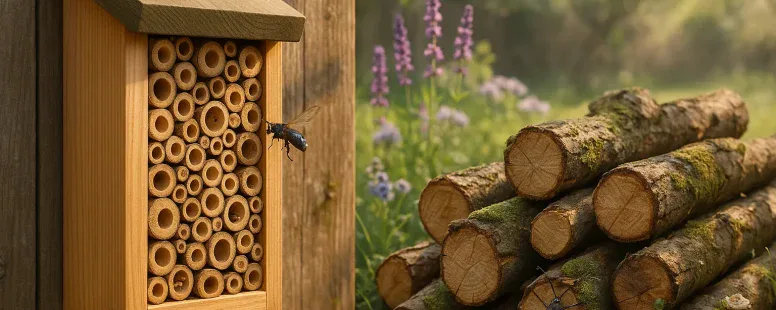
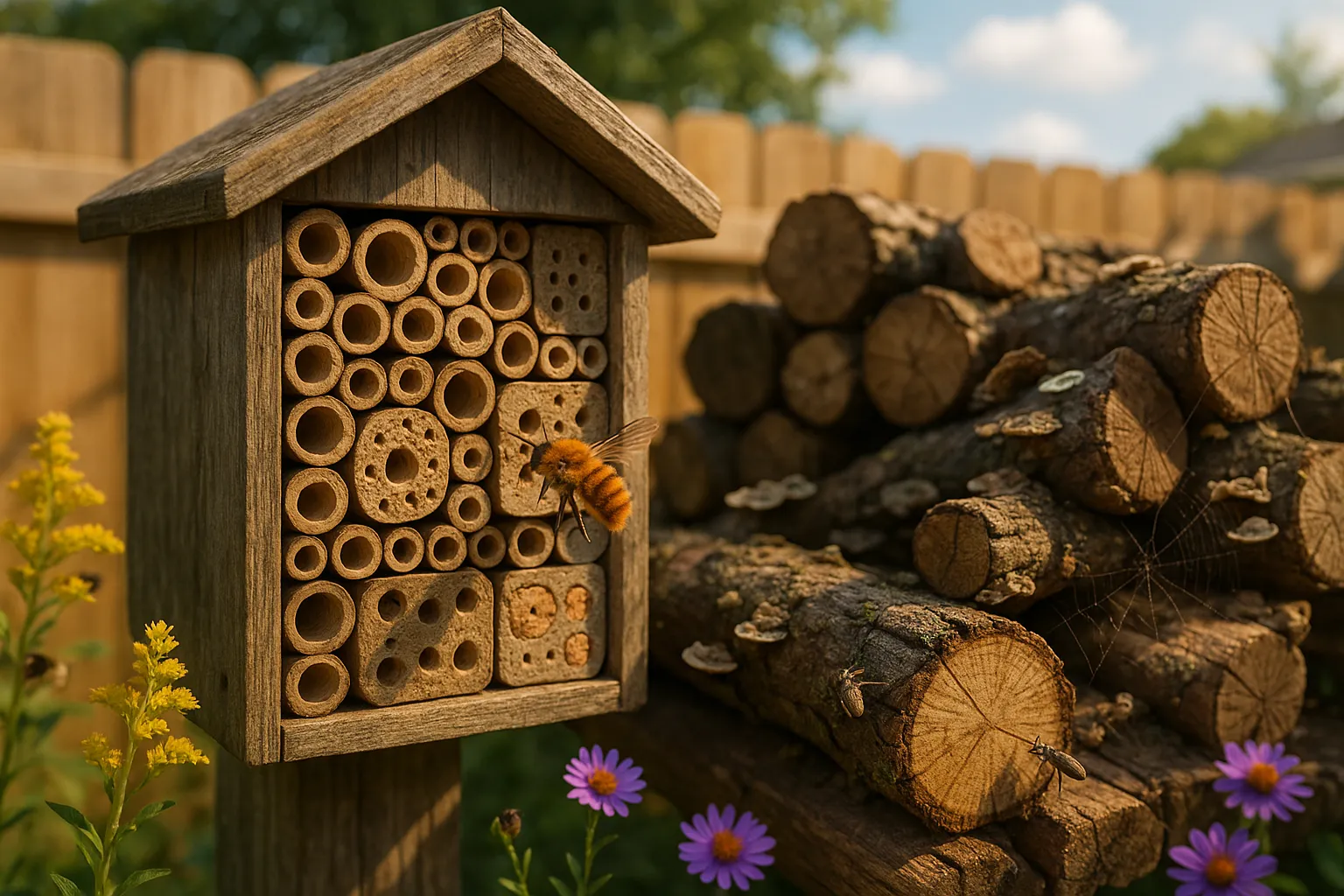
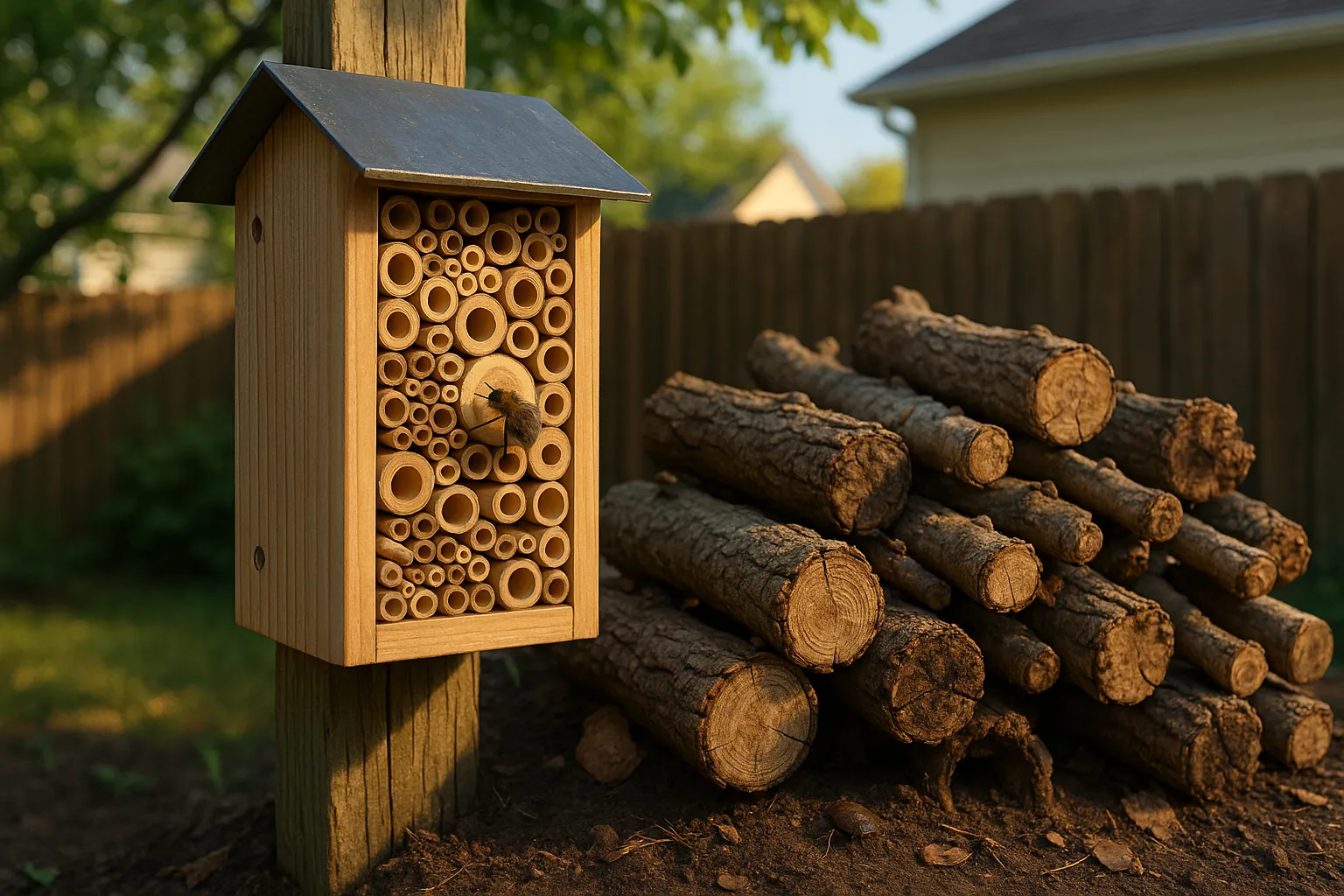
You can create useful nesting habitat for solitary bees in two very different ways: a crafted bee hotel or a simple pile of decaying logs. Both give bees places to rear young and both change how your garden looks, smells, and functions. Think about the quiet, powdery scent of sawdust in a warm bee hotel versus the damp, earthy smell of a log pile hosting moss and beetles. Each option delivers surprising benefits, bee hotels offer targeted shelter for cavity-nesting species while log piles support broader biodiversity and natural processes. This article compares those benefits, shows practical steps you can take, and helps you decide which approach fits your garden, your time, and your conservation goals.
How Solitary Bees Use Nesting Sites
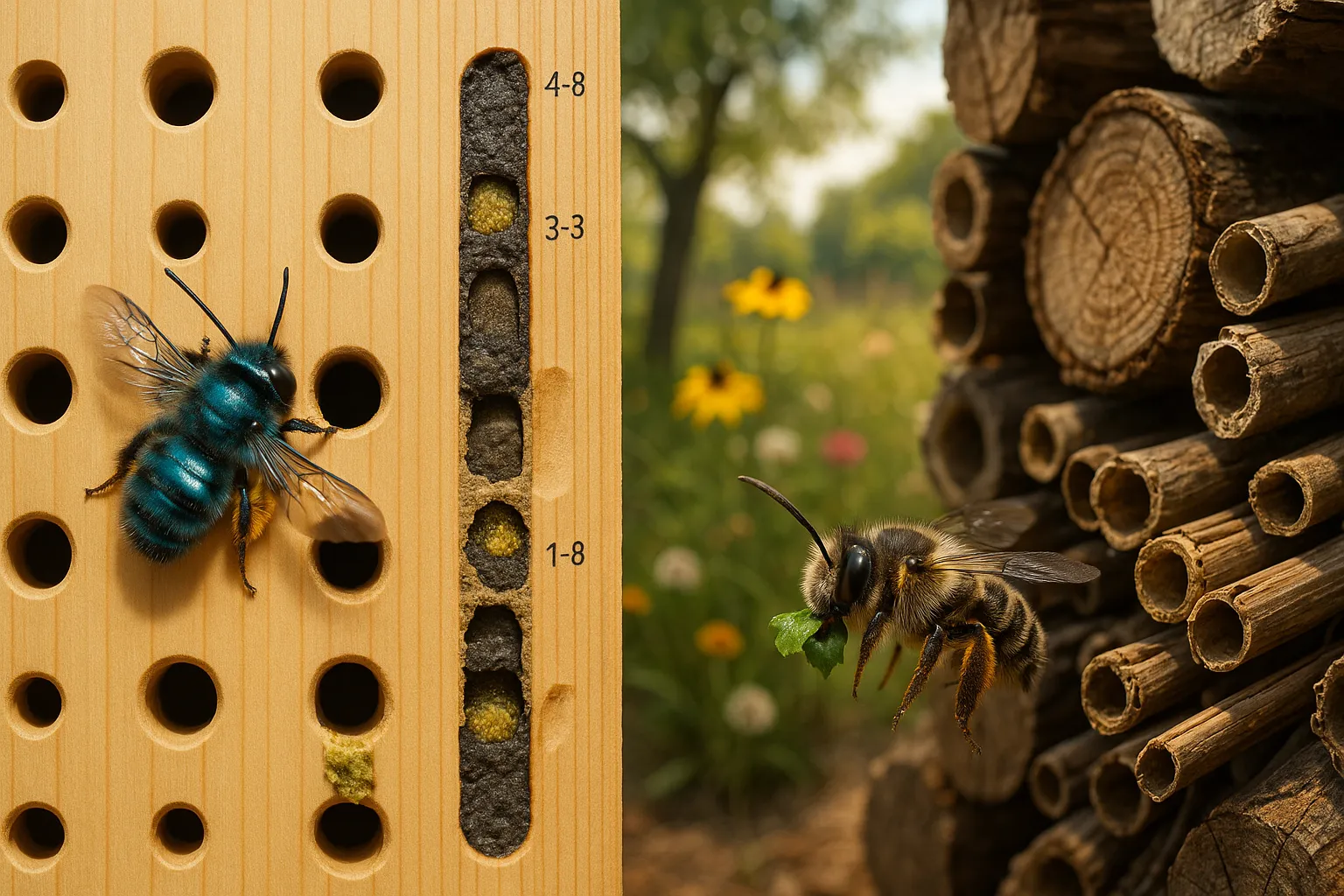
Fact: Many solitary bees nest alone in cavities or tunnels rather than in hives. Solitary bees like mason bees (Osmia spp.), leafcutter bees (Megachile spp.), and many resin bees use pre-existing cavities, bore into pithy stems, or excavate tunnels in dead wood. These species provision single brood cells with pollen and nectar, seal them, and leave. You see a linear series of sealed cells when you split an occupied stem or drilled block.
Solitary bees act as efficient pollinators. They carry pollen on their bodies and visit many flowers during one foraging trip. For example, blue orchard bees (Osmia lignaria) can pollinate fruit trees more efficiently than honey bees in some orchards. You should know species differ: some prefer narrow tunnels about 4–8 mm wide, others use wider cavities: some nest only in soft, decayed wood while others accept paper tubes or reed stems.
Follow-up: Where do you find nesting sites ? Check fallen logs, dead branches in hedgerows, hollow stems like raspberry canes, and even cracks in old mortar. Those places supply different nesting geometries and microclimates. Recognizing that variety helps you match any artificial structure to local species’ needs.
What A Bee Hotel Is And How It Works
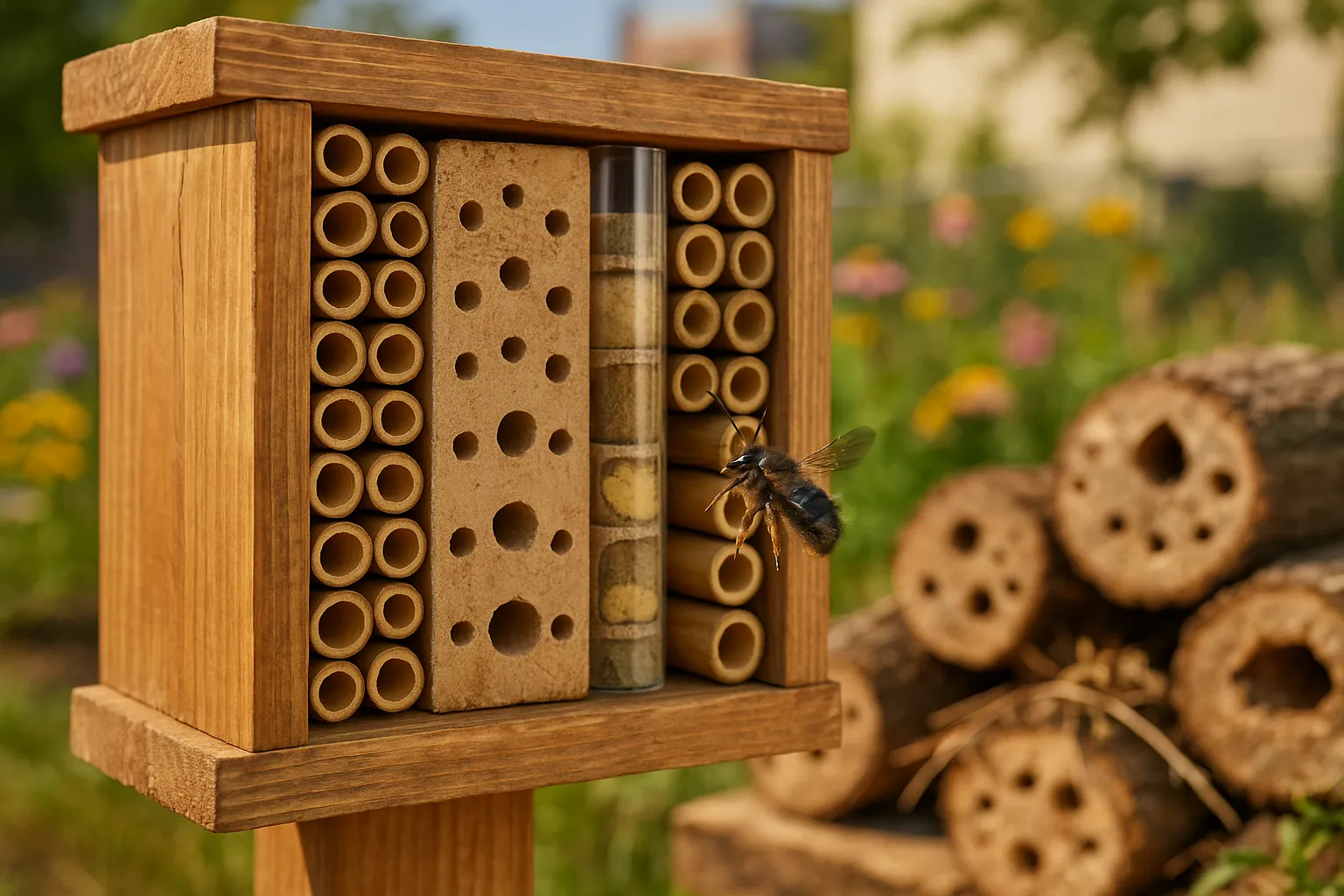
Fact: A bee hotel is an artificial nesting block that mimics natural cavities. Bee hotels range from simple bundles of bamboo canes to purpose-built wooden boxes with drilled holes or removable tubes. The design gives cavity-nesting bees immediate, safe places to lay eggs.
Mechanics: You give bees a structure with holes or tubes. Female bees enter, deposit pollen and nectar, lay an egg, and seal each cell. Many hotels use tubes or drilled holes of varied diameters to attract multiple species. Some models offer removable liners to inspect and clean cells.
Practical note: Organizations like the Royal Horticultural Society and the Xerces Society recommend bee hotels as short-term tools to support urban bee populations, especially when natural cavities are scarce. But bee hotels also concentrate nests in one place, which can raise parasite and disease risk if poorly managed. You should understand that a hotel helps cavity users, but it will not replace broad habitat like flower-rich meadows.
What A Natural Log Pile Is And How It Works
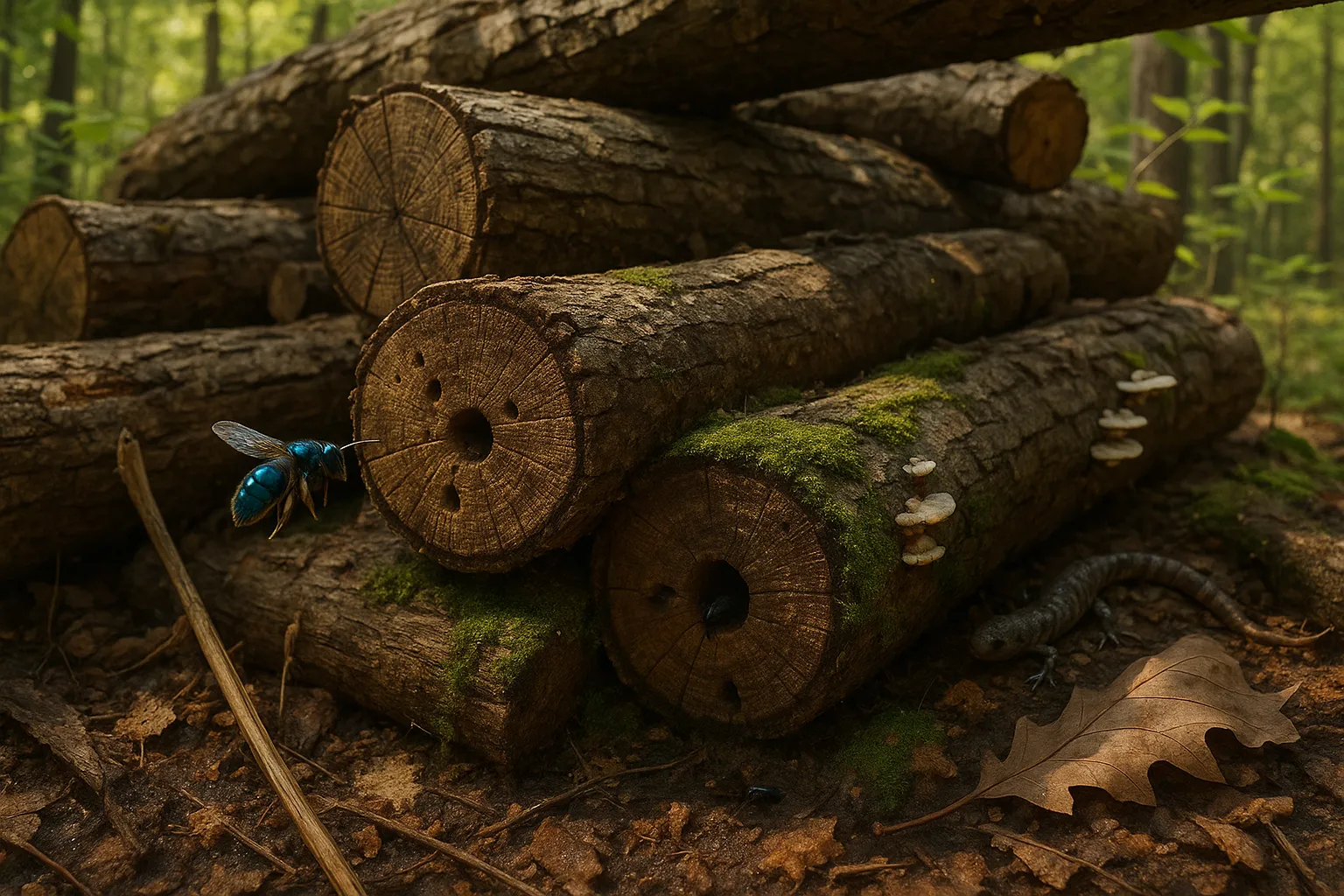
Fact: A natural log pile is a stack of deadwood left to decay on the ground. Log piles provide tunnels, pithy stems, moist microhabitats, and feeding resources for a wide range of wildlife. When wood decays, wood-boring beetles, fungi, and other organisms create cavities and soft wood that many solitary bees excavate or use secondarily.
Mechanics: You leave branches, trunks, and twigs in a sheltered pile. Over seasons, decomposition opens up soft areas and cavities. Some bees excavate their own tunnels in softened wood: others use tunnels made by beetle larvae. The pile also supports predators, decomposers, and fungi that increase ecosystem complexity.
Practical note: The UK’s Wildlife Trusts and many ecological studies list deadwood as essential habitat for invertebrates and birds. A log pile functions as an ecological engine: it stores carbon, recycles nutrients, and gradually supplies diverse nesting opportunities without regular human intervention.
Benefits And Trade‑Offs: Bee Hotel Versus Log Pile
Fact: Bee hotels give targeted shelter quickly: log piles create long-term habitat complexity. Compare them across key criteria:
Target species: Bee hotels favor cavity-using species (Osmia, Megachile). Log piles favor wood-excavating bees plus beetles, spiders, and fungi.
Speed of use: Hotels can be occupied the first season. Log piles take months or years to develop suitable cavities.
Maintenance needs: Hotels need cleaning or rotation to limit parasites. Log piles require low maintenance but need time.
Disease and parasites: Hotels concentrate nests and can amplify mites, wasp parasites, and fungal problems. Log piles spread risk over many micro-sites, lowering concentration.
Biodiversity: Log piles support broader food webs, stag beetles (Lucanus cervus), longhorn beetles, and wood-decay fungi. Hotels support bees but fewer associated species.
Trade-offs: If you want quick results and control, choose a bee hotel. If you aim to increase overall garden biodiversity and can wait, choose a log pile. You can also create both. , combining them often yields the best ecological balance.
Design, Placement, And Materials — Practical Guidance
Fact: Proper design and placement strongly affect nest use. For bee hotels use untreated hardwood, bamboo, or paper tubes with hole diameters from 2 to 10 mm. Drill holes cleanly to depths of 80–150 mm: avoid splintered edges. Use a sloped roof and a backboard to shield from rain. Mount hotels 1–2 meters high on a south- or east-facing wall or fence to capture morning sun.
For log piles use mixed-diameter branches and small trunks, including oak, ash, and willow if available. Place large logs on the ground in partial sun with some shade. Stack irregularly to create air pockets and a range of moisture zones. Leave logs in contact with soil to encourage beetle colonization.
Material notes: Use locally sourced deadwood when possible. Avoid treated timber, pressure-treated wood, or wood with chemical residues. For hotels, include a variety of hole sizes to attract multiple species: for piles, include a mix of soft and hard wood to encourage faster and slower decay processes.
Maintenance, Monitoring, And Disease Risk Management
Fact: Regular monitoring reduces disease risk in bee hotels: passive observation suffices for log piles. For hotels inspect in late autumn or early spring for signs of parasitism (chewed mud plugs, wasp entry holes) and mold. Replace or rotate tubes every 1–3 years. Some gardeners remove occupied tubes and store them in a cool, dry place over winter to break pest cycles, but check local guidance from Xerces Society first.
For log piles inspect annually. Look for active beetle emergence holes, fungal fruiting bodies, and cavities used by bees. Do not remove too many decayed logs: a mix of stages benefits many species. If you detect heavy parasitism in a hotel, like high numbers of kleptoparasitic wasps, remove and replace affected tubes and clean the hotel frame.
Disease management: Use simple hygiene. Keep hotels dry, replace rotten tubing, and avoid stacking hotels where rain pools. For log piles, avoid moving heavily infested wood to other sites. If you see abnormal fungal growths or large numbers of dead bees, consult a local naturalist or entomology extension service: you probably need to intervene.
Choosing The Right Approach For Your Garden
Fact: Your choice depends on goals, space, and how much effort you want to invest. If you manage a small urban balcony, a compact bee hotel with varied tubes will give you measurable pollinator visits fast. If you maintain a half-acre garden or rural plot, a log pile will create persistent habitat and support more species.
Design Recommendations For Bee Hotels
Start with a wooden box and drill holes 4–8 mm for most mason bees: include a few at 9–10 mm for larger species. Fit a slanted roof and an easy-access back for cleaning. Use bamboo canes or paper tubes as liners. Position the hotel in morning sun and protect it from heavy rain.
Material Selection And Preparation For Log Piles
Choose a mix of hardwood and softwood. Cut logs into varied lengths (30–60 cm). Leave some bark on to shelter invertebrates. Stack loosely on well-drained ground and include some vertical stumps to attract beetles that prefer upright wood.
Ideal Location, Orientation, And Microclimate Considerations
Place structures where they get morning sun and shelter from strong wind. South-facing exposures warm earlier: east-facing exposures catch morning sun without overheating. Keep nests close to flower-rich areas so mothers minimize foraging time.
Cleaning, Replacement, And Seasonal Care For Bee Hotels
Clean hotels in late autumn after adults emerge. Replace tubes every 2–3 years and discard heavily moldy liners. Store spare tubes in a cool, ventilated place. Don’t clean out every year: some brood need time to develop .
Inspecting Log Piles And Natural Decay Management
Inspect log piles annually for settlement and moisture pooling. Rearrange only when necessary. If a log becomes waterlogged, tilt it to improve drainage. Add fresh branches each winter to keep a range of decay stages.
Signs Of Parasites, Fungal Problems, And When To Intervene
Look for small holes that differ from neat mud seals, which indicate parasitoid wasps, or for excessive webbing and dead adults, which point to fungal or mite problems. Intervene by removing affected tubes in hotels. For log piles, remove only the most compromised pieces and isolate them away from healthy habitat.
Garden Size, Habitat Connectivity, And Floral Resources As Decision Factors
Large gardens benefit from multiple small log piles and several dispersed hotels. Small gardens get more value from a single well-placed hotel plus potted native flowers. Connect nesting sites to foraging areas with native nectar sources such as Salvia, Phacelia, and native fruit trees.
Combining Bee Hotels And Log Piles: Complementary Strategies
Use both. Install a hotel to provide immediate nesting for cavity users and build a log pile to develop long-term habitat diversity. Hotels give fast results: log piles give persistence. Together they supply nesting options across seasons and species, increasing resilience in your local pollinator community.
To provide the best experiences, we use technologies like cookies to store and/or access device information. Consenting to these technologies will allow us to process data such as browsing behaviour or unique IDs on this site. Not consenting or withdrawing consent, may adversely affect certain features and functions.
Functional
Always active
The technical storage or access is strictly necessary for the legitimate purpose of enabling the use of a specific service explicitly requested by the subscriber or user, or for the sole purpose of carrying out the transmission of a communication over an electronic communications network.
Preferences
The technical storage or access is necessary for the legitimate purpose of storing preferences that are not requested by the subscriber or user.
Statistics
The technical storage or access that is used exclusively for statistical purposes.The technical storage or access that is used exclusively for anonymous statistical purposes. Without a subpoena, voluntary compliance on the part of your Internet Service Provider, or additional records from a third party, information stored or retrieved for this purpose alone cannot usually be used to identify you.
Marketing
The technical storage or access is required to create user profiles to send advertising, or to track the user on a website or across several websites for similar marketing purposes.