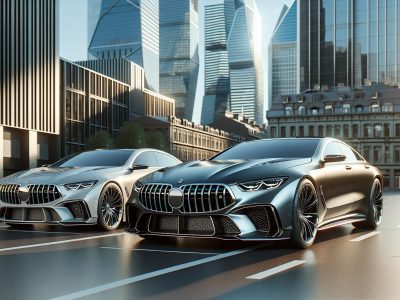
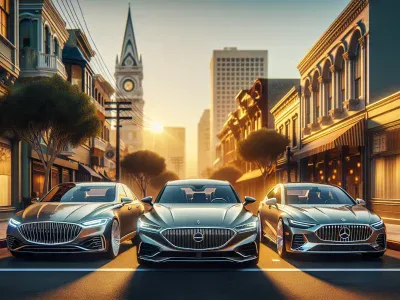
Picture gripping the leather steering wheel as the city blurs past—do you crave the razor-sharp precision of a BMW or the plush embrace of a Mercedes? The rivalry between these automotive legends isn’t just about horsepower or badge appeal. It’s a tale of engineering philosophies and lifestyle statements that shape every mile you drive.
Maybe you’re searching for a car that turns every commute into a thrill or perhaps you want a sanctuary on wheels where silence reigns and comfort rules. Each brand offers more than meets the eye—hidden features, unexpected perks, and a driving experience that lingers long after the engine cools. So which one truly deserves a spot in your garage? Let’s peel back the chrome and discover what sets them apart.
Brand Heritage and Reputation
BMW and Mercedes both come from rich automotive traditions, but their stories shape how you might see them today. When you think “BMW,” precision engineering and sporty driving spring to mind, with the brand’s Bavarian roots tracing back to 1916. Picture a winding German road—many drivers have felt the distinct pull of a 3 Series hugging those curves, thanks to a design philosophy focused on the “Ultimate Driving Machine.” Publications like Car and Driver frequently cite BMW’s enduring legacy in motorsport, connecting the brand to an enthusiast’s heart.
In contrast, Mercedes-Benz—founded in 1926, but with origins to Karl Benz’s 1886 “Patent Motorwagen”—symbolizes prestige, comfort, and leadership in innovation. Every S-Class has set benchmarks for technology, from ABS brakes to advanced driver assistance. When people recall moments of luxury, maybe you remember a classic silver star gracing a diplomat’s driveway or stories of the E-Class passing from one generation to the next. Mercedes isn’t just about aspiration. It’s about history, from state carriages to Formula One victories, creating a narrative where bold statements meet reliable luxury.
Which legacy calls your name? Are you drawn to bay-windowed garages filled with BMWs and tales of Nürburgring victories, or does the dignified heritage of three-pointed stars and innovation milestones inspire you more? Automotive historians like Jason Vines point out that BMW often markets its dynamic evolution, while Mercedes leans into their claim as the inventor of the automobile.
Some say BMW attracts younger thrill-seekers who want their wrists, literally, on the pulse of the steering wheel, but Mercedes appeals to those who equate a car with status—a rolling testament to taste and achievement. Both brands inspire loyalty that’s rare in today’s shifting car market. When thinking about which badge best aligns with you, consider not just what the emblem represents now, but what stories and ambitions have fueled it for over a century.
Performance and Driving Experience
BMW and Mercedes both craft vehicles for distinct driving sensations; your perception of “performance” shapes which brand feels superior. Each brand uses advanced engineering to target specific emotional responses—BMW with sportiness and Mercedes with plush refinement.
Engine Options and Power
BMW offers a range of engine variants, like the 3.0-liter inline-sixs from the M340i, that deliver sharp, throttle-happy response and a potent 382 horsepower. Mercedes counters with the robust AMG lineup, for example, the C43’s turbocharged V6 making 402 horsepower, favoring seamless acceleration and silky powerband transitions. You can sense the difference in turbo lag, throttle mapping, and exhaust note: where BMW urges you to chase redlines, Mercedes seduces with torque-rich, understated surge.
With plug-in hybrids—such as the BMW 330e and Mercedes C350e—the theme persists: BMW wrings out dynamic edge by letting electric boost sharpen throttle input, while Mercedes, tuned for urban tranquility, smooths transitions so you glide from stoplight to freeway. Top models illustrate the rivalry: the BMW M5 Competition uses a twin-turbo V8 for precise, explosive sprints, while the Mercedes-AMG E63 S translates 627 lb-ft torque into relentless, rolling force (Car and Driver, 2023).
Handling and Ride Quality
BMW’s suspension tuning prioritizes agility and connection, as evidenced by adaptive dampers in the 5 Series or the natural feedback through the M3’s steering rack. You often feel BMW’s “Ultimate Driving Machine” mantra at work—each turn and input translates to the pavement, inviting you to challenge limits in canyons or track days.
Mercedes, by contrast, perfects the art of undisturbed cruising. The E-Class glides over expansion joints using air suspension, masking rough roads and isolating you from outside clamor. In spirited driving, Mercedes uses rear-wheel steering and dynamic chassis control, but the focus stays balanced—delivering both confidence and comfort, not just unfiltered energy.
Choosing between these brands, ask yourself: Does tactile feedback and every curve matter more, or do you value mastering miles without fatigue? Test drives, not just spec sheets, reveal which language of performance speaks to you.
Interior Design and Comfort
Step inside a BMW or a Mercedes and deciding between them gets tactile—soft leathers, cool aluminum, and glowing screens greet you, but the feel couldn’t be more different. Each brand sculpts its world, tailoring ambiance for emotional impact and usability. Do those tiny stitched seams under your fingertips say “sport” or “sanctuary”?
Materials and Craftsmanship
BMW interiors showcase crisp lines and functional minimalism—think of the M3’s leather dashed with real carbon fiber inserts, matte finishes, and clear ergonomic intent. The tactile contrast between the 5 Series’ Vernasca leather and the subtle metal speaker grilles highlights BMW’s engineering-first philosophy. BMW’s approach often echoes an athlete’s training room—everything placed for clarity, comfort, and performance, but with understated elegance.
Mercedes wraps you in a cocoon of plushness, with S-Class owners often raving about the ambient lighting that changes shades with your mood, and the pillow-top headrests that cradle you during long commutes. Burmester surrounds, open-pore woods, and double-stitched leather transform the cabin into a lounge on wheels. In the E-Class, every surface radiates opulence, designed to calm the mind—a literal sanctuary according to longtime owners and industry reviewers like Car and Driver.
Both brands favor soft-touch surfaces, but the intent diverges: BMW accentuates sport-driven luxury, while Mercedes executes comfort-centric flair.
Technology and Features
Tech in BMW’s cabins means control and engagement—iDrive’s rotary dial lets your hand rest on the console as you flick through menus, and full-digital clusters wrap visual data around you. Gesture control in the 7 Series lets you raise the volume or skip a track with a wave, blurring the line between driver and machine. It’s an interface for people who love to drive, but it comes with a learning curve that can frustrate new users, as pointed out in multiple owner forums.
Mercedes technology works quietly in the background, prioritizing seamless luxury. MBUX voice control answers casually spoken requests, screens appear to float above the dash, and heated, ventilated, massaging seats soothe your ride. In the EQS, no fewer than three dashboard displays merge under a single glass pane—the “Hyperscreen.” It’s less a cockpit and more a digital living room, guided by natural speech and touch, welcoming you to relax. Reliability sometimes stumbles in early model years, with Consumer Reports highlighting sporadic glitches.
Choosing between these interiors asks you to listen to your instincts: do you crave the sharp, purposeful comfort of a BMW, or the regal serenity of a Mercedes? Each brand’s vision for interior design and comfort reflects a century of philosophy, making every detail—a switch, a stitch, a screen—a signpost for your journey.
Safety and Reliability
You encounter a crossroads in automotive trust when you compare BMW and Mercedes—two titans, each weaving safety and reliability deep into their DNA. Picture stepping into a Mercedes-Benz S-Class: sensors glancing like watchful eyes, PRE-SAFE tightening your seatbelt before trouble strikes, and the crumple zones ready to cradle you if things go wrong. The Insurance Institute for Highway Safety (IIHS) and Euro NCAP regularly shower Mercedes sedans like the E-Class and SUVs like the GLE with top ratings—just last year, the 2023 E-Class clinched a five-star safety score.
Consider, though, a story repeated in countless Munich workshops. BMWs, particularly the 3 Series, showcase dynamic stability control that seems to read the road’s mind, and collision warning systems that act faster than your reflexes after a long day. BMW doesn’t only aim for driving joy—it blends it with laser-focus on accident prevention. The 2024 BMW X5, for example, achieves top NHTSA marks, proving that agility doesn’t mean sacrificing peace of mind.
Yet questions linger: Do ratings capture the nuances of everyday mishaps? Some drivers share anecdotes—like the Mercedes owner whose car alerted them to drowsiness just before a micro-nap at the wheel, or the BMW enthusiast whose lane-keep assist saved them from an unseen bicyclist at dawn. These stories show AI tech evolving into guardian angels, blurring lines between luxury and literal lifesavers.
Reliability, then, paints a subtler canvas. J.D. Power data points to Mercedes as edging out BMW in dependability over the first three years—though both brands, unlike some rivals, demand premium maintenance. Outliers still emerge: One owner keeps a 2014 BMW 5 Series at 140,000+ miles, untouched by serious trouble, while another reports electrical quirks in a newer Mercedes GLC. The question remains—do you value a badge synonymous with bulletproof engineering, or do you chase the next adrenaline rush, accepting quirks as part of character?
Every drive, you verify this debate. No car confers immunity; every technology presents trade-offs. Compare recalls on the National Highway Traffic Safety Administration (NHTSA) database and you’ll see that, while both brands experience occasional stumbles, models like the Mercedes C-Class and BMW X3 frequently outperform mainstream rivals in long-term customer satisfaction.
Are you looking for the comfort of certainty or the excitement of possibility? When your next car becomes an extension of your life, ask: What does safety and reliability mean to you—not just on paper, but on real roads, in unpredictable moments?
Pricing and Value for Money
Everyone asks: does BMW or Mercedes squeeze more value out of every dollar? Pricing shakes out like a chess match—every move, every option, every badge adding to the story. You step into a BMW 3 Series, and sticker shock meets you at around $44,500 (MSRP, 2024). Meanwhile, Mercedes counters with the C-Class, starting at $46,950. At first glance, the gap looks slim, but the devil’s always in the details. Both brands tempt you with package upgrades, trims like M Sport or AMG Line, and tech add-ons that can push costs well past $60K before you even blink.
BMW’s value proposition leans sporty. You get standard features—sport suspension, paddle shifters, LED headlights—that prioritize driving engagement. Mercedes, in contrast, thickens the luxury stew with standard heated seats, ambient lighting, and a voice-activated MBUX infotainment system, lending its entry trims a richer, more serene flavor. But here’s where things flip: When you start adding adaptive cruise, wireless charging, or advanced driver assists, Mercedes’ premium stacks high faster than you’d expect. Which leaves you in a familiar tug-of-war—chase the badge or chase the options?
Take, for example, certified pre-owned: You’d find a 3-year-old BMW 5 Series dipping under $32,000, while the comparable E-Class averages closer to $35,000, according to Kelley Blue Book. But depreciation slices deep with both badges, a Mercedes often dropping 45% of value in 5 years, versus BMW’s 47% slide (iSeeCars, 2023). It’s enough to make anyone ask: Is brand cachet holding up, or are you just watching your investment float away like autumn leaves on a brisk Munich morning?
Service costs whisper a different story. Routine maintenance, oil changes, and brake pads on a BMW or Mercedes will usually run 10–20% more than mainstream brands, say Consumer Reports. But, BMW includes scheduled maintenance for the first three years or 36,000 miles, which can tip the ledger if you drive a bit more than average.
Do you want sharp performance and are willing to hunt for incentives or loyalty rebates? You’ll find BMW dealerships throw competitive lease deals and financing offers your way more often than Mercedes. Mercedes, meanwhile, holds a tighter grip on incentives, betting on its prestige to carry the day. How much are you really paying for that three-pointed star? How much of the Ultimate Driving Machine magic can you get before diminishing returns?
Numbers, features, incentives, and cachet—they all twist together in this rivalry. As you compare what’s in your garage dreams, remember: What counts as real value sometimes depends less on pure figures and more on how a certain badge makes you feel when you grab the keys.
Model (2024 base)
BMW MSRP
Mercedes MSRP
5-Year Depreciation (avg.)
3 Series / C-Class
$44,500
$46,950
-47% (BMW), -45% (MB)
5 Series / E-Class
$59,000
$63,900
-47% (BMW), -45% (MB)
Ownership Experience
Ownership experience for BMW and Mercedes transcends daily commutes and routine errands. Whether you find excitement in the undeniable edge of a BMW or cherish the majestic calm of a Mercedes, each brand tailors your journey differently. Are you searching for spirited agility, or is quiet prestige your anchor?
Maintenance and Service
Maintenance and service reflect the core philosophies of BMW and Mercedes. BMW’s Ultimate Care program covers scheduled services for three years or 36,000 miles; owners like Mark, who drove his 5 Series 40,000 miles in two years, found peace of mind in flat-rate coverage. Mercedes counters with flexible pay-as-you-go options and prepaid maintenance plans, appealing to those who dislike surprises.
Service center experience also sets these brands apart. BMW centers often feel like performance hubs, where staff highlight your car’s dynamic features—some owners report quick turnarounds but note that diagnostics, particularly for iDrive systems, can take longer. Mercedes-Benz dealerships, meanwhile, create a spa-like environment; you’ll find cappuccinos and lounge seating, with technicians famous for their attention to detail, although, as John from Chicago shared, securing appointments in busy metro areas sometimes takes a week or more.
Parts cost runs high for both. A brake job for a BMW X5 hovers near $1,100 and comparable maintenance for a Mercedes GLC sits around $1,200, according to RepairPal. DIY enthusiasts sometimes complain that proprietary tools and digital locks complicate at-home fixes. If quick, affordable fixes matter, BMW and Mercedes both challenge your patience and wallet.
Resale Value
Resale value, much like an echo of your initial investment, shapes long-term satisfaction. BMW cars lose, on average, about 47% of their value after five years, while Mercedes vehicles depreciate closer to 45%, according to iSeeCars 2023 data. This margin, narrow as a tire’s tread, may sway budget-conscious drivers. Curious how your preferences ripple into resale? Owners who kept maintenance logs and chose popular colors—like Alpine White or Obsidian Black—typically commanded higher prices in private sales.
The prestige of Mercedes’ emblem, a three-pointed star, often helps models like the E-Class maintain higher resale values if you trade in before six years. In contrast, used BMW M Series coupes, cherished for their bespoke performance, sometimes fetch surprising premiums, particularly among enthusiasts on forums such as Bimmerpost.
Marketplace swings can feel unpredictable. In 2020, luxury SUV demand spiked after supply chain issues; X3s and GLCs saw resale prices hover near 70% of new MSRP—a rare phenomenon, Consumer Reports noted. if keeping service records in pristine order could be your unseen ace when negotiating trade-in offers down the line?
Model
5-Year Depreciation (%)
Average Maint. Cost (Annual, $)
Scheduled Maint. Coverage
BMW 3 Series
47
$1,200
3 yrs/36,000 mi included
Mercedes C-Class
45
$1,300
Prepaid and pay-as-you-go options
BMW X5
47
$1,400
3 yrs/36,000 mi included
Mercedes GLC
45
$1,350
Prepaid and pay-as-you-go options
Owning a luxury car can feels like both a badge of honor and a test of endurance—timing, habits, and even color preferences subtly tilting the balance between delight and regret.
Conclusion
Choosing between BMW and Mercedes really comes down to what you value most in a car. Both brands offer a unique blend of innovation, style and driving experience that can elevate your daily commute or weekend adventure.
As you weigh your options consider how each brand’s philosophy aligns with your lifestyle and priorities. Whether you crave dynamic performance or refined luxury your perfect match is out there waiting for you to take the wheel.
To provide the best experiences, we use technologies like cookies to store and/or access device information. Consenting to these technologies will allow us to process data such as browsing behaviour or unique IDs on this site. Not consenting or withdrawing consent, may adversely affect certain features and functions.
Functional
Always active
The technical storage or access is strictly necessary for the legitimate purpose of enabling the use of a specific service explicitly requested by the subscriber or user, or for the sole purpose of carrying out the transmission of a communication over an electronic communications network.
Preferences
The technical storage or access is necessary for the legitimate purpose of storing preferences that are not requested by the subscriber or user.
Statistics
The technical storage or access that is used exclusively for statistical purposes.The technical storage or access that is used exclusively for anonymous statistical purposes. Without a subpoena, voluntary compliance on the part of your Internet Service Provider, or additional records from a third party, information stored or retrieved for this purpose alone cannot usually be used to identify you.
Marketing
The technical storage or access is required to create user profiles to send advertising, or to track the user on a website or across several websites for similar marketing purposes.