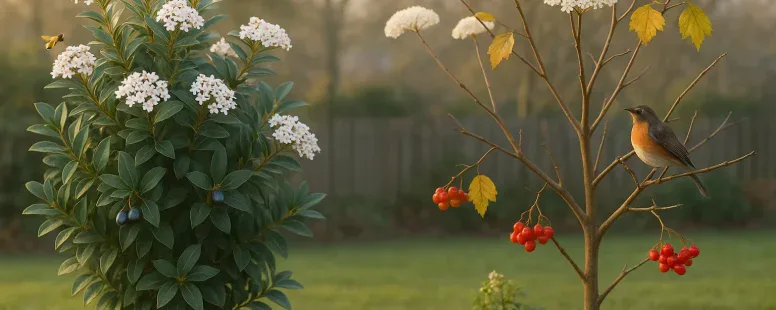
Which viburnum fits your garden: the evergreen, winter-flowering Viburnum tinus (laurustinus) or the deciduous, fruit-rich Viburnum opulus (guelder rose)? You smell the late-winter flowers of tinus before you see them, sweet, faint, promising spring, while opulus announces itself with lacey white umbels and, later, clusters of bright red berries that burn against bare branches. Both plants offer reliable structure, but they serve different seasonal needs. This guide gives clear, plant-level answers so you can pick the right viburnum for pollinators, privacy, or year-round interest.
Quick Comparison Snapshot
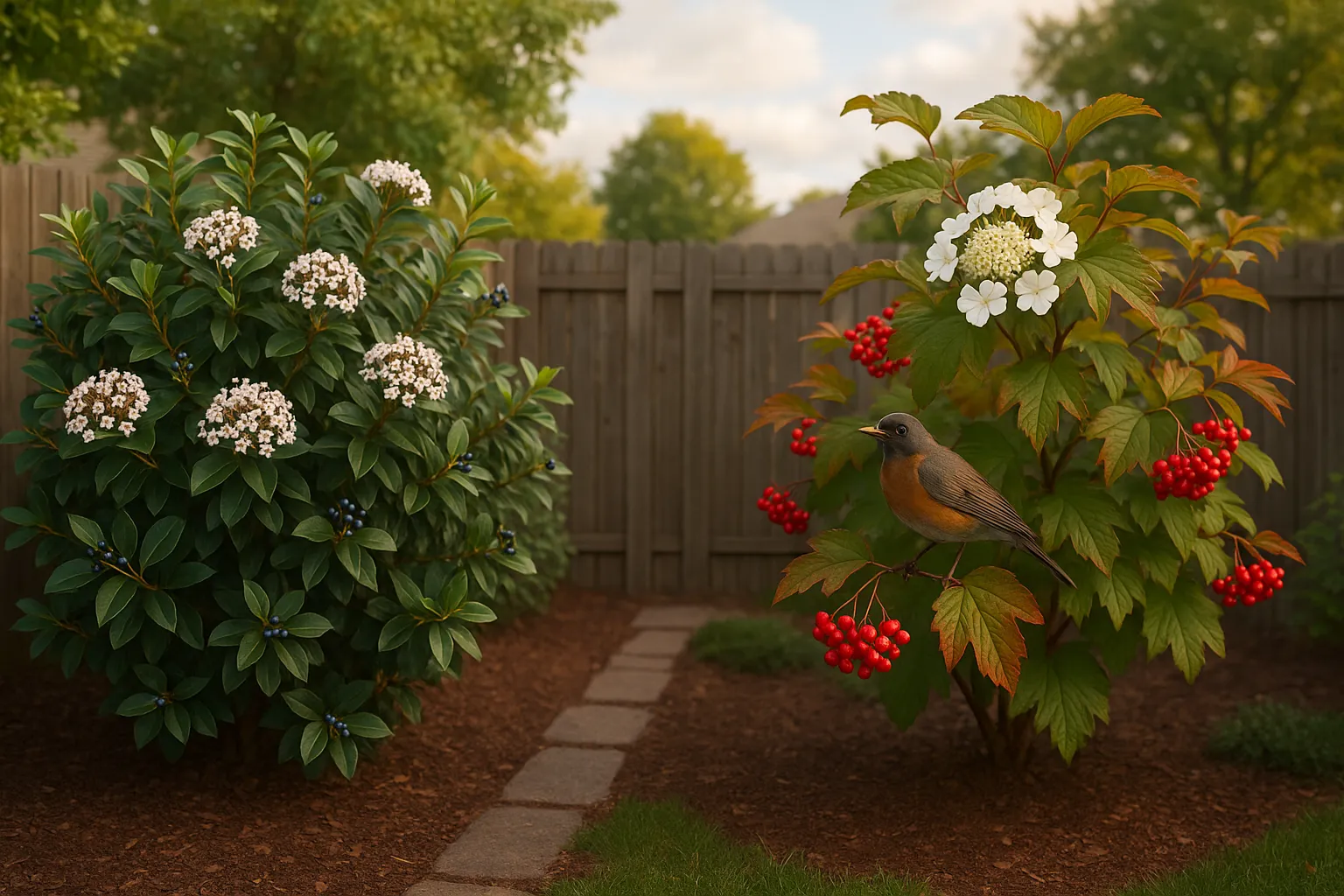
Fact: Viburnum tinus is an evergreen shrub with winter-spring bloom and small bluish-black fruit: Viburnum opulus is a deciduous shrub valued for summer flowers and bright red berries in autumn. Both belong to the genus Viburnum (family Adoxaceae) but they differ in leaf persistence, fruit type, and seasonal impact.
Viburnum tinus (laurustinus)
Habit: Evergreen, dense, 4–8 ft typical: can reach 10 ft with time.
Flowers: Clusters of small white-pink flowers from late winter to spring.
Fruit: Small, oblong black-blue drupes persistent into spring.
Best for: Winter interest, year-round screening, coastal sites.
Viburnum opulus (guelder rose)
Habit: Deciduous, open, 8–12 ft common: can form multi-stemmed small tree.
Flowers: Flat, lacecap clusters: sterile outer florets with showy display in late spring.
Fruit: Round, vivid red berries that persist into fall and feed wildlife.
Best for: Wildlife gardens, bright autumn color, structural interest in summer.
You can use this snapshot to quickly match plant traits to your goals, privacy, pollinators, or seasonal color.
Key Botanical And Visual Differences
Fact: The two species differ in morphology, flowering habit, fruiting strategy, and seasonal foliage.
Morphology And Growth Habit
Viburnum tinus grows as a dense, multi-stemmed evergreen shrub. Its leaves are opposite, leathery, and glossy: they slow water loss and keep the shrub green in mild winters. Viburnum opulus grows more upright and open. Its leaves are three-lobed and thinner, they turn yellow to purple in fall. You will see tinus hold a compact silhouette while opulus gives a more architectural, airy presence.
Flowers: Timing, Color, And Form
Viburnum tinus flowers from late winter into spring. The flowers form in compact clusters and smell faintly sweet: bees visit them early when few other nectar sources exist. Viburnum opulus blooms in late spring with flat, lace-like cymes: sterile outer flowers create a white halo around fertile central florets. The opulus display reads as a summertime meadow flower in a shrub form.
Fruit: Color, Persistence, And Wildlife Value
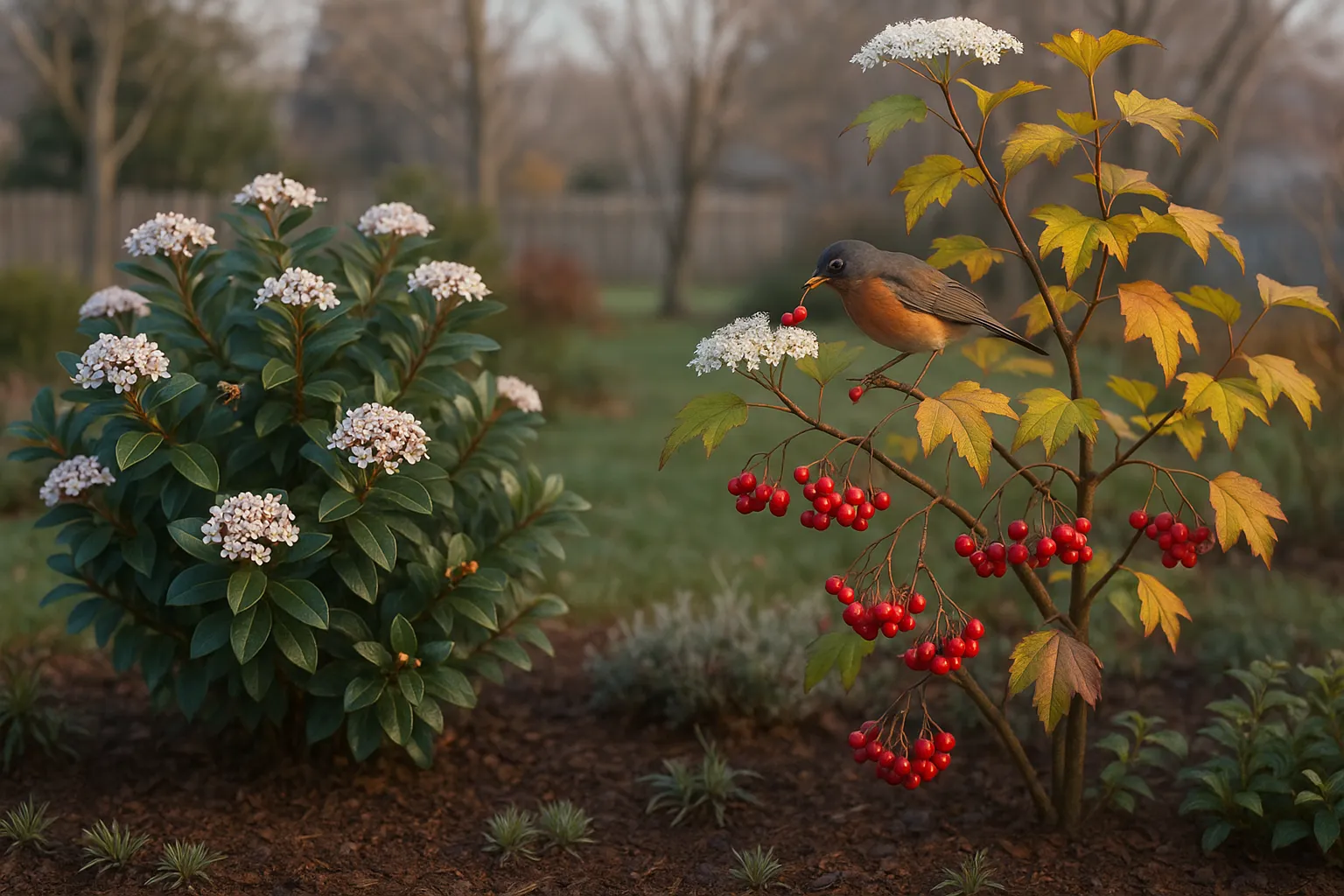
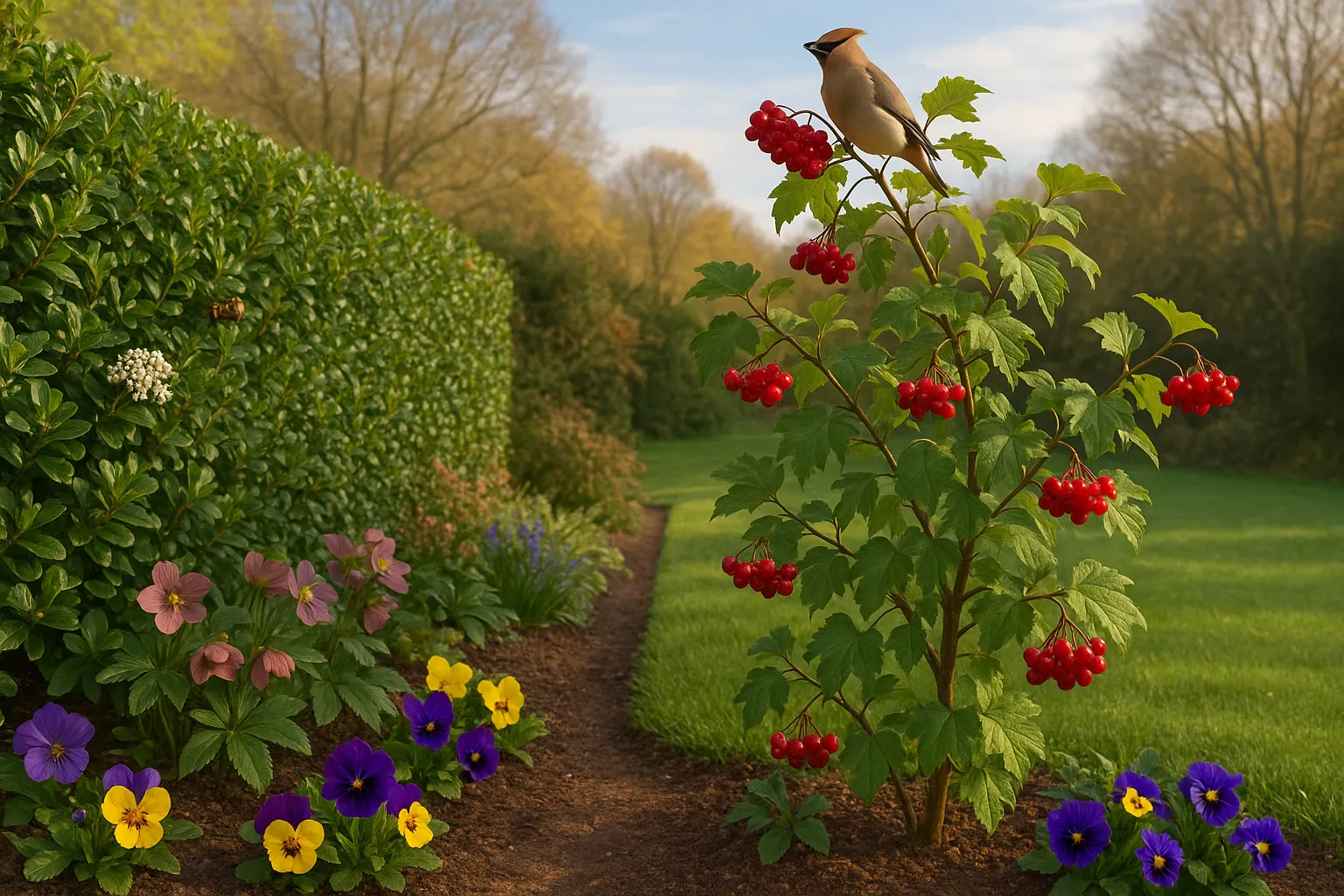
Viburnum tinus produces small dark blue to black drupes. Birds eat them, but they’re less conspicuous. Viburnum opulus sets glossy red pomes that stand out against bare stems: they attract thrushes, waxwings, and robins in autumn and early winter. If you want high wildlife value and bright winter berries, opulus leads.
Foliage, Size And Seasonal Interest
Viburnum tinus offers evergreen foliage and winter-spring bloom, useful for structure when other shrubs are bare. Viburnum opulus offers distinct seasonal change: fresh green leaves, white summer bloom, striking red berries, and autumn color. Your choice depends on whether you prefer steady green background or a seasonal performer that changes its show through the year.
Growing Requirements And Site Preferences
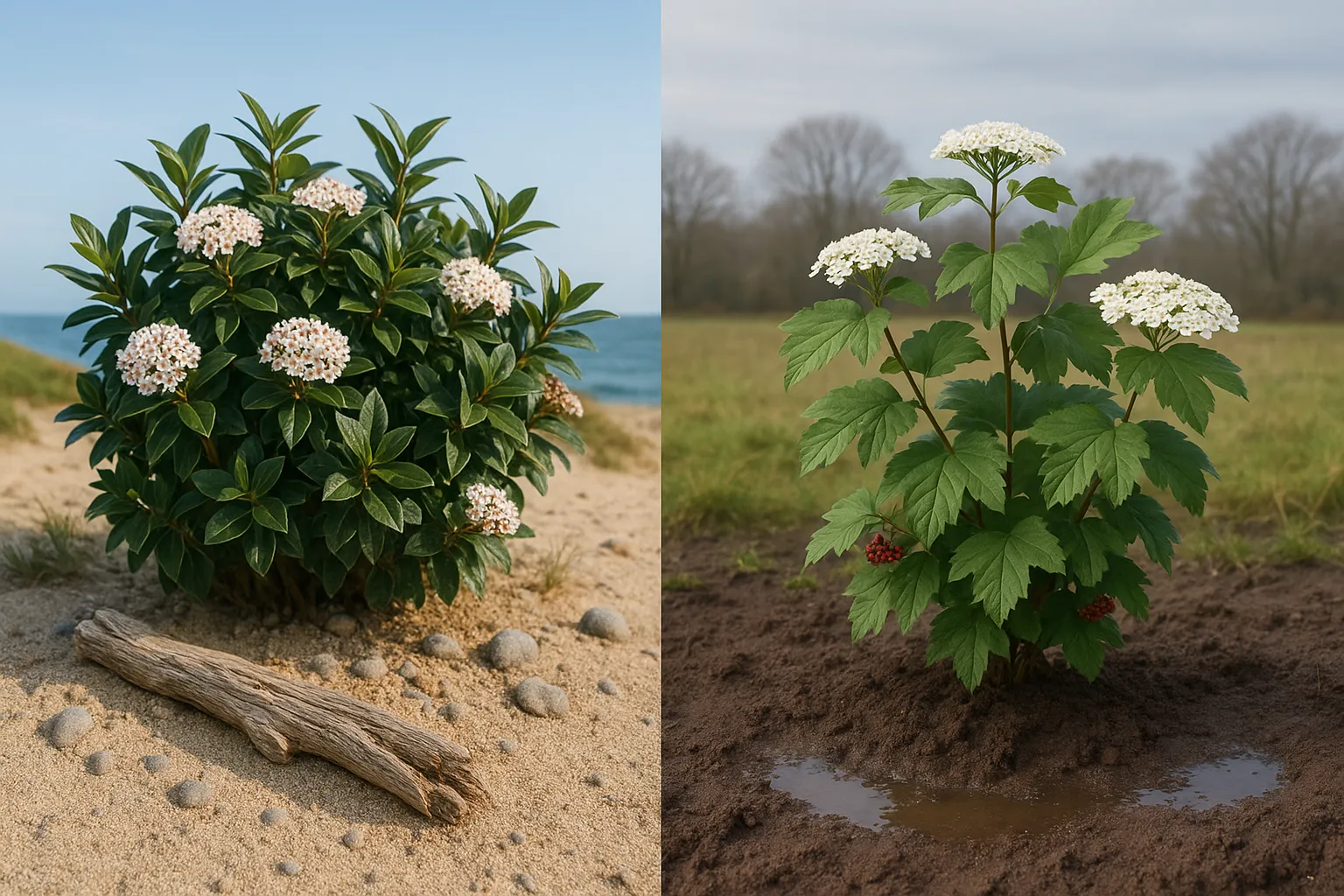
Fact: Tinus tolerates milder, coastal climates and a range of soils: opulus tolerates colder continental climates and wetter sites.
Hardiness Zones And Climate Tolerance
Viburnum tinus succeeds in USDA zones roughly 7–9. It can struggle in prolonged hard freezes but tolerates maritime exposure. Viburnum opulus is hardy in zones 3–8 and suits colder inland gardens. If you garden in zone 6 or colder, opulus is the safer pick: if you live on the British coast or the U.S. Pacific coast, tinus can perform beautifully.
Soil, Drainage, And pH Preferences
Both species prefer fertile, well-drained soil but have differences. Tinus tolerates a wider pH range and can handle slightly alkaline soils common in coastal areas. Opulus tolerates heavier, moisture-retentive soils and also tolerates neutral to slightly acidic pH. Neither likes standing water: amend heavy clay with organic matter if drainage is poor.
Light Exposure And Watering Needs
Tinus flowers best in full sun to partial shade: too much deep shade reduces blossom density. Opulus also performs in full sun but will tolerate part shade: it often flowers better with more light. Water young plants regularly: once established, tinus shows better drought tolerance than opulus, which prefers more consistent moisture.
Landscape Uses And Design Considerations
Fact: Use tinus for evergreen structure and opulus for seasonal highlights and wildlife.
Hedges, Screens, And Mass Plantings
Viburnum tinus suits formal hedging and living screens because it keeps leaves year-round and responds well to shaping. For a dense, tall screen you can plant tinus 3–4 ft apart and clip annually. Viburnum opulus makes a looser hedge: space plants 4–6 ft apart to allow berry display and bird access.
Specimen Planting And Mixed Borders
Use a single opulus as a focal point where its lacecap flowers and red berries can be seen against a lawn or woodland edge. Tinus works as a backbone in mixed evergreen-perennial borders, providing winter structure behind shorter perennials like hellebores and pansies.
Wildlife, Pollinators, And Seasonal Interest
Opulus gives higher wildlife value with conspicuous berries that feed birds. Tinus supplies early-season nectar for bees when few other shrubs bloom. If you want year-round wildlife support, plant both: tinus for nectar in late winter and opulus for autumn fruit.
Maintenance, Pruning And Common Problems
Fact: Both viburnums are generally low-maintenance: pruning and monitoring keep them healthy.
Pruning Timing And Techniques For Each Species
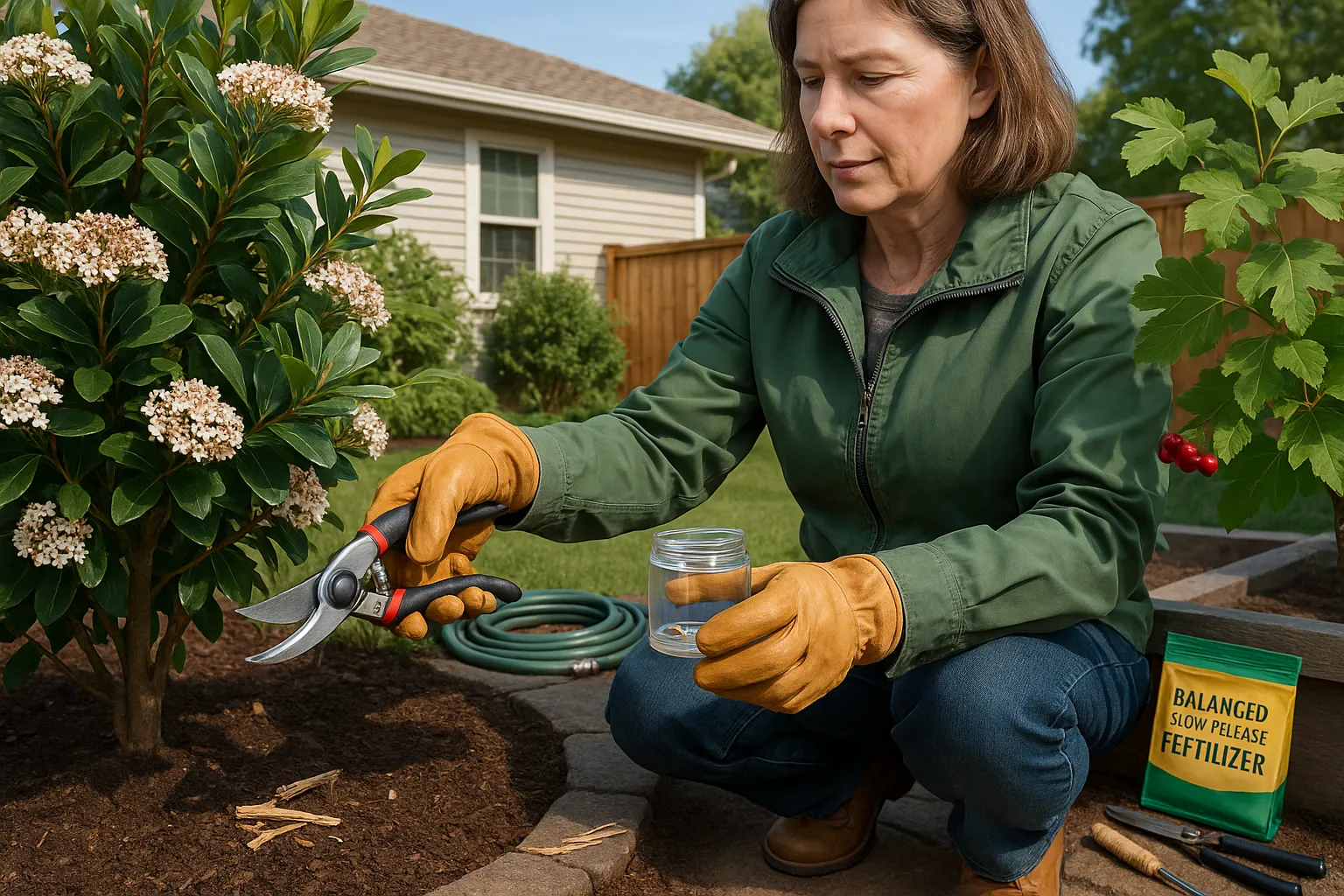
Prune Viburnum tinus after flowering to avoid cutting off next season’s flower buds: remove older wood to encourage fresh growth. Prune Viburnum opulus in late summer after fruiting or in early spring before buds swell: thin stems to open the plant and improve air flow. Use clean, sharp tools and cut to outward-facing buds to shape the plant.
Pests, Diseases, And How To Manage Them
Both species can get aphids, scale, and viburnum beetle (Pyrrhalta viburni). Viburnum beetle attacks many species including opulus: inspect foliage in spring for notched leaves and treat by handpicking larvae or using an appropriate insecticide if populations rise. Powdery mildew can affect leaves in shaded, humid sites: improve air circulation and remove infected leaves. The Royal Horticultural Society and local extension services list monitoring and early removal as key steps.
Fertilization And Long-Term Care Tips
Apply a balanced slow-release fertilizer in spring for both species. Mulch to conserve moisture and suppress weeds, keeping mulch a few inches from stems. Replace very old wood on tinus to rejuvenate: for opulus, allow some dead stems for birds but remove crossing branches. Don’t over-fertilize, too much nitrogen encourages soft growth and can increase pest pressure.
Propagation, Cultivars And Purchasing Advice
Fact: You can propagate both species from cuttings: select cultivars based on size and flower/fruit traits.
Propagation Methods: Seed, Cuttings, And Layering
You can grow Viburnum opulus from seed, but germination is slow and seedlings vary. Both species propagate reliably from semi-ripe cuttings in summer using rooting hormone and a damp medium. Layering works well for opulus when a low branch roots in contact with soil. For faster, predictable results, buy nursery-grown plants.
Notable Cultivars And What To Look For At Purchase
Viburnum tinus cultivars: ‘Eve Price’ (compact, abundant flowers), ‘Gwenllian’ (prolific bloom), and ‘Compactum’ (smaller habit). Look for plants with healthy roots, no crown rot, and multiple stems.
Viburnum opulus cultivars: ‘Notcutt’s Variety’ (large sterile outer florets), ‘Roseum’ (double-flowered form), and ‘Xanthocarpum’ (yellow fruit). Check for berry set on older plants if you want immediate wildlife value. When buying, inspect for viburnum beetle damage and faded foliage that may indicate stress.
Choosing Between Viburnum Tinus And Viburnum Opulus: A Practical Guide
Fact: Choose based on your climate, seasonal priorities, and wildlife goals.
Best Choice By Garden Goal And Climate Scenario
You want year-round greenery and winter flowers: choose Viburnum tinus. It fits coastal and mild climates (USDA 7–9) and gives structure in winter borders.
You want bright autumn berries, high bird value, and winter silhouettes: choose Viburnum opulus. It tolerates colder climates (USDA 3–8) and wetter soils.
You want both nectar in late winter and berries in autumn: plant both at different spots. They complement each other ecologically and visually.
Quick Decision Checklist For Gardeners
Climate: Is your garden in zone 3–6? lean toward opulus. In zone 7–9? tinus is safer.
Space and form: Need a dense evergreen screen? choose tinus. Want airy summer flower displays and berry clusters? choose opulus.
Wildlife: Want to attract early pollinators? tinus. Want to feed late-season birds? opulus.
Maintenance tolerance: Prefer low-prune, evergreen structure? tinus. Happy to manage seasonal leaf drop and occasional beetle checks? opulus.
If you’re still unsure, buy one small specimen of each and observe them for a season, you will learn fast which one suits your garden microclimate and maintenance style. Try contacting your local extension or the Royal Horticultural Society for region-specific advice.
Published: March 7, 2026 at 8:15 am by Ellie B, Site owner & Publisher
To provide the best experiences, we use technologies like cookies to store and/or access device information. Consenting to these technologies will allow us to process data such as browsing behaviour or unique IDs on this site. Not consenting or withdrawing consent, may adversely affect certain features and functions.
Functional
Always active
The technical storage or access is strictly necessary for the legitimate purpose of enabling the use of a specific service explicitly requested by the subscriber or user, or for the sole purpose of carrying out the transmission of a communication over an electronic communications network.
Preferences
The technical storage or access is necessary for the legitimate purpose of storing preferences that are not requested by the subscriber or user.
Statistics
The technical storage or access that is used exclusively for statistical purposes.The technical storage or access that is used exclusively for anonymous statistical purposes. Without a subpoena, voluntary compliance on the part of your Internet Service Provider, or additional records from a third party, information stored or retrieved for this purpose alone cannot usually be used to identify you.
Marketing
The technical storage or access is required to create user profiles to send advertising, or to track the user on a website or across several websites for similar marketing purposes.