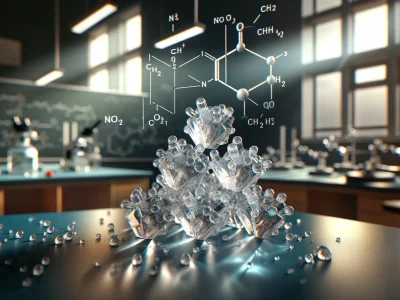
When we think about covalent bonds, the image of tightly connected atoms often comes to mind. These bonds are the backbone of countless substances around us, from the air we breathe to the materials we use daily. But does this mean covalently bonded substances always form small molecules? It’s a question that challenges how we understand chemistry at its core.
I’ve always found it fascinating how these bonds can create everything from tiny water molecules to massive structures like diamonds. Exploring whether all covalent compounds fit into the “small molecule” category reveals some surprising truths about their versatility and complexity. Let’s dive deeper into what makes these substances so unique and uncover whether this statement holds up under scrutiny.
Understanding Covalent Bonds
Covalent bonds form when atoms share electrons, creating connections that hold molecules or structures together. These bonds underlie both small molecular compounds and extensive networks.
Definition And Key Characteristics
Covalent bonding involves the sharing of one or more pairs of electrons between atoms to achieve a stable electronic configuration. This type of bonding typically occurs between nonmetals with similar electronegativities. Covalently bonded substances exhibit low melting and boiling points in small molecules like oxygen (O₂) but can show high values in network structures such as quartz (SiO₂). Electrical conductivity is generally absent because no free ions or delocalized electrons exist within these substances.
Types Of Covalent Bonding
Single covalent bonds involve one shared electron pair, as seen in hydrogen (H₂). Double covalent bonds include two shared pairs, found in oxygen (O₂), while triple covalent bonds feature three shared pairs, evident in nitrogen (N₂). Polar covalent bonds occur when the electron sharing is unequal due to differences in electronegativity, resulting in partial charges on the bonded atoms, such as water (H₂O). Nonpolar covalent bonds display equal sharing of electrons, like methane (CH₄). Network covalent bonding creates large lattice structures with no distinct molecules, examples being diamond and graphite.
Exploring The Claim: True Or False?
Covalently bonded substances don’t always consist of small molecules. Examining common misconceptions and examples reveals their varied structures.
Common Misconceptions About Covalent Substances
Many believe covalently bonded substances are always small molecules, but this isn’t accurate. While some covalent compounds like water (H₂O) or carbon dioxide (CO₂) are molecular, others form extensive networks. Substances such as diamond and quartz demonstrate network covalent bonding, where atoms connect in vast lattices rather than discrete molecules. This difference highlights the diversity within covalent bonds.
Another misconception is that all covalently bonded substances share similar physical properties. Small molecular compounds often have low melting and boiling points due to weak intermolecular forces, whereas network solids exhibit high thermal stability because of the strong bonds throughout their lattice structure.
Examples Of Covalently Bonded Substances
Water (H₂O), methane (CH₄), and oxygen (O₂) represent simple molecular examples with distinct units bound by shared electrons. These substances generally exist as gases or liquids under standard conditions due to their weak intermolecular forces.
In contrast, diamond and silicon dioxide (SiO₂) exemplify network covalent structures. Diamond’s carbon atoms form a rigid three-dimensional lattice, resulting in extreme hardness and high melting points exceeding 3,500°F (1,982°C). Similarly, SiO₂ creates a durable crystalline framework found in quartz with comparable strength characteristics.
These examples illustrate that while some covalently bonded materials consist of small molecules, others form complex networks with vastly different properties.
Small Molecules Versus Larger Structures
Covalently bonded substances exhibit a wide range of sizes, from discrete small molecules to extensive macromolecular networks. This diversity results in varied physical and chemical properties.
Small Molecules: Traits And Examples
Small molecules consist of a limited number of atoms held together by covalent bonds. These substances often have low melting and boiling points due to weak intermolecular forces, such as van der Waals forces or hydrogen bonding. For example, water (H₂O) exhibits strong hydrogen bonding between molecules but remains a liquid at room temperature, while methane (CH₄) and oxygen (O₂) are gases under similar conditions due to even weaker interactions.
In addition to their physical properties, small molecular compounds typically exist as distinct entities with fixed molecular formulas. Carbon dioxide (CO₂), for instance, forms simple linear molecules composed of one carbon atom double-bonded to two oxygen atoms. Similarly, ammonia (NH₃) contains one nitrogen atom covalently bonded to three hydrogens in a trigonal pyramidal structure.
Macromolecules And Covalent Bonding
Macromolecules involve extensive networks of atoms connected through covalent bonds without forming discrete molecular units. These structures create materials with high melting points and exceptional durability because the bonds extend throughout the substance rather than being confined within individual molecules. Diamond is an excellent example; each carbon atom forms four strong covalent bonds in a tetrahedral arrangement, resulting in superior hardness and thermal conductivity.
Quartz (SiO₂), another network solid, consists of silicon-oxygen tetrahedra linked continuously into a crystalline lattice. Unlike small molecules that rely on intermolecular forces for cohesion, these materials depend entirely on intramolecular covalent bonding within their rigid frameworks.
While both small molecular compounds and macromolecules arise from covalent bonding principles, their differences highlight the versatility of this type of bond across diverse chemical contexts.
Analyzing The Statement
Covalently bonded substances exhibit diverse properties, making it essential to evaluate whether they always consist of small molecules. While the statement holds true in specific cases, notable exceptions challenge this generalization.
Situations Where The Statement Holds True
In many instances, covalent bonds result in the formation of small molecules. These substances typically involve a limited number of atoms connected through single, double, or triple covalent bonds. Examples include water (H₂O), methane (CH₄), and ammonia (NH₃). Such compounds often display low melting and boiling points due to weak intermolecular forces like Van der Waals interactions or hydrogen bonding.
Small molecules are common when nonmetals with similar electronegativities bond without forming extended structures. For example, diatomic elements like oxygen (O₂) and nitrogen (N₂) consist solely of two atoms sharing electrons covalently. These examples align with the statement as they involve simple molecular arrangements rather than extensive networks.
Exceptions To The Rule
Not all covalently bonded substances conform to the small molecule classification. Covalent network solids represent significant exceptions, comprising vast lattices where atoms connect through continuous covalent bonds rather than discrete molecular units. Diamond and quartz (SiO₂) are prime examples of such materials.
Network solids exhibit distinct physical properties compared to small molecules. Their high melting points and exceptional hardness arise from robust covalent bonding throughout their structures. Unlike small molecular compounds, these networks lack finite boundaries between individual “molecules,” challenging the claim that all covalently bonded substances exist as small units.
Additionally, macromolecular organic compounds like polymers defy this classification due to their large size and repeating subunits linked by covalent bonds. Polymers such as polyethylene or proteins highlight how complex architectures can emerge within covalently bonded systems while diverging from traditional definitions of small molecules.
Conclusion
Covalently bonded substances demonstrate remarkable diversity, spanning from simple small molecules to intricate network structures. While many covalent compounds fit the classification of small molecules, exceptions like diamond and quartz reveal the complexity of these bonds. This versatility underscores the importance of examining each substance’s unique characteristics rather than relying on a one-size-fits-all definition. Covalent bonding truly showcases nature’s ability to create both simplicity and complexity in equal measure.
Published: August 14, 2025 at 7:38 pm by Ellie B, Site owner & Publisher
To provide the best experiences, we use technologies like cookies to store and/or access device information. Consenting to these technologies will allow us to process data such as browsing behaviour or unique IDs on this site. Not consenting or withdrawing consent, may adversely affect certain features and functions.
Functional
Always active
The technical storage or access is strictly necessary for the legitimate purpose of enabling the use of a specific service explicitly requested by the subscriber or user, or for the sole purpose of carrying out the transmission of a communication over an electronic communications network.
Preferences
The technical storage or access is necessary for the legitimate purpose of storing preferences that are not requested by the subscriber or user.
Statistics
The technical storage or access that is used exclusively for statistical purposes.The technical storage or access that is used exclusively for anonymous statistical purposes. Without a subpoena, voluntary compliance on the part of your Internet Service Provider, or additional records from a third party, information stored or retrieved for this purpose alone cannot usually be used to identify you.
Marketing
The technical storage or access is required to create user profiles to send advertising, or to track the user on a website or across several websites for similar marketing purposes.