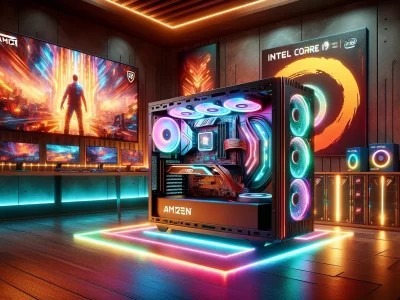
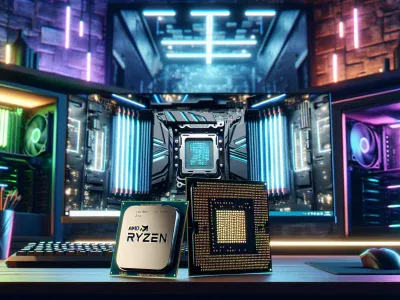
When selecting a computer processor, the choice often narrows down to two well-known contenders: AMD’s Ryzen and Intel’s Core series. Each of these processors brings distinctive benefits and characteristics, tailored to various user needs. From gaming enthusiasts craving peak performance to professionals seeking efficiency and reliability, understanding these two processor lines’ intricacies can help making the best purchasing decision.
Overview of Ryzen and Intel Processors
AMD Ryzen and Intel processors have been pivotal in shaping the computing landscape. Introduced in 2017, AMD Ryzen disrupted the market by delivering high core and thread counts at competitive prices. Meanwhile, Intel’s processors, established long before, are renowned for their consistent performance and innovation in single-core efficiency. The rivalry is not only a testament to advanced technology but also a driver for continual improvement.
Key Features and Architecture Differences
Performance Metrics Comparison
AMD Ryzen processors, leveraging their Zen architecture, excel in multithreading capabilities, making them ideal for workload-heavy tasks. Contrarily, Intel’s processors using their optimized architectures deliver unmatched single-thread performance, favoring applications that rely on core performance.
Application-Specific Performance
Ryzen CPUs’ higher thread counts benefit rendering, compiling, and other multitasking-heavy applications, while Intel’s greater clock speeds ensure top-tier performance for gaming and programs requiring single-core capabilities.
Power Efficiency and Thermals
Efficiency and thermal dynamics are crucial for sustained performance and longevity. AMD’s Ryzen processors, thanks to their innovative chiplet design, consume less power under multithreaded workloads compared to their Intel counterparts. Intel’s advanced node technologies, though, provide excellent thermal handling under varying workloads.
Cost Analysis and Market Value
The pricing of CPUs greatly affects their market appeal. AMD typically offers a better price-to-performance ratio, especially within mid-tier and high-core count categories. Intel, while potentially costlier, provides market-leading options for gaming enthusiasts and enterprise-grade requirements.
User Scenarios and Recommendations
Gaming and Creative Workloads Best Choice
For gaming systems, Intel processors, with their superior clock speeds and latency optimizations, remain a top recommendation. Creative professionals, but, benefit greatly from AMD’s higher thread offerings, speeding up rendering and multimedia production processes.
Professional and Enterprise Applications Suitability
AMD’s multithreading marvels support server-based and multitasked environments impeccably, making them a favorite in professional settings, while Intel’s enterprise-tier solutions shine bright in scenarios requiring premium efficiency and robust system stability.
Published: November 4, 2025 at 8:05 am by Ellie B, Site owner & Publisher
To provide the best experiences, we use technologies like cookies to store and/or access device information. Consenting to these technologies will allow us to process data such as browsing behaviour or unique IDs on this site. Not consenting or withdrawing consent, may adversely affect certain features and functions.
Functional
Always active
The technical storage or access is strictly necessary for the legitimate purpose of enabling the use of a specific service explicitly requested by the subscriber or user, or for the sole purpose of carrying out the transmission of a communication over an electronic communications network.
Preferences
The technical storage or access is necessary for the legitimate purpose of storing preferences that are not requested by the subscriber or user.
Statistics
The technical storage or access that is used exclusively for statistical purposes.The technical storage or access that is used exclusively for anonymous statistical purposes. Without a subpoena, voluntary compliance on the part of your Internet Service Provider, or additional records from a third party, information stored or retrieved for this purpose alone cannot usually be used to identify you.
Marketing
The technical storage or access is required to create user profiles to send advertising, or to track the user on a website or across several websites for similar marketing purposes.