You stand at the edge of your yard, rain still beading on the leaves, and you wonder: should that soggy low spot become a vibrant rain garden that soaks up runoff, or a sunlit rock garden that stays dry and sculptural? Both choices cut water use and add character, but they solve different problems and ask for different care. This article gives clear, practical contrasts so you can match site conditions, budget, and aesthetic goals to the garden that will thrive on your property. Read on to learn which style will earn you resilience, wildlife value, and season-by-season pleasure.
What Each Garden Type Is And Where It Works Best
Rain Garden: Definition, Purpose, And Ideal Site Conditions
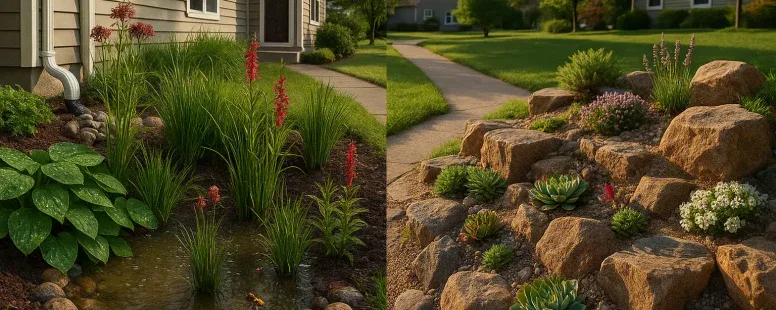
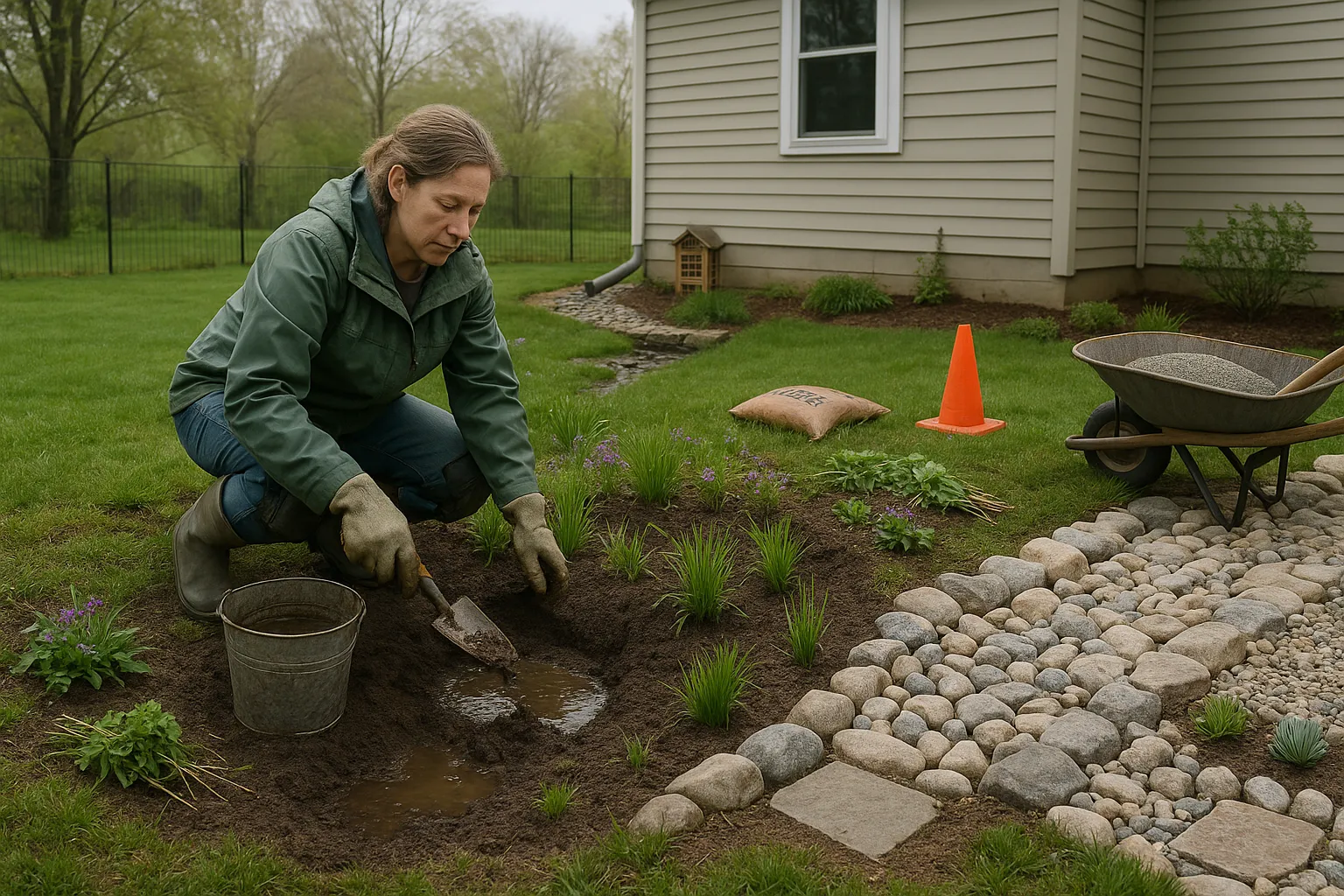
A rain garden is a shallow, vegetated depression designed to capture and infiltrate stormwater. It reduces runoff, filters pollutants, and recharges groundwater. You should place a rain garden at a natural low spot or downslope from roof drains, patios, or driveways. Ideal soils have moderate to good infiltration: sandy loam performs very well. Avoid siting the garden where it will undermine foundations, keep it at least 10 feet from buildings unless you add an engineered underdrain. Clay soils require deeper excavation or amended soil and sometimes a gravel underlayer.
Rain gardens suit yards with noticeable runoff, urban lots with limited permeable area, and properties near drainage ditches. They work in USDA zones 4–9 with plant choices adapted locally. Cities like Portland and Seattle promote rain gardens as best management practice for stormwater control, and local native plant lists are often available from county extension services.
Rock Garden: Definition, Purpose, And Ideal Site Conditions
A rock garden is a planted area that emphasizes stones, gravel, and drought-tolerant plants, often alpine or succulent species. It’s primarily aesthetic but can also improve drainage on steep slopes and reduce lawn area. Rock gardens perform best on well-drained sites with good sun exposure: they do not work well in persistently wet hollows.
Place a rock garden on slopes, raised beds, or sunny terraces. Soils should be gritty and free-draining: scree-style rock gardens mimic mountain conditions and favor small, hardy plants. Famous rock garden approaches include the Japanese dry rock arrangement and the Alpine scree bed: both stress stone placement and plant scale. Choose this style if you have poor access to water, want a sculptural focal point, or wish to cut mowing and irrigation.
Design And Siting Considerations
Water Management And Drainage Needs
Fact: Rain gardens manage stormwater: rock gardens shed it. Start by mapping where water flows on your site after a heavy rain. For a rain garden you must design an inlet that directs runoff while slowing flow to prevent erosion. Consider adding a level spreader or a flow-through swale. For rock gardens, you focus on creating layers of drainage, coarse gravel, gritty soil, and strategic rock placements to channel water away from plant roots.
Soil, Slope, And Microclimate Factors
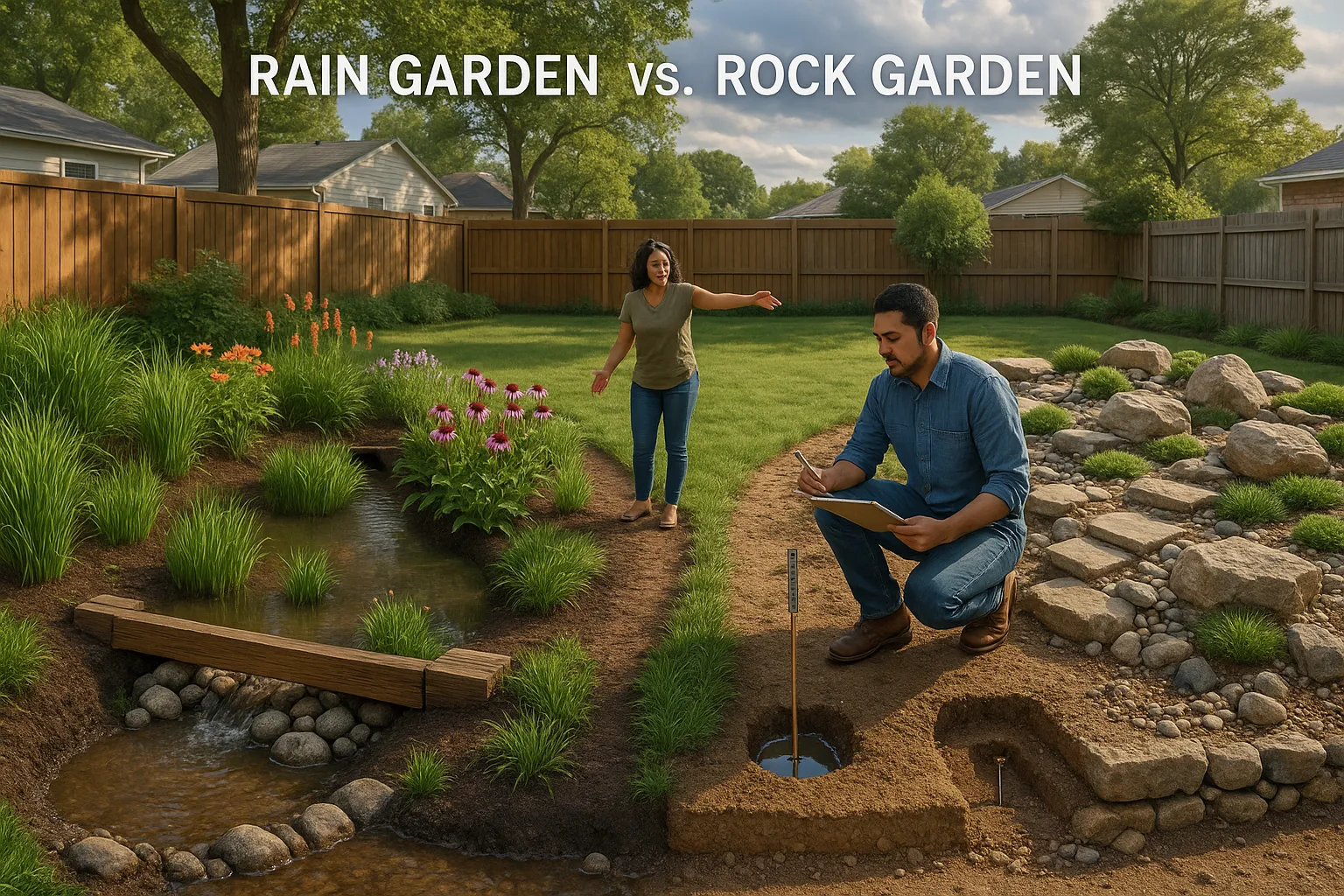
Fact: Soil texture and slope dictate which garden will survive. If your soil drains slowly and the slope collects water, a rain garden wins. If the slope drains fast and your garden bakes in afternoon sun, a rock garden will need less intervention. Test soil infiltration with a two-hour percolation test: dig a 6-inch hole, fill with water, and time how fast it drains. Note microclimates: a north-facing swale stays cooler and wetter: a south-facing terrace gets hot and dry.
Aesthetic Goals And Scale (Formal Vs. Naturalistic)
Fact: Your aesthetic choice affects scale and materials. Choose a formal rock garden with geometric stone beds and clipped alpines for a refined look. Choose a naturalistic rain garden with meandering edges, native sedges, and wildflowers if you want soft, seasonal movement. Scale matters: a small urban lot may use a compact rain garden that also serves as a focal plant bed. Large properties can host expansive rock terraces with winding paths. Decide whether you want high contrast and structure, or a flowing, habitat-oriented space.
Planting, Materials, And Construction
Plant Choices For Rain Gardens (Native, Wet-Tolerant Species)
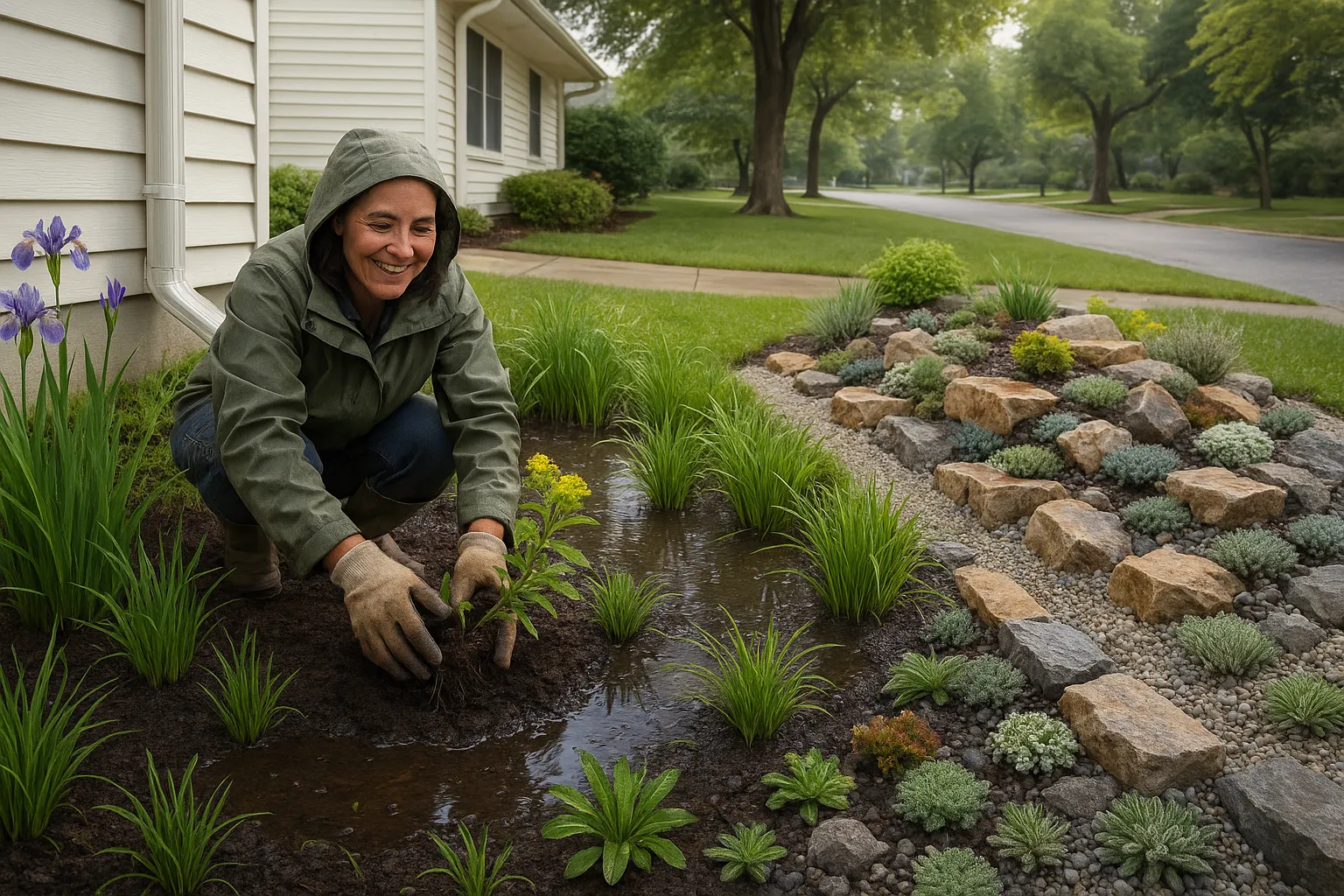
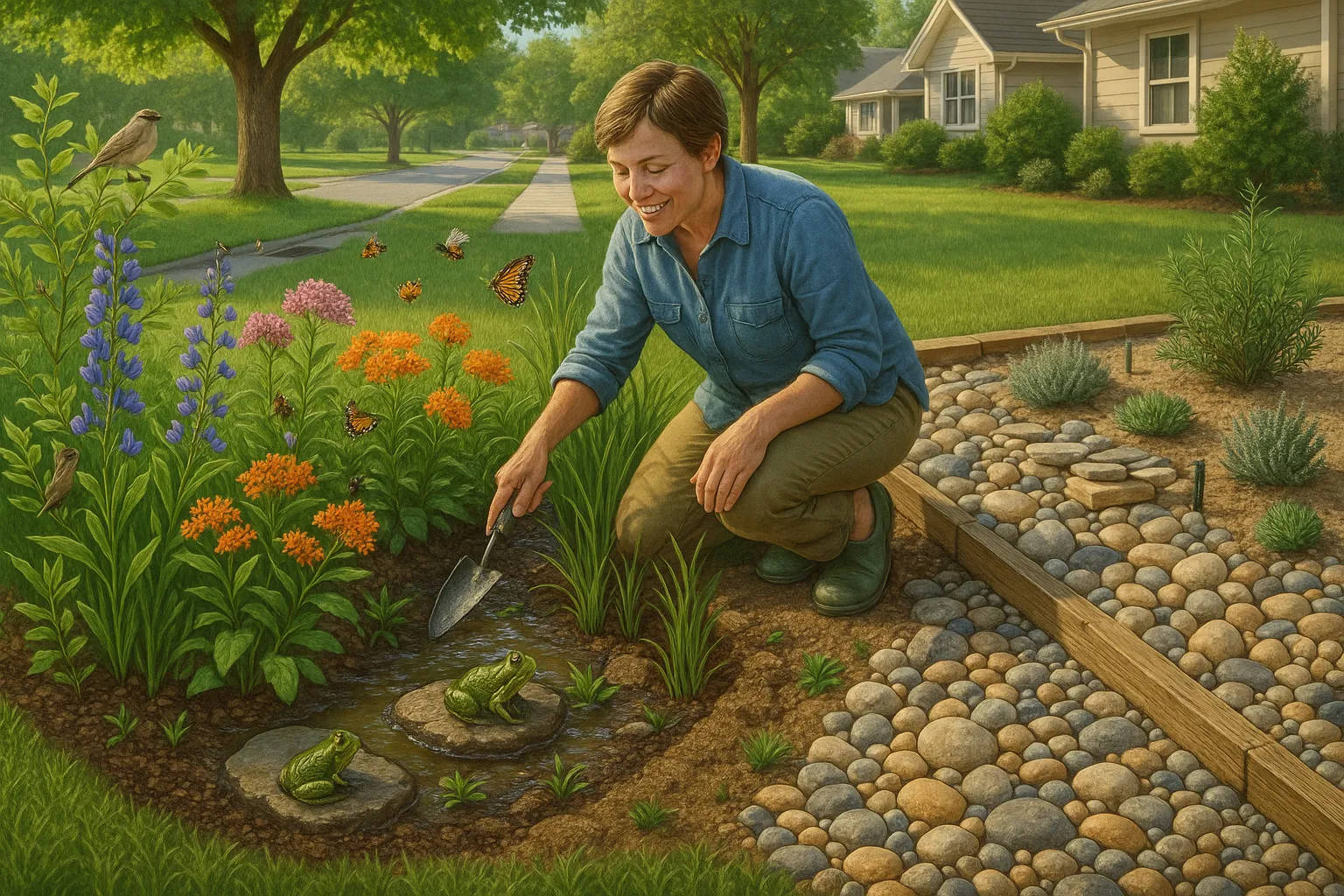
Fact: Wet-tolerant natives survive both flood and dry spells. Choose species like Asclepias incarnata (swamp milkweed), Carex vulpinoidea (fox sedge), and Lobelia cardinalis (cardinal flower) in eastern U.S. zones. In western regions pick native rushes, Oregon iris, and red-osier dogwood near the top edges. Mix grasses, forbs, and shrubs to create layers that trap sediment and provide year-round structure. Use local native plant lists from your county extension or native plant societies to pick proven performers.
Plant Choices For Rock Gardens (Drought-Tolerant, Alpine Species)
Fact: Rock garden plants want sun and drainage. Choose Sedum spp., Sempervivum (hens-and-chicks), Dianthus, and low-growing lavender varieties for Mediterranean-like sites. For alpine screes try Saxifraga, Armeria maritima, and Lewisia. Group plants by drainage needs: the crevice zones get the driest plants: sheltered pockets hold mixes with slightly higher moisture.
Hardscape, Mulch, And Rock Selection For Both Styles
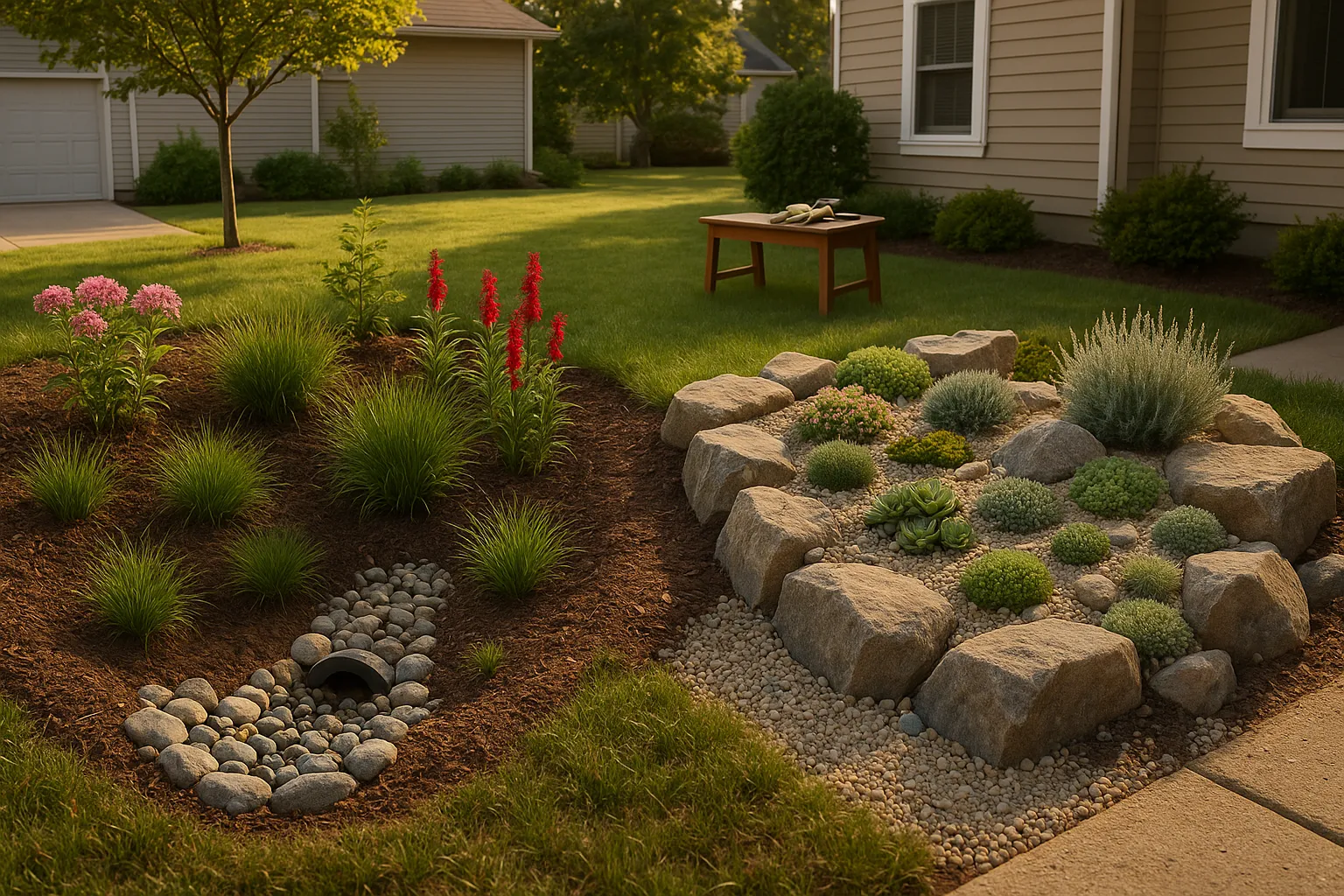
Fact: Material choice sets maintenance and look. For rain gardens use native mulch, rock-lined inlets, and sometimes an underdrain with perforated pipe if needed. Gravel in the infiltration zone can help if your soil is heavy. For rock gardens select stones that look natural to your region, sandstone, granite, or basalt, and use coarse gravel or grit as mulch. Avoid fine bark mulch in rock gardens: it holds too much moisture and breaks down quickly. Place larger rocks first, then plant into pockets and top with grit for a tidy, long-lasting bed.
Maintenance, Longevity, And Seasonal Care
Routine Tasks For Rain Gardens (Sediment Removal, Weeding, Inlet Care)
Fact: Rain gardens need seasonal cleanup to keep working. After winter and heavy storms remove accumulated sediment from inlets and the bowl to restore capacity. Check that overflow paths are clear. Pull weeds before they set seed: young rain gardens attracts annuals the first two summers. Replace mulch annually and replant any eroded edges. Inspect for standing water after major storms, brief pooling is normal, persistent standing water more than 48–72 hours indicates infiltration issues.
Routine Tasks For Rock Gardens (Pruning, Replacing Soil, Weed Control)
Fact: Rock gardens ask for light, focused care. Deadhead perennials, trim overgrown patches, and replace crushed soil or grit that compacts over time. Pull deep-rooted weeds and use a small amount of gravel to refill low pockets. If you use succulents check for rot after wet winters. Replant failing specimens with species better matched to your microclimate: sometimes you must accept trial-and-error.
Common Problems And Troubleshooting (Pests, Erosion, Standing Water)
Fact: Problems differ by type. Rain gardens struggle with mosquitoes only when water stands long: fix by increasing infiltration and adding native predatory insects habitat nearby. Erosion from concentrated flow requires energy dissipation, add rocks or check dams. Rock gardens can suffer root rot and fungal issues in wet seasons: improve drainage and remove affected plants. Both gardens may attract deer or voles: use fencing or repellents when needed. Be honest: I once planted a rain garden too close to a downspout and it eroded, repair meant adding a cobble apron and regrading, lesson learned the hard way.
Environmental Impact And Ecosystem Services
Stormwater Capture, Water Quality, And Wildlife Benefits Of Rain Gardens
Fact: Rain gardens reduce stormwater volume and improve water quality. properly sized rain gardens can capture the first flush of runoff, removing nutrients and heavy metals through filtration and plant uptake. You will see more pollinators, frogs, and birds using the habitat for foraging and shelter. Municipal programs from Seattle Public Utilities and Philadelphia Water Department document reduced combined-sewer overflows when homeowners install rain gardens at scale.
Biodiversity, Heat Reduction, And Resource Use In Rock Gardens
Fact: Rock gardens use less water and can increase local biodiversity if you pick varied species. They replace thirsty lawns and reduce irrigation demand, lowering water footprint in dry regions. A well-placed rock garden can lower surface temperatures by reducing dark, compacted soil and by providing cooling microhabitats where shade-loving alpine plants grow among stones. But rock gardens provide less stormwater benefit than rain gardens: they mostly conserve resources rather than capture runoff.
Cost, Installation Effort, And Return On Investment
Typical Budget Ranges And Labor For DIY Vs. Professional Installation
Fact: Costs vary widely. A DIY rain garden for a small urban lot often runs $300–$2,000 for plants, soil amendments, and stone, plus your labor. Professional installation for complex drainage or large projects can be $2,000–$10,000. Rock gardens range from $200 for a small DIY plot with purchased stones and succulents to $5,000+ for professionally built terraces with imported stone. Labor is the largest variable: expect professional work to cost more but to save mistakes and rework.
Long-Term Costs: Water, Maintenance, And Replacement Materials
Fact: Long-term costs favor both styles versus high-maintenance turf. Rain gardens lower runoff mitigation costs and can save on erosion control: they may need annual mulching and intermittent replanting. Rock gardens cut irrigation bills substantially: occasional soil topping and plant replacement are typical every few years. When you compare life-cycle costs, factor in ecosystem services: reduced stormwater fees in some cities, increased property appeal, and lower mowing bills. Those returns can be real and measurable over a decade.
How To Decide Which Garden Fits Your Site And Goals
Checklist: Questions To Ask About Your Property And Priorities
Fact: A short checklist points the way. Ask yourself: Does water pool or run across my site after rain? How much sun does the site receive? What is my soil type (sand, loam, clay)? How much time will I spend on maintenance? Do I want habitat value or sculptural, low-water design? Are there local regulations, incentives, or rebates for stormwater projects? Answering these will narrow the choice quickly.
Fact: Match scenarios to solutions. Small urban lot: install a compact rain garden beneath downspouts or choose a small rock garden with drought-tolerant succulents if runoff isn’t an issue. Sloped yard: use terraced rock gardens to stabilize soil and create visual interest: add a bioswale or linear rain garden along contours to slow water. Low-maintenance goal: pick a rock garden with region-appropriate sedums and gravel: or choose a large native-grass rain garden if you can commit to seasonal cleanups but want hands-off care most of the year.
Use those facts, then walk your site after rain. You’ll see which option answers the real problem, water you need to hold, or soil you need to keep dry, and from there the right choice becomes clear. Good luck with your project, and may your garden give you fewer headaches and more wildlife visits.
To provide the best experiences, we use technologies like cookies to store and/or access device information. Consenting to these technologies will allow us to process data such as browsing behaviour or unique IDs on this site. Not consenting or withdrawing consent, may adversely affect certain features and functions.
Functional
Always active
The technical storage or access is strictly necessary for the legitimate purpose of enabling the use of a specific service explicitly requested by the subscriber or user, or for the sole purpose of carrying out the transmission of a communication over an electronic communications network.
Preferences
The technical storage or access is necessary for the legitimate purpose of storing preferences that are not requested by the subscriber or user.
Statistics
The technical storage or access that is used exclusively for statistical purposes.The technical storage or access that is used exclusively for anonymous statistical purposes. Without a subpoena, voluntary compliance on the part of your Internet Service Provider, or additional records from a third party, information stored or retrieved for this purpose alone cannot usually be used to identify you.
Marketing
The technical storage or access is required to create user profiles to send advertising, or to track the user on a website or across several websites for similar marketing purposes.