You can get dramatically different looks from two magnolia species that share a genus but not personality. Magnolia stellata (the star magnolia) offers compact, early fireworks of star-shaped blooms: Magnolia kobus (the kobus magnolia) gives you a larger, tree-like presence with classic saucer flowers and stronger cold tolerance. If you’re deciding which to plant, this comparison will give clear, practical answers and the trade-offs you should expect, including surprising benefits like low-maintenance spring spectacle and wildlife value you might not expect.
Quick Comparison: Key Differences At A Glance
Fact: Stellata and Kobus differ mainly in size, bloom form, and site tolerance.
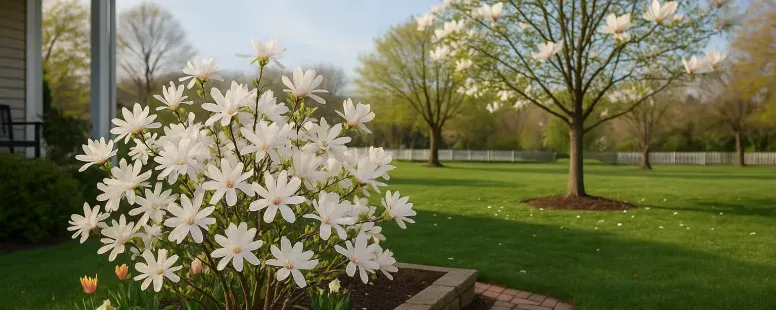
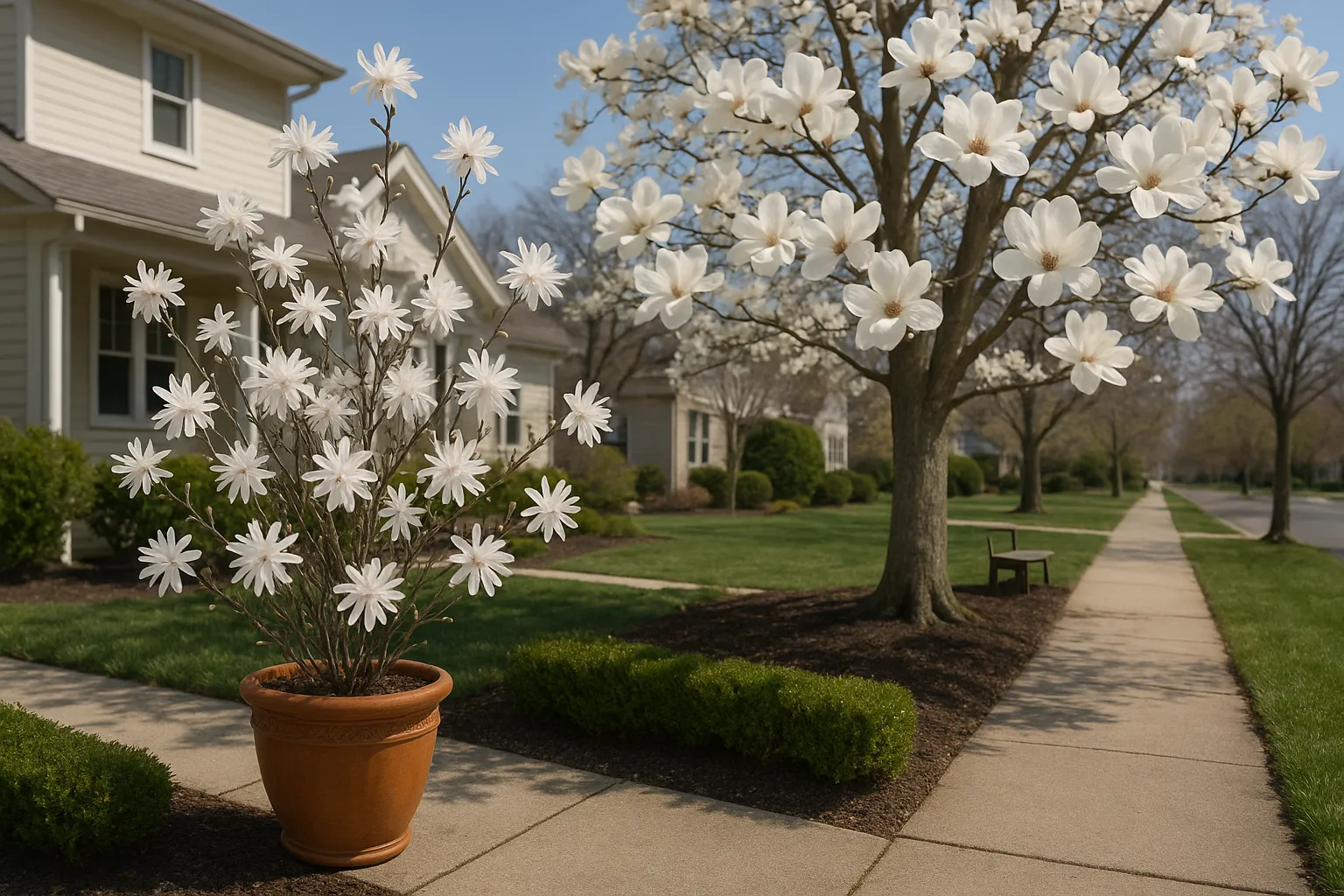
Magnolia stellata: Small (8–15 ft), multi-stemmed shrub or small tree. Early spring bloom. Star-shaped, often fragrant petals: best for small gardens and containers. Hardy in USDA zones 4–8.
Magnolia kobus: Medium to large tree (20–40+ ft). Mid to late spring bloom. Saucer-shaped flowers with a classic magnolia look: good as a specimen or street tree. Hardy in USDA zones 4–8 (some sources list zone 3 for select strains).
Quick decision insight: Choose stellata if you need early flowers, tight space use, or a flowering shrub near a walkway. Choose kobus if you want a larger specimen with architectural presence and slightly greater tolerance for colder inland sites.
Why this matters: Size dictates placement, pruning, and foundation-root interactions. Bloom form affects pollinator attraction and visual drama. Hardiness and soil needs determine long-term success.
Botanical Profiles
Fact: Each species has a clear botanical identity that shapes how it behaves in the garden.
Species Origins And Natural Range
Magnolia stellata: Native to Honshu, Japan. It grows along streams and hillsides near coastal areas. Nurseries often sell cultivars such as ‘Centennial’ and ‘Royal Star’.
Magnolia kobus: Native to Japan and Korea. It appears in colder upland forests and coastal zones. The species includes forms that are more tree-like, and cultivars include ‘Ballerina’ and ‘Wada’s Memory’.
Size, Form, And Growth Rate
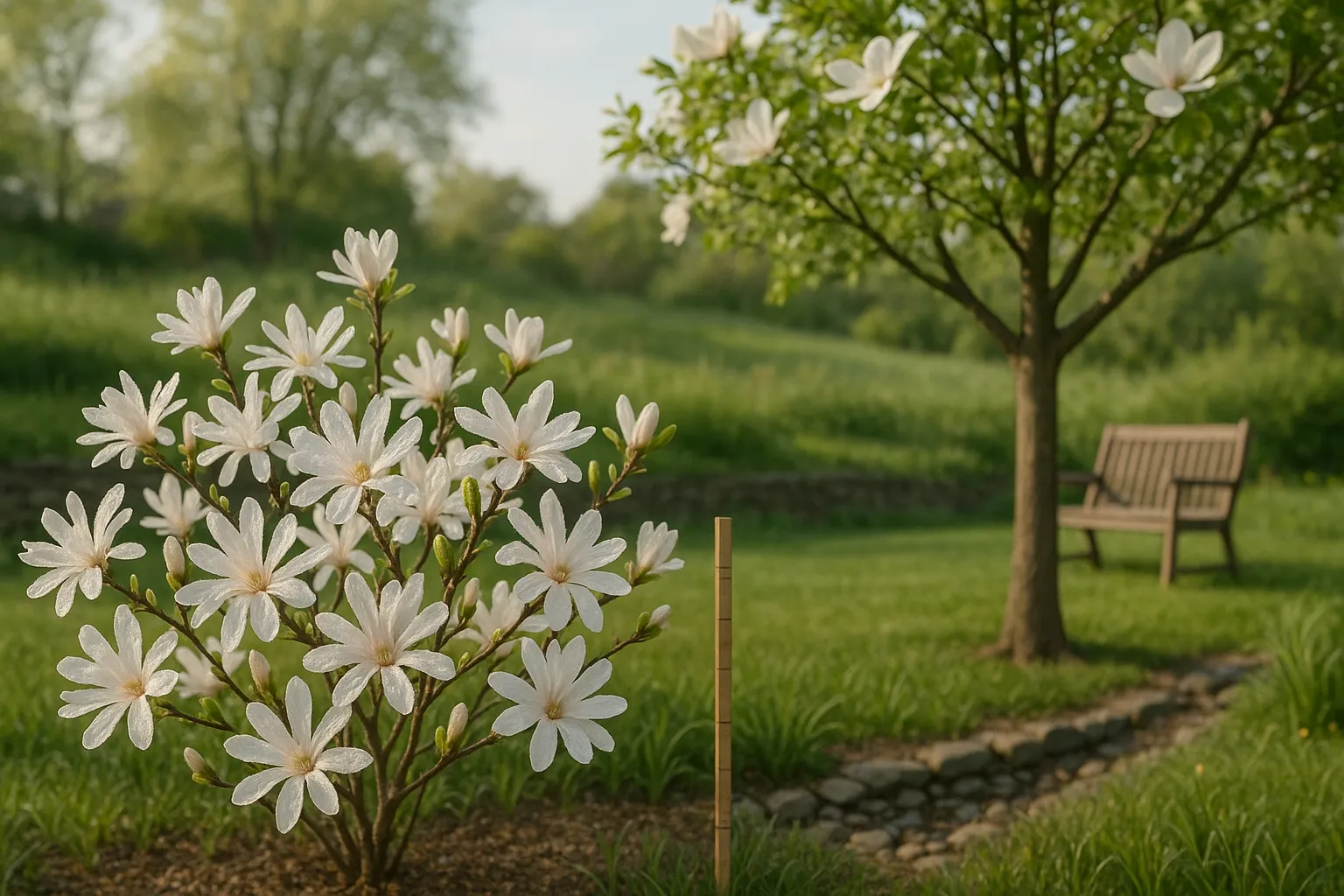
Stellata grows slowly to moderately. You will see 6–12 inches of growth per year after establishment. It keeps a compact, rounded shape and often forms multiple stems that give a shrub-like silhouette.
Kobus grows faster and taller. You can expect 1–2 feet per year in good sites. It develops a single trunk and a broad canopy over time. That canopy creates summer shade and a strong winter profile.
Flower And Foliage Characteristics
Stellata: Flowers open before leaves, creating a clear, floral display. Petals (technically tepals) look like thin ribbons: they range from white to pale pink. Leaves are small, oblong, and emerge after bloom.
Kobus: Flowers open as leaves begin to unfurl or just before. Tepals are broader and more cupped, often white with a pink flush. Leaves are larger, up to 6 inches, and they provide late-season interest before a muted fall color.
Practical note: If you value early spring display or need a low-growing form, stellata fits. If you want summer shade and a backyard focal point, kobus fits.
Site, Soil, And Hardiness Requirements
Fact: Both species prefer acid to neutral, well-drained soils, but kobus tolerates heavier soils and colder pockets better than stellata.
Preferred Soil Types And Drainage
Stellata prefers moist, well-draining loam with a slightly acidic pH (5.5–6.5). It dislikes standing water and heavy clay unless you improve drainage.
Kobus tolerates a wider soil range. It grows well in loam, clay-loam, and sandy soils if drainage is adequate. You can plant it in heavier soil with compost amendments.
Cold Hardiness And Climate Tolerance
Stellata: Usually rated USDA zones 4–8. Some cultivars show greater cold tolerance: others suffer bud damage in late freezes. Flower buds sit exposed on stems, so late frost can reduce bloom.
Kobus: Rated USDA zones 4–8 and sometimes zone 3 in hardy forms. It withstands inland cold better and holds bloom buds deeper within the canopy, reducing frost loss.
Sun Exposure And Microclimate Considerations
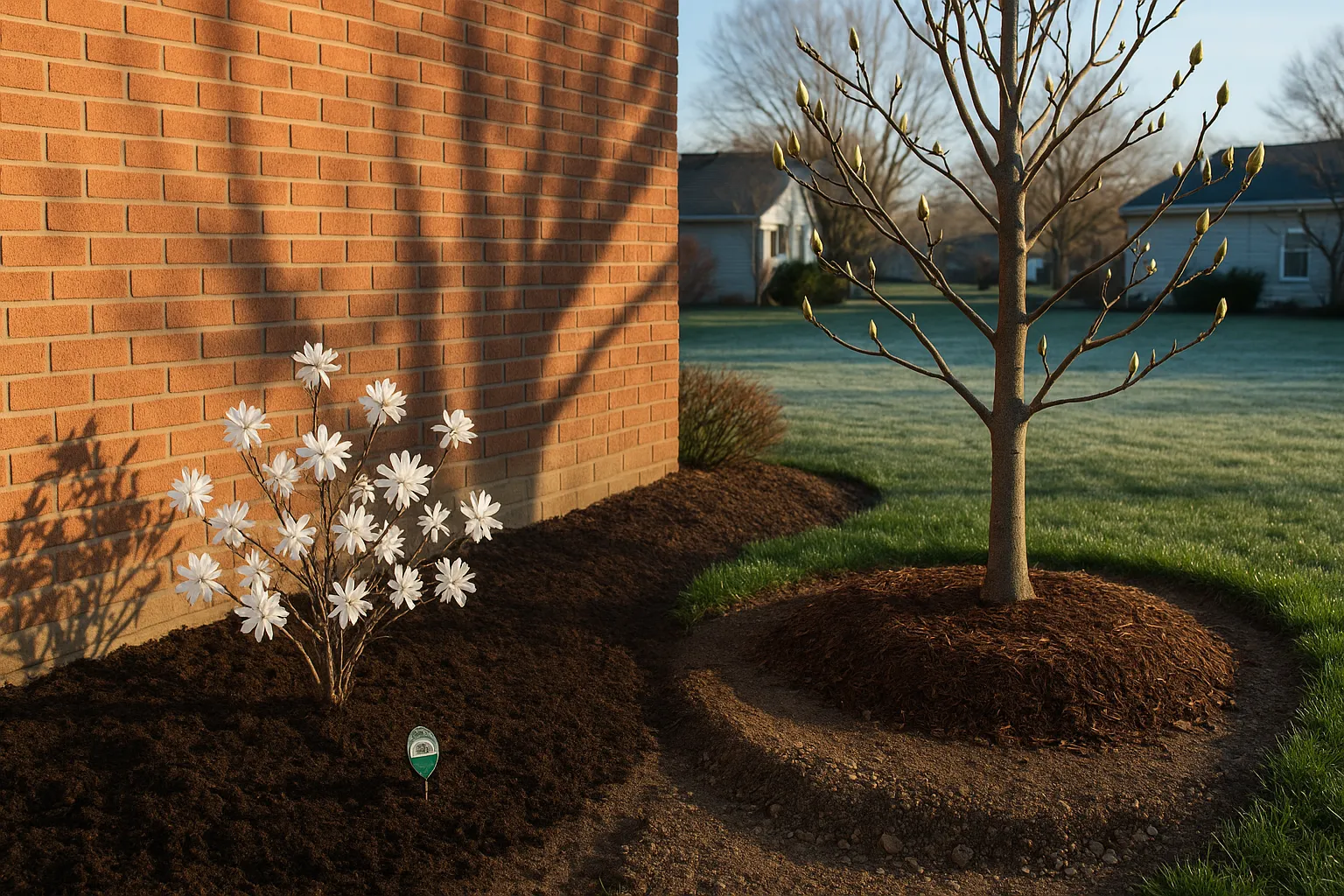
Stellata flowers best in full sun to part shade: morning sun with afternoon protection reduces petal scorch in hot climates. Plant near a south-facing wall in cool sites to extend bloom life.
Kobus tolerates full sun to part shade and accepts more wind and colder exposure. It prefers a sheltered root zone with mulch to keep soil moisture stable.
Design tip: Map your microclimates. Place stellata where it gets bright morning light and protection from harsh afternoon sun or late frost. Site kobus where it has room to expand and where roots won’t conflict with structures.
Bloom Timing, Fragrance, And Seasonal Interest
Fact: Stellata blooms earlier and more reliably in mild winters: kobus blooms later but provides stronger structural interest.
Flowering Time And Duration
Stellata often blooms in late winter to very early spring. Its window can be 2–3 weeks, sometimes shorter if frost hits.
Kobus blooms from mid to late spring and can hold flowers for 2–4 weeks depending on weather. Warm spells speed opening: cool cloudy conditions extend display.
Fragrance, Color, And Fall/Winter Interest
Stellata often has a light, sweet fragrance that you smell when you pass close by. Colors lean toward pure white and soft pink.
Kobus has a mild scent. Its flowers read as classic magnolia white with occasional blush. In winter, kobus gives you a strong silhouette and interesting bark: stellata shows twig structure and early buds.
Garden strategy: Use stellata near patios, windows, or entrance paths where fragrance and early blossoms will be noticed. Use kobus as a lawn specimen or street tree where scale and presence matter.
Care, Maintenance, And Common Problems
Fact: Both magnolias reward simple care: major failures come from poor soil, incorrect pruning, or late frost damage.
Pruning Needs And Best Practices
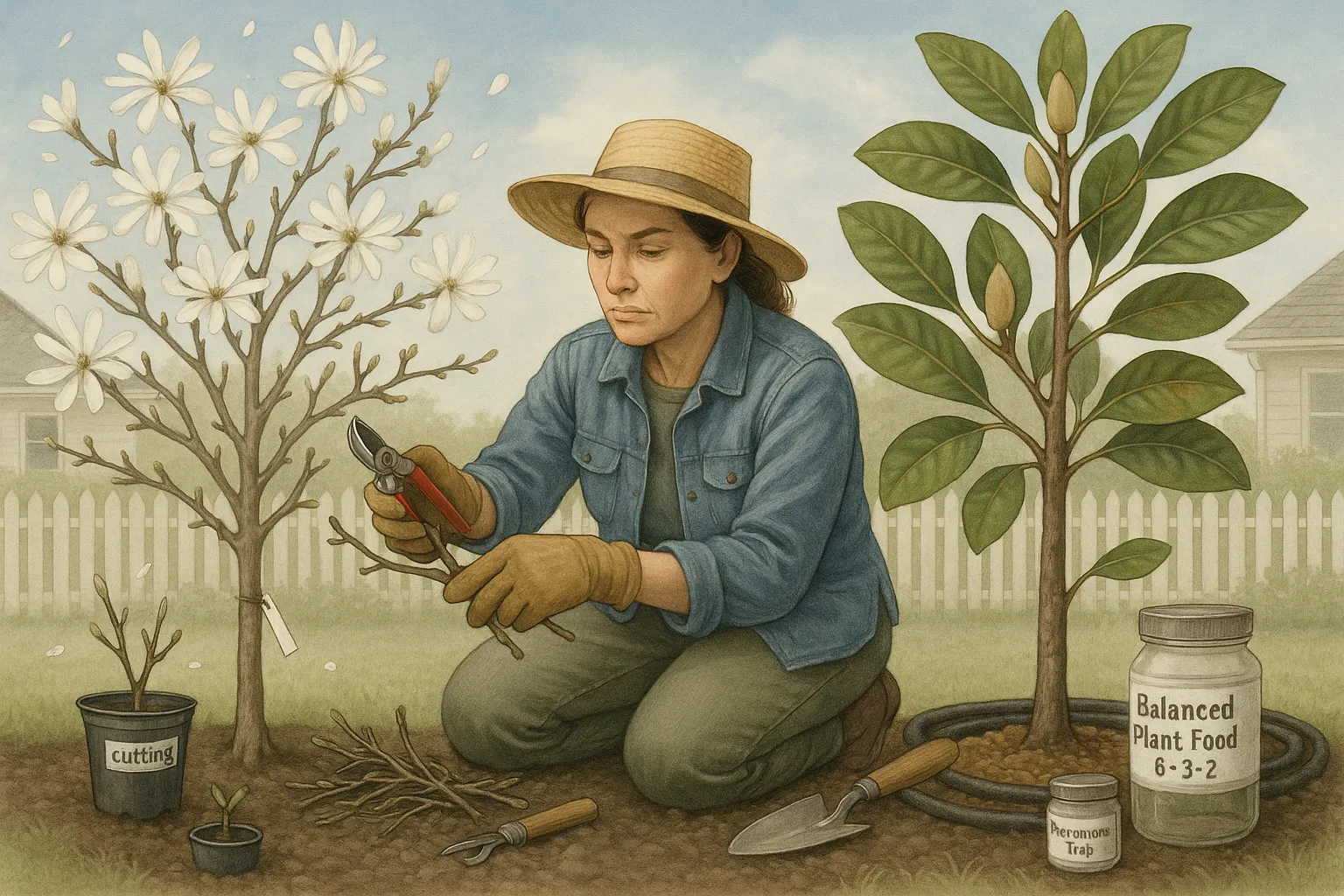
Stellata: Minimal pruning. Remove dead wood after bloom. If you need shape, prune immediately after flowering because next season’s buds set soon after.
Kobus: Prune sparingly to maintain form. Remove crossing branches in late winter before bud swell. Avoid heavy structural pruning in spring: it causes sap bleeding and stress.
Pests, Diseases, And Troubleshooting
Both species face similar threats: scale insects, leaf spots (such as fungal anthracnose), and root rot in poorly drained soils. Kobus sometimes attracts magnolia borer in warmer zones.
Practical troubleshooting: Inspect buds after winter. If many buds fail to open, check for late frost or bud mite damage. If leaves show spots, apply cultural controls (remove debris, improve airflow) before chemical options.
Propagation And Establishment Tips
Stellata: Propagate by softwood cuttings in late spring or by grafting. It roots with patience but often performs best as grafted nursery stock for true-to-type flowers.
Kobus: Propagate by seed or grafting. Seed grows true to species but may vary in flowering time. Plant container-grown specimens in spring or fall when soil is workable.
Establishment advice: Mulch 2–3 inches of organic material, keep soil evenly moist for the first two seasons, and avoid high-nitrogen fertilizers that push leaf growth at the expense of blooms.
Landscape Uses And Design Considerations
Fact: Stellata suits small gardens and mixed borders: kobus suits open lawns, avenues, and large beds.
Placement In Small Gardens Vs. Large Landscapes
Stellata fits near foundations, along paths, or as a container specimen. Its scale allows planting within 6–10 feet of structures.
Kobus needs space, 15–30 feet or more, to form a good canopy. Plant it as a focal point in larger yards, parks, or streets.
Companion Plants And Seasonal Layering
Stellata pairs well with spring bulbs (Tulipa, Narcissus), early perennials (pulmonaria, hellebore), and low-evergreen groundcovers. Those companions hide the base and extend seasonal interest.
Kobus pairs with understory shrubs like rhododendron, azalea, and shade-tolerant ferns. Use spring bulbs and late-spring perennials for layered bloom that follows the tree’s flowers.
Design caution: Avoid heavy root competition close to both species. Place shallow-rooted shrubs and bulbs at a comfortable distance from the trunk to ensure establishment.
How To Choose Between Stellata And Kobus
Fact: Your site, space, and aesthetic aim should drive the choice more than trends or availability.
Decision Checklist Based On Site, Size, And Aesthetic Goals
Space: If you have under 15 feet of width and want a near-patio plant, choose stellata. If you need a shade tree or focal point, choose kobus.
Climate risk: If late spring frost is common, expect stellata buds to suffer: choose kobus for more protected blooms. If severe winter cold prevails, pick a cold-hardy kobus form.
Visual goal: Want delicate early bloom and fragrance close up? Stellata wins. Want classic magnolia form and summer canopy? Kobus wins.
Be honest: I once planted a stellata under a power line because I loved the flowers: it needed constant pruning and lost its natural form. That taught me to match mature size to the site, lesson learned the hard way, and you won’t repeat that mistake.
Nursery Selection, Cultivar Recommendations, And Planting Timing
Buy healthy, grafted stock from reputable nurseries such as Monrovia or local botanical gardens when possible. Recommended cultivars:
Kobus: ‘Ballerina’ (compact), species M. kobus for classic form, ‘Wada’s Memory’ for large flowers.
Plant in spring or fall. In colder zones, plant in spring to give roots a full growing season before winter. Inspect root systems: choose a fibrous, not root-bound, specimen. Water weekly in the first year and protect young trees from deer and rodent damage.
Call to action: Match the species to your space, plant with care, and you will enjoy reliable spring drama for years to come.
To provide the best experiences, we use technologies like cookies to store and/or access device information. Consenting to these technologies will allow us to process data such as browsing behaviour or unique IDs on this site. Not consenting or withdrawing consent, may adversely affect certain features and functions.
Functional
Always active
The technical storage or access is strictly necessary for the legitimate purpose of enabling the use of a specific service explicitly requested by the subscriber or user, or for the sole purpose of carrying out the transmission of a communication over an electronic communications network.
Preferences
The technical storage or access is necessary for the legitimate purpose of storing preferences that are not requested by the subscriber or user.
Statistics
The technical storage or access that is used exclusively for statistical purposes.The technical storage or access that is used exclusively for anonymous statistical purposes. Without a subpoena, voluntary compliance on the part of your Internet Service Provider, or additional records from a third party, information stored or retrieved for this purpose alone cannot usually be used to identify you.
Marketing
The technical storage or access is required to create user profiles to send advertising, or to track the user on a website or across several websites for similar marketing purposes.