In our daily lives, we often encounter various metal objects, furnishings in our homes, intricate jewelry, or tools in our garages. But have you ever stopped to wonder whether that shiny fixture is brass or bronze? Identifying these alloys isn’t just a fun trivia question: it can significantly influence decisions about restorations, purchases, or even recycling. Understanding the differences can empower us to make informed choices. In this guide, we will explore how to tell brass from bronze, unlocking the distinguishing features of each metal so we can confidently identify them in any context.
Understanding Brass and Bronze
Composition and Properties
Brass and bronze are often confused due to their similar appearance, but they each come from distinct compositions. Brass is primarily composed of copper and zinc — if you also struggle to tell brass from copper, our dedicated guide covers the subtle colour and weight tests that separate them. Bronze is mainly copper and tin, yielding a more reddish colour. Each metal possesses unique properties: brass is known for its malleability and resistance to corrosion, making it an ideal choice for applications requiring intricate shapes. Bronze, while also resistant to corrosion, is tougher, making it suitable for historical statues and certain marine applications. If you enjoy identifying metals by their properties, our guide on how to tell aluminium from stainless steel covers similar hands-on tests for two other commonly confused workshop materials.
Common Uses and Applications
Brass is commonly found in musical instruments, plumbing fixtures, and decorative items due to its shiny finish and workability. Bronze is often used for sculpture, medals, and bearings, as its durability under friction is unmatched. When shopping for quality decorative pieces or jewellery, being able to identify the base metal is as valuable as knowing how to tell real leather from fake — both skills help you assess authenticity before you buy. Recognising where these alloys are used sharpens our identification skills considerably.
Visual and Physical Differences
Color and Luster Comparison
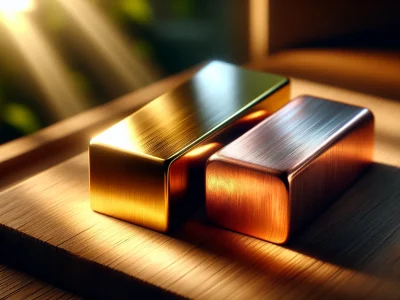
While both can have a shiny finish, brass typically shines with a bright, golden gleam, while bronze exhibits a more muted, reddish-brown finish. This subtle colour difference serves as an initial clue. Over time, brass can tarnish to a duller colour, whereas bronze tends to develop a green patina from oxidation — a reliable distinguishing characteristic. Colour and patina as identifiers are a recurring theme in material science: our article on how to tell pyrite from gold similarly relies on colour consistency and streak tests to separate two visually deceptive minerals.
Weight and Density Factors
When we hold an object, its weight can also provide hints about its identity. Generally speaking, bronze is heavier than brass due to its composition. If we lift two pieces of similar size and one feels noticeably heavier, it may be bronze. This easy comparison is an effective first step in identifying these alloys.
Sound Test for Identification
Conductivity and Magnetism Tests
When struck, brass produces a bright, ringing tone, while bronze emits a deeper, warmer sound. We can use this principle to perform a quick sound test by gently tapping the metal. Sound as a diagnostic tool isn’t unique to metals — our piece on how to tell crystal from glass shows how the same tapping technique reveals composition differences between glassware that looks identical to the naked eye.
We can also test for magnetism: brass is non-magnetic, while some bronze alloys can exhibit slight magnetic properties. If we have access to a magnet, this quick test provides valuable information about the metal’s nature.
Patina and Corrosion Variations
The patina’s colour can also serve as a guide. While brass may develop a light brown or black tarnish, bronze usually develops a greenish patina over time, especially in humid environments. Observing the colour of corrosion on an aged object gives us strong evidence about whether we’re dealing with brass or bronze.
Tools for Identification
Using a Magnet
Keeping a magnet handy is one of the simplest yet effective approaches. By applying a magnet to the metal, we can quickly determine its magnetic properties. If the object is attracted to the magnet, it’s not brass — we’re likely dealing with a bronze or a different metal entirely.
Conductivity Meters
For a more precise identification, conductivity meters can be used. Since the copper content contributes to conductivity in both brass and bronze, measuring this property provides valuable data. However, this method may require access to specific tools that are outside everyday reach.
Expert Analysis Options
When to Seek Professional Help
While many identification methods can be done at home, there may come a time when we need the expertise of a professional. If we have a valuable piece — perhaps an antique or a significant artwork — consulting with a metallurgist can provide definitive identification. Their experience and access to advanced technology help us make informed decisions about preservation or sale.
Costs and Time Considerations
Before seeking professional help, it’s wise to consider the costs and time involved. Expert evaluations can range from affordable to quite expensive, depending on the complexity of the analysis.
Conclusion
Being able to tell brass from bronze isn’t just an interesting challenge: it’s a skill that can enhance our appreciation of metalwork in our lives. From understanding their unique properties to employing a few simple tests, we can navigate this seemingly tricky identification process confidently. Whether we’re assessing antiques, shopping for new items, or simply engaging in a conversation about metals, this knowledge positions us to make informed choices and deepen our understanding of the materials around us.
To provide the best experiences, we use technologies like cookies to store and/or access device information. Consenting to these technologies will allow us to process data such as browsing behaviour or unique IDs on this site. Not consenting or withdrawing consent, may adversely affect certain features and functions.
Functional
Always active
The technical storage or access is strictly necessary for the legitimate purpose of enabling the use of a specific service explicitly requested by the subscriber or user, or for the sole purpose of carrying out the transmission of a communication over an electronic communications network.
Preferences
The technical storage or access is necessary for the legitimate purpose of storing preferences that are not requested by the subscriber or user.
Statistics
The technical storage or access that is used exclusively for statistical purposes.The technical storage or access that is used exclusively for anonymous statistical purposes. Without a subpoena, voluntary compliance on the part of your Internet Service Provider, or additional records from a third party, information stored or retrieved for this purpose alone cannot usually be used to identify you.
Marketing
The technical storage or access is required to create user profiles to send advertising, or to track the user on a website or across several websites for similar marketing purposes.