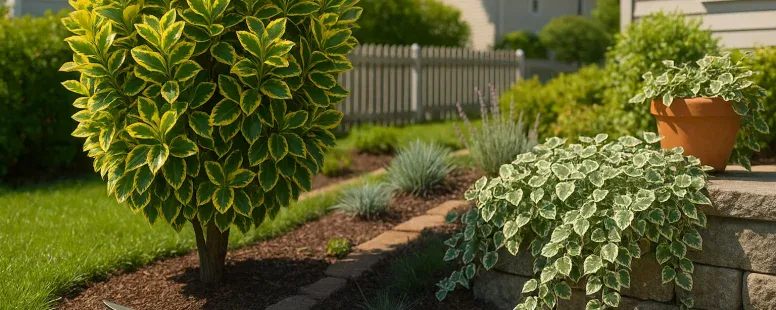
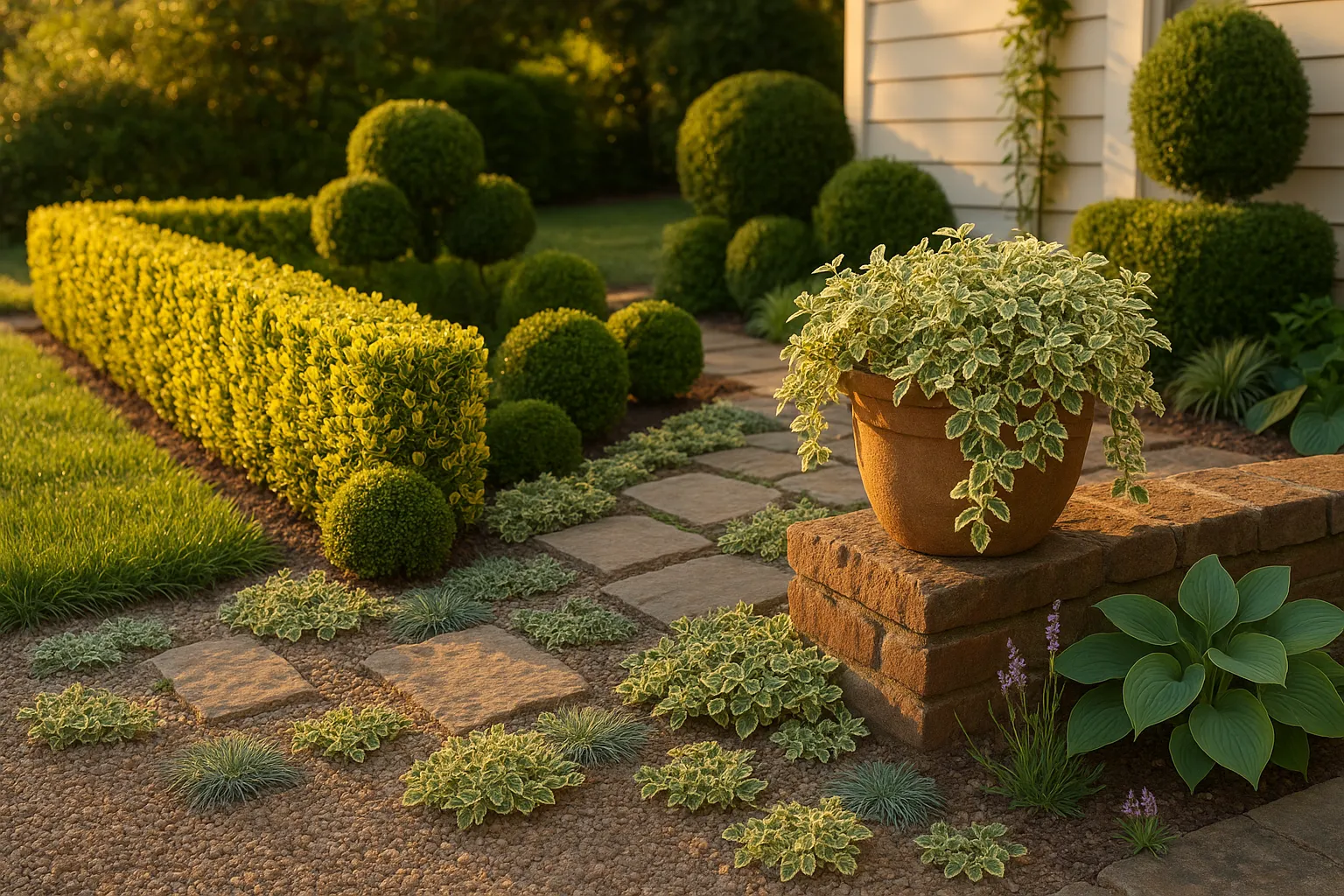
You can pick the right variegated euonymus for your garden without guessing. Both Euonymus “Emerald ‘n’ Gold” and Euonymus fortunei ‘Emerald Gaiety’ show bright, two-tone leaves, but they behave and perform very differently. Picture a low hedge that glows lemon-yellow at midday or a trailing vine that softens a stone wall with icy white edges, those are different promises from these two plants. This comparison points out the real, usable differences: what each looks like through the seasons, where each thrives, how much care they demand, and the exact landscape roles they fill. Read on to pick the option that gives you the color, form, and reliability you want in your yard.
Quick Side‑By‑Side Comparison
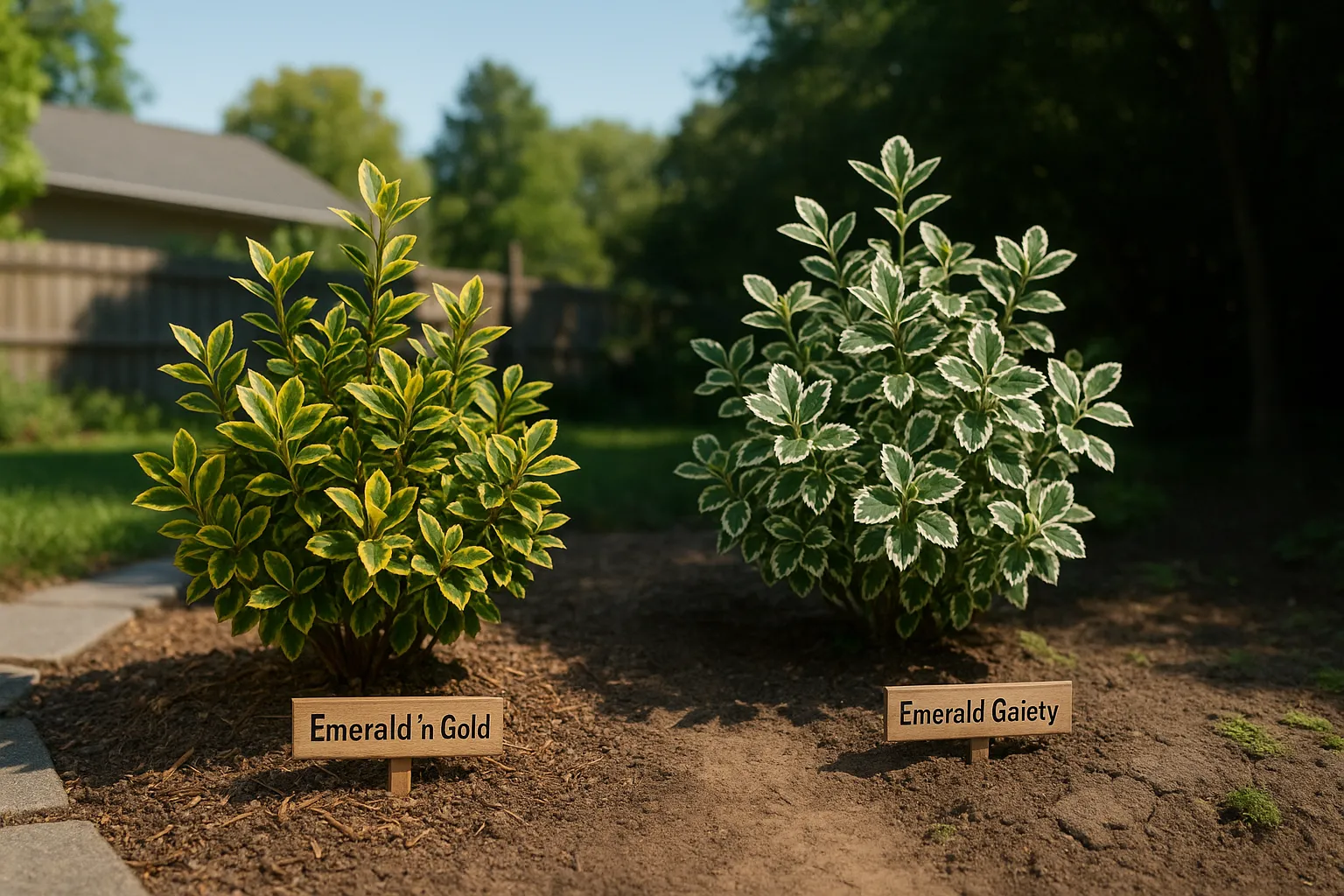
Fact: Emerald ‘n’ Gold is a shrubby euonymus with bold yellow margins: Emerald Gaiety is a climbing/groundcover euonymus with narrow white margins.
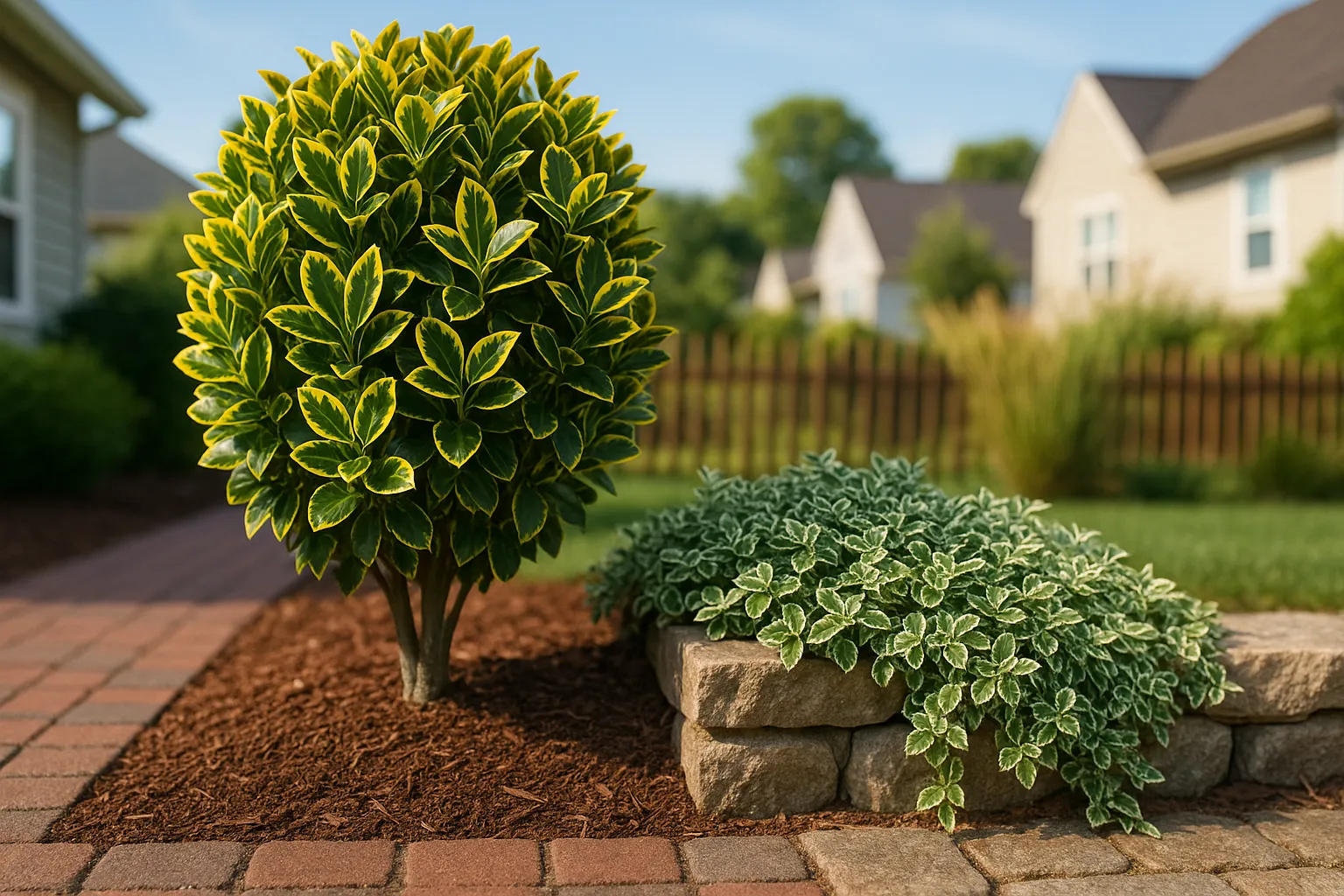
Emerald ‘n’ Gold (Euonymus japonicus ‘Aureo-marginatus’) gives you a dense, upright shrub that reaches 4–6 feet in many gardens. Emerald Gaiety (Euonymus fortunei ‘Emerald Gaiety’) gives you a low, spreading habit that can climb or carpet and usually stays 1–2 feet tall when used as groundcover.
Best for: ‘n’ Gold, formal hedges and structure: Gaiety, groundcover, containers, and underplanting.
If you want a fast visual answer: choose Emerald ‘n’ Gold for bold, architectural color: choose Emerald Gaiety for subtle brightness and versatility.
Appearance And Variegation
Fact: The two cultivars differ first in leaf edge color and second in overall visual impact.
Leaf Color, Pattern, And Seasonal Changes
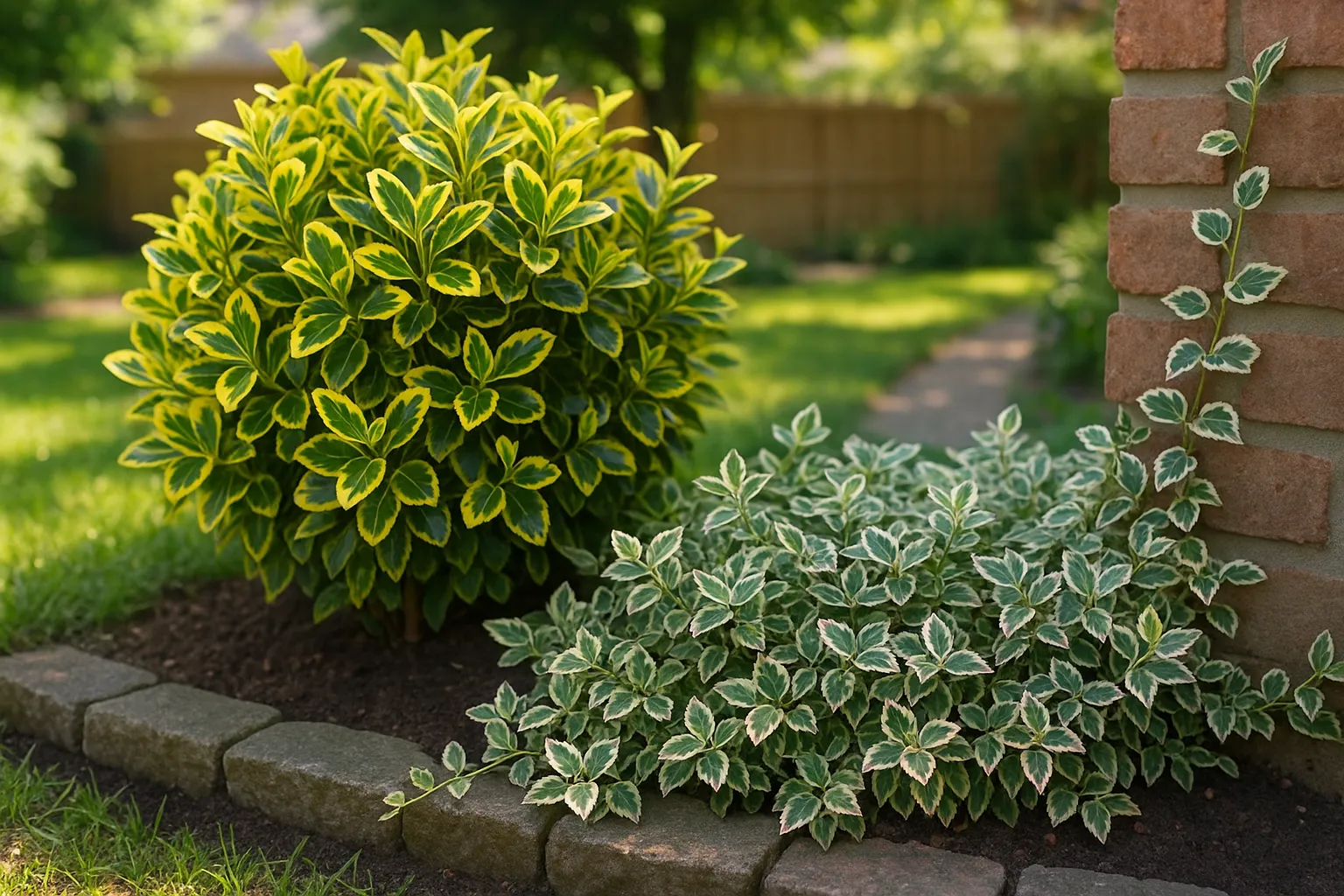
Emerald ‘n’ Gold shows thick, glossy leaves with wide, buttery-yellow margins and deep green centers. The yellow stays apparent through spring and summer and can intensify with more sun. In winter the yellow may dull slightly, yet the contrast usually remains strong. Emerald Gaiety displays thinner leaves. The center green sits narrow and the margins are white-cream. In cool weather the white can take on a faint pink or blush tone, especially in exposed sites.
Both plants show more contrast in higher light, but Gaiety will keep variegation in deeper shade better than ‘n’ Gold. You will notice texture differences: ‘n’ Gold feels waxy under your fingers: Gaiety feels papery and finer. These tactile cues help you match plant to place.
Size, Form, And Growth Rate
Fact: ‘n’ Gold grows into a medium shrub: Gaiety spreads low and fast.
Emerald ‘n’ Gold typically grows 3–6 feet tall and 3–5 feet wide. It forms a compact, rounded shape and responds well to clipping. Growth rate is moderate to fast if you give it regular water and moderate fertility. Emerald Gaiety usually stays 6–24 inches tall as a groundcover and can reach several feet when climbing a wall or tree via adventitious roots. Its lateral spread is quick: expect a foot or more per season under favorable conditions.
Choose ‘n’ Gold if you need vertical structure or an instant hedge. Choose Gaiety if you need rapid coverage, slope stabilization, or a living mulch.
Hardiness, Climate, And Site Preferences
Fact: Emerald Gaiety tolerates colder zones and deeper shade than Emerald ‘n’ Gold.
USDA Hardiness, Heat Tolerance, And Sun Requirements
Emerald ‘n’ Gold typically thrives in USDA zones 7–10: Emerald Gaiety survives zones 5–9. That means Gaiety can handle winters that would damage ‘n’ Gold. Both handle summer heat, but ‘n’ Gold loses variegation and can scorch if full sun meets drought. Gaiety handles shade far better and will keep pale margins in woodland edges.
Give ‘n’ Gold morning sun and afternoon shade in hot inland climates. Gaiety tolerates full shade to part sun: variegation is usually stronger with some morning light.
Soil, Drainage, And Microclimate Considerations
Fact: Both prefer well-drained soil: Gaiety tolerates heavier, clay soils better than ‘n’ Gold.
You should plant either in soil with steady moisture but good drainage. ‘n’ Gold dislikes waterlogged feet and shows root-rot symptoms faster. Gaiety tolerates compacted soils and coastal exposure: it also rescues bare ground on slopes where heavier soils limit other plants. Microclimate matters: protected, warm spots favor ‘n’ Gold: north-facing or windy sites favor Gaiety.
Care And Maintenance Needs
Fact: Emerald ‘n’ Gold needs more pruning and occasional feeding: Emerald Gaiety needs control and occasional shearing.
Watering, Fertilizing, And Soil pH
Both prefer slightly acidic to neutral pH (pH 6.0–7.5). Water new plants regularly for the first year to establish roots. After that, ‘n’ Gold benefits from consistent summer moisture to keep leaves glossy: drought makes margins brown. Feed ‘n’ Gold with a balanced shrub fertilizer in early spring and again in midsummer if growth lags. Gaiety is less thirsty and often thrives on average garden fertility: a light spring feed is usually enough.
Pruning, Training, And Controlling Spread
Fact: ‘n’ Gold responds well to formal pruning: Gaiety requires routine containment if used near structures.
You prune Emerald ‘n’ Gold to shape hedges or correct size in late winter or early spring. It tolerates hard pruning back to green wood. Emerald Gaiety spreads and climbs: cut runners back in spring and summer to keep it off patios, trunks, or unwanted walls. For topiary or trained forms, choose ‘n’ Gold: for pleached screens or carpeted terraces, Gaiety will work if you check it often.
Pests, Diseases, And Troubleshooting Common Problems
Fact: Both face scale insects and occasional fungal issues, but ‘n’ Gold is more prone to leaf scorch and root problems.
Scale (e.g., Coccus spp.) can appear on both: inspect stems and undersides of leaves. Treat small infestations with horticultural oil in late winter. Watch ‘n’ Gold for root rot in poorly drained sites and for leaf scorch during hot, dry spells. Gaiety can suffer from powdery mildew in humid, low-light situations: increase air flow and prune crowded stems. Be honest: you will make mistakes, overwatering early in my first hedge killed half the plants, so check soil moisture before watering and don’t assume more is better.
Landscape Uses And Design Ideas
Fact: Emerald ‘n’ Gold bests as structure: Emerald Gaiety excels as filler and accent.
Hedges, Foundation Plantings, Containers, And Topiary
Use Emerald ‘n’ Gold for low formal hedges, clipped parterres, foundation plantings, and topiary because it holds shape and shows bold margin color at eye level. Plant 2–3 feet apart for a dense screen: clip twice a year for a crisp face.
Use Emerald Gaiety in containers spilling over rims, as a groundcover between stepping stones, or climbing a trellis to soften rough masonry. For narrow foundations where you want a low, bright border, Gaiety works well without the need for frequent shaping.
Companion Plants And Color Schemes
Fact: ‘n’ Gold pairs with deep blues and purples: Gaiety pairs with cool pastels and textured evergreens.
Pair Emerald ‘n’ Gold with Salvia ‘May Night’, Agapanthus, or purple-leaved Heuchera to make the yellow edges sing. Pair Emerald Gaiety with blue fescue (Festuca glauca), lavender, or variegated hostas for a soft, layered look. Use boxwood or Japanese holly as structural anchors with ‘n’ Gold: use autumn fern or Liriope to blend with Gaiety. These combos manage contrast and rhythm in a small bed or large planting.
Pros, Cons, And Best Use Cases
Fact: Choose based on shape you need, maintenance you will do, and climate at your site.
When To Choose Emerald N Gold
Choose Emerald ‘n’ Gold when you need a medium upright shrub with bold yellow margins that read from a distance. It works when you want formal structure, topiary, or a reliable clipped hedge near entryways. Prefer ‘n’ Gold if you garden in milder winter areas (USDA zones 7–10), if you will water during hot months, and if you enjoy occasional shaping.
When To Choose Emerald Gaiety
Choose Emerald Gaiety when you need a hardy, low-spreading plant that tolerates shade, poor soils, or cold winters. Pick Gaiety for groundcover under trees, for softening retaining walls, or for mixed containers where you want trailing color. It is better if you want low maintenance but are ready to cut back runners now and then.
Vulnerable moment: I once used ‘n’ Gold on a hot southwest foundation without afternoon shade. The leaves scorched the first summer because I ignored microclimate, learn from that. If you can’t promise regular care, pick Emerald Gaiety: if you like to prune and shape, pick Emerald ‘n’ Gold. Make your choice by matching form, color, and habit to your site and your willingness to maintain the plant.
To provide the best experiences, we use technologies like cookies to store and/or access device information. Consenting to these technologies will allow us to process data such as browsing behaviour or unique IDs on this site. Not consenting or withdrawing consent, may adversely affect certain features and functions.
Functional
Always active
The technical storage or access is strictly necessary for the legitimate purpose of enabling the use of a specific service explicitly requested by the subscriber or user, or for the sole purpose of carrying out the transmission of a communication over an electronic communications network.
Preferences
The technical storage or access is necessary for the legitimate purpose of storing preferences that are not requested by the subscriber or user.
Statistics
The technical storage or access that is used exclusively for statistical purposes.The technical storage or access that is used exclusively for anonymous statistical purposes. Without a subpoena, voluntary compliance on the part of your Internet Service Provider, or additional records from a third party, information stored or retrieved for this purpose alone cannot usually be used to identify you.
Marketing
The technical storage or access is required to create user profiles to send advertising, or to track the user on a website or across several websites for similar marketing purposes.