You can tell lavender at first breath: one plant smells sweet and refined, the other smells richer and more camphor‑like. Which to plant depends on where you live, how you plan to use the blooms, and how much maintenance you want. This guide compares English lavender and French lavender side‑by‑side so you can pick with confidence. Expect clear botanical facts, hands‑on care tips, and frank tradeoffs, plus real examples from Provence lavender farms and small urban gardens in the Pacific Northwest that show what works in practice.
Quick Comparison At A Glance
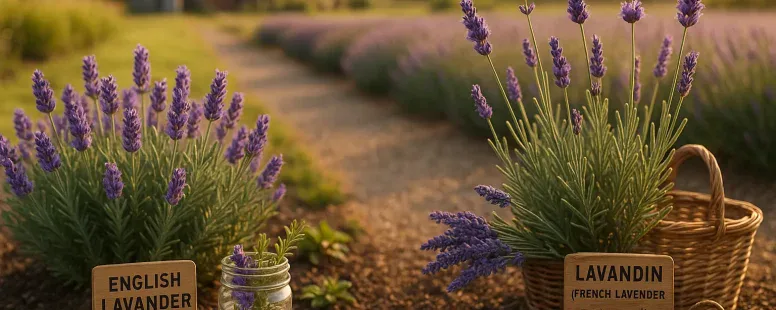
Fact: English lavender (Lavandula angustifolia) and French lavender (Lavandula × intermedia) differ in aroma, hardiness, and typical uses.
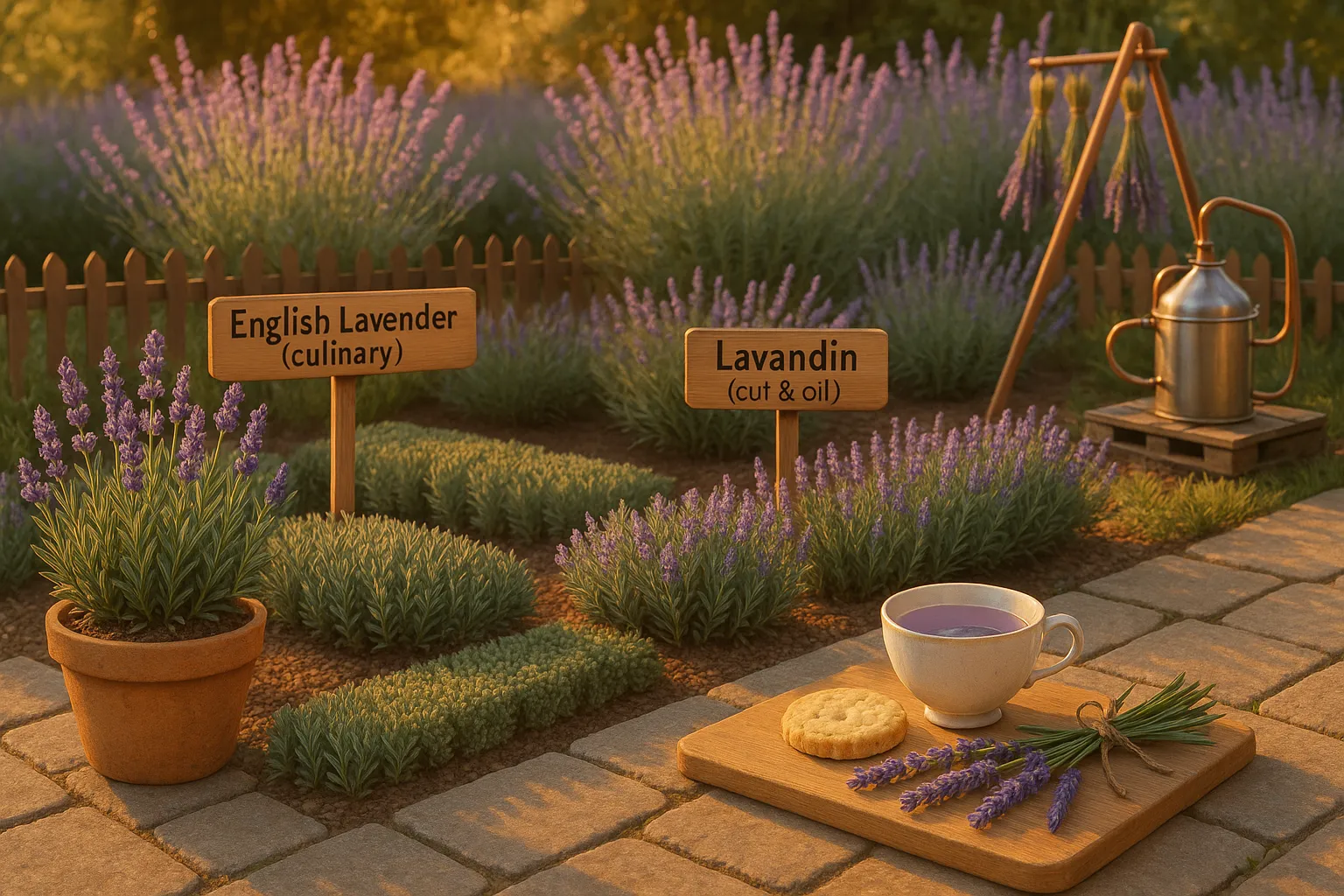
English lavender: Hardy, floral-sweet scent, compact growth, best for culinary uses and cold climates.
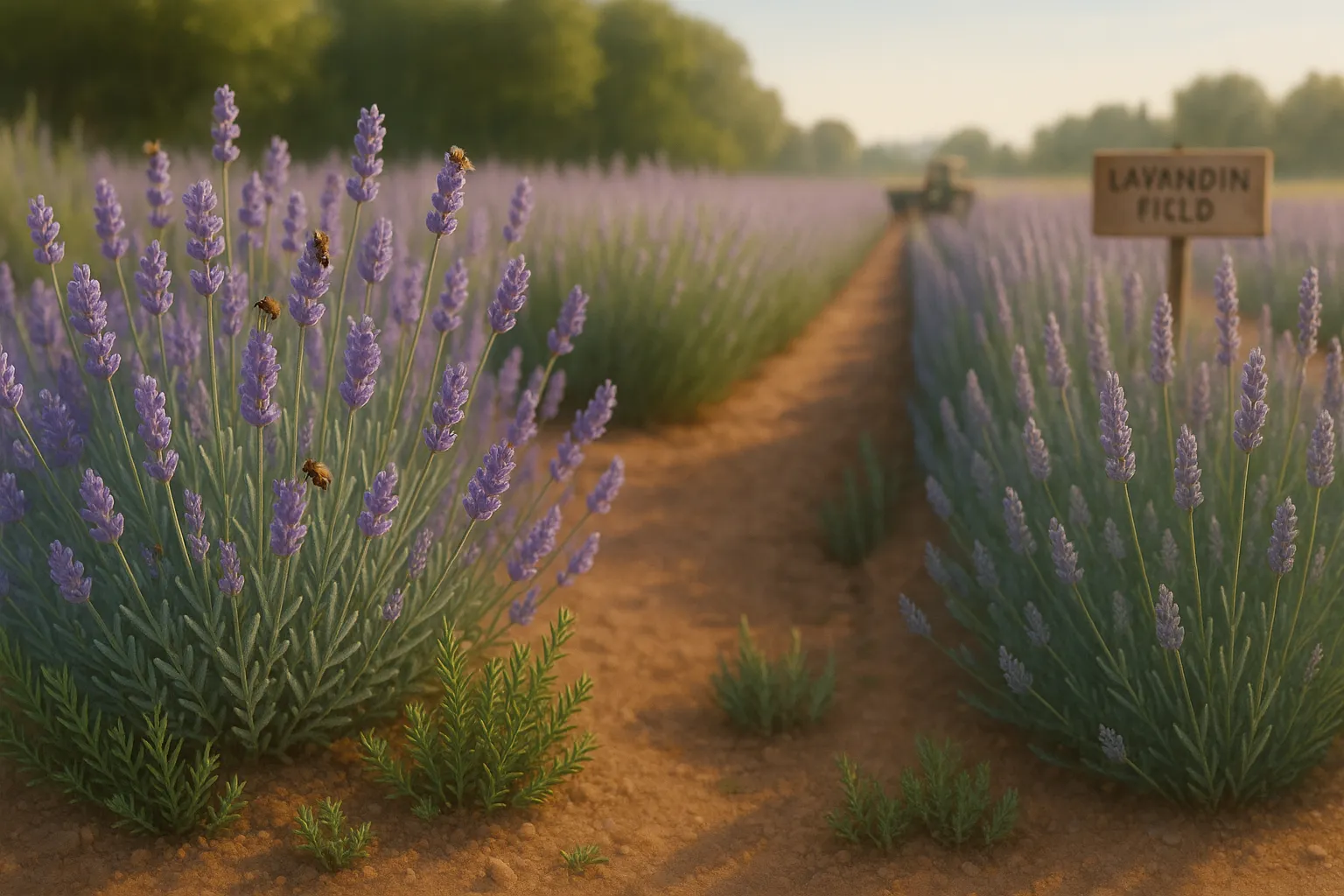
French lavender (lavandin): Taller, produces more oil, stronger camphor notes, better for large-scale oil production and dryer sites.
If you want low-maintenance borders and edible flowers, choose English lavender. If you need volume of flowers for oil, sachets, or large-scale drying, choose French lavender. Practical tip: plant English lavender near kitchen herbs like rosemary and thyme: plant lavandin along long hedgerows or farm rows where mechanical harvesting is possible.
Botanical Differences
Fact: the two types come from different species and hybrids and that drives many of their differences.
Scientific Names And Taxonomy
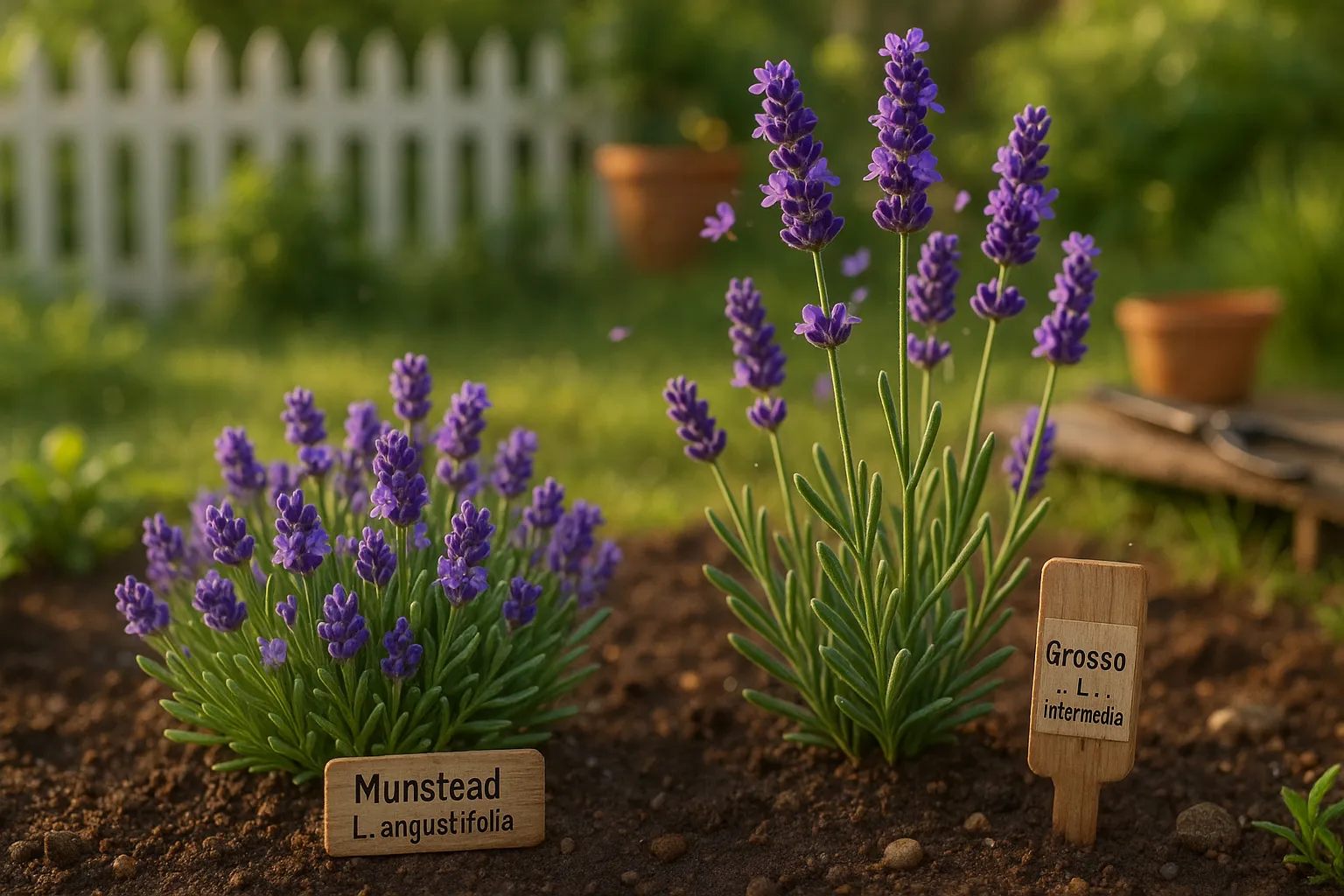
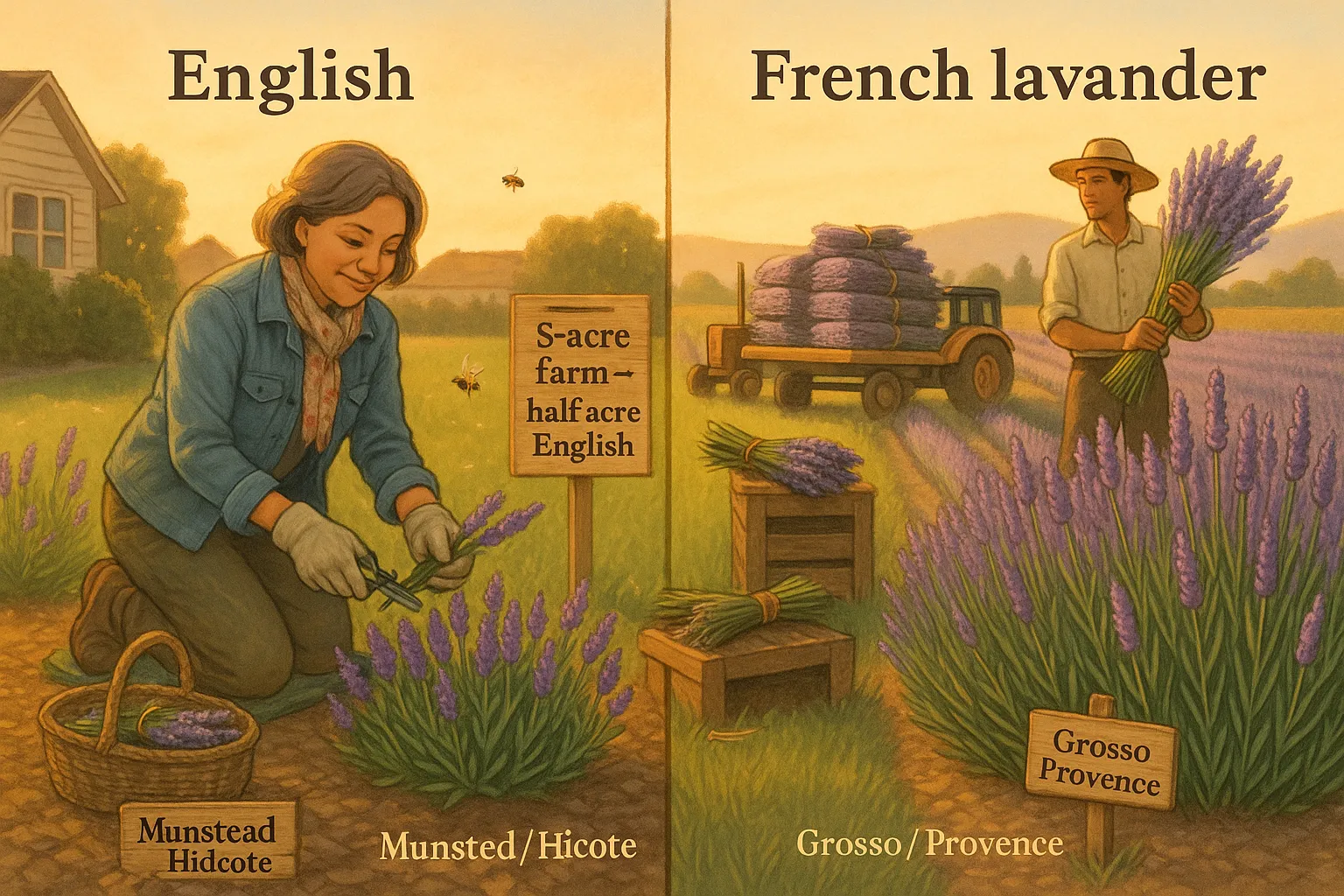
Fact: English lavender is Lavandula angustifolia: French lavender is typically Lavandula × intermedia. English lavender is a true species native to the mountains of the Mediterranean basin, including Corsica and Italy. Lavandin is a hybrid between L. angustifolia and Lavandula latifolia (spike lavender). The Royal Horticultural Society lists many cultivars: ‘Munstead’ and ‘Hidcote’ for English, ‘Grosso’ and ‘Provence’ for lavandin.
Growth Habit, Size, And Lifespan
Fact: English lavender grows as a compact shrub 1–2 feet tall and wide: lavandin reaches 2–4 feet and often forms more open, lanky stems. English lavender tends to live longer in cold climates and can survive two decades with good pruning. Lavandin grows faster but often has shorter individual plant lifespan when left unpruned: but you will get more annual harvest volume.
Flower Structure, Color, And Fragrance
Fact: English lavender flowers are smaller, denser, and usually have a more floral, sweet aroma. Lavandin produces long flower spikes and larger flower heads with a sharper, camphorous scent. Color varies: English shows deep violet to pale blue: lavandin often shows bright violet and sometimes purple‑blue. If you sniff the oils, you will notice lavandin has higher camphor and linalool ratios: that changes how you use the oil.
Growing Conditions And Care
Fact: both lavenders prefer sun and good drainage but they differ in hardiness and water tolerance.
Preferred Climate And Hardiness Zones
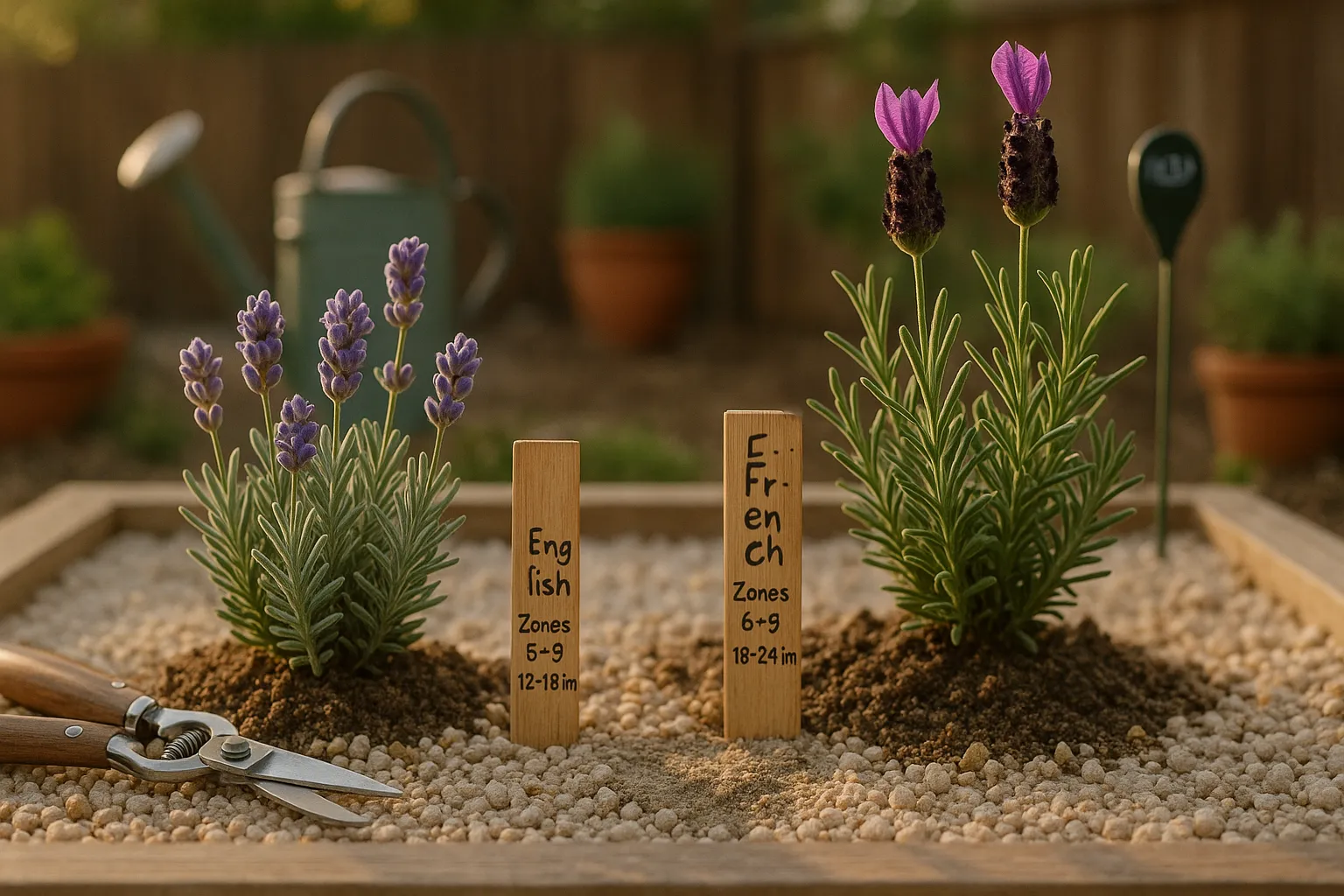
Fact: English lavender is hardy to USDA zones 5–8: lavandin is hardy to zones 6–9. If you live in zone 5 or colder, choose English lavender or grow lavandin as an annual. Provence farms (Bouches‑du‑Rhône) grow lavandin broadly: English lavender thrives in cooler British gardens near Cornwall.
Soil, Drainage, And Watering Needs
Fact: both need well‑drained, neutral to slightly alkaline soil. Use gritty, sandy loam or add sharp sand to clay soil. Water young plants regularly until established: after that, water sparingly. Overwatering causes root rot in both species. Practical test: after watering, the top inch of soil should dry within 48 hours in summer.
Sunlight, Fertilizer, And Pruning Practices
Fact: lavenders need full sun, 6+ hours daily. Feed lightly: a low‑nitrogen fertilizer or a slow‑release granular in spring is enough. Prune after flowering to shape and remove one third of the new growth: avoid cutting into old, woody wood for English lavender because it may not resprout. Lavandin tolerates harder shearing and responds well to rejuvenation pruning.
Propagation And Establishment Tips
Fact: you can propagate both from semi‑ripe cuttings: seed for lavandin gives variable results because it’s a hybrid. Use 3–4 inch cuttings in late summer, place in a free‑draining mix and keep humid until roots form. Space plants 12–18 inches for English lavender, 18–24 inches for lavandin in rows. Mulch with gravel to improve drainage and reduce crown moisture: do not over‑mulch with organic matter that holds water.
Uses And Practical Differences
Fact: use-case often determines which lavender you should plant.
Culinary, Medicinal, And Aromatherapy Uses
Fact: English lavender is best for culinary use because it has a milder, sweeter flavor and lower camphor. Use English lavender flowers in syrups, shortbread, and as a subtle tea. Lavandin has a stronger, sometimes bitter taste that can overpower dishes: it is better for potpourri than for a lemon‑lavender scone.
Landscaping, Border Planting, And Container Use
Fact: English lavender makes tidy borders and works in containers near patios. Lavandin fits long borders, mass plantings, and windbreaks because of its height and open habit. If you want a low hedge, plant English lavender in staggered rows and shear lightly each year.
Cut Flowers, Drying, And Craft Uses
Fact: lavandin produces longer stems and more blooms per plant, so it is the preferred choice for cutting and drying at scale. English lavender dries well too, but yields fewer stems per square foot. For sachets and wreaths, many small growers prefer lavandin for its volume and stronger scent.
Essential Oil And Commercial Considerations
Fact: lavandin yields more essential oil per acre and extracts are cheaper: English lavender oil (L. angustifolia) commands higher prices for perfumery and therapeutic markets because of its fragrance profile. If you plan small‑batch, high‑value oil sales, focus on English lavender cultivars and invest in careful steam distillation: if you want bulk oil for cleaning products or fillers, lavandin will be more profitable per hectare.
Choosing The Right Lavender For You
Fact: match plant traits to your goals and climate before you buy.
Best Choice For Home Gardeners And Beginners
Fact: English lavender is generally better for beginners in cooler climates because it tolerates pruning mistakes less, yet rewards simple care with long life and edible flowers. Choose cultivars like ‘Munstead’ or ‘Hidcote’ for small gardens. If you live in a warm, dry area and want a showy, low‑effort hedge, lavandin will perform well.
Best Choice For Cut-Flower Growers And Crafters
Fact: lavandin often wins for cut flowers and drying because of stem length and flower abundance. Cultivars such as ‘Grosso’ and ‘Provence’ give uniform stems ideal for bundles. For artisan wreath‑makers who sell on Etsy or at markets, lavandin will reduce harvest time and increase bundles per plant.
Best Choice For Commercial Oil Production Or Small Farms
Fact: lavandin yields more oil and is easier to mechanize, so small farms that target volume should plant lavandin rows. For boutique aromatherapy brands you should choose English lavender to justify premium pricing. Example: a 5‑acre farm near Sequim, Washington, switched to lavandin for volume but kept a half acre of English lavender for high‑margin distillates.
Troubleshooting And Common Problems
Fact: many problems come from poor drainage, incorrect pruning, or wrong climate choice.
Common Pests, Diseases, And How To Prevent Them
Fact: lavenders are relatively pest‑free but can suffer from root rot, fungal leaf spots, and occasional aphid outbreaks. Prevent root rot by improving drainage and avoiding heavy mulches. Control aphids with water sprays or insecticidal soap: beneficial insects like ladybugs help. If you see gray mold, remove affected parts immediately and improve air circulation.
Seasonal Care: Winter Protection And Summer Heat
Fact: English lavender needs winter protection in colder zones, mound soil or gravel over roots and avoid late season fertilizing. Lavandin tolerates heat well but may need afternoon shade in very hot climates. In summer, watch for drought stress and water young plants: established plants survive on minimal irrigation but will reward light watering during prolonged heat.
When To Replace Plants And How To Revive Overgrown Specimens
Fact: replace a plant when it becomes mostly woody in the center and produces few new shoots. To revive overgrown lavandin, cut back hard in spring but leave green growth: for English lavender, perform lighter shaping to avoid cutting into old wood. If a plant fails to resprout, propagate new cuttings from healthy neighbors and replace the old crown. Honest note: sometimes removal is faster than rescue, especially with old, sunken crowns that rot below the surface.
To provide the best experiences, we use technologies like cookies to store and/or access device information. Consenting to these technologies will allow us to process data such as browsing behaviour or unique IDs on this site. Not consenting or withdrawing consent, may adversely affect certain features and functions.
Functional
Always active
The technical storage or access is strictly necessary for the legitimate purpose of enabling the use of a specific service explicitly requested by the subscriber or user, or for the sole purpose of carrying out the transmission of a communication over an electronic communications network.
Preferences
The technical storage or access is necessary for the legitimate purpose of storing preferences that are not requested by the subscriber or user.
Statistics
The technical storage or access that is used exclusively for statistical purposes.The technical storage or access that is used exclusively for anonymous statistical purposes. Without a subpoena, voluntary compliance on the part of your Internet Service Provider, or additional records from a third party, information stored or retrieved for this purpose alone cannot usually be used to identify you.
Marketing
The technical storage or access is required to create user profiles to send advertising, or to track the user on a website or across several websites for similar marketing purposes.