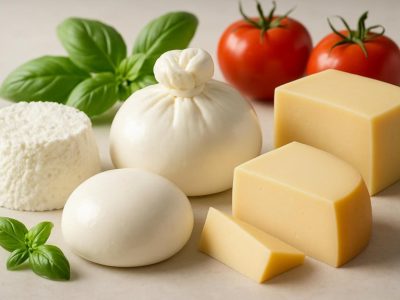
Ever stood in the dairy aisle, puzzled by the array of cheeses before you? You’re not alone. American cheese, a staple in many households and fast food joints alike, often leaves folks scratching their heads over one particular question: what’s the difference between yellow and white varieties?
What is American Cheese?
Let’s jump into the intriguing area of this popular dairy product. Unraveling its rich history and understanding how it comes to life, gives a clearer picture of what exactly constitutes “American cheese.”
Historical Background of American Cheese
As you explore your favorite sandwich ingredient, keep in mind that the roots trace back to early 20th century Britain. Yes, British origins for an all-American staple! It was there that Canadian-born Robert L. Kraft perfected his processed cheddar recipe during World War I – creating a long-lasting and easy-to-transport food source for soldiers.
This unique blend wasn’t dubbed as ‘American’ until it found fame on US soil post-war when cost-conscious households appreciated its affordability compared with traditional cheeses like Swiss or Cheddar.
How is American Cheese Made?
Moving onto production now: believe it or not, crafting this beloved cheese doesn’t involve magic wands waving over vats full of milk – although sometimes we wish they did!
Here’s the process at glance:
Milk gets heated along with emulsifiers.
2.Getting rid off unwanted bacteria happens through pasteurization.
3.The mixture then thickens via enzymes addition forming curds.
4.Curds undergo heating once more melting them down smoothly; salt & coloring agents join here giving us familiar yellow hue (or left out for white version).
5.Finally these blocks cool off solidifying into slices ready to melt over our burgers!
Understanding Yellow American Cheese
In the area of dairy delights, yellow American cheese holds its ground with unique attributes. Let’s unravel these characteristics under specific subheadings.
Composition and Flavor Profile
Yellow American cheese owes its vibrant hue to annatto, a natural food coloring derived from the seeds of Achiote trees. It shares an identical recipe as white variant but it’s this colorant that sets them apart. On tasting, you’d find it offers a smooth creamy texture coupled with mild flavor – not too sharp nor tangy like traditional cheddar or Swiss counterparts.
The primary components include milk – often part skimmed – salt for seasoning and emulsifiers for binding purposes; ingredients that are heated together in monitored conditions till they melt into one homogenous mixture. Following pasteurization and solidification processes, what results is your familiar sliceable yet meltable piece of goodness.
Uses in Popular Foods
You’ve undoubtedly seen yellow American cheese gracing various popular dishes around you- burgers being prime candidates among others! Its high melting point lends itself perfectly to hot sandwiches or casseroles where it melts evenly without turning greasy.
Understanding White American Cheese
Transitioning from yellow, let’s investigate into white American cheese. This variant differs slightly in composition and flavor profile but still holds a prominent place in the culinary world.
Composition and Flavor Profile
White American cheese isn’t colored with annatto like its yellow counterpart. It consists of similar ingredients: milk, emulsifiers for smoothness, salt to enhance taste, enzymes that contribute to curd formation during pasteurization – all combined under high heat until they form a homogeneous mix. Its absence of color doesn’t affect its rich creaminess or versatility.
In terms of flavor profile, you’ll find it mild yet tangy due to the unique blend of cheeses used as base product – usually Colby or Cheddar – resulting in an end product that complements rather than overpowers dishes it is added to.
Uses in Popular Foods
Just like yellow version found on burgers everywhere across America; white american cheese too has specific popular uses! Sandwiches are one such domain where this variety reigns supreme- think Philly cheesesteak sandwiches packed with juicy beef strips smothered by molten white American goodness! Its melting point aligns perfectly when heated within layers making it ideal choice for hot subs and grilled paninis alike.
Also,in mac-n-cheese recipes seeking subtler hue without compromising on cheesy decadence? Here’s your answer: swap out bright cheddars for creamy-white slices!
Finally,soups craving silky-smooth consistency often incorporate handful cubes knowing well their guaranteed melt factor enriches both texture & overall depth flavors enticing each spoonful taken after another!
Remember,your kitchen rules may vary but rest assured knowing whichever route choose between these two versions,you’re bound experience hearty satisfaction every bite thanks uniquely appealing characteristics brought forth by either beloved varieties-American Cheeses Yellow & White-in unison indeed truly showcase testament timeless popularity enjoyed among masses nationwide even though inherent differences hold respective merits quite successfully.
Difference Between Yellow and White American Cheese
Digging deeper into the world of cheese, let’s focus on two popular types: yellow and white American cheeses. We’ll discuss their differences in color, nutrition content, flavor, and texture.
Color Differentiation: Natural vs Artificial
In terms of color differentiation between yellow and white American cheese, it all boils down to one ingredient – annatto. This natural food coloring gives the former its characteristic golden hue. In contrast with this naturally colored variety is white American cheese which lacks any added colors – hence resulting in a creamier appearance that mirrors its key component—milk.
Yellow
White
Coloring agent
Annatto
None
This table illustrates how both varieties differ primarily due to presence or absence of coloring agents such as annatto.
Nutritional Comparison
When it comes to nutritional comparison there isn’t much difference between these two variants as they possess similar levels of fat (about 9 grams), protein (around 5 grams), carbohydrates (less than a gram) ,and calories(approximately100 kcal per slice). The primary distinction arises from sodium content where some brands might have higher amounts depending on whether salt was heavily used during processing.
Nutrient Yellow White
Fat ~9g ~9g
Protein ~5g ~5g
Carbs <1 g <1 g
Calories ~100kcal ~100kcal
Sodium* Varies Varies
The above table summarizes similarities across most nutrients while highlighting potential variances in Sodium.*
*Sodium varies by brand; check labels for specific information.
Flavor and Texture Contrasts
Last but not least are flavor & texture contrasts among these sibling-cheeses! Known for their mild yet distinct flavors, both variants have different taste profiles. Yellow American cheese has a smooth and mild flavor which is preferred in dishes like burgers. On the other hand, white American cheese offers a slightly tangy punch derived from its blend of Colby or Cheddar cheeses making it ideal for sandwiches and mac-n-cheese.
Texture-wise, they are quite similar with their creamy consistency – though many food enthusiasts argue that yellow variant melts better creating an irresistibly gooey delight on grilled cheeses!
Yellow
White
Mildness level
milder
tangier
Meltability*
higer
lower
This table gives you an at-a-glance comparison between these two types of American Cheese based on key aspects such as Mildness Level & Meltability*
*Meltability varies by brand; check labels for specific information.
Common Misconceptions and Myths about Yellow and White American Cheese
Bust myths, correct misconceptions. That’s the focus of this section as we take on some commonly held beliefs about yellow and white American cheese.
Myth 1: Yellow Cheese is Unhealthy Because it’s Artificially Colored
Contrary to popular belief, annatto—the ingredient used for coloring yellow American cheese—comes from achiote tree seeds. It doesn’t pose health risks when consumed in moderation; instead, its use dates back centuries by indigenous communities across Central and South America due to its natural healing properties.
Myth 2: All Cheeses are Created Equal
You might think all cheeses have similar nutritional content. But, variations exist between different types of cheese—even within variants of the same type! For example, sodium levels may vary among brands producing both yellow or white American cheeses depending on their unique production methods.
Myth 3: Flavor Dictates Quality
Many believe that stronger flavor equals higher quality—an incorrect assumption. While white American cheese tends to be tangier than mild-flavored yellow variant—it’s not an indicator of superior quality but simply a matter of personal preference!
Making an Informed Cheese Choice
When it comes to cheese, details matter. Understanding the nuanced differences between yellow and white American cheeses empowers you to make informed culinary decisions.
Color Difference: Natural vs Neutral
First off, let’s discuss color variations in these two types of cheese. The distinct yellow hue of Yellow American Cheese derives from annatto—a natural seed-based food coloring widely used throughout history for its rich pigment. But, White American Cheese maintains a neutral tone due to absence of any added colors.
Flavor Profile: Mild vs Tangy
Next up is flavor—another crucial aspect that sets them apart distinctly. You’ll find Yellow American cheese offering a mild taste perfectly suited for burgers or grilled sandwiches where it effortlessly blends with other flavors without dominating them. Conversely, if your dish demands something bolder like mac-n-cheese or cream-filled pastries—the tangier profile found in White American Cheese becomes your go-to choice!
Sodium Content Variation:
Interestingly enough there can be slight variances in sodium content as well depending on brand and type chosen which could influence decision-making process especially when dietary restrictions are involved.
Type
Average Sodium (mg/oz)
Yellow
100-200
White
150-250
Data Source: U.S National Library Of Medicine – MedlinePlus
Conclusion
So you’ve journeyed through the world of American cheese, distinguishing between yellow and white variants. It’s clear that while they share many similarities in production and nutritional content, subtle differences set them apart. The color variation is thanks to annatto used in yellow cheese; its mild flavor pairs well with various dishes like burgers. White American cheese sans annatto offers a creamy texture with a tangy kick making it ideal for sandwiches or mac-n-cheese.
Remember these distinctions when picking your next block from the dairy aisle: Yellow for versatility and blendability, white for boldness in taste! Also bear in mind potential sodium levels if dietary restrictions are part of your equation.
You’re now armed with everything you need to make an informed culinary decision on which slice will elevate your dish – be it yellow or white.
To provide the best experiences, we use technologies like cookies to store and/or access device information. Consenting to these technologies will allow us to process data such as browsing behaviour or unique IDs on this site. Not consenting or withdrawing consent, may adversely affect certain features and functions.
Functional
Always active
The technical storage or access is strictly necessary for the legitimate purpose of enabling the use of a specific service explicitly requested by the subscriber or user, or for the sole purpose of carrying out the transmission of a communication over an electronic communications network.
Preferences
The technical storage or access is necessary for the legitimate purpose of storing preferences that are not requested by the subscriber or user.
Statistics
The technical storage or access that is used exclusively for statistical purposes.The technical storage or access that is used exclusively for anonymous statistical purposes. Without a subpoena, voluntary compliance on the part of your Internet Service Provider, or additional records from a third party, information stored or retrieved for this purpose alone cannot usually be used to identify you.
Marketing
The technical storage or access is required to create user profiles to send advertising, or to track the user on a website or across several websites for similar marketing purposes.