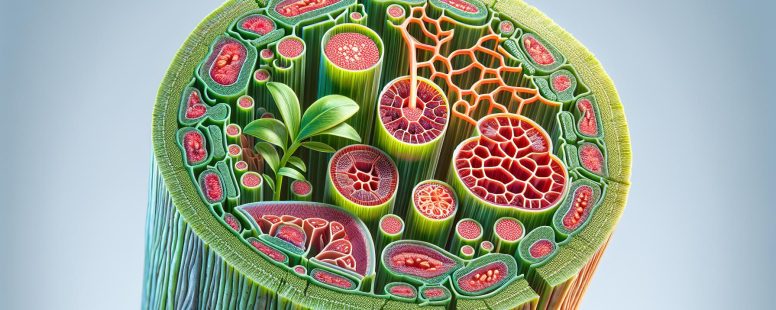
Ever wondered how plants drink water or eat food? It’s a fascinating process, and it all comes down to two vital components: xylem and phloem. These aren’t just fancy botanical terms; they’re the lifelines of every leafy green thing you see around you.
Understanding Plant Anatomy
To investigate deeper into the world of plant biology, it’s essential to understand vascular tissues’ role in plants.
The Role of Vascular Tissues in Plants
In a nutshell, vascular tissues serve as transport channels within plants. There are two primary types: xylem and phloem.
Xylem
Xylem primarily transports water from roots to other parts of the plant. This tissue comprises vessels that aid in maintaining structural support for the plant body while facilitating water movement.
Example: In tall trees such as sequoias (Sequoiadendron giganteum), xylems play an integral part by pumping ground-level nutrients up heights reaching over 300 feet!
Phloem
On another hand, you’ve got phloem responsible for distributing organic compounds like sugars produced during photosynthesis from leaves (source) towards growth sites including root tips or developing seeds.
Example: If we consider sunflowers(Helianthus annuus), their height growth largely depends on sugar distribution managed by phloems between different sections – a testament to this tissue’s importance!
A remarkable feature about these elements is they function harmoniously even though performing distinctly separate roles – transporting minerals upwards through xylems whilst moving nutrition-rich sap downwards via phloems! An understanding so helps appreciate nature’s incredible ingenuity better than ever before.
Xylem: The Water Conduit
Unravel the essence of xylem, a fundamental pillar in plant anatomy. This section dissects its structure and components, unveiling how it’s pivotal to plants’ hydration.
The Structure and Function of Xylem
The structure of xylem is intricate yet highly efficient. Comprising mainly tracheids and vessel elements that are dead at maturity, this tissue forms long tubes allowing water movement from roots upwards. Also, it includes fibers for structural support contributing to the strength of wood in trees.
Xylems excel at transporting water absorbed by root hairs up towards leaves where photosynthesis takes place. Consider sequoias reaching skyward over 300 feet – they owe their towering stature largely to xylum conducting massive volumes of water with nutrients extracted from soil throughout their extensive structures daily.
Components of Xylem
Four primary types make up xylums – Tracheids, Vessel Elements along with Fibers and Parenchyma cells:
Tracheids, elongated cells with hard cell walls serving as principal conduits for moving water.
Vessel Elements link end-to-end forming continuous pipelines facilitating faster flow rates than tracheid-only systems allow.
Fibers contribute structurally rather than functionally providing robustness integral to trees’ rigid frameworks resisting gravity pull or wind sway.
Parenchyma Cells involved less directly play supportive roles storing food materials while also aiding repair following injury occurrences within vascular tissues such as those inflicted by insects or disease pathogens.
Phloem: The Food Distributor
As the article transitions from xylem, it’s time to investigate deeper into phloem – another integral part of a plant’s vascular system. Contrasting with xylem, which is involved in water transport and structural support, phloem plays an indispensable role in transporting food substances across different parts of the plant.
The Structure and Function of Phloem
In simple terms, think of phloem as nature’s version of a delivery truck for plants. It transports organic nutrients — specifically sugars like sucrose created during photosynthesis —from leaves (the production sites) towards growth-related areas such as roots and stems (consumption sites).
Phloem exhibits unique structure facilitating its function. Its main components include sieve tube elements that lack nuclei at maturity but are interconnected via perforated end walls known as sieve plates—allowing free flow nutrient transportation—and companion cells actively engaged in maintaining metabolic functions vital for nutrient distribution.
The functionality scope extends beyond merely being sugar conduits; they contribute significantly toward healing wounds or injuries by forming callus tissues around damaged sections—an attribute called ‘phellogen activity’.
Components Of Phloom
Diving further into what constitutes this critical transporter within our green friends reveals four primary component types:
Sieve Tube Elements: These elongated cylindrical cells form continuous tubes through their connecting ends.
Companion Cells: Situated adjacent to each sieve tube element—they help maintain cell metabolism.
Parenchyma Cells: These serve storage purposes besides aiding lateral translocation between other conducting cells
4.,Fibers: While not directly contributing to active transport these offer mechanical strength justifying their abundance along stem regions subjected stress scenarios such barks exterior surfaces larger tree species example mighty Oak!
So next time you marvel over how trees manage year-round nutrition supply even though seasonal changes remember—it all boils down to the phenomenal efficiency and intricate functionality of their phloem system.
The Key Difference Between Xylem and Phloem
Continuing from the previous sections, let’s investigate deeper into what sets xylem apart from phloem. Both these vascular tissues play pivotal roles in plant life, yet their structures, components, and functions are distinctively different.
Difference in Structure and Components
Looking closely at the structure of xyleom reveals that it consists mainly of dead cells; tracheids and vessel elements form long hollow tubes allowing efficient water transport. This sturdy design provides structural support to plants as well as facilitating hydration.
On contrast with this architecture is phloem: comprised mostly of living cells like sieve tube elements linked by sieve plates for transporting nutrients. Companion cells maintain metabolic functions since sieve tube elements lose their nuclei upon maturing—a clear difference compared to rigidly structured xyleom vessels!
A prime example lies within fibers – they contribute significantly to both systems but have contrasting roles! In xylem? They provide mechanical strength due its lignified cell walls whereas those found in phloem ensure protection against invaders or injury – a testament towards nature’s efficiency!
Difference in Function
When you consider function , another layer of distinction emerges between our two subjects- Xyelum is primarily involved with water transportation while Pholem specializes on nutrient distribution throughout a plant body.
In simple terms,xlyleou can be seen as an upward flowing pipeline carrying precious H2O resources from roots all way up leaves enabling photosynthesis processs .
Pholeu,on other hand,is very much “plant delivery truck” taking organic compounds such sugars produced during photo synthesis growth sites making sure every part gets nourishment needed .
The balance struck between these two opposing forces ensures optimal health for any given flora species proving once again ingenuity inherent natural world itself ! No matter season changes external stressors throw them off stride,Xyluem & Phelem work together ensuring survival propagation generation after generation.
So, these fundamental differences in structure and function form the crux of what distinguishes xylem from phloem – an intricate dance between life-giving water and nutrient transport within plants.
Significance in Plant Growth and Survival
Understanding the significance of xylem and phloem to plant growth is like unraveling a biological mystery. Both vascular tissues work hand-in-hand, maintaining an intricate balance that ensures not just survival but also flourishing life for plants.
Let’s dive deeper into how these two systems are crucial cogs in the wheel of plant existence.
Role of Xylem in Structural Stability
Xylems do more than merely serving as water conduits; they’re key contributors to structural stability too! They form part of the ‘skeleton’ within plants, lending rigidity necessary for upright stature, especially seen with towering giants such as sequoias which stand tall owing much to their robust xylary framework!
Consider this: A mature oak tree can absorb around 50 gallons (189 liters) of water per day through its root system – mostly facilitated by tracheids and vessel elements present in xylem.
Isn’t it amazing how nature has designed such efficient mechanisms? It’s nothing short from awe-inspiring!
Phloem: The Lifeline Supplying Nutrients
Switch your focus now onto phloem – consider them akin to highways carrying food packets across various parts! After all, photosynthesis alone isn’t enough if nutrients don’t reach where needed right?
Phloems function round-the-clock transporting sugars synthesized during photosynthesis from leaves towards other parts including roots or stems acting as storage houses or regions supporting new shoots/flowers/fruits respectively.
Their role extends beyond nutrient transport- injuries lead formation callus tissue sealing off damaged areas restoring health before you know it! Just think about a wounded bark on maple trees soon covered over time – thanks goes out mainly due phloemic action at play there.
Here’s another fun fact: During winter months when deciduous trees shed leaves halting photosynthetic activities altogether– stored starches convert back into soluble sugars transported upwards from roots to buds preparing for spring bloom – an ingenious survival strategy orchestrated by phloem tissues!
Striking the Right Balance: The Xylem-Phloem Connection
The coexistence of xylem and phloem is no mere coincidence. It’s nature’s perfect design wherein they work in harmony ensuring a steady flow of water, nutrients across various plant parts irrespective seasons or external conditions.
This delicate equilibrium between upward movement through xylems contrasted with multidirectional distribution via phloems forms crux behind plants’ health vitality eventually dictating their overall growth patterns.
Visual Models: Xylem vs Phloem
Building upon the detailed understanding of xylem and phloem’s structure and functions, let’s now turn our attention to visualizing these plant lifelines. Understanding their physical characteristics gives a clearer picture of how they perform vital roles in water transport, nutrient distribution, structural support, and healing injuries.
Xylem Structure
The xylem can be imagined as long hollow tubes that traverse from root to leaf tip. Composed primarily of tracheids and vessel elements – both dead at maturity – this network allows for efficient upward transportation of water absorbed by roots. For instance; imagine giant sequoias reaching skyward heights upwards 275 feet! It’s only possible due to strong columns made up by fibres in the xylems providing critical support while efficiently moving massive volumes of water vertically.
Phloem Configuration
Phloem is unlike its counterpart on many levels starting with it being comprised largely out living cells interconnected into sieve tube-like structures aided by companion cells maintaining metabolic activities even after maturing without nuclei presence inside them like other matured cellular bodies typically do have.
Consider viewing an intricate highway system crisscrossing across varying terrains – quite similar conceptually speaking about what pholem does within plants distributing organic nutrients produced during photosynthesis process throughout various parts ensuring optimal growth health overall aspects same time playing crucial role repairing any damages sustained overtime calling forth callus tissues covering injured areas just as bandage would wound case humans aiding faster recovery periods too eventually!
By visually differentiating between these two vascular systems’ unique properties you’d gain deeper appreciation towards intricacies involved nature perfect design enabling smooth flow essential life-supportive resources such sugars required nourishment purposes through leaves right down stem unto deepest sections rooted underground alike whilst facilitating seamless passage voluminous amounts waters all way top simultaneously achieving feats extraordinary balance amidst complex variables inherent biological world around us universally so indeed truly fascinating perspective observe upon closer inspection regardless where stand today!
Interrelation Between Xylem and Phloem
Now that you’ve visualized these individual structures, consider their collaboration. Think of a perfectly balanced relay race; the baton (water and nutrients) is passed from xylem to phloem ensuring every part of the plant receives what it needs when needed.
Picture an oak tree’s impressive stature supported by its robust ‘skeleton’ formed out of xylem fibers while 50 gallons worth water being absorbed daily gets distributed efficiently within alongside sugars produced during photosynthesis travelling across highways created via pholem transporting vital growth-promoting substances all corners successfully!
Meanwhile stored starches get converted into soluble sugars as winter approaches thanks primarily active roles played by aforementioned sieve tube elements functioning together with companion cells in unison even though harsh external conditions persisting around – another testament towards ingenious survival strategies adopted plants coping environmental changes dynamically year-round basis yet thriving through adversities natural world presents before them each passing day so showcasing resiliency inherent nature’s design once more time indeed quite remarkable see unfold right front our very eyes behold isn’t?
In essence, observing interplay between two seemingly contrasting systems like xylems versus pholems gives one deeper insights related complexities underlying biological processes behind how life thrives on planet earth effectively so keeping global ecosystem intact healthy state for generations come hopefully forevermore same note too – something definitely worth reflecting pondering about deeply sure well enough said this point onwards further exploration awaits ahead journey continues moving forward step-by-step moment-to-moment without missing beat along way just keep going strong ever onward upwards always remember importance understanding essential truths hidden beneath surface appearances things matter most us end eventually nothing less than truth itself shines brightest light guiding path enlightenment beyond mere words alone express fully perhaps someday though till then let’s continue exploring learning growing knowing loving living fullest potentials individually collectively alike embracing interconnectedness existence wholeness unity entirety one universal consciousness cosmic intelligence divine love eternal peace ultimate reality truth beauty goodness infinity eternity omnipresence omniscience omnipotence transcendental supreme absolute beingness awareness blissfulness joy happiness freedom liberation salvation redemption resurrection ascension enlightenment illumination wisdom knowledge understanding insight intuition instinct inspiration imagination creativity innovation invention discovery exploration adventure journey quest mission vision dream aspiration goal purpose destiny fate karma dharma duty responsibility obligation opportunity privilege honor dignity respect reverence devotion dedication commitment loyalty fidelity trust confidence faith hope charity compassion kindness gentleness humility modesty patience perseverance persistence determination courage bravery valor heroism greatness nobility majesty glory splendor magnificence grandeur elegance grace charm allure mystique charisma power strength energy vitality dynamism enthusiasm passion zeal fervor ardor intensity fierceness ferocity tenacity resilience endurance fortitude steadfastness constancy stability reliability dependability consistency predictability accuracy precision efficiency effectiveness productivity profitability prosperity abundance wealth richness affluence luxury comfort convenience ease relaxation tranquillity serenity calmness peacefulness quietude silence stillness solitude seclusion privacy security safety protection preservation conservation restoration rejuvenation regeneration renewal rebirth reincarnation immortality eternality perpetuity continuity succession progression evolution transformation metamorphosis transmutation mutation variation differentiation diversification expansion growth development progress improvement enhancement enrichment augmentation amplification maximization optimization perfection completion fulfillment satisfaction contentment pleasure delight ecstasy rapture orgasm nirvana heaven paradise utopia eden shangri-la arcadia elysium atlantis avalon camelot xanadu neverland wonderland fairyland dreamworld fantasy world imaginary land make-believe place ideal location perfect setting beautiful scene lovely view breathtaking panorama picturesque world scenic vista charming environment pleasant atmosphere delightful ambiance attractive ambience inviting milieu cozy nest comfortable home sweet homely abode loving family warm hearth happy household cheerful company friendly companionship good fellowship cordial relationship harmonious association close friendship deep bond strong connection intimate attachment personal involvement emotional engagement romantic affection sensual attraction sexual desire physical lust carnal appetite bodily hunger primal urge basic need natural desire human longing divine yearning spiritual aspiration cosmic quest universal journey eternal path timeless road infinite highway endless route boundless track limitless course unrestricted way open space free area wide field broad territory vast expanse immense ocean huge sea large lake big river long canal small stream short creek narrow brook tiny rill little rivulet minute puddle microscopic droplet nanoscopic particle picoscopic atom femtoscopic quark zeptoscopic string yottascopic universe zettascopic multiverse exascopic omniverse petascopic metaverse terascopic xenoverse gigascopic alternativverse megascope parallel universe kiloscope microcosm hectorscopes miniscape molecule decascape cell centiscapes organelles millispace macromolecule microspace dna nanospace base pair picospace atom femtospace proton attoscale neutron zeptocope electron yoctoscopy neutrino.
Conclusion
So you’ve learned the essential roles of xylem and phloem in plants. These two critical vascular tissues, although similar in their transport functions, have distinct differences that make them unique. You now know how xylem’s dead cells form long tubes for water transportation from roots to leaves while providing structural support much like a skeleton would do for humans.
On the other hand, phloem is made up of living cells that work as nature’s delivery truck ensuring sugars produced during photosynthesis reach all parts of the plant including its growth areas such as roots and stems. This distribution process highlights how intricately designed these systems are allowing trees to manage nutrition supply throughout changing seasons effectively.
Understanding this balance between water transportation by xylem and nutrient distribution by phloem underlines just how sophisticated Mother Nature really is with her designs enabling life on Earth. By appreciating these biological processes we can foster healthier greener environments around us making our world a better place one plant at a time!
To provide the best experiences, we use technologies like cookies to store and/or access device information. Consenting to these technologies will allow us to process data such as browsing behaviour or unique IDs on this site. Not consenting or withdrawing consent, may adversely affect certain features and functions.
Functional
Always active
The technical storage or access is strictly necessary for the legitimate purpose of enabling the use of a specific service explicitly requested by the subscriber or user, or for the sole purpose of carrying out the transmission of a communication over an electronic communications network.
Preferences
The technical storage or access is necessary for the legitimate purpose of storing preferences that are not requested by the subscriber or user.
Statistics
The technical storage or access that is used exclusively for statistical purposes.The technical storage or access that is used exclusively for anonymous statistical purposes. Without a subpoena, voluntary compliance on the part of your Internet Service Provider, or additional records from a third party, information stored or retrieved for this purpose alone cannot usually be used to identify you.
Marketing
The technical storage or access is required to create user profiles to send advertising, or to track the user on a website or across several websites for similar marketing purposes.