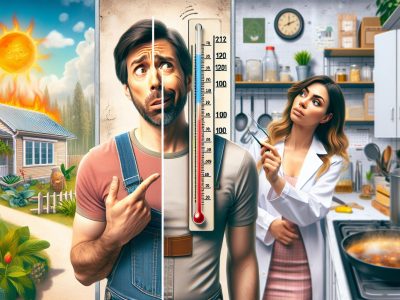
Picture this: you’re planning a weekend hike, checking the forecast to see if rain might spoil your adventure. But while weather apps tell you if you’ll need a raincoat tomorrow, they can’t predict the winters of the next decade. That’s where the distinction between weather and climate becomes essential—and fascinating.
Weather is the fleeting mood of the atmosphere, changing from sunny to stormy in hours. Climate, on the other hand, is the personality of a region, shaped over decades. Understanding this difference isn’t just trivia; it helps you grasp everything from daily decisions to global environmental shifts. So, how exactly do they diverge, and why does it matter? Let’s break it down.
Understanding Weather
Weather refers to the atmospheric conditions in a specific place over a short period, such as hours or days. It’s dynamic and can vary significantly even within the same day.
Definition of Weather
Weather comprises short-term changes in atmospheric elements, including temperature, humidity, wind speed, air pressure, and precipitation. For example, a sunny morning can quickly shift to an afternoon rainstorm. Weather operates on a local scale and is heavily influenced by geographic factors like altitude, latitude, and proximity to water bodies.
Meteorological studies analyze weather patterns using tools such as thermometers, barometers, and anemometers. These provide data for forecasting temperatures, measuring pressure, and gauging wind speeds. A weather forecast predicts these conditions, offering insights for immediate activities, like whether to carry an umbrella or reschedule outdoor plans.
Short-Term Fluctuations: Changes in weather might occur hourly or daily. You might see heavy rain in the morning and clear skies by the evening. This variability highlights its spontaneous nature.
Localized Impact: Weather is specific to a region or even a particular area. A town near the coast might experience cooler breezes due to the ocean, while an inland region could feel hotter and drier.
Measureable Parameters: Factors like wind speed (e.g., 15 mph), precipitation levels (e.g., 2 inches), and temperature (e.g., 75°F) define weather conditions. Meteorologists use these metrics to report accurate, real-time data.
Influence of Seasonal Changes: Seasons indirectly affect weather. For instance, winter often brings snow and subzero temperatures in northern latitudes, whereas summers lead to thunderstorms or heatwaves.
By examining short-term atmospheric behaviors and their tangible effects, you grasp the essence of weather’s transient nature. Understanding these key traits of weather separates it from the broader concept of climate.
Understanding Climate
Climate refers to the collective patterns of weather conditions observed over an extended period, typically decades or centuries, in a given region. Unlike the short-term nature of weather, climate provides a long-term perspective on atmospheric behaviors.
Definition of Climate
Climate encapsulates the average of weather variables, like temperature, precipitation, and wind, studied over at least 30 years. This duration ensures that the patterns and trends identified account for natural variability rather than isolated anomalies. It’s your tool for understanding the “normal” conditions expected in an area.
For example, the Sahara Desert’s climate is categorized as arid due to its consistently low precipitation levels, whereas tropical rainforests, such as the Amazon, exhibit a humid climate with year-round rainfall and high temperatures. The two are stark contrasts that illustrate climate’s long-term focus.
Temporal Scale
Climate analyzes atmospheric data over extensive timescales, unlike weather, which fluctuates hourly or daily. If data spans less than three decades, identifying climate patterns becomes challenging. Long-term stability and trends anchor climate studies.
Geographic Influence
Climate reflects the interaction of geographic elements like latitude, altitude, and proximity to water bodies. Coastal areas, such as San Francisco, often display mild, maritime climates due to oceanic buffering, while interior regions like Arizona experience more extreme desert climates.
Global Systems
Climate connects to broader systems like ocean currents, jet streams, and greenhouse gas concentration. The El Niño phenomenon, which alters Pacific Ocean temperatures, showcases how large-scale patterns significantly affect regional climates.
Change Over Time
Climate evolves due to factors like tectonic shifts, solar variations, and human activities. For instance, the Industrial Revolution marked a pivotal change in Earth’s climate systems, driven by rising carbon dioxide levels. Recognizing this highlights how global actions have long-term planetary consequences.
Climate serves as a baseline for assessing environmental changes, making it integral to understanding the Earth’s dynamics.
Major Differences Between Weather And Climate
Weather and climate differ in scope and duration, influencing how you perceive atmospheric conditions. Understanding their distinctions helps interpret short-term changes versus long-term trends.
Time Frame
Weather exists on a short-term scale, often measured in hours, days, or weeks. For instance, a sudden thunderstorm in the afternoon represents weather. Climate, but, stretches over decades. Scientists, typically, examines patterns for 30 years or more to define a region’s climate—such as the cold winters in Siberia or humid summers in Florida.
Patterns and Trends
Weather patterns are highly variable. A sunny morning can turn into a rainy afternoon, demonstrating how unpredictable weather events often are. In comparison, climate focuses on consistent trends. For example, the Mediterranean’s climate consistently features mild, rainy winters and hot, dry summers. Climate trends also involve understanding global shifts, like rising average temperatures linked to climate change.
Prediction and Measurement
Weather is measured using tools like barometers and thermometers, allowing meteorologists to generate forecasts. These forecasts are short-term projections, such as a 70% chance of rain tomorrow. Climate predictions rely on historical data, satellite observations, and advanced models to track longer-term shifts. While you can prepare for a heatwave with weather forecasts, planning for agricultural practices depends on understanding climate patterns in your region.
Why It Matters to Differentiate Between Weather and Climate
Recognizing the distinction between weather and climate enables better planning and understanding of environmental trends. It affects daily life and scientific research on a fundamental level.
Implications for Daily Life
Misunderstanding weather and climate can lead to poor decision-making in daily activities. For example, if a storm’s forecasted within the week, you might cancel outdoor plans, but knowing your region’s climate helps anticipate seasonal risks like hurricanes or droughts. Farmers rely on climate trends to decide crop planting and harvesting times, ensuring they’re aligned with predictable long-term conditions. But, short-term weather changes, such as unexpected frost, can disrupt these plans.
Unexpected extremes highlight this difference. Imagine preparing for a summer wedding during a heatwave, which is driven by weather, not climate. While climate gives a sense of average seasonal warmth, it doesn’t predict when specific events, like rainstorms, will occur. Whether planning vacations, construction projects, or even clothing choices, you need to consider both weather and climate for accurate preparation.
Importance in Climate Science
Climate science heavily relies on distinguishing short-term weather variability from long-term climate patterns. Researchers can’t analyze global warming trends unless they’re separated from temporary phenomena like El Niño or volcanic eruptions. For instance, annual temperature spikes caused by these disruptions can’t be mistaken for permanent climate shifts.
Accurate differentiation supports modeling future scenarios. Climate projections inform policies on renewable energy, urban planning, and disaster preparedness, promoting sustainability. If governments mistake changing weather patterns for stable climatic behavior, they risk underestimating threats like rising sea levels.
Scientists studying polar ice melting depend on climate observations spanning centuries, as weather data alone would provide no meaningful trends. This clarity helps prevent misinterpretation of data, ensuring informed climate action based on robust evidence, not short-term fluctuations.
Properly distinguishing weather and climate, both in everyday life and scientific research, enhances decisions and environmental understanding.
Conclusion
Grasping the distinction between weather and climate empowers you to better understand the world around you. It helps you make smarter decisions, whether you’re planning your day or considering long-term environmental impacts. By appreciating the unique roles both play, you can navigate daily changes while staying informed about broader trends shaping our planet.
Published: July 25, 2025 at 8:20 am by Ellie B, Site owner & Publisher
To provide the best experiences, we use technologies like cookies to store and/or access device information. Consenting to these technologies will allow us to process data such as browsing behaviour or unique IDs on this site. Not consenting or withdrawing consent, may adversely affect certain features and functions.
Functional
Always active
The technical storage or access is strictly necessary for the legitimate purpose of enabling the use of a specific service explicitly requested by the subscriber or user, or for the sole purpose of carrying out the transmission of a communication over an electronic communications network.
Preferences
The technical storage or access is necessary for the legitimate purpose of storing preferences that are not requested by the subscriber or user.
Statistics
The technical storage or access that is used exclusively for statistical purposes.The technical storage or access that is used exclusively for anonymous statistical purposes. Without a subpoena, voluntary compliance on the part of your Internet Service Provider, or additional records from a third party, information stored or retrieved for this purpose alone cannot usually be used to identify you.
Marketing
The technical storage or access is required to create user profiles to send advertising, or to track the user on a website or across several websites for similar marketing purposes.