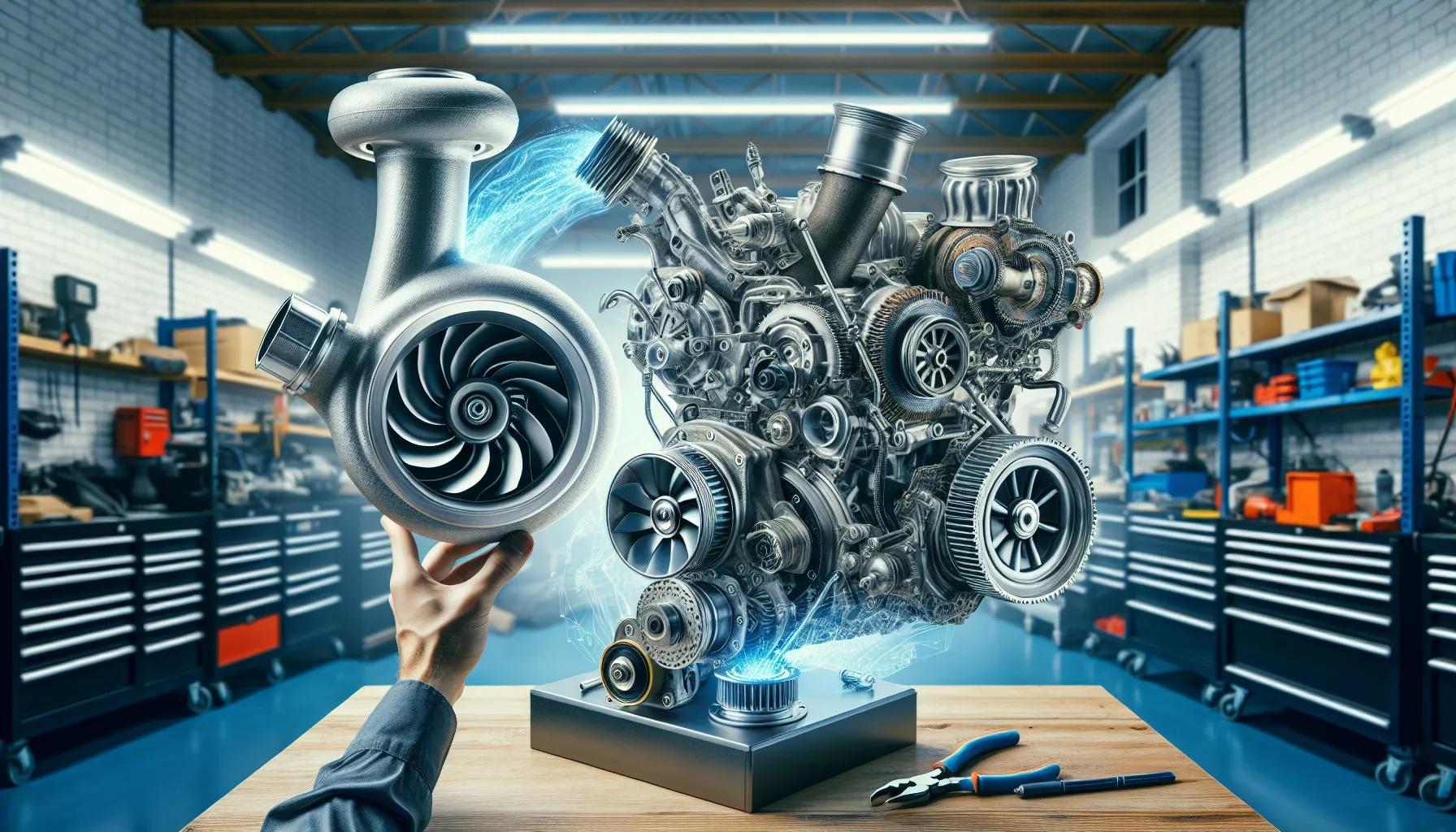
enhancing the performance of an internal combustion engine, car enthusiasts and professionals often encounter the terms “turbocharger” and “supercharger.” Both systems serve the purpose of improving engine efficiency by increasing air intake, yet they operate on distinct principles and offer unique advantages. Understanding these systems is crucial for anyone considering performance upgrades or even appreciating the advances in automotive engineering. In this text, we investigate into the fascinating mechanics and implications of these two forced induction systems, guiding you to make educated decisions.
Understanding Forced Induction
Forced induction represents a technology utilized to enhance engine performance by increasing the mass of air entering the combustion chamber. Engines traditionally draw air under atmospheric pressure, which limits their capacity to produce power. With forced induction systems such as turbochargers and superchargers, this limitation is circumvented by compressing air, enabling more fuel to be burned and so producing more power. This principle forms the foundation for both types of systems.
The Basics of a Turbocharger
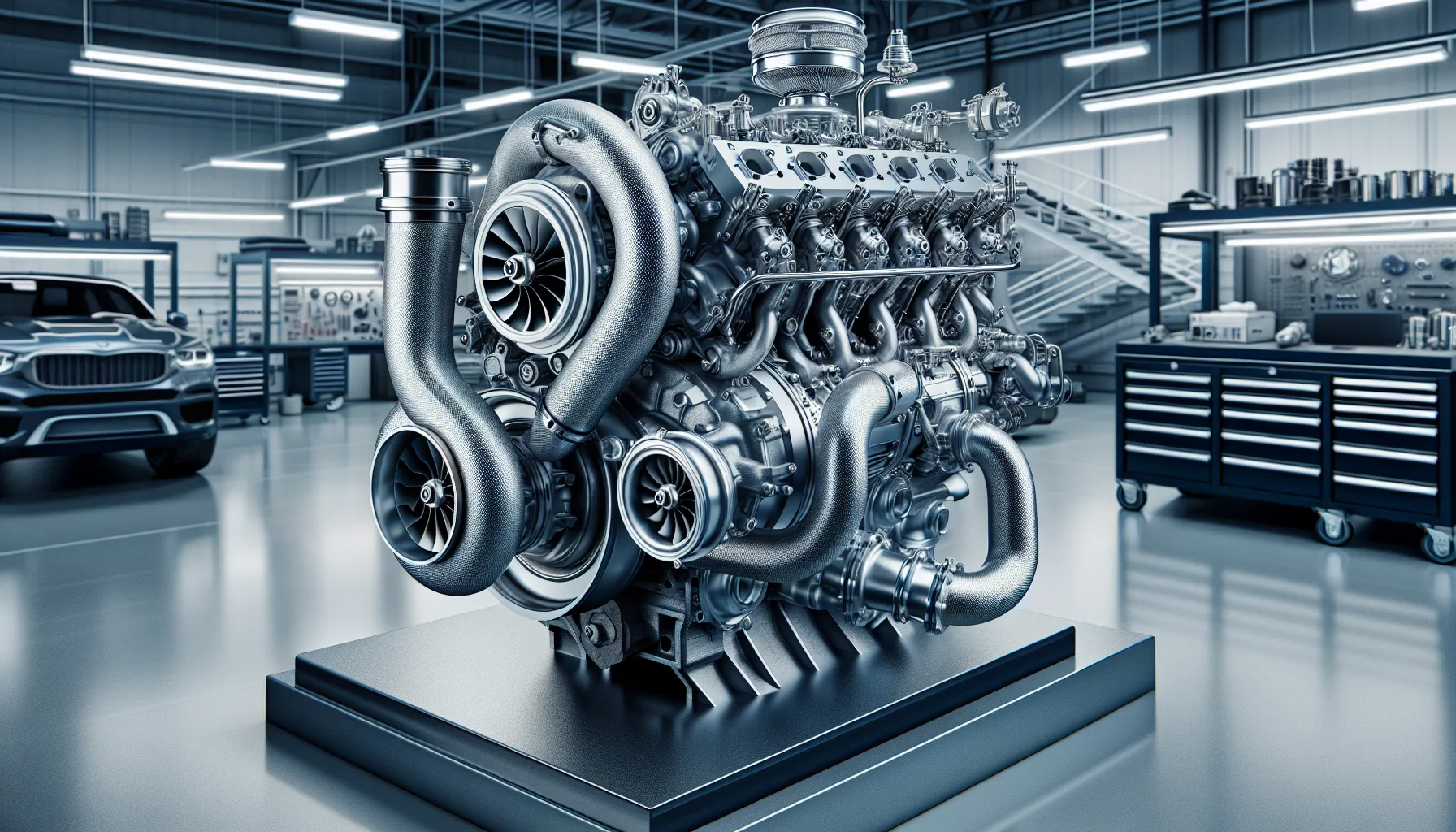
A turbocharger harnesses the engine’s exhaust gases to drive a compressor, enabling increased air intake.### How Turbochargers WorkA turbine within the turbocharger is propelled by exhaust gases from the engine. This rotational energy drives a compressor, which pressurizes the incoming air before directing it to the intake manifold.### Advantages of TurbochargersTurbochargers efficiently use otherwise wasted exhaust energy, enhancing engine performance without significantly increasing fuel consumption.### Common Turbocharger ApplicationsTurbochargers are frequently implemented in modern vehicles, ranging from fuel-efficient compact cars to high-performance racing models, due to their ability to provide seamless power boosts.
The Basics of a Supercharger
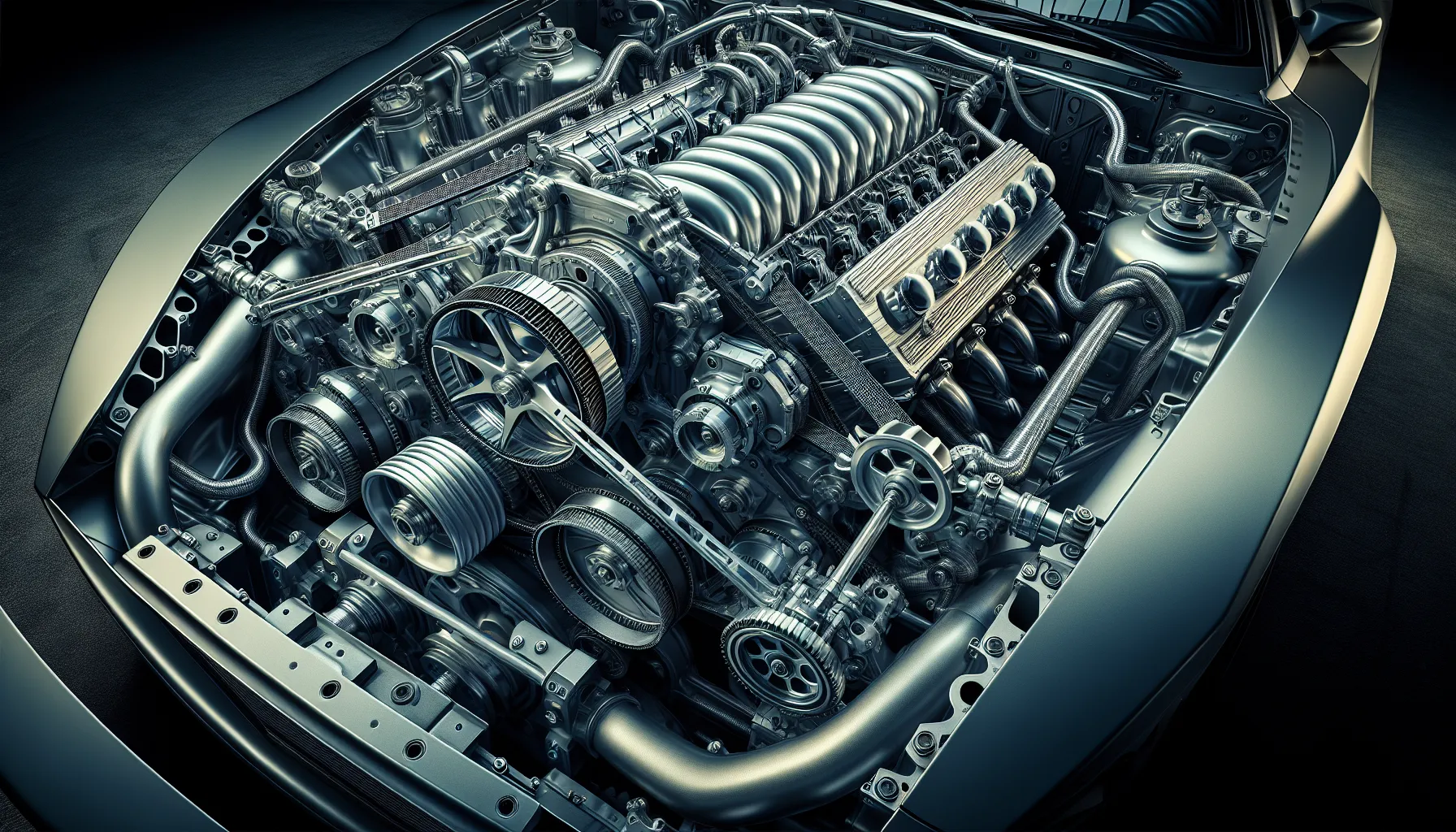
Unlike turbochargers, superchargers rely on engine power to compress intake air.### Working Principle of SuperchargersA belt connected to the engine’s crankshaft powers the supercharger’s compressor, thereby forcing more air into the engine.### Advantages of SuperchargersSuperchargers provide immediate power delivery, eliminating lag and enhancing acceleration.### Common Supercharger ApplicationsSuperchargers are typically found in performance-oriented vehicles where instantaneous response and high torque are desired.
Key Differences Between Turbochargers and Superchargers
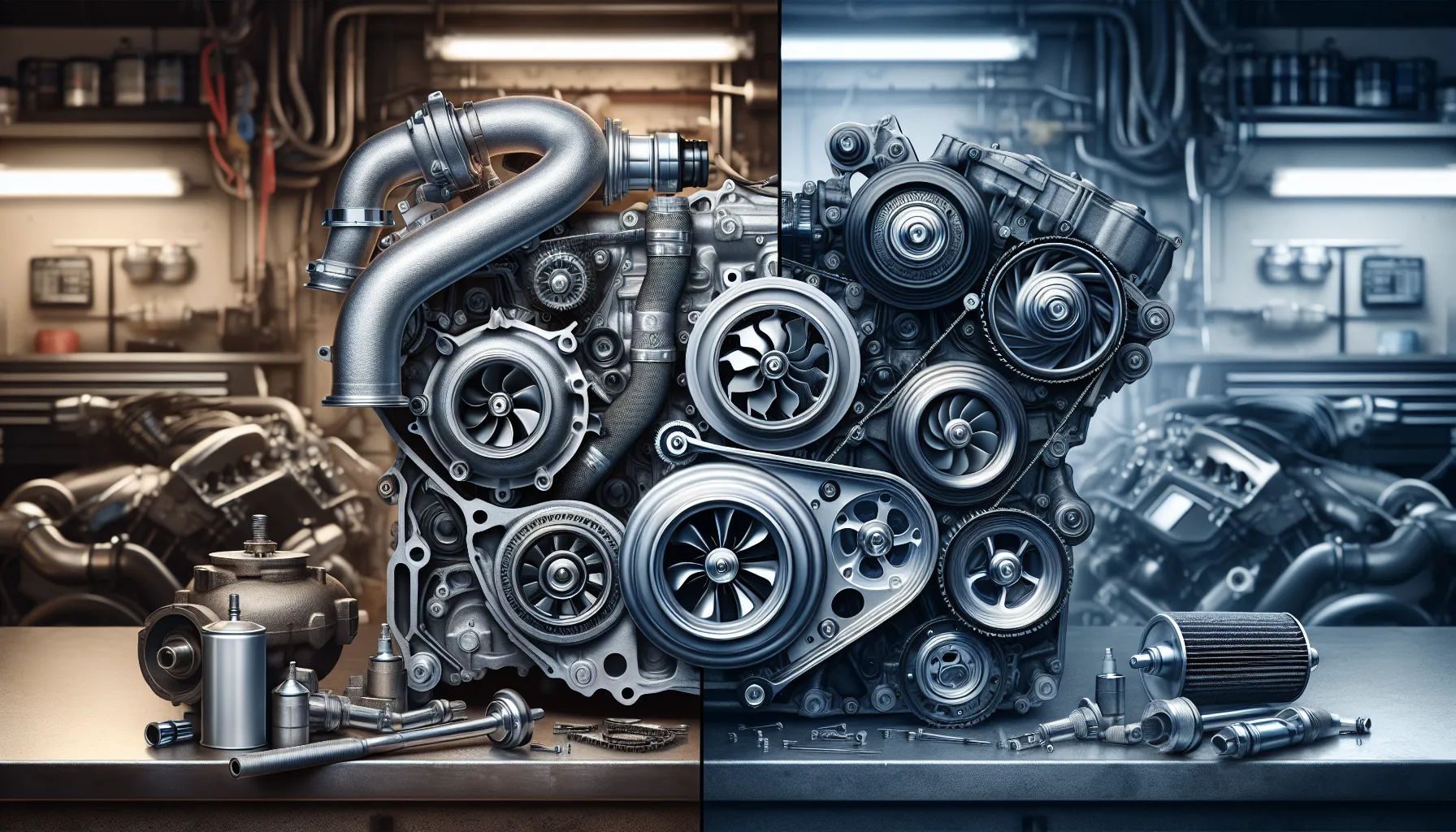
While their goal is similar, turbochargers and superchargers differ significantly in design and operation.
Energy Source and EfficiencyTurbochargers use exhaust gases, resulting in better fuel efficiency, whereas superchargers draw power directly from the engine, marginally impacting overall efficiency.### Effects on Engine PerformanceTurbochargers offer a gradual increase in power as engine speed rises, while superchargers deliver power instantly at low RPMs.### Cost and Maintenance ConsiderationsTurbochargers tend to be more complex and so might require higher maintenance compared to the simpler mechanism of superchargers.
Choosing the Right System for Your Needs
Selecting between a turbocharger and a supercharger depends on factors such as your vehicle’s application, desired performance characteristics, and maintenance preferences. A turbocharger is suitable for those seeking fuel economy and high-end power, whereas a supercharger benefits drivers who prioritize immediate responsiveness and simplicity.
To provide the best experiences, we use technologies like cookies to store and/or access device information. Consenting to these technologies will allow us to process data such as browsing behaviour or unique IDs on this site. Not consenting or withdrawing consent, may adversely affect certain features and functions.
Functional
Always active
The technical storage or access is strictly necessary for the legitimate purpose of enabling the use of a specific service explicitly requested by the subscriber or user, or for the sole purpose of carrying out the transmission of a communication over an electronic communications network.
Preferences
The technical storage or access is necessary for the legitimate purpose of storing preferences that are not requested by the subscriber or user.
Statistics
The technical storage or access that is used exclusively for statistical purposes.The technical storage or access that is used exclusively for anonymous statistical purposes. Without a subpoena, voluntary compliance on the part of your Internet Service Provider, or additional records from a third party, information stored or retrieved for this purpose alone cannot usually be used to identify you.
Marketing
The technical storage or access is required to create user profiles to send advertising, or to track the user on a website or across several websites for similar marketing purposes.