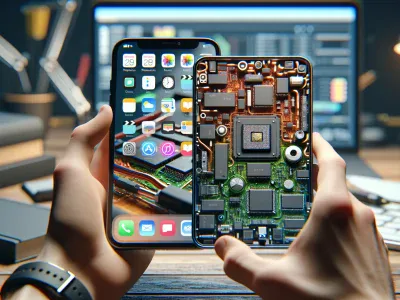
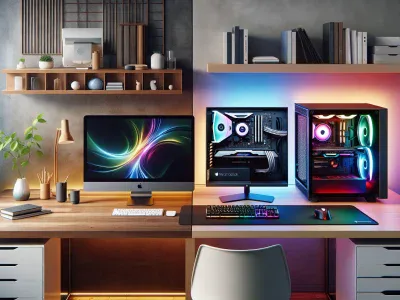
Imagine trying to use your favorite gadget without understanding what makes it tick. Every device you interact with, from your smartphone to your laptop, relies on two essential components: hardware and software. These two elements work hand in hand, yet they couldn’t be more different in their roles and functions. One is tangible, something you can touch and feel, while the other is the invisible force that brings it all to life.
Have you ever wondered what truly separates the physical machine from the programs it runs? Understanding the difference between hardware and software isn’t just for tech enthusiasts—it’s the key to grasping how modern technology shapes your world. Whether you’re troubleshooting a device or simply curious about how it all works, knowing this distinction can unlock a whole new level of appreciation for the tech you use every day. Let’s immerse and unravel this fascinating relationship.
Understanding Software And Hardware
Both software and hardware serve essential roles in modern technology. While hardware provides the physical framework, software directs and controls these mechanisms, ensuring functionality.
Definition Of Software
Software refers to a collection of programs and data that guide a computer’s operation. It includes system software like operating systems (e.g., Windows, macOS) and application software such as word processors and browsers. Unlike hardware, software’s intangible—it exists as coded instructions stored on devices.
Consider an online game. The app itself, with its graphics and functionalities, represents software. But, software cannot execute or function without compatible hardware components.
Definition Of Hardware
Hardware consists of the physical parts of a computer or electronic device. Examples include CPUs, RAM, hard drives, and peripheral devices like keyboards. Hardware operates based on software instructions, allowing users to perform tasks.
For example, in a smartphone, the touchscreen display and internal components form the hardware, enabling communication and navigation functionalities provided by the software. Without robust hardware, even well-designed software fails to perform efficiently.
Key Differences Between Software And Hardware
Software and hardware are fundamental to technology, but they differ significantly in characteristics and functionality.
Tangibility And Physical Presence
Hardware is the physical component of a device, such as keyboards, monitors, and hard drives. You can see, touch, and interact with these elements directly. For example, the external casing of a laptop and its internal motherboards represent tangible parts of its hardware.
Software is intangible and exists as digital entities like operating systems, applications, and databases. Unlike hardware, you access software through interfaces but can’t physically touch it. An example is your smartphone’s operating system, which you interact with on-screen but can’t physically hold.
Function And Purpose
Hardware functions as the structural framework necessary for software execution. It provides the computational power, storage, and processing capabilities required to support software operations. For instance, a computer’s GPU accelerates graphics rendering in gaming software.
Software serves as the operational guide that directs the hardware. Its purpose is to execute predefined tasks, process data, and deliver functionalities. For example, word processing software allows writing, editing, and formatting text using the keyboard and display.
Dependency And Interaction
Hardware operates only through instructions provided by software. Without software, hardware becomes inactive or limited to basic operations. A mouse, for instance, remains a basic point-and-click device unless connected with specialized software that customizes its functionality.
Software is utterly reliant on hardware for storage, execution, and input/output processing. Its performance depends on hardware compatibility and efficiency. Complex design software demands high-performance CPUs and sufficient RAM for smooth functioning.
Examples Of Software And Hardware
Understanding specific examples of software and hardware helps you grasp their significance in technology. Here’s a breakdown under distinct categories to showcase their roles.
Common Software Examples
Operating systems manage hardware functionalities; examples include Windows, macOS, and Linux. Application software enhances productivity, such as Microsoft Word, Adobe Photoshop, and Google Chrome. Database management systems, like Oracle SQL and MySQL, store and organize data efficiently. Programming languages like Python, Java, and C++ are tools for creating software applications. Antivirus programs, such as Norton and McAfee, ensure system security.
Games like Minecraft and Call of Duty represent entertainment-driven software. Utility tools, such as WinRAR and CCleaner, focus on optimizing system performance. Educational software, including Duolingo and MATLAB, promote skill development and learning. Cloud-based solutions like Google Drive and Dropbox emphasize accessibility and shared workspaces.
Common Hardware Examples
Physical components essential in systems include CPUs like Intel Core and AMD Ryzen. Memory devices, such as RAM modules and SSDs, ensure data storage and retrieval. Input devices, like keyboards, mice, and microphones, allow user interaction. Output devices, including monitors, printers, and speakers, provide processed data representation.
Networking equipment like routers and switches enable internet connectivity. Smartphones, with hardware like touchscreens and cameras, combine multiple physical elements for functionality. External storage devices, such as USB drives and external hard disks, provide portable data solutions. Wearable gadgets like smartwatches illustrate the integration of advanced hardware in daily life.
These examples reveal the distinct yet interdependent nature of software and hardware in driving technology forward.
Importance Of Software And Hardware In Modern Technology
Software and hardware form the backbone of modern technology, enabling innovation and efficiency across multiple industries. You interact with these elements daily, from smartphones to kitchen appliances powered by both hardware components and intelligent software.
Driving Automation And Productivity
Businesses rely on software and hardware integration to improve processes and increase output. In manufacturing, robots equipped with sensors (hardware) use AI-driven algorithms (software) to perform complex tasks like assembly and quality inspection. These capabilities reduce human effort and minimize errors, revolutionizing production lines globally.
Enhancing Connectivity And Communication
From video calls to instant messaging, software applications like Zoom and WhatsApp rely on hardware devices such as microphones, cameras, and processors to deliver seamless communication. Imagine attending virtual meetings without computers or smartphones—connectivity depends heavily on this symbiotic relationship.
Advancing Healthcare Technology
The healthcare sector exemplifies the critical role of software and hardware in saving lives. Medical imaging devices, like MRI machines, use advanced hardware to capture images and software tools to process and analyze those images for accurate diagnosis. Without this combination, modern diagnostics would be far less effective.
Supporting Innovation In Education
Educational platforms such as Google Classroom depend on servers (hardware) hosting the platform’s software. Laptops, tablets, and projectors further aid learning by offering versatile hardware tools for content delivery. You might know someone leveraging e-learning applications powered by this seamless integration.
Understanding the collaborative nature of software and hardware design underscores their importance to every technological achievement. Cutting-edge gadgets and systems thrive when these elements harmonize.
Conclusion
Understanding the distinction between software and hardware is key to appreciating how technology works in your everyday life. These two components, though different in nature, rely on each other to deliver the seamless functionality you often take for granted.
By recognizing their unique roles and interdependence, you can better grasp the innovations shaping industries and improving efficiency. Whether you’re a tech enthusiast or just curious about the devices you use daily, this knowledge empowers you to navigate the digital world with confidence.
Published: August 11, 2025 at 7:28 am by Ellie B, Site owner & Publisher
To provide the best experiences, we use technologies like cookies to store and/or access device information. Consenting to these technologies will allow us to process data such as browsing behaviour or unique IDs on this site. Not consenting or withdrawing consent, may adversely affect certain features and functions.
Functional
Always active
The technical storage or access is strictly necessary for the legitimate purpose of enabling the use of a specific service explicitly requested by the subscriber or user, or for the sole purpose of carrying out the transmission of a communication over an electronic communications network.
Preferences
The technical storage or access is necessary for the legitimate purpose of storing preferences that are not requested by the subscriber or user.
Statistics
The technical storage or access that is used exclusively for statistical purposes.The technical storage or access that is used exclusively for anonymous statistical purposes. Without a subpoena, voluntary compliance on the part of your Internet Service Provider, or additional records from a third party, information stored or retrieved for this purpose alone cannot usually be used to identify you.
Marketing
The technical storage or access is required to create user profiles to send advertising, or to track the user on a website or across several websites for similar marketing purposes.