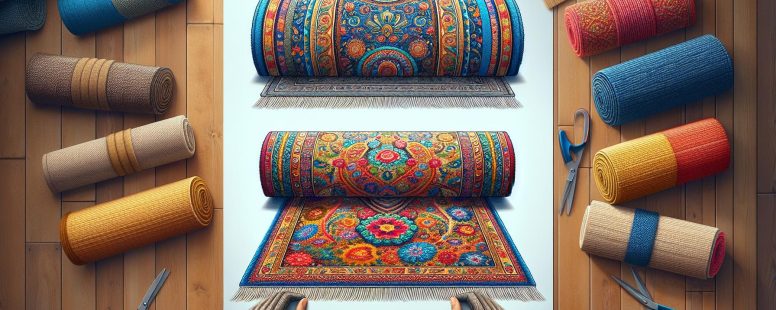
Ever found yourself in the middle of a home décor store, staring at floor coverings and wondering what’s really the difference between a rug and carpet? You’re not alone. It’s an age-old question that has puzzled many homeowners.
Understanding the Basics of Rugs and Carpets
Delving into specifics, let’s decode these two commonly misunderstood terms in home décor: rugs and carpets.
What Is a Rug?
A rug refers to a textile floor covering that doesn’t extend over the entire space it sits within. It is typically less than 40 square feet in size; examples include an oriental rug you’d find adorning your living room or kitchen runner.
Rugs come with diverse designs, materials, shapes, sizes making them versatile additions to any room setting. They can be moved around easily due their smaller dimensions compared to carpets which usually require professional installation.
As per Oxford Languages, “a small carpet woven in a pattern of colors,” serves as one definition for ‘rug.’ This highlights its decorative function besides providing comfort underfoot.
What Is a Carpet?
On contrary stands another type – carpet; spanning wall-to-wall becoming an integral part of your interior design scheme rather than just accessory like rugs are known for being used as. Unlike the more flexible usage associated with rugs,
Carpets often cover larger areas upwards from 40 sq ft., almost always requiring professional fitting because they’re generally glued down onto subflooring underneath by specialized adhesive referred colloquially “carpet glue” among industry professionals according Encyclopedia Britannica’s detailed account on this subject matter.
Interestingly enough term ‘carpet’ derives etymologically Latin word carpita meaning “plucked,” suggesting something made by plucking fabric (as wool).
Key Differences Between Rugs and Carpets
Digging deeper into the world of floor coverings, you’ll notice some key differences between rugs and carpets. These distinctions stem from aspects such as size and shape variations, installation requirements, mobility factors, along with their range of use in terms of styles.
Size and Shape Variations
Rugs show a variety when it comes to sizes; they’re available anywhere from small 2×3 foot mats for your bathroom or kitchen up to larger 8×10 foot area rugs that are perfect for living rooms (for example). Also, these textile pieces can come in various shapes – circular ones add flair under coffee tables while runners stretch down hallways.
Carpets? They’re built on a grander scale altogether! Unlike smaller rug counterparts which provide accents to specific areas within rooms; carpets lay claim over an entire room’s flooring surface area – spanning wall-to-wall seamlessly covering every inch beneath them.
Installation and Mobility
Considering how both types get installed helps illuminate another significant difference. The placement process for rugs involves simply unrolling them onto any existing flooring type—hardwood floors or even atop other carpeted surfaces—it’s all game!
But side exists carpeting installation: It isn’t something done lightly nor often given its complexity requiring professional assistance typically due involving adhesives application among other steps not forgetting disposal old materials if replacing current one making overall try quite tasking indeed!
Rug and Carpet Materials
Diving deeper into the comparison of rugs and carpets, let’s investigate into their construction. The fabric used in both can influence not only aesthetics but also durability.
Common Materials Used
Various materials contribute to the distinctiveness between rugs and carpets. Natural fibers such as wool offer warmth and softness; they’re typically seen in high-end oriental or Persian rugs due to their superior quality. Cotton provides a more casual look often found in braided or flatweave designs, ideal for low-traffic areas given its lightweight nature.
On the other hand, synthetic materials like nylon bring resilience against wear-and-tear – it’s common within wall-to-wall carpeting solutions thanks to its long-lasting properties. Polyester offers vibrant colors with stain resistance – an excellent choice if you’ve got children or pets causing frequent messes!
Finally comes olefin (polypropylene), budget-friendly yet tough against moisture making it suitable for outdoor use on patios or poolside lounges where water exposure might be unavoidable.
In selecting your rug material consider traffic levels: high-use spaces benefit from hard-wearing fabrics like wool whereas quieter rooms could employ delicate silks that exude luxury without fear of damage.
When choosing carpet material prioritize factors including comfort underfoot which may lead towards plush options such as Saxony styles using polyester yarns while those seeking longevity would opt instead for frieze-style constructions utilizing tightly twisted nylons resilient enough even under heavy footfall conditions!
It’s all about balance – matching the perfect material to your specific needs, resulting in a home that looks great and functions flawlessly.
Care and Maintenance
Taking care of your floor coverings prolongs their life, retains aesthetic appeal, and ensures a healthy living environment. Let’s explore the best ways to maintain rugs and carpets.
Cleaning Tips for Rugs
Rug maintenance involves regular vacuuming – perform this task once a week or more often in high-traffic areas. Spot cleaning proves necessary when spills occur; blot stains instead of rubbing them to avoid spreading dirt deeper into fibers.
Turn small-sized rugs over occasionally, letting you clean both sides effectively with a vacuum cleaner. Deep cleaning methods depend on rug material – steam cleaning suits synthetic fiber types while professional washing fits well for delicate natural fibers like silk or wool.
Consider rotating your rugs annually if they’re exposed to sunlight regularly as it helps ensure even fading from UV rays exposure—an inevitable occurrence even though using UV resistant materials in some modern designs.
Cleaning Tips for Carpets
Carpets also require frequent vacuuming—ideally twice weekly—and immediate spot treatment following spills. Steam cleaners work great on wall-to-wall carpet installations but always follow manufacturer guidelines about specific products’ usage compatibility before proceeding.
A preventative measure includes placing doormats at all entrances which can help reduce incoming soil that could get embedded within carpet pile layers.
While DIY deep-cleaning solutions exist including rental machines available at supermarkets or home improvement stores, consider scheduling annual professional cleanings especially if warranty conditions specify so—it’s an investment towards long-term quality preservation of your carpet installation.
Conclusion
You’ve now unraveled the mystery of rugs versus carpets. It’s not just about size or installation, but also design flexibility and material selection. Remember, care is key to longevity – be it rug rotation for sun exposure management, regular vacuuming, spot cleaning based on material type for rugs or immediate stain treatment and steam cleaning in case of carpets. Don’t forget those handy doormats at entrances either! Whether you opt for a versatile rug or an all-encompassing carpet depends largely on your space requirements, aesthetic preferences and maintenance commitment levels. After all, each comes with its own set of pros and cons. So weigh these factors wisely before making your choice because eventually they’re more than floor coverings; they’re part of creating a comfortable living environment that reflects your style.
To provide the best experiences, we use technologies like cookies to store and/or access device information. Consenting to these technologies will allow us to process data such as browsing behaviour or unique IDs on this site. Not consenting or withdrawing consent, may adversely affect certain features and functions.
Functional
Always active
The technical storage or access is strictly necessary for the legitimate purpose of enabling the use of a specific service explicitly requested by the subscriber or user, or for the sole purpose of carrying out the transmission of a communication over an electronic communications network.
Preferences
The technical storage or access is necessary for the legitimate purpose of storing preferences that are not requested by the subscriber or user.
Statistics
The technical storage or access that is used exclusively for statistical purposes.The technical storage or access that is used exclusively for anonymous statistical purposes. Without a subpoena, voluntary compliance on the part of your Internet Service Provider, or additional records from a third party, information stored or retrieved for this purpose alone cannot usually be used to identify you.
Marketing
The technical storage or access is required to create user profiles to send advertising, or to track the user on a website or across several websites for similar marketing purposes.