Imagine holding a glass of crystal-clear water and wondering—what makes it so pure? Now picture a bowl of trail mix, each handful offering a unique combination of flavors. These everyday examples highlight a fascinating distinction in the world of matter: pure substances and mixtures. While they might seem similar at first glance, their differences shape everything from the food you eat to the air you breathe.
Understanding this difference isn’t just about science; it’s about seeing the hidden order in the chaos around you. Whether it’s the uniformity of a pure substance or the diverse blend of a mixture, these concepts influence countless aspects of daily life. So, why does it matter? Knowing how they differ can deepen your appreciation for the materials that build your world and even help you make smarter choices in everything from cooking to chemistry. Let’s jump into what sets them apart.
Understanding Pure Substances
Pure substances are forms of matter with uniform composition and consistent chemical properties. These substances contain only one type of particle, either elements or compounds, which gives them distinct characteristics.
Characteristics of Pure Substances
Pure substances exhibit homogeneity, ensuring uniform distribution of particles throughout. They possess a fixed melting and boiling point, which distinguishes them from mixtures. For example, water (H₂O) boils at 100°C at sea level, while impurities in mixtures alter these points.
Chemical properties of pure substances remain unchanged under similar conditions, as they consist of identical molecules or atoms. Gold (Au) always retains its malleability and density, while sugar (C₁₂H₂₂O₁₁) consistently dissolves in water without changing its molecular structure.
Examples of Pure Substances
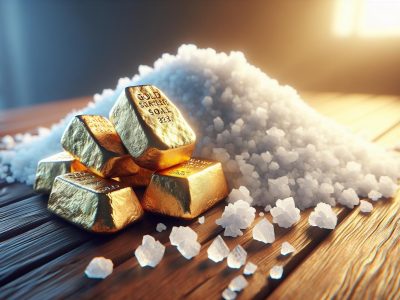
Common examples include elements and compounds. Oxygen (O₂) and hydrogen (H₂) are pure elements essential for various biological and chemical processes. Sodium chloride (NaCl), also known as table salt, represents a pure compound used in everyday cooking.
Metals, like silver and iron, are elemental substances with uniformity. Diamonds, composed of pure carbon atoms arranged in a crystalline structure, illustrate purity in nature. Each demonstrates the stability and uniformity that define pure substances.
Understanding Mixtures
Mixtures consist of two or more substances physically combined, where each retains its individual properties. They’re omnipresent in everyday life, from the air you breathe to the salad on your plate.
Characteristics Of Mixtures
Mixtures lack uniformity in composition and are not chemically bonded. Each component can be separated by physical means, like filtration or evaporation. Unlike pure substances, they don’t have fixed melting or boiling points. For example, a saltwater solution’s boiling point depends on the concentration of salt present.
Homogeneity varies among mixtures. Some are uniform throughout, like vinegar, while others, like trail mix, clearly show individual components. Energy changes during their formation are minimal because no chemical reactions occur. Properties such as color, taste, and texture are dependent on the components’ proportions.
Types Of Mixtures
Mixtures divide into homogeneous and heterogeneous types based on composition consistency. Homogeneous mixtures, also known as solutions, have a uniform appearance and composition. For instance, sugar dissolved in water creates a solution where the sugar’s invisible yet uniformly distributed.
Heterogeneous mixtures contain visibly distinct components. Examples include muddy water, where soil particles and water form separate layers over time. Colloids and suspensions, subcategories of mixtures, display unique behaviors. Colloids, like milk, have stable properties, whereas suspensions, like sand in water, settle when left undisturbed.
Key Differences Between Pure Substances And Mixtures
Composition
Pure substances have a fixed composition with only one type of particle, whether it’s an element like gold or a compound like water (H2O). In mixtures, two or more substances combine physically but not chemically. Mixtures can vary in composition, like saltwater, where the salt concentration isn’t fixed. Imagine comparing distilled water, a pure substance, with orange juice, a mixture of water, sugar, and pulp.
Separation Methods
You can’t physically separate a pure substance into simpler substances. Water, for instance, requires chemical processes like electrolysis to split into oxygen and hydrogen. Mixtures, but, can be separated easily using physical methods. Techniques vary; you can use filtration to separate sand from water or distillation to extract alcohol from a liquid mixture. For example, crude oil is separated into petrol and diesel through fractional distillation.
Physical And Chemical Properties
Pure substances exhibit constant physical properties, such as boiling points and melting points, under stable conditions. For example, pure iron melts at 1538°C. Mixtures exhibit variable properties, depending on their composition. The boiling point of saltwater, for instance, rises with increased salt concentration. Chemically, pure substances retain uniform reactions, while mixtures may show reactions influenced by individual components. For example, while sugar burns in air, salad ingredients maintain their separate characteristics.
Importance Of Differentiating Between Pure Substances And Mixtures
Grasping the distinction between pure substances and mixtures equips you with a foundational understanding of matter’s behavior. This knowledge is crucial in fields like chemistry, pharmacology, and environmental science, as well as in everyday tasks such as cooking and resource management.
Scientific Applications
Differentiating pure substances from mixtures is central to scientific research and innovation. Pure substances, like distilled water, provide accurate results in experiments, while mixtures require analysis for effective use. For example, engineering alloys such as steel, which is a mixture, are designed to enhance strength and durability, showcasing how manipulating mixtures improves outcomes.
Daily Life Decisions
Recognizing these differences helps you make informed decisions. When you’re cooking, using pure ingredients like salt ensures consistency in flavor. In contrast, mixtures like pre-mixed seasoning offer variability but may contain additives you might not desire. This distinction also applies when choosing products like drinking water, where purified options translate to better health.
Industrial Processes
Industrial advancements rely on proper identification. Separating crude oil (a mixture) into usable components like gasoline and diesel is only possible through a detailed understanding of its composition. Whether manufacturing pharmaceuticals or producing refined metals, clarity on whether a material is pure or mixed optimizes results and reduces waste.
Environmental Importance
Addressing pollution demands precise identification. Air, a mixture, can contain harmful contaminants; understanding its components enables targeted solutions. Similarly, conserving water resources benefits from distinguishing clean water (a pure substance) and polluted water mixtures.
Accurate differentiation fosters efficiency, safety, and informed choices, reinforcing the importance of understanding these fundamental concepts.
Real-World Applications And Examples
Pure substances and mixtures play crucial roles in everyday tasks and industrial settings. Both have practical uses, with distinct examples showcasing their significance.
1. Cooking and Food Industry
Pure substances ensure consistent flavors and outcomes. For example, table salt (sodium chloride) provides uniform seasoning due to its chemical purity. Mixtures like salad dressings combine oil and vinegar, which you can separate physically if desired. Understanding these can improve your recipes and ingredient choices.
2. Medicine and Pharmacology
Pharmaceutical manufacturing relies on pure substances for precision. Paracetamol, a compound used in pain relief pills, is an example of a pure substance. By contrast, cough syrups represent mixtures where active ingredients blend with flavoring agents and solvents. Recognizing these classifications ensures safer drug formulations.
3. Environmental Science
Pure substances like distilled water are essential for accurate ecological testing. Mixtures, such as polluted water containing various contaminants, require separation techniques to tackle environmental issues. Distinguishing these forms is critical for effective resource conservation and pollution management.
4. Industrial Processes
Industries depend on identifying pure substances and mixtures. Crude oil serves as a mixture that is refined into pure components like gasoline or kerosene. Steel production involves combining elements like iron and carbon, resulting in an alloy. These processes highlight the importance of proper classification for innovation.
5. Daily Life Decisions
From selecting cleaning products to improving personal care routines, pure substances like baking soda offer specific benefits due to known chemical properties. Mixtures such as detergents combine multiple ingredients for versatile use. Awareness enhances smarter purchasing and practical applications.
6. Scientific Experiments
Pure substances lead to reliable results. For instance, researchers rely on pure metals like gold for conductivity studies. Mixtures, like electrolyte solutions in batteries, provide experimental insight into real-world applications. Choice of materials dictates experimental accuracy and advancements.
Grasping the role of pure substances and mixtures in your life and industry expands your practical knowledge and appreciation for material science.
Conclusion
Understanding the differences between pure substances and mixtures opens up a new perspective on the materials you encounter daily. It equips you with the knowledge to make informed choices, whether you’re selecting ingredients, managing resources, or exploring scientific concepts.
By recognizing their unique characteristics and applications, you can appreciate the role they play in various aspects of life, from cooking and medicine to environmental conservation and industry. This awareness not only enhances your decision-making but also deepens your connection to the world around you.
To provide the best experiences, we use technologies like cookies to store and/or access device information. Consenting to these technologies will allow us to process data such as browsing behaviour or unique IDs on this site. Not consenting or withdrawing consent, may adversely affect certain features and functions.
Functional
Always active
The technical storage or access is strictly necessary for the legitimate purpose of enabling the use of a specific service explicitly requested by the subscriber or user, or for the sole purpose of carrying out the transmission of a communication over an electronic communications network.
Preferences
The technical storage or access is necessary for the legitimate purpose of storing preferences that are not requested by the subscriber or user.
Statistics
The technical storage or access that is used exclusively for statistical purposes.The technical storage or access that is used exclusively for anonymous statistical purposes. Without a subpoena, voluntary compliance on the part of your Internet Service Provider, or additional records from a third party, information stored or retrieved for this purpose alone cannot usually be used to identify you.
Marketing
The technical storage or access is required to create user profiles to send advertising, or to track the user on a website or across several websites for similar marketing purposes.