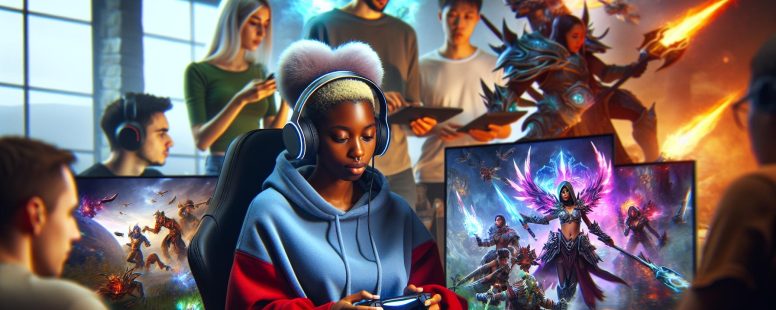
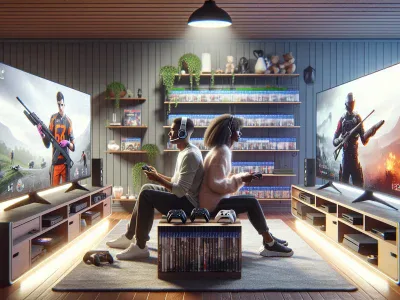
You’ve probably heard the terms MMO and MMORPG thrown around in gaming circles, but what do they really mean? How different are they from each other? These questions might seem like a maze for anyone who’s not an avid gamer.
Jump into this article to unravel these acronyms that have taken the gaming world by storm. We’ll demystify them for you, highlighting their unique characteristics and how one stands apart from the other.
Understanding MMO and MMORPG
Defining MMO (Massively Multiplayer Online Games)
In the gaming world, there’s a term you might’ve heard of – MMO. It stands for Massively Multiplayer Online games. These are interactive platforms that host thousands, even millions of players concurrently from all around the globe.
What sets them apart? The scale, for starters. Unlike single-player or small multiplayer games where action is confined to your living room couch or local network, an MMO allows you to interact with a multitude of other participants in real-time within expansive virtual worlds.
Examples such as ‘World Of Tanks’, ‘Star Wars: The Old Republic’, offer gameplay ranging from strategic warfare simulations to sci-fi adventures.
MMO Game
Gameplay Type
World Of Tanks
Strategic Warfare Simulation
Star Wars: The Old Republic
Sci-Fi Adventure
Notably though, not every interaction needs combat involvement; socialization plays just as crucial role in these settings too.
Now let’s turn our attention towards another acronym often thrown about — MMORPGs which means Massively Multiplayer Online Role-Playing Games.
An offshoot genre stemming directly from traditional RPGs like Dungeons & Dragons combined with elements seen above under “MMOs”, it offers immersive storytelling intertwined with substantial player interactions on grand scales!
Games including ‘Final Fantasy XIV’ and ‘Elder Scrolls Online’ fall into this category encapsulating large numbers involved alongside deep character development mechanics:
Final Fantasy XIV – In-depth quests coupled along intricate class systems
Each participant steps into shoes different roles—be they warriors mages healers thieves etc—and collaborates others tackling challenges facing their virtual society together!
Remember but no two MMORPGs are alike; every game brings its unique elements and experiences to the table. And though MMO is a broad term that encompasses many types of games, including MMORPGs, the latter has specific defining characteristics separating it from other subgenres.
Key Differences Between MMO and MMORPG
Game Objectives
In the area of Massively Multiplayer Online (MMO) games, objectives vary widely. Some titles such as ‘World Of Tanks’ prioritize competitive gameplay where victory is achieved through tactical warfare against other players. Others focus on exploration or resource management, with success defined by your ability to survive in a hostile environment.
On the flip side, Massively Multiplayer Online Role-Playing Games (MMORPGs) like ‘Final Fantasy XIV’ often center around narrative-driven quests. Your main goal isn’t just winning battles but progressing through intricate storylines and completing challenges that require strategic thinking and collaboration.
Player Roles and Character Development
Character development takes different forms across these two genres too. In most MMOs, you might develop skills relevant to game mechanics—think improving marksmanship in a shooter or building efficiency in strategy games.
But step into an MMORPG? It’s about developing personas inside out—from their abilities down to their personal histories—in sync with evolving narratives within expansive universes. Think becoming a heroic warrior who saves kingdoms from evil forces while unraveling secrets of his past—as seen in ‘Elder Scrolls Online’.
Level of Interaction and Community
Interaction varies between both categories as well; it’s usually less personalized yet still cooperative among large groups in MMOs—you could join alliances for shared goals without necessarily forming deep bonds.
Contrarily, interactions can be profoundly social within MMORPG communities—not only do you team up for complex missions requiring intense cooperation—you’re also partaking jointly creating societal norms within virtual societies akin real-world civilizations! So whether battling together against mythical beasts or bartering goods at bustling markets—your actions contribute significantly shaping communal experiences therein.
Examples of MMO and MMORPG Games
Transitioning from the distinct characteristics that set apart MMOs and MMORPGs, let’s investigate into some well-known examples of these games. By examining popular titles within each genre, you’ll gain a clearer understanding of how these elements manifest in actual gameplay.
Popular MMO Games
MMOs showcase vast worlds ripe for exploration with a primary focus on competition and mastery over game mechanics. For instance:
World Of Tanks: A vehicular combat-themed multiplayer game where players commandeer armored vehicles to participate in fierce battles.
EVE Online: Set amidst interstellar space’s infinite expanse, it encourages trading commodities across galaxies while also engaging in cosmic warfare.
Star Wars: The Old Republic: Even though its role-playing features borrowed from its predecessor ‘Knights Of The Old Republic’, this title is more about galactic conquest than character development.
These games demonstrate high-intensity competitive play coupled with extensive world-building – two hallmarks signifying their identity as classic Massively Multiplayer Online (MMO) games.
Popular MMORPG Games
On the other hand, Massively Multiplayer Online Role-Playing Game (MMORPG) titles lean towards immersive storytelling combined with deep-rooted social interaction aspects like guild formations or team quests completion:
Final Fantasy XIV: An epic tale spanning multiple expansions where narrative-driven quests are just as crucial as slaying monsters.
2.Guild Wars 2: It pioneers dynamic event systems replacing traditional questing structures by involving players collectively influencing the world state through actions taken during events.
3.The Elder Scrolls Online: Building upon beloved single-player RPG series’ lore-rich universe; fostering cooperative exploration among thousands who shape Tamriel’s destiny together via richly detailed narratives woven throughout various missions.
Within such realms populated by countless adventurers worldwide lies an allure unmatched elsewhere – epitomizing the MMORPG genre’s essence.
Impact on Gaming Culture
As the gaming world continues to evolve, MMOs and MMORPGs have had a significant influence. The impacts are most notable in their influences on each other and how they’ve fostered community building.
How MMORPGs Have Influenced MMOs
MMOs originated from the concept of connecting players globally through online platforms. But, it’s undeniable that certain elements found commonly in today’s popular MMO titles have roots in MMORPG mechanics. For instance, consider character progression systems which involve leveling up by gaining experience points—this gameplay element was first introduced prominently within the area of RPG games like ‘Final Fantasy’ or ‘Elder Scrolls’. This trend implies that even though having different focus areas; these genres borrow ideas interchangeably when beneficial for enhancing player experiences.
Also, another observable impact is seen with interactive non-playable characters (NPC) quests being incorporated into modern-day MMO settings—a feature typical to narrative-focused MMORPGS like ‘World Of Warcraft’.
Finally but importantly—the incorporation of guild-like structures where users form alliances—an inherent aspect initially embedded primarily within RPG landscapes has been adopted widely across various competitive-focused multiplayer environments thereby demonstrating mutual influencing occurring between these two genres over time.
Community Building in Online Gaming
The advent of both MMMO and MMOPRG communities transformed not only digital interactions but also society at large due its socializing potential realized via creation virtual spaces allowing users around world meet interact irrespective geographical boundaries cultural differences.
For example: In game such as EVE Online or World Tanks –there exist factions clans respectively wherein participants band together towards achieving common objectives fostering sense unity camaraderie among members representing global populace hence breaking down barriers otherwise prevalent real-world scenarios making this an incredibly powerful societal transformation catalyzed onset online gaming culture.
Also immersive role-playing games Guild Wars 2 Final Fantasy XIV – there exists intricate network relationships formed basis storylines personal narratives offered by respective game worlds. This invariably leads creation deeply interconnected community players who not only partake collective storytelling but also develop lasting friendships beyond digital area so exhibiting profound impact online gaming has on forming strong enduring communities spanning across geographical divides.
Conclusion
So, you’ve seen how MMOs and MMORPGs differ in their unique gameplay elements. Games like ‘World Of Tanks’ stand out as classic MMO examples while titles such as ‘Final Fantasy XIV’ perfectly embody the essence of MMORPGs. We’ve also explored how these two genres have influenced each other over time.
Character progression and NPC quests from MMORPGs are now integral to many modern MMO games. They’re more than just entertainment—they foster unity among players worldwide, transforming digital interactions significantly.
The impact of both genres on gaming culture can’t be overstated—with them shaping communities that transcend traditional boundaries—showcasing the enduring influence they hold over virtual landscapes globally.
Published: June 21, 2024 at 5:15 am by Ellie B, Site owner & Publisher
To provide the best experiences, we use technologies like cookies to store and/or access device information. Consenting to these technologies will allow us to process data such as browsing behaviour or unique IDs on this site. Not consenting or withdrawing consent, may adversely affect certain features and functions.
Functional
Always active
The technical storage or access is strictly necessary for the legitimate purpose of enabling the use of a specific service explicitly requested by the subscriber or user, or for the sole purpose of carrying out the transmission of a communication over an electronic communications network.
Preferences
The technical storage or access is necessary for the legitimate purpose of storing preferences that are not requested by the subscriber or user.
Statistics
The technical storage or access that is used exclusively for statistical purposes.The technical storage or access that is used exclusively for anonymous statistical purposes. Without a subpoena, voluntary compliance on the part of your Internet Service Provider, or additional records from a third party, information stored or retrieved for this purpose alone cannot usually be used to identify you.
Marketing
The technical storage or access is required to create user profiles to send advertising, or to track the user on a website or across several websites for similar marketing purposes.