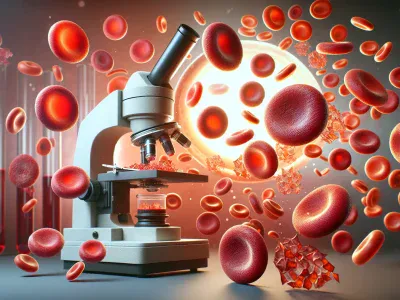
Your blood holds countless secrets about your health, with every tiny component playing a vital role. Among these, MCH (Mean Corpuscular Hemoglobin) and MCHC (Mean Corpuscular Hemoglobin Concentration) might sound like complex medical jargon, but they carry essential clues about how well your red blood cells are functioning. Understanding the difference between them could be the key to unraveling hidden health issues.
Picture your red blood cells as delivery trucks carrying oxygen throughout your body. Now think of MCH as the amount of cargo each truck carries and MCHC as how tightly that cargo is packed. These subtle differences can reveal insights into conditions like anemia or other deficiencies you might not even know about yet. By exploring what sets these two apart, you’ll gain a clearer picture of their significance in keeping your body running smoothly.
Understanding MCH And MCHC
Mean Corpuscular Hemoglobin (MCH) and Mean Corpuscular Hemoglobin Concentration (MCHC) are two key metrics used to assess red blood cell health. Both play distinct roles in diagnosing conditions like anemia or nutritional deficiencies.
What Is MCH?
MCH measures the average amount of hemoglobin present in a single red blood cell. Hemoglobin, responsible for oxygen transport, directly affects your body’s ability to function efficiently. For example, if your MCH levels drop below 27 picograms per cell (pg/cell), it could indicate iron deficiency anemia. Conversely, elevated levels above 33 pg/cell might suggest macrocytic anemia.
A complete blood count test usually provides this value automatically. If you’re experiencing symptoms such as fatigue or shortness of breath, examining your MCH level offers valuable insights into potential underlying issues.
What Is MCHC?
MCHC represents the concentration of hemoglobin within a given volume of packed red blood cells. Unlike MCH, which looks at the total hemoglobin content per cell, MCHC focuses on how densely hemoglobin is distributed inside each cell. Normal ranges typically fall between 32-36 grams per deciliter (g/dL).
Low MCHC values often point towards hypochromic anemia caused by chronic diseases or severe iron deficiency. Elevated values—known as hyperchromia—might be linked with hereditary spherocytosis or autoimmune disorders affecting red blood cells.
Understanding both measurements helps identify whether issues stem from reduced quantity or improper distribution of hemoglobin across cells.
Key Differences Between MCH And MCHC
MCH and MCHC are distinct parameters in a complete blood count (CBC) test that assess different aspects of red blood cells (RBCs). While both relate to hemoglobin, their roles, calculations, and clinical implications vary significantly.
Role In Blood Tests
MCH measures the average amount of hemoglobin in a single RBC. This value helps you understand whether each cell carries enough oxygen-transporting capacity. On the other hand, MCHC evaluates how densely hemoglobin is packed within a given volume of RBCs. It focuses on distribution efficiency rather than quantity per cell.
For example, if an individual has low MCH but normal MCHC levels, it could indicate smaller RBCs with adequate hemoglobin concentration. Conversely, elevated MCHC alongside low MCH may suggest irregularities such as spherocytosis or uneven hemoglobin allocation.
Calculation And Measurement
Laboratories calculate MCH by dividing total hemoglobin by the number of RBCs and express it in picograms (pg). For instance, an average adult’s typical range falls between 27-33 pg per cell.
MCHC results from dividing total hemoglobin by hematocrit (the percentage of blood volume occupied by RBCs), expressed in grams per deciliter (g/dL). Normal ranges typically lie between 32-36 g/dL. By comparing these metrics simultaneously, you can identify discrepancies between absolute content and relative density in your blood cells.
Clinical Significance
Low MCH often correlates with microcytic or iron-deficiency anemia due to insufficient iron for proper hemoglobin synthesis. High values may signal macrocytic anemia caused by vitamin B12 or folate deficiencies affecting cell size and function.
In contrast, reduced MCHC suggests hypochromic conditions like chronic disease-related anemia or severe iron deficiency where less pigment exists within RBCs. Elevated levels might point towards hereditary spherocytosis or autoimmune destruction altering cellular uniformity.
Understanding these differences enables targeted diagnosis based on specific abnormalities—whether it’s related to inadequate production capacity reflected through MCH or poor structural integrity indicated via abnormal MCHC levels.
Common Conditions Related To MCH And MCHC Levels
Both high and low levels of MCH (Mean Corpuscular Hemoglobin) and MCHC (Mean Corpuscular Hemoglobin Concentration) indicate underlying health problems. Their interpretation helps in diagnosing specific blood-related conditions.
High MCH And MCHC Levels
Elevated MCH levels often point to macrocytic anemia, where red blood cells are unusually large, reducing their efficiency in oxygen transport. Causes include vitamin B12 or folate deficiencies. For example, pernicious anemia results from impaired vitamin B12 absorption, leading to neurological symptoms like numbness or memory issues alongside fatigue.
High MCHC levels may relate to hereditary spherocytosis, a genetic condition affecting red blood cell shape and stability. This condition causes cells to break down prematurely, resulting in jaundice or spleen enlargement. Autoimmune disorders can also increase MCHC by damaging red blood cells through antibodies attacking them abnormally.
Low MCH And MCHC Levels
Low MCH values typically suggest iron-deficiency anemia, the most common type of anemia globally per WHO data. Insufficient dietary iron reduces hemoglobin production in red blood cells, causing symptoms like pallor or chronic tiredness. Women with heavy periods or individuals experiencing gastrointestinal bleeding are particularly at risk.
Low MCHC is associated with hypochromic anemia, characterized by pale and less dense hemoglobin distribution within red blood cells. Chronic diseases like inflammatory bowel disease or infections such as tuberculosis contribute to this condition by disrupting iron utilization processes necessary for proper hemoglobin synthesis.
Why Understanding The Difference Matters
Understanding the distinction between MCH and MCHC aids in pinpointing specific red blood cell abnormalities. When you evaluate these metrics together, it becomes easier to differentiate whether a condition stems from low hemoglobin production or improper hemoglobin distribution.
MCH provides insight into the oxygen-carrying capacity of individual red blood cells. If this value is abnormal, you can identify conditions like iron-deficiency anemia or macrocytic anemia early. For example, low MCH values may explain symptoms such as chronic fatigue or pale skin caused by insufficient hemoglobin in each cell.
MCHC highlights how efficiently hemoglobin is packed within red blood cells. Abnormalities here often indicate structural issues with cells themselves. For instance, elevated MCHC levels might suggest hereditary spherocytosis—a genetic disorder affecting membrane integrity—or autoimmune hemolytic anemia where your immune system attacks its own red blood cells.
Combining both markers enhances diagnostic accuracy. A patient presenting with low energy and breathlessness might have normal MCH but reduced MCHC, pointing towards hypochromic anemia linked to inflammatory diseases or long-term infections that impair iron absorption. Without analyzing both parameters simultaneously, subtle yet critical differences may go unnoticed.
These measures are also essential for tailoring treatments effectively. Treating iron-deficiency anemia requires replenishing dietary iron stores if MCH is low due to inadequate intake rather than focusing solely on symptoms like fatigue. Similarly, addressing high MCHC involves managing the underlying cause—whether it’s hereditary conditions or other immune-related disorders—rather than generalized interventions.
Conclusion
Understanding the distinct roles of MCH and MCHC provides valuable insights into your overall health, particularly identifying and addressing blood-related conditions. These measurements go beyond basic red blood cell analysis, offering a deeper look at hemoglobin function and distribution.
By evaluating both metrics together, you’re better equipped to uncover potential issues like anemia or deficiencies that might otherwise go unnoticed. This knowledge allows for precise diagnoses and more effective treatment strategies tailored to your unique needs.
To provide the best experiences, we use technologies like cookies to store and/or access device information. Consenting to these technologies will allow us to process data such as browsing behaviour or unique IDs on this site. Not consenting or withdrawing consent, may adversely affect certain features and functions.
Functional
Always active
The technical storage or access is strictly necessary for the legitimate purpose of enabling the use of a specific service explicitly requested by the subscriber or user, or for the sole purpose of carrying out the transmission of a communication over an electronic communications network.
Preferences
The technical storage or access is necessary for the legitimate purpose of storing preferences that are not requested by the subscriber or user.
Statistics
The technical storage or access that is used exclusively for statistical purposes.The technical storage or access that is used exclusively for anonymous statistical purposes. Without a subpoena, voluntary compliance on the part of your Internet Service Provider, or additional records from a third party, information stored or retrieved for this purpose alone cannot usually be used to identify you.
Marketing
The technical storage or access is required to create user profiles to send advertising, or to track the user on a website or across several websites for similar marketing purposes.