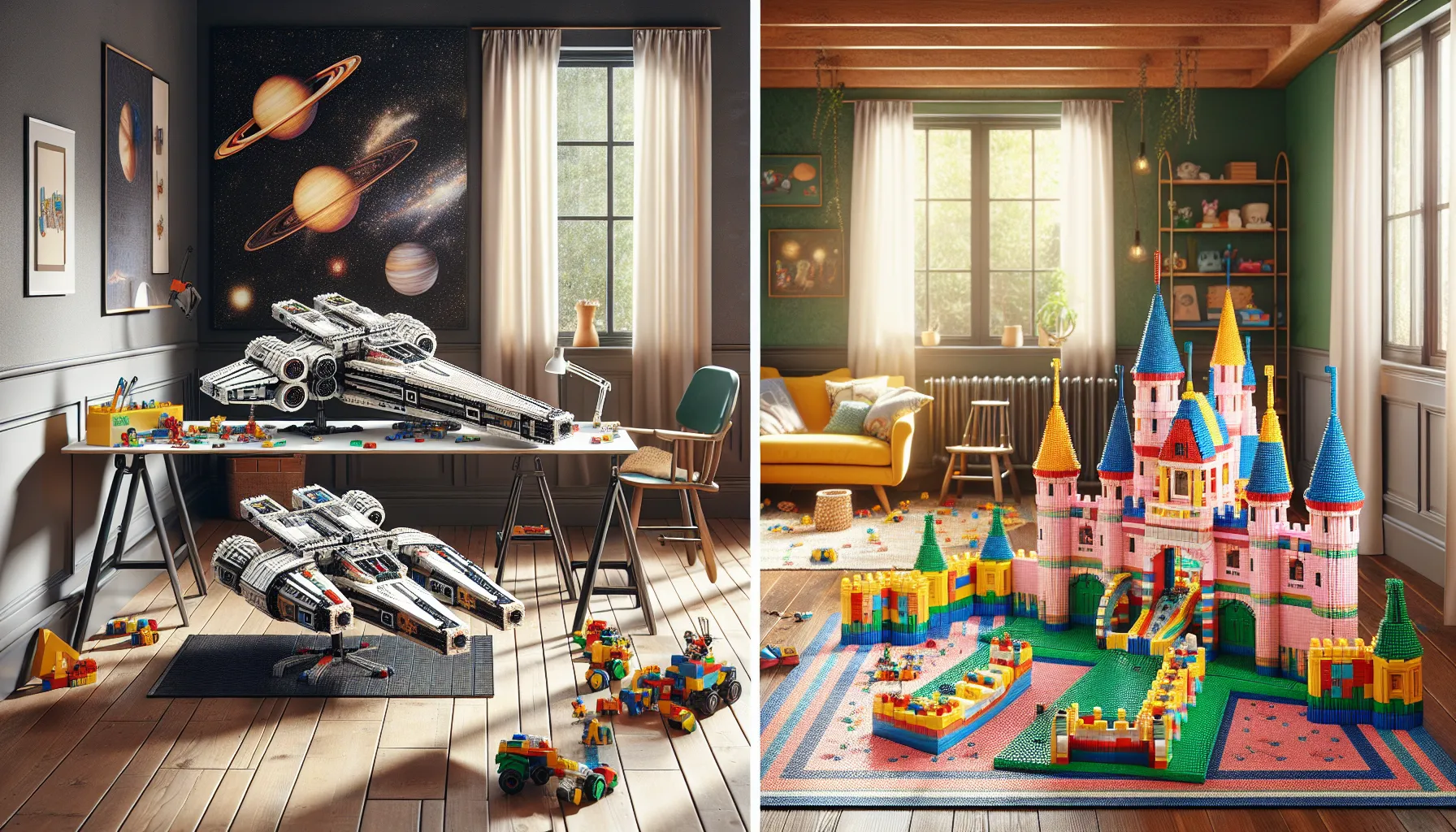
When searching for engaging and educational toys, LEGO and DUPLO frequently emerge as top contenders. Both product lines stem from the renowned LEGO Group, offering unique attributes and catering to different audiences. But, understanding their distinctions is vital for choosing the right set for your needs. Whether you’re selecting for yourself or a young aspiring builder, knowing the key differences can maximize both enjoyment and developmental value.
Overview of LEGO and DUPLO
What Are LEGO Building Sets?
LEGO building sets are iconic construction toys featuring high-quality interlocking bricks. Designed originally for older children and adults, LEGO sets vary widely in complexity, boasting versatile designs and intricate models. Ranging from simple kits to advanced engineering projects, they encourage design innovation and out-of-the-box thinking.
What Are DUPLO Blocks?
DUPLO blocks are a subdivision of the LEGO Group engineered specifically for younger children. These blocks are larger, making them safer and more suitable for small hands. The simplified design promotes beginner construction skills, ensuring an enjoyable and enriching play experience for toddlers.
Key Differences Between LEGO and DUPLO
Size and Compatibility
The most notable difference between LEGO and DUPLO lies in their size. DUPLO bricks are noticeably larger, ensuring easy handling for younger users. Even though this, DUPLO pieces are designed to connect seamlessly with standard LEGO bricks, offering a transitional bridge for growing children.
Target Age Range
LEGO sets are typically intended for ages 4 and up, with specialized series targeting adults. On the other hand, DUPLO targets toddlers, often recommended for ages 1.5 to 5.
Design and Themes
While LEGO offers a plethora of detailed themes, such as Star Wars and Architecture, DUPLO focuses on thematic simplicity, featuring sets based on farms, animals, and basic storytelling elements. These distinctions cater to the developmental and narrative needs of their respective audiences.
Developmental Benefits of LEGO and DUPLO
Cognitive and Motor Skills Enhancement
Playing with LEGO and DUPLO encourages problem-solving, spatial awareness, and fine motor skills. The act of assembling pieces fosters coordination and logical thinking, underlying essential developmental milestones.
Creativity and Imaginative Play
Both LEGO and DUPLO fuel creativity by enabling children to construct their imagined scenes. DUPLO sets lay the foundation, while LEGO offers a world with literally endless possibilities, expanding imaginative horizons.
Choosing Between LEGO and DUPLO for Your Needs
Considering the Child’s Age and Developmental Stage
When deciding between LEGO and DUPLO, it’s important to evaluate the child’s age and skills. DUPLO suits toddlers and preschoolers, while LEGO is apt for older children and enthusiasts aiming for detailed creations.
Exploring the Product Range and Themes
Exploring available product ranges can help match interests and abilities. LEGO offers extensive sets targeting complex projects, whereas DUPLO focuses on vibrant, easy-to-handle components.
To provide the best experiences, we use technologies like cookies to store and/or access device information. Consenting to these technologies will allow us to process data such as browsing behaviour or unique IDs on this site. Not consenting or withdrawing consent, may adversely affect certain features and functions.
Functional
Always active
The technical storage or access is strictly necessary for the legitimate purpose of enabling the use of a specific service explicitly requested by the subscriber or user, or for the sole purpose of carrying out the transmission of a communication over an electronic communications network.
Preferences
The technical storage or access is necessary for the legitimate purpose of storing preferences that are not requested by the subscriber or user.
Statistics
The technical storage or access that is used exclusively for statistical purposes.The technical storage or access that is used exclusively for anonymous statistical purposes. Without a subpoena, voluntary compliance on the part of your Internet Service Provider, or additional records from a third party, information stored or retrieved for this purpose alone cannot usually be used to identify you.
Marketing
The technical storage or access is required to create user profiles to send advertising, or to track the user on a website or across several websites for similar marketing purposes.