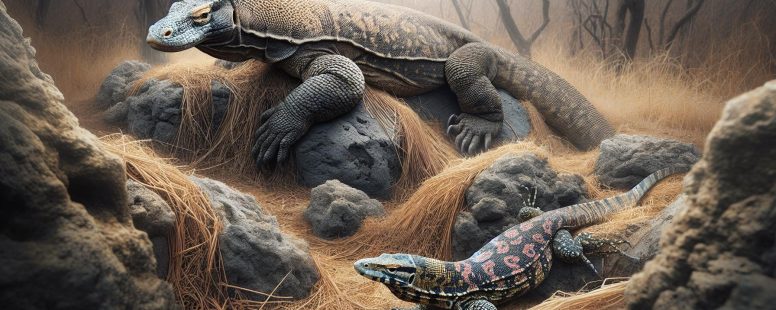
Picture a creature so powerful it feels like stepping into a prehistoric world. Now picture another, equally fascinating yet often misunderstood, lurking in diverse habitats across the globe. The Komodo dragon and monitor lizards both command attention with their striking appearances and formidable reputations, but how much do you really know about what sets them apart?
While they share a family tree and some physical similarities, these reptiles are worlds apart in behavior, size, and even where they call home. From the mighty Komodo dragon reigning over its island domain to the adaptable monitor lizards thriving in deserts and forests alike, their differences are as captivating as their shared lineage.
Overview Of Komodo Dragon And Monitor Lizard
Komodo dragons and monitor lizards are fascinating reptiles belonging to the Varanidae family. Even though their shared lineage, they vary significantly in size, habitat, and behavior.
What Is A Komodo Dragon?
The Komodo dragon (Varanus komodoensis), found primarily on Indonesia’s Lesser Sunda Islands, is the largest living lizard. Adult males often reach lengths of up to 10 feet and weigh around 150 pounds. These apex predators exhibit impressive hunting skills, relying on their sharp teeth, powerful limbs, and venomous bite to subdue prey like deer, wild boar, and even water buffalo.
Adapted for a dry climate, Komodo dragons thrive in grasslands and tropical forests with sparse vegetation. Territorial by nature, they dominate smaller animals within their range. Their forked tongue helps detect scents over long distances through Jacobson’s organ—a highly sensitive olfactory system.
What Is A Monitor Lizard?
Monitor lizards comprise over 80 species under the genus Varanus, inhabiting diverse environments across Africa, Asia, Australia, and surrounding islands. Sizes range widely; for instance—the Nile monitor averages six feet while some dwarf monitors measure as small as eight inches.
These opportunistic omnivores consume insects (e.g., grasshoppers), amphibians (e.g., frogs), birds (e.g., chicks), eggs (e.g., crocodile nests), or carrion depending on availability. Unlike the isolated Komodo dragon population—monitor lizards adapt well to wetlands deserts or forests enhancing survival chances globally.
Physical Differences
Komodo dragons and monitor lizards have distinct physical characteristics that set them apart, even though belonging to the same family. Their differences in size, skin texture, coloration, and structural features are particularly notable.
Size And Weight Comparison
Komodo dragons are significantly larger than most monitor lizard species. Adult Komodo dragons can grow up to 10 feet long and weigh around 150 pounds. In contrast, monitor lizards vary widely in size across over 80 species; some like the dwarf monitor (Varanus acanthurus) reach just eight inches, while others like the water monitor (Varanus salvator) can grow up to six feet but rarely exceed 100 pounds.
The sheer bulk of a Komodo dragon gives it an imposing presence. While both reptiles exhibit muscular builds for strength and agility, Komodo dragons dominate their ecosystems as apex predators due to their sheer massiveness.
Skin Texture And Coloration
Komodo dragons possess rough scales with reinforced osteoderms that act as natural body armor. These scales appear dull gray or brownish to blend into arid environments on Indonesia’s Lesser Sunda Islands. Monitor lizards display more diversity in skin patterns and colors depending on their habitats; examples include vivid yellow bands on ornate monitors (Varanus ornatus) or dark green hues seen in emerald tree monitors (Varanus prasinus).
Monitor lizards’ smoother scales often help climbing or swimming where many of them thrive. The muted tones of Komodo dragons contrast sharply against the bright markings found in some smaller species of monitors.
Head And Tail Structure
A Komodo dragon’s head is broader with a blunt snout suited for tearing flesh from large prey animals. Its powerful jaw muscles deliver strong bites capable of inflicting serious wounds. The tail is robust yet proportional to its massive body frame, aiding balance during attacks or when standing upright.
Monitor lizard heads vary by species but tend toward narrower shapes with longer snouts ideal for catching small prey like insects or fish. Their tails range from prehensile types used by tree-dwelling monitors to whip-like ones found in terrestrial species for defense.
Habitat And Geographic Distribution
Natural Habitat Of Komodo Dragons
Komodo dragons inhabit arid, open environments dominated by savannas, grasslands, and tropical forests. These reptiles are native to Indonesia’s Lesser Sunda Islands, including Komodo, Rinca, Flores, Gili Motang, and Padar. They thrive in hot climates with distinct wet and dry seasons.
You might find them basking under the sun or seeking shade beneath dense vegetation during peak heat hours. Unlike many reptiles relying on water-rich ecosystems, Komodo dragons adapt well to areas with limited water sources.
Habitat Range Of Monitor Lizards
Monitor lizards occupy a diverse range of habitats across Africa, Asia, Australia, and nearby islands. Their adaptability allows them to survive in deserts (e.g., the desert monitor found in North Africa), wetlands (e.g., water monitors thriving near rivers), forests (e.g., tree monitors in Papua New Guinea), and even urban regions.
With over 80 species varying in size and behavior patterns, monitor lizards demonstrate remarkable ecological flexibility. For instance: Bengal monitors frequent agricultural lands while black-throated monitors prefer rocky terrains. This versatility enhances their global distribution and survival prospects even though environmental challenges.
Behavior And Diet Differences
Komodo dragons and monitor lizards exhibit distinct behaviors and dietary habits shaped by their environments, size, and ecological roles.
Hunting Techniques And Food Preferences
Komodo dragons are apex predators that rely on ambush hunting. They use their keen sense of smell to locate prey up to 2.5 miles away. Their powerful jaws, sharp teeth, and venomous saliva enable them to take down large animals like deer, wild boar, and water buffalo. After delivering a fatal bite, they often track the weakened prey until it succumbs. Scavenging also plays a significant role in their diet.
Monitor lizards display diverse hunting strategies due to the variety of species within their group. Smaller monitors actively forage for insects (e.g., grasshoppers) or eggs, while larger species like the Asian water monitor hunt fish or small mammals. Opportunistic feeding is common among all sizes; some even consume carrion if available.
Interaction With Humans
Komodo dragons rarely interact with humans unless provoked or looking for food near settlements on Indonesia’s Lesser Sunda Islands. While attacks are uncommon, they can be dangerous due to their size and strength when threatened.
Monitor lizards are more frequently encountered across regions inhabited by humans due to their adaptability. Species like the Nile monitor may raid poultry farms for eggs or chickens—leading to conflict in rural areas—but others co-exist peacefully in urban parks or wetlands without posing a threat unless cornered.
Reproductive And Lifespan Differences
Komodo dragons and monitor lizards exhibit distinct reproductive strategies and lifespans, reflecting their unique adaptations. These differences provide insight into their survival mechanisms within diverse ecosystems.
Reproduction In Komodo Dragons
Komodo dragons are oviparous reptiles, laying 15-30 eggs per clutch during the mating season, which occurs between May and August. Females bury their eggs in soil or abandoned nests to protect them from predators. The incubation period lasts approximately eight months, with hatchlings emerging in April when food resources are abundant. Juvenile Komodo dragons climb trees to avoid predation by adults or other threats on the ground.
A remarkable aspect of Komodo dragon reproduction is parthenogenesis. Females can produce offspring without male fertilization under certain conditions, enabling population continuation when mates are scarce. This adaptation enhances survival prospects on isolated islands like Komodo or Rinca.
Reproduction In Monitor Lizards
Monitor lizards display diverse reproductive behaviors across over 80 species. Most species are oviparous, laying clutches ranging from 6-50 eggs depending on size and environment. For example, the Nile monitor (Varanus niloticus) lays around 60 eggs per clutch in burrows near water sources for protection against predators and desiccation.
Parental care is generally absent among monitor lizards; but, some species exhibit limited nest guarding until egg-laying concludes. Unlike Komodo dragons’ parthenogenesis capability, monitor lizard reproduction relies entirely on sexual fertilization between males and females.
Lifespan variations also highlight distinctions: Komodo dragons live up to 30 years in the wild compared to smaller monitor lizard species averaging 8-20 years based on habitat conditions and predatory pressure levels.
Conservation Status And Threats
Komodo dragons and monitor lizards face diverse conservation challenges due to their unique ecological roles and habitats. Their survival depends on targeted efforts addressing these threats.
Komodo Dragon Conservation Efforts
Conservation programs for Komodo dragons emphasize habitat protection, anti-poaching measures, and scientific research. The International Union for Conservation of Nature (IUCN) lists them as Endangered, with fewer than 3,500 individuals remaining in the wild. Indonesia’s Komodo National Park ensures critical habitat preservation by regulating tourism and preventing deforestation.
Captive breeding programs aid population stability while reducing human-wildlife conflict. For example, zoos worldwide collaborate to maintain genetic diversity through structured breeding initiatives. Community education campaigns also raise awareness about sustainable practices that benefit local ecosystems.
Challenges Facing Monitor Lizard Populations
Monitor lizards encounter threats like habitat loss, illegal wildlife trade, and hunting for meat or traditional medicine. Species such as the Bengal monitor (Varanus bengalensis) are particularly affected by urban expansion in South Asia.
Global demand for exotic pets further endangers specific species, including the black-throated monitor (Varanus albigularis microstictus). Overharvesting disrupts natural populations while diminishing biodiversity within ecosystems where they act as key predators or scavengers.
Climate change compounds these issues by altering habitats essential for nesting or food availability—desert-dwelling monitors like Varanus griseus face intensified risks from rising temperatures and shifting precipitation patterns. Effective monitoring systems could improve long-term conservation outcomes if implemented consistently across regions experiencing rapid environmental changes.
Conclusion
Understanding the differences between Komodo dragons and monitor lizards gives you a deeper appreciation for their unique roles in nature. While they share a common lineage, their distinct characteristics, habitats, and behaviors highlight the incredible diversity within the Varanidae family. Both face significant conservation challenges, reminding you of the importance of protecting these remarkable reptiles and their ecosystems. By supporting conservation efforts and raising awareness, you can contribute to preserving their legacy for future generations.
To provide the best experiences, we use technologies like cookies to store and/or access device information. Consenting to these technologies will allow us to process data such as browsing behaviour or unique IDs on this site. Not consenting or withdrawing consent, may adversely affect certain features and functions.
Functional
Always active
The technical storage or access is strictly necessary for the legitimate purpose of enabling the use of a specific service explicitly requested by the subscriber or user, or for the sole purpose of carrying out the transmission of a communication over an electronic communications network.
Preferences
The technical storage or access is necessary for the legitimate purpose of storing preferences that are not requested by the subscriber or user.
Statistics
The technical storage or access that is used exclusively for statistical purposes.The technical storage or access that is used exclusively for anonymous statistical purposes. Without a subpoena, voluntary compliance on the part of your Internet Service Provider, or additional records from a third party, information stored or retrieved for this purpose alone cannot usually be used to identify you.
Marketing
The technical storage or access is required to create user profiles to send advertising, or to track the user on a website or across several websites for similar marketing purposes.