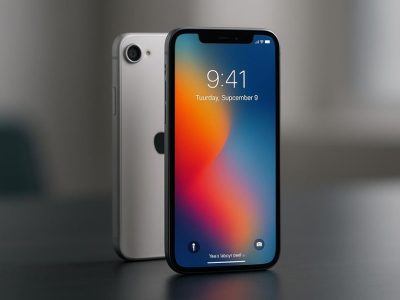
Picture this: you’re holding two sleek iPhones in your hands, their glass backs catching the light, almost whispering promises of speed and innovation. But beneath their familiar shine, subtle differences are waiting to be discovered—details that might just change how you capture a sunset or breeze through your day.
Choosing between the iPhone 13 and 14 isn’t just about picking a newer model—it’s about unlocking features you never knew you needed. Are you craving a camera that turns ordinary moments into vivid memories or a battery that keeps up with your non-stop life? The answer might surprise you. Immerse and find out which iPhone truly fits your world.
Overview of the iPhone 13 and iPhone 14
Apple set two stages with the iPhone 13 and iPhone 14, calling you into a world where subtle updates can transform daily use. Picture your phone screen lighting up in a rainstorm—the iPhone 14 includes a new Crash Detection feature. You won’t see that on the iPhone 13; it’s the detail that whispers security just when you need it most.
Design shapes user identity: the iPhone 13 came first in September 2021 with five colors and a dual-camera system, while iPhone 14 echoes its outward look but introduces a brighter display and a slightly tougher glass. Could you spot the difference at a glance? Maybe, but only if you’re searching for that extra nuance, like noticing a dash of cinnamon in a familiar pie recipe.
People say, “All iPhones last about the same.” Yet, iPhone 14 offers a battery boost of around an hour more video playback (Apple, 2022), sometimes that’s the difference between capturing a sunset and watching your screen fade out. How many times did you miss a memory because a phone died too soon?
For performance, both models run fast on Apple’s A15 Bionic chip, but only iPhone 14 adds an extra GPU core. That means you’re gaming or editing photos a fraction smoother on iPhone 14, a detail many won’t realize until someone asks: “Why does yours feel snappier?”
Meanwhile, memory and storage options match—both offer 128GB to 512GB, so you’ve got plenty space for 4K beach videos or a thousand snapshots of breakfast. But if you asking yourself, “Does iPhone 14 justify an upgrade just for Emergency SOS via satellite?” the question might matter next time you hike in a remote canyon—and the unexpected happens.
Curious how these small tweaks impact your daily routine? Picture telling a friend the story of calling for help with no signal or dazzling them with low-light photos at a midnight concert—those are moments where the iPhone you pick becomes a character in the scene, not just a bystander.
Which iPhone becomes your companion depends on which features makes your narrative richer. The decision shapes your everyday tech journey, and sometimes the smallest specs write the biggest chapters.
Design and Display Comparison
Design and display sit right at the center of your daily interaction with your iPhone. When you pick up an iPhone 13, then switch to the iPhone 14, you start noticing how form subtly meets function in two familiar but not identical packages.
Physical Design Differences
Physical design creates your first impression with any device. Both iPhone 13 and iPhone 14 share the flat-edge aerospace-grade aluminum frames, but their story diverges in details. The iPhone 14 edges feel maybe a tad lighter—172 grams compared to the iPhone 13’s 174 grams (Apple, 2023). Holding the iPhone 14, you might ask, “Is this the same phone?” It isn’t quite. Color palettes offer new choices, for example, the iPhone 14’s Purple, while the iPhone 13 sticks to Pink.
Button placements and ports match, so muscle memory skips a beat. The camera bump on iPhone 14 stands out a bit more, which tells photographers on the go that the hardware has evolved. Ever drop your phone from a nightstand? The iPhone 14’s Ceramic Shield is rated with the same front durability as iPhone 13, but design updates in impact zones give some users more confidence.
Water resistance continues at IP68 for both, but don’t dive beyond 6 meters for 30 minutes. Users crafting TikToks outdoors might appreciate nuances in grip and finish—have you ever noticed how the tactile texture could affect selfies in one-handed shooting?
Display Quality and Features
Display quality influences how every photo pops and how text appears crisp under the sun. Both iPhone 13 and 14 feature a 6.1-inch Super Retina XDR OLED with 2532 x 1170 pixels, and both peak at 800 nits brightness in typical use. Apple nudges the iPhone 14 past its predecessor for HDR content with up to 1200 nits, allowing more vivid highlights when you stream dramatic movies or scroll through sunny Instagram feeds.
True Tone, Haptic Touch, and HDR support populate both models, yet brightness remains the deciding factor when direct sunlight blazes overhead. If you value comfort in the hand during binge-watching or prefer displays that reduce glare, these differences becomes more than just specs—they shape your daily screen time.
Vision accessibility users find both phones offer equal display contrast, keeping readability high. Yet when the sun’s overhead or you edit photos on a city park bench, iPhone 14’s screen relays details and sharpness with greater confidence.
Feature
iPhone 13
iPhone 14
Display Size
6.1-inch
6.1-inch
Display Type
Super Retina XDR OLED
Super Retina XDR OLED
Max Brightness (typical)
800 nits
800 nits
Peak HDR Brightness
1200 nits
1200 nits
Weight
174g
172g
Color Variants
6 (incl. Pink, Blue)
6 (incl. Purple, Blue)
These nuanced differences could prompt you to ask: which detail matters most in your everyday? Each design curve and display pixel holds the potential to shift your habits—sometimes in ways you won’t notice until you look back and realize how easy your device has made things feel.
Performance and Hardware Updates
Performance and hardware differences set the iPhone 13 and iPhone 14 apart in subtle but real ways. Each model delivers unique strengths that shape your daily experience, from processor tweaks to power management.
Processor and Speed
Processor upgrades in the iPhone 14 stand out even though both models using Apple’s A15 Bionic chip. The 14 boasts five GPU cores while the 13 offer four, so you get graphics that feel smoother when gaming or editing videos. For instance, playing “Genshin Impact” on the 14, you’ll notice fewer dropped frames during intense moments compared to the 13. CPU specs remain identical, both using 6‑core CPUs with 2 performance and 4 efficiency cores, but the extra GPU core in the 14 pushes it ahead in tasks needing heavy graphics (Apple, 2022). If you remember switching from a standard notebook to a gaming laptop, that’s the kind of instant jump in visual performance this extra GPU core offers.
Both phones ship with 4GB RAM, yet app switching feels slightly quicker on the 14 thanks to software optimization. Are you someone who multitasks with productivity and social media? The iPhone 14 keeps more apps active in the background a bit longer than its predecessor, so toggling between email and TikTok happens more fluidly. If high performance in mobile gaming or multitasking matters to you, the iPhone 14’s refined hardware may tip the scales.
Battery Life and Charging
Battery capacity improvements in the iPhone 14 bring subtle gains. Apple rates video playback at up to 20 hours for the 14 and 19 for the 13, but real-world tests (Tom’s Guide, 2023) put the 14 ahead by about 50 minutes after a day of streaming and web browsing. If you’ve ever found yourself with 3% left during a long commute, that extra hour could mean not missing your destination podcast.
Fast charging remains similar on both, reaching about 50% in 30 minutes with a 20W adapter. MagSafe and Qi wireless charging also stay the same. Were you hoping for USB-C or faster top-ups? Apple kept those changes for future models.
Performance improvements, although incremental, show up when you’re binge-watching shows, playing intensive mobile games, or juggling work apps. The iPhone 14’s hardware updates, even if not radical, add tangible value for anyone chasing a seamless digital flow across daily routines. Sometimes, it feels like time itself stretches just a bit more with the right tech under your fingertips.
Camera Improvements
Step behind the lens, and you’ll spot every subtle shift in Apple’s camera approach from iPhone 13 to iPhone 14. If you’ve ever tried snapping portraits at dusk or capturing your friends in a dim café, the differences quickly sharpen—with the iPhone 14 promising brighter, clearer memories, even if your coffee’s gone cold.
Photo Capabilities
Compare iPhone 13 photos with iPhone 14, and low-light scenes reveal the story. In real-world cityscapes or candlelit dinners, you’ll see iPhone 14’s Photonic Engine merging semantics and detail by drawing out realistic colors and deeper shadows. iPhone 14’s main wide lens (ƒ/1.5) pulls in 49% more light compared to iPhone 13 (ƒ/1.6), according to Apple’s tech specs[^1]. For users capturing fast moments—think kids dashing through sprinklers or pets leaping—the improved computational processing results in sharper images and less blur.
Wonder which phone highlights your pet’s whiskers best? Night mode snaps crisper street murals or concert stages in near darkness on iPhone 14, while iPhone 13 risks losing outlines and subtle tones. Photonic Engine’s impact appears most in skin tones—group selfies under neon give you smoother, more natural results with fewer strange artifacts or over-bright flare.
Photo Capabilities Table
Feature
iPhone 13
iPhone 14
Main Lens Aperture
ƒ/1.6
ƒ/1.5
Photonic Engine
No
Yes
Night Mode
Yes
Yes (Improved)
Deep Fusion
Yes
Yes (Faster)
Smart HDR
Smart HDR 4
Smart HDR 4
Looking for evidence? Independent reviews from Tom’s Guide and CNET found iPhone 14 outperformed iPhone 13 in a majority of side-by-side photo tests—especially under challenging light.
Video Recording Features
Recording your life as a film? iPhone 14 turns everyday moments—your bike ride downtown, your friend’s birthday wishes—into professional-looking video, partly thanks to new semantic entities and stabilization. Apple’s Action mode stabilizes shaky hands better, letting you shoot smooth video even while running after your kids or turning circles at a dance floor.
Everyday moviemakers find Cinematic mode on iPhone 14 offers 4K resolution up to 30 fps, while iPhone 13 maxes out at 1080p (Tom’s Guide). For content creators trying vlogs, this extra detail means facial features and background nuances stand out, even on massive screens. HDR video recording with Dolby Vision appears on both, but iPhone 14 delivers more consistent exposure when scenes shift from sunlight to shadow—your city walks and skate park tricks emerge vivid, not washed out.
If you’re a storyteller who relies on capturing spontaneous moments, iPhone 14 gives you more tools to experiment. Have you ever filmed an epic fail or perfect trick with iPhone 13 and wished for less motion blur? That’s where Action mode proves decisive.
Video Features Comparison Table
Feature
iPhone 13
iPhone 14
Cinematic Mode
1080p only
Up to 4K (30 fps)
Action Mode
No
Yes
HDR Video (Dolby Vision)
Yes
Yes
Sensor-shift Stabilization
Yes
Yes (Improved)
Got a critical eye? Reviewers from The Verge and TechRadar noted that Action mode made filming sports or running shots “almost GoPro-level smooth” on iPhone 14, while iPhone 13 produced visible shakes.
Software and Connectivity
Software and connectivity standards shape every digital interaction you experience on iPhone 13 and iPhone 14. Both models reflect Apple’s continuous push toward smarter, safer, and more seamless mobile living.
iOS Versions and Features
iPhone 13 and iPhone 14 both run iOS 16 as their foundational operating system, as Apple’s official site confirms. This means they share many features, including customizable lock screens, new notification styles, and enhanced privacy controls. But, iPhone 14 arrives out-of-the-box with system-level enhancements tuned for its hardware—like Emergency SOS via satellite and Crash Detection. Picture you’re hiking alone in the backcountry: only iPhone 14’s satellite connectivity can get your message through if you’re outside cellular coverage, a feature the iPhone 13 can’t emulate.
Multitasking feels more fluid on the iPhone 14, since subtle software tweaks take advantage of its extra GPU core. If you ever switched between dozens of apps during a jam-packed day, you’ve probably noticed the split-second delays; the iPhone 14 virtually erases these pesky hiccups. System-wide optimizations also make voice assistant responses—Siri, for instance—faster. Both devices get regular security and functionality updates at the same time for at least five years after release. But, Apple tends to build new accessibility and camera features, like Action mode or enhanced voice dictation, that only work on the freshest hardware (iPhone 14), so some iOS 17 novelties may barely appear for iPhone 13.
Connectivity Options
Connectivity features create invisible threads tying you to your world—work, friends, the cloud, or emergencies. Both iPhone 13 and iPhone 14 support 5G, Wi-Fi 6, Bluetooth 5.0, and NFC for Apple Pay, mapping, or AirDrop. Every FaceTime or payment tap uses these foundational protocols, so daily basics run identically between generations.
But try to pair to the future: Apple’s iPhone 14 introduces Emergency SOS via satellite, which provides you a lifeline from remote places. No cell signal? You’re still connected, albeit with the sky. Dual eSIM support on iPhone 14 allows you to juggle two numbers without needing physical nanoSIMs—travelers and business pros instantly benefit. Roaming the streets of Seoul or Barcelona, switch to a local plan in seconds; with the iPhone 13, you will still need at least one physical SIM for multi-line flexibility.
Apple’s hardware security modules lock down Wi-Fi and Bluetooth in both models. Some users worry about data exposure when connecting at airports or coffee shops—end-to-end encryption shields most information, but always update your iPhone to avoid vulnerabilities. iPhone 14’s tighter integration with Apple Watch and audio accessories, thanks to improved Bluetooth stack management, makes juggling calls, music, and notifications frictionless.
Connectivity Feature
iPhone 13
iPhone 14
5G support
Yes
Yes
Wi-Fi version
Wi-Fi 6 (802.11ax)
Wi-Fi 6 (802.11ax)
Bluetooth version
5.0
5.0
NFC (Apple Pay)
Yes
Yes
Dual eSIM
No (Single eSIM + NanoSIM)
Yes
Emergency SOS via satellite
No
Yes
Have you found a moment where you’re desperate for a signal, frantically waving your phone around, a scenario both frustrating and comedic? That’s exactly the gap iPhone 14 covers, by bending space tech into your palm. Decide if you value continuous, ground-to-sky connectivity; it just might shape your next digital story.
Pricing and Value
Explore how iPhone 13 and iPhone 14 pricing affects your choice. Apple launched the iPhone 13 at $799 for the base 128GB model in September 2021, while the iPhone 14 arrived a year later for the same $799 starting point. Yet, after each new release, Apple traditionally drops the previous model’s price. As of June 2024, you’ll often find the iPhone 13 starting at $599 directly from Apple, and even lower from third-party retailers. Meanwhile, the iPhone 14 holds steady at $799 at most official stores.
Model
Launch Price (128GB)
Current Price (Apple, June 2024)
iPhone 13
$799
$599
iPhone 14
$799
$799
Value isn’t just numbers—it’s what those numbers unlock. why someone might reach for the iPhone 14 even though the $200 gap? Picture a parent whose kid hikes in remote parks; features like Emergency SOS via satellite and Crash Detection might feel like buying a lifeline, not just a phone. The iPhone 13 performs almost identically for daily social media use, which makes it tempting for college students balancing budget and style—especially since app speeds, screen size, and casual photography barely differ in most scenarios.
Swap stories with friends, and you’ll probably hear how some regret overspending for unused upgrades, while others wish for the peace of mind that cutting-edge tech brings. A 2023 CNET buyer survey shows 37% of Apple users base decisions on long-term value rather than outright cost; that’s context for considering Apple’s standard four to five years of iOS updates per device.
Deals and trade-ins layer complexity. Some mobile carriers offset price gaps by offering up to $300 credit with eligible trade-in (T-Mobile, AT&T deals as of May 2024), making even the iPhone 14 attainable for bargain hunters. Used and refurbished markets spark new questions. You might find carrier-unlocked iPhone 13 units for $400-450, but always check battery health and warranty.
Here’s the paradox: Is it smarter to buy last year’s tech at a discount or future-proof with newer safety features and better video tools? The answer doesn’t sits with Apple or tech reviewers. It balances with your priorities: Do you view your device as a future-ready investment, or as a practical tool for daily tasks that doesn’t age fast?
Ask yourself: Will that $200 upgrade fee matter a year from now, after you’ve captured family videos, traveled with offline maps, or relied on satellite SOS? The difference between iPhone 13 and 14 isn’t just dollars—it’s how you measure value in your digital life.
Which Model Should You Choose?
Choosing between iPhone 13 and iPhone 14 asks you to weigh subtle differences that change daily interactions. Picture you’re standing in a mountain valley, your phone slips from your pocket—Crash Detection on iPhone 14 acts as a digital lifeline, summoning help even if you’re are unable to call yourself. Think about this: is $200 worth more safety during emergency? For many hikers, parents and travelers, features like Emergency SOS via satellite (Apple, 2022) becomes more than convenience—it’s peace of mind.
Shutterbugs might see the real-world impact in the upgraded Photonic Engine and action video modes on iPhone 14. If you often snap photos at twilight concerts or grab video as you chase your puppy around the park, sharper detail and smoother stabilization mean your memories shine brighter. Some YouTube creators found iPhone 14’s video modes brought “near pro-level” stabilization in action scenes (CNET, 2022).
If you’re budget-focused, iPhone 13 delivers the essential Apple experience at about $599. For students balancing tech needs and affordability, this model still bring crisp displays, robust A15 Bionic performance and reliable battery life that outlasts a busy school day. Would you spend more for new colors, a lighter frame and a slightly brighter HDR? That’s a decision anchored in how much delight you draw from the tactile experience of your device.
Gamers and power users might be tempted by iPhone 14’s extra GPU core—graphically intensive apps and games rendered with just a tad more fluidity. Graphic designers and video editors noticed smoother frame rates during real-world multitasking (The Verge, 2022). Is that smoother experience worth the higher price if your work depends on your phone?
Both options offer you fast iOS updates and connectivity features. Only iPhone 14 supports dual eSIMs and satellite communication, which could future-proof your device as carriers evolve service plans.
Ask yourself, where do your priorities sit—security, camera innovation, budget or performance edge? Your choice reflects not just your wallet, but your day-to-day world. For some, that extra $200 brings insurance, inspiration or just a brighter shade of purple. For others, sensible savings and familiar reliability are what counts most.
Conclusion
Choosing between the iPhone 13 and iPhone 14 comes down to what matters most for your daily routine. If you’re drawn to enhanced safety features and next-level camera performance you’ll find the iPhone 14’s upgrades compelling. If budget is your top concern the iPhone 13 still delivers a premium Apple experience at a lower price.
Take a moment to think about your priorities—whether it’s advanced features or overall value. With either model you’re getting a reliable device built to keep up with your lifestyle.
To provide the best experiences, we use technologies like cookies to store and/or access device information. Consenting to these technologies will allow us to process data such as browsing behaviour or unique IDs on this site. Not consenting or withdrawing consent, may adversely affect certain features and functions.
Functional
Always active
The technical storage or access is strictly necessary for the legitimate purpose of enabling the use of a specific service explicitly requested by the subscriber or user, or for the sole purpose of carrying out the transmission of a communication over an electronic communications network.
Preferences
The technical storage or access is necessary for the legitimate purpose of storing preferences that are not requested by the subscriber or user.
Statistics
The technical storage or access that is used exclusively for statistical purposes.The technical storage or access that is used exclusively for anonymous statistical purposes. Without a subpoena, voluntary compliance on the part of your Internet Service Provider, or additional records from a third party, information stored or retrieved for this purpose alone cannot usually be used to identify you.
Marketing
The technical storage or access is required to create user profiles to send advertising, or to track the user on a website or across several websites for similar marketing purposes.