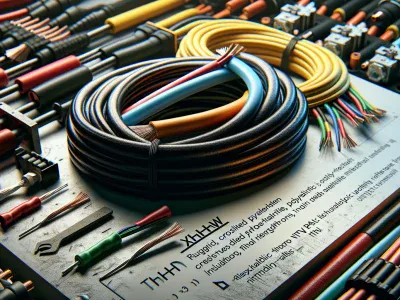
Ever found yourself tangled in the intricate world of wires, particularly GXL and TXL types? You’re not alone. These two automotive wire variants are often misunderstood yet they play a pivotal role in our daily lives.
From powering up your favorite gadgets to running complex industrial machinery, these unsung heroes work behind-the-scenes tirelessly. But what sets them apart? And why should you care about their differences?
Understanding GXL and TXL Wire Specifications
To further understand the differences between these two types of wires, it’s vital to examine their origins, manufacturing differences, material composition and insulation properties.
Origins and Manufacturing Differences
GXL (Cross-Linked Polyethylene) wire originates from a unique process that cross-links molecules. This method boosts heat resistance; so the wire can endure temperatures up to 125 degrees Celsius without compromising its performance or structural integrity.
On the other hand, TXL (Thin wall Cross-Linked Polyethylene) wires have an even thinner insulation than GXL ones – hence why they’re often found in compact applications such as race cars or aerospace where space is limited but high temperature endurance remains necessary.
Material Composition and Insulation Properties
When discussing materials used in each type of wire, both GXL and TXL consist mainly of copper conductors with insulations made out of chemically cross-linked polyethylene plastic compound – giving them superior thermal characteristics compared to ordinary PVC insulated cables for example.
But when looking at specific insulation features: even though being thin walled like mentioned before ,TXL exhibits higher dimensional stability after heating whilst still maintaining excellent mechanical strength under stress conditions thanks also part due again its fine-stranded bare copper construction allowing optimal flexibility .
Performance Factors
Delving deeper into the differences between GXL and TXL wires, let’s consider their performance in varying conditions. These factors can heavily influence a wire type selection for different applications.
Temperature Resistance
When it comes to temperature resistance, both GXL and TXL exhibit strong capabilities due to their cross-linked polyethylene insulation. Specifically, GXL wires are renowned for withstanding temperatures up to 125 degrees Celsius; they’re robust enough not only withstand everyday heat exposure but also abrupt spikes in temperature that might occur during malfunction or short-circuiting events.
On the other hand, though TXL shares similar thermal characteristics as its counterpart – thanks largely again to cross-linking process used in its creation – what sets it apart is its dimensional stability post heating: an attribute critical especially when employed within confined spaces such as race cars or aerospace devices where any expansion of components could have potentially disastrous implications.
Durability in Automotive Environments
Automotive environments pose unique challenges like vibrations, friction from constant movement alongside potential exposure to automotive fluids — all these necessitate high durability standards from involved wiring systems.
In this context too, both types impress but each has areas where they shine brighter than the other:
GXL’s thicker insulation grants superior protection against physical damage caused by abrasion which makes them ideal choice for external wiring applications – think under-the-hood scenarios involving significant mechanical stress.
Applications of GXL and TXL Wires
Both GXL and TXL wires serve as crucial components in various applications, primarily due to their unique physical properties. Their temperature resistance, durability, flexibility make them suitable for a wide range of uses.
Use in Engine Compartments
GXL wires’ heat-resistant property finds extensive application within engine compartments. Given that these areas frequently reach high temperatures—upwards of 125 degrees Celsius—the resilience offered by the cross-linked polyethylene insulation proves invaluable. These toughened cables can endure abrupt spikes in temperature without compromising on performance or safety standards.
On the other hand, you’ll find TXL wire being commonly used where space is at a premium such as race cars or aerospace technologies because they offer an impressive strength-to-weight ratio coupled with excellent dimensional stability post-heating—a critical factor when operating under confined conditions like those found within compact engine systems.
In comparison charts detailing automotive wiring preferences based on location usage and environment constraints:
Wire Type
Preferred Usage Area
GXL
Engine Compartment & External Wiring
TXL
Compact Systems (Race Cars/Aerospace)
Flexibility for Complex Wiring Systems
Complex wiring systems demand flexible yet durable cabling solutions – exactly what both types bring to table! Withstanding mechanical stress comes naturally to GXL wires thanks its superior abrasion protection feature which makes it highly suited for external wirings exposed rough terrains while exploring through tight bends isn’t problem given robust build structure.
Conversely,TXl’s thin insulation layer not only reduces overall weight but also increases its bending radius making it more adaptable intricate circuit designs seen modern vehicles where every millimeter counts optimizing cable management enhancing system efficiency simultaneously!
Comparative analysis showing key features each type demonstrates why they’re chosen specific roles respective fields :
Wire Type Features Preferred Role
GXL High temperature resistance, Superior Abrasion Protection External Wiring
TXL Thin Insulation, Increased Bending Radius Complex Internal Circuits
Key Considerations for Choosing Between GXL and TXL
When you’re determining whether to choose a GXL or TXL wire, there are key considerations. These include cost implications and application-specific needs.
Cost Comparison
Cost can play a critical role in your choice between the two types of wires. Both come with different price tags due to their unique manufacturing processes and material compositions.
GXL wires, known for their heat resistance up to 125 degrees Celsius, generally have higher production costs attributed to the thick insulation layers that offer superior abrasion protection. This makes them slightly more expensive compared with other automotive wiring solutions on the market.
On the flip side, TXL wires typically have lower production expenses due to thinner insulating materials used in its construction which translates into less overall raw material usage per unit length produced – so providing an economical solution especially when dealing with extensive wiring systems like those found within race cars or aerospace technologies where every ounce matters!
But remember, while initial purchase costs matter it’s equally important not just consider this aspect alone but also account longevity performance factors which eventually determine real value money over time period use both these options bring table terms durability resilience harsh conditions high temperature fluctuations experienced engine compartments compact spaces respectively.
Application-Specific Needs
Plus financial aspects understanding specific requirements crucial selecting right type wire given application purpose under consideration
For instance if working within environment such as vehicle’s engine compartment characterized by persistent exposure high temperatures frequent thermal spikes better suited opt Gxl because withstands upto degree celsius without compromising structural integrity
Conversely situations necessitate weight reduction coupled increased mechanical strength dimensional stability Txls thin lightweight design proves be ideal candidate With reduced wall thickness contributes lighter overall system mass allows intricate circuit designs requiring tight bends twists Also advantage space constrained applications prominent industries including racing aerospace sector being able maintain flexibility even though smaller cross-sectional area enabling efficient routing complex layouts
So taking stock individual project specifications requirement imperative making well-informed choice about whether choose GXL TXL wire
To conclude key considerations choosing between these two types wires boil down cost comparison application-specific needs Being aware understanding help make better choice that meets budget fits purpose well effectively serves its intended use.
Conclusion
Now you’re equipped with the essentials to distinguish between GXL and TXL wires. Remember, while both have their strengths, your choice hinges on what’s most important for your specific application. If high-temperature resistance is paramount, go for GXL wires – they can handle heat up to 125 degrees Celsius like a champ! But if you need something lightweight yet robust especially in cramped spaces such as race cars or aerospace applications then TXL wires might just be your best bet.
Costs also come into play here: thicker insulation of GXL makes it pricier but gives superior abrasion protection; conversely, economical TXL has thinner insulation that doesn’t skimp on mechanical strength.
In essence whether it’s a durable heavyweight contender or an agile featherweight champion choosing wisely requires understanding these aspects thoroughly before making any automotive wiring decisions.
Published: July 23, 2024 at 5:15 am by Ellie B, Site owner & Publisher
To provide the best experiences, we use technologies like cookies to store and/or access device information. Consenting to these technologies will allow us to process data such as browsing behaviour or unique IDs on this site. Not consenting or withdrawing consent, may adversely affect certain features and functions.
Functional
Always active
The technical storage or access is strictly necessary for the legitimate purpose of enabling the use of a specific service explicitly requested by the subscriber or user, or for the sole purpose of carrying out the transmission of a communication over an electronic communications network.
Preferences
The technical storage or access is necessary for the legitimate purpose of storing preferences that are not requested by the subscriber or user.
Statistics
The technical storage or access that is used exclusively for statistical purposes.The technical storage or access that is used exclusively for anonymous statistical purposes. Without a subpoena, voluntary compliance on the part of your Internet Service Provider, or additional records from a third party, information stored or retrieved for this purpose alone cannot usually be used to identify you.
Marketing
The technical storage or access is required to create user profiles to send advertising, or to track the user on a website or across several websites for similar marketing purposes.