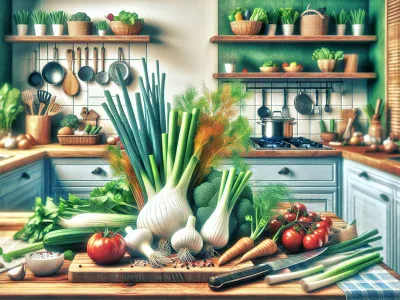
Picture yourself standing in your kitchen, a bundle of slender green stalks in hand, their crisp scent hinting at freshness and flavor. You’re about to sprinkle something over your soup or salad—but wait. Are you reaching for green onions or chives? These vibrant greens might look like culinary twins, but their differences can transform your dish in surprising ways.
Picture the subtle bite of one, the delicate aroma of the other. Choosing the right garnish isn’t just about taste—it’s about unlocking hidden layers of flavor, color, and even nutrition. As you discover what sets green onions and chives apart, you’ll find new ways to elevate your cooking and impress your taste buds.
Overview of Green Onions and Chives
Green onions and chives both belong to the Allium genus, yet each displays a distinctive profile in the kitchen and garden. Your meals might spark with their subtle differences—green onions, (sometimes called scallions), carry a mild, ever-so-peppery bite while chives offer a faint, grassy sweetness that hints at wild spring meadows. Compare one classic dish: a Chinese scallion pancake leans on the crisp crunch of green onion stalks, but chives transforms French omelets with a feathery texture and delicate aroma. Which herb brings color or fragrance to your kitchen the most?
Farmers harvest green onions when their bulbs still remain small, and you’ll notice the firm white and green stalks standing tall in the produce aisle. Meanwhile, chives hide among herbs, their slender deep-green tubes bunched like tiny, edible grass. Can you picture your windowsill turning into an aromatic patch of chives, perfect for quick snipping into creamy dips or baked potatoes?
Cooks around the world experiment with both, yet botanically, green onions (Allium fistulosum or young Allium cepa) relate closer to regular onions, while chives (Allium schoenoprasum) stay more delicate and herbaceous. Nutritionally, both provide vitamin K and vitamin C (USDA FoodData Central), but chives often deliver higher amounts of vitamin A per gram. Texturally, you can feel the crispy juiciness from green onions, contrasted by the soft, hollow blades of chives.
Curious cooks sometimes substitute one for the other, but chefs often caution: the subtle shift in flavor can change the spirit of a dish. Some find green onions overpowering in dressings where chives provide a gentle lift. What would your signature recipe say if you swapped them by mistake?
Appearance and Flavor Differences
You’ll instantly spot contrasts between green onion and chives if you place them side by side. Each one dresses salads and soups differently, and delivers distinct notes when you add them to your recipes.
Visual Characteristics
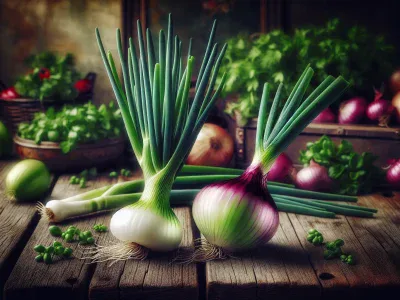
Green onions reach up with bright, tubular stalks; their edible white bulbs blend into firm green leaves. You usually see bunches of these with roots trimmed, looking sturdy and upright in grocery displays. Chives, on the other hand, look slender and grasslike. Their deep-green blades never form bulbs—just pencil-thin, hollow tubes, snipped short and delicate. Next time, picture a bowl of potato soup: thick slices of green onion would lie there in crisp, geometric patterns, while a dusting of chives would ripple across the top, almost feathery, so light they could blow away on a sigh.
Which garnish signals freshness in your favorite dish? In Japanese miso soup, finely sliced green onion adds a pop of height and color, catching your eye. Chives, by contrast, dissolve almost invisibly into a batch of herbed cream cheese for bagels, lending only a soft shimmer of green.
Taste Profiles
Green onions bring a sharp, peppery bite and mild pungency, especially near their white ends. If you bite into a raw green onion stalk, you’ll notice a juicy crunch and a gentle—yet unmistakable—kick. In stir-fries, their flavor remains vivid; you can feel the mild heat even with other strong flavors on the plate. Soups and salads often benefit from this assertive brightness, a quality culinary scientists identify as allyl sulfide, the sulfur compound responsible for its aroma (Source: McGee, “On Food and Cooking”).
Chives suggest onion but whisper instead of shouting. They taste sweet, lightly vegetal, and grassy, with their genus Allium schoenoprasum lending dishes a subtle undertone reminiscent of spring gardens. French chefs toss chives fresh into omelets at the very end so their volatile oils stay vivid—waiting, perhaps, for your first bite. You might try both chopped on baked potatoes. Would you notice the clean edge of green onion, or the fragrant warmth chive brings, as sour cream melts beneath?
Both ingredients add more than mere green—each one can sets the mood for a dish, turning a bland bite into a memorable mouthful. Picking the right herb changes the story your food tells.
Culinary Uses and Applications
Green onions and chives transform ordinary recipes into vibrant, memorable experiences. Their culinary roles depend not just on taste but on texture, aroma, and visual appeal—so you always got an opportunity to make a dish truly stand out.
Common Dishes and Cooking Methods
Green onions prove versatile in both cooked and raw dishes—think stir-fried beef with spring onion, loaded potato skins, or miso soup garnished with chopped greens. You can toss the white bulbs and green tops of green onions onto a sizzlin’ hot grill, infuse them into omelets, or scatter them fresh over ramen for a crisp bite.
Chives, meanwhile, lean toward the delicate side. You’ll spot their slender tubes crowning baked potatoes or finely snipped atop smoked salmon canapés, where their subtle garlic-like aroma shine without overwhelming. French chefs slip chives into classic fines herbes, elevating omelets or beurre blanc sauce with an understated, grassy sweetness that’s never harsh.
Ever wondered why a chive omelet feels sophisticated but green onion pancakes taste rustic? The difference lies in both the texture and the botanical kinship. Chives, belonging to Allium schoenoprasum, soften quickly and lose flavor with heat, so chefs usually sprinkle them last. In contrast, green onions from Allium fistulosum handle sautéing or grilling—they give bite and structure wherever heat’s involved.
Substitution Tips
You might reach for chives when green onions run out, hoping they play the same role in your recipe; this rarely works seamlessly. Chives dissolve in hot dishes, unlike the sturdy green onion, which remains crisp. If swapping, use chives as a late-stage topping for dishes like scrambled eggs, but avoid tossing them into soups that simmer for hours.
Green onions can stand in for chives in garnishes, like on loaded nachos or savory pies, as long as you mind their bolder flavor—trim the white part and only use the green stalks to approximate chive’s subtlety. Still, don’t expect an identical result, especially where chives’ lightness defines a sauce or egg custard.
Think about your favorite snack: would a soft cheese dip feel the same with firm green onions scattered on top, instead of feathery chives? There’s artistry in choosing the right garnish. Next time you’re experimenting, ask yourself, do you want boldness, or whisper? The answer shapes your culinary adventure.
Nutritional Comparison
You grab a fistful of green onions, noticing their crisp stalks and bright white bulbs. Next to them, chives drape like silky green ribbons, neat and fragrant. Green onions headline many kitchens, loaded with vitamin K, C, and folate—1 cup (100g) gives you about 207% of your daily vitamin K, 31% vitamin C (USDA FoodData Central). Chives, smaller but mighty, offer a similar vitamin K punch: that same 100g delivers 259% of your daily value, and 48% vitamin C, with barely 30 calories.
Nutrient
Green Onion (per 100g)
Chives (per 100g)
Calories
32
30
Vitamin K (%DV)
207
259
Vitamin C (%DV)
31
48
Folate (%DV)
16
26
Fiber (g)
2.6
2.5
Calcium (mg)
72
92
Picture: you’re topping a loaded baked potato. Would the garnish be a nutritional afterthought, or an antioxidant boost? Chives and green onions both supply immune-supporting vitamin C, but chives edge ahead, adding a whisper more per pinch. Chefs sometimes ask, “Which greens carry fewer calories for a light meal?” Green onions and chives both deliver, keeping your dishes trim and bright.
Interestingly, while both plants offer fiber and calcium—think about building strong bones—only green onions bring in more folate per stalk, supporting cell growth and repair (Journal of Food Science, 2022). Have you ever sprinkled chives onto soup, watching them nearly melt and vanish? That softness reflects their soluble fiber, helpful for gut health, if you eat enough.
Nutritional density often sneaks by unnoticed in tiny herbs. Next time you reach for a fresh top-off, ask yourself, am I just boosting the color and flavor, or stacking my meal with hidden micronutrients, too?
Growing and Availability
Green onion and chives both play starring rolls in kitchen gardens, but their growing needs differ. If you crave quick satisfaction, you’ll notice green onions popping up just days after planting sets or seeds; chives, but, emerge more like patient artists—sprouting slowly and developing their tender blades over weeks. University of Minnesota Extension notes that green onions thrive in full sun and well-drained soil, while chives demand consistent moisture but tolerate partial shade. Could you picture growing a row of crisp green onions next to a tufted patch of chives? You’d easily taste the difference right out of the dirt, the peppery bite of a green onion against the subtle sweetness of freshly snipped chives.
Gardeners often wonder which herb survives harsh winters. Green onions, usually grown as annuals, last for one season—unless you pick perennial Egyptian walking onions with their quirky, bulb-topped stalks. Chives, on the other hand, return year after year in USDA zones 3-9, like quiet old friends who always drop by in spring. Do you wanna experiment with hardy perennial herbs? Try fostering chives; they’ll reward you with edible purple blossoms that attract pollinators and grace salads with color.
Freshness matters, too, when you walk the grocery aisles. Major chains like Kroger, H-E-B, and Walmart stock green onions nearly year-round. Chives appear more seasonally, peaking in spring and early summer—and sometimes hiding in the herb case as a premium garnish. Restaurants, especially those serving classic French or fine-dining cuisine (think The French Laundry in Yountville, CA), buy chives almost daily for finishing dishes, while fast-casual eateries rely on the hardy supply chain of green onions for stir-fries and soups. This divide ties straight to shelf life: green onions, with their sturdy stalks and bulbs, last up to a week refrigerated; chives, delicate and thin, wilt after only a few days.
If you talk to a home cook in Texas, they might describe driving to a local farmers market in June, eager for bundles of just-harvested green onions with roots still tangled with soil. In contrast, a chef in Brooklyn might recall racing to grab the last clamshell of chives needed for a smoked salmon tartine. Which story fits your kitchen? If you choose herbs based on what’s freshest and best for your climate, your garnishes and flavors will always sing.
Conclusion
Choosing between green onions and chives comes down to understanding the impact you want in your dish. Each brings its own unique touch—whether you’re after a bold crunch or a gentle hint of flavor. By paying attention to freshness, seasonality, and your recipe’s needs, you’ll elevate your cooking and make every meal shine. Don’t hesitate to experiment and see how each herb transforms your favorite dishes. Your kitchen creativity will thank you.
Last Updated: July 25, 2025 at 8:28 am by Ellie B, Site owner & Publisher
To provide the best experiences, we use technologies like cookies to store and/or access device information. Consenting to these technologies will allow us to process data such as browsing behaviour or unique IDs on this site. Not consenting or withdrawing consent, may adversely affect certain features and functions.
Functional
Always active
The technical storage or access is strictly necessary for the legitimate purpose of enabling the use of a specific service explicitly requested by the subscriber or user, or for the sole purpose of carrying out the transmission of a communication over an electronic communications network.
Preferences
The technical storage or access is necessary for the legitimate purpose of storing preferences that are not requested by the subscriber or user.
Statistics
The technical storage or access that is used exclusively for statistical purposes.The technical storage or access that is used exclusively for anonymous statistical purposes. Without a subpoena, voluntary compliance on the part of your Internet Service Provider, or additional records from a third party, information stored or retrieved for this purpose alone cannot usually be used to identify you.
Marketing
The technical storage or access is required to create user profiles to send advertising, or to track the user on a website or across several websites for similar marketing purposes.