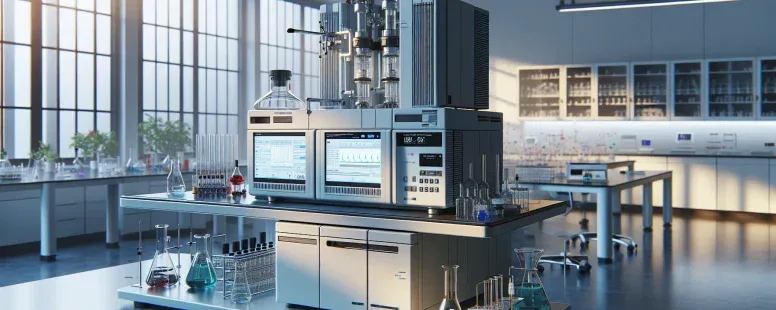
Picture trying to unravel the secrets hidden within a complex mixture—each component telling its own story. Gas Chromatography (GC) and High-Performance Liquid Chromatography (HPLC) are like two masterful storytellers, each with their unique approach to separating and analyzing compounds. But which one fits your needs?
Whether you’re working with volatile substances or intricate biomolecules, understanding the key differences between GC and HPLC can save you time and effort while ensuring accurate results. These powerful techniques may seem similar at first glance, but their methods, applications, and even the science behind them set them worlds apart.
Overview Of GC And HPLC
Gas Chromatography (GC) and High-Performance Liquid Chromatography (HPLC) are core analytical techniques for separating chemical mixtures. Both methods cater to specific compound types and applications, making them indispensable in various industries.
What Is Gas Chromatography (GC)?
Gas Chromatography analyzes volatile compounds by utilizing a gas as the mobile phase. A sample is vaporized and transported through a column using an inert carrier gas like helium or nitrogen. The stationary phase inside the column interacts with the sample components, causing separation based on boiling points and polarity differences.
For example, GC is widely used in environmental monitoring to identify organic pollutants in air samples or detect pesticide residues in food products. Its high sensitivity makes it suitable for analyzing trace-level substances.
What Is High-Performance Liquid Chromatography (HPLC)?
High-Performance Liquid Chromatography separates non-volatile or thermally unstable compounds by employing a liquid mobile phase under high pressure. A pump pushes the liquid solvent through a packed column containing the stationary phase, facilitating component separation based on size, charge, or hydrophobic interactions.
Pharmaceutical companies rely extensively on HPLC to ensure drug purity and consistency by identifying active ingredients or impurities. It also excels at analyzing complex biomolecules like proteins and nucleotides that cannot be processed via GC methods.
Key Components Of GC And HPLC
Gas Chromatography (GC) and High-Performance Liquid Chromatography (HPLC) rely on distinct system components to perform their analytical functions effectively. Each technique’s design reflects its specific application focus.
System Components In GC
GC systems use a carrier gas, such as helium or nitrogen, as the mobile phase. The sample is injected into the system through an injection port, where it’s vaporized before entering the column. The column—often made of stainless steel or fused silica—is coated internally with a stationary phase that interacts with analytes based on their boiling points and polarity.
A temperature-controlled oven houses the column to maintain optimal thermal conditions for separation. As compounds elute from the column, they pass through a detector, like flame ionization detectors (FID) or mass spectrometers (MS), which identify and quantify them precisely. For example, FID detects hydrocarbons in environmental samples while MS provides detailed molecular data.
System Components In HPLC
HPLC systems use a high-pressure pump to propel a liquid mobile phase through the setup. A solvent reservoir holds this mobile phase, which may include water, organic solvents, or buffer mixtures tailored to specific analytes’ properties.
The sample enters via an auto-sampler or manual injector into the pressurized flow stream directed towards an HPLC column packed with tiny porous particles forming the stationary phase. These columns separate molecules based on size exclusion, polarity differences, or ion exchange interactions.
At the end of separation, compounds reach a detector, such as UV-Vis absorbance detectors for chromophores in pharmaceuticals or evaporative light-scattering detectors (ELSD) for non-chromophoric compounds like lipids and carbohydrates.
Differences In Separation Mechanism
Gas Chromatography (GC) and High-Performance Liquid Chromatography (HPLC) use distinct separation mechanisms tailored for different types of compounds. Understanding these principles helps you select the right method for specific analytical needs.
Separation Principles In GC
GC separates volatile compounds based on their boiling points and interactions with the stationary phase. A sample is vaporized and carried through a column by an inert gas like helium or nitrogen. The stationary phase, typically a liquid or polymer coated onto a solid support, interacts with the analytes. Compounds with lower boiling points or weaker interactions elute faster, while those with higher boiling points take longer.
For example, when analyzing hydrocarbons in petroleum samples, lighter alkanes elute sooner due to their lower boiling point compared to heavier alkanes. This makes GC ideal for substances that are gaseous at operating temperatures or can be easily vaporized without decomposition.
Separation Principles In HPLC
HPLC separates non-volatile or thermally unstable compounds using differences in polarity, size, or charge between analytes and the stationary phase. A high-pressure pump moves the liquid mobile phase through columns packed with porous particles designed for specific interactions. Retention times depend on how strongly each compound interacts with the stationary phase.
For instance, in reverse-phase HPLC (RP-HPLC), polar compounds pass quickly because they interact less with the nonpolar stationary phase compared to nonpolar compounds like lipids that have higher retention times. This technique excels in analyzing complex biomolecules such as peptides and nucleotides found in pharmaceuticals or biological research.
Applications Of GC And HPLC
Gas Chromatography (GC) and High-Performance Liquid Chromatography (HPLC) serve distinct purposes in chemical analysis, tailored to the properties of the substances being analyzed.
Common Uses Of Gas Chromatography
GC is widely applied for analyzing volatile organic compounds. Environmental testing labs use it to detect pollutants like benzene or toluene in air samples. It’s essential in food safety, identifying pesticide residues such as organochlorines in produce. Petrochemical industries rely on GC to characterize hydrocarbons and assess fuel compositions.
Pharmaceutical companies use GC for residual solvent analysis, ensuring compliance with regulatory standards like USP <467>. Forensic investigations benefit from its precision when analyzing arson evidence or detecting alcohol levels in blood samples. In flavor and fragrance development, GC profiles aromatic compounds contributing to specific sensory properties.
Common Uses Of High-Performance Liquid Chromatography
HPLC excels at analyzing non-volatile or thermally unstable molecules. Pharmaceutical applications dominate its usage, verifying drug formulations by quantifying active pharmaceutical ingredients (APIs) and impurities. It’s critical for bioanalysis—measuring metabolites or therapeutic drugs in biological matrices like plasma.
The food industry employs HPLC for nutrient profiling—for instance, quantifying vitamins B1 and C—or detecting contaminants such as mycotoxins. Biotechnology researchers depend on HPLC to purify proteins or study monoclonal antibodies’ stability during production processes. Cosmetics manufacturers use it for quality control, ensuring ingredient consistency across batches of products like sunscreens.
In clinical diagnostics, HPLC identifies biomarkers linked to diseases; one example includes separating hemoglobin variants during diabetes monitoring tests using HbA1c analysis methods.
Advantages And Limitations
Gas Chromatography (GC) and High-Performance Liquid Chromatography (HPLC) offer distinct advantages for chemical analysis, yet each method has inherent limitations that influence their suitability for specific applications.
Strengths Of GC
GC excels in identifying volatile and thermally stable compounds. It achieves high resolution due to its ability to separate analytes based on boiling points and interaction with the stationary phase. The technique is highly sensitive, with detectors like flame ionization detectors (FID) capable of detecting trace-level substances. This makes GC invaluable in environmental analysis, such as monitoring air pollutants or pesticide residues in soil samples.
Its rapid analysis time enhances efficiency in industries requiring fast results. For instance, petrochemical companies rely on GC to analyze hydrocarbons within minutes. Also, GC’s compatibility with mass spectrometry provides precise molecular identification, aiding forensic investigations by confirming compound structures.
Strengths Of HPLC
HPLC is superior for analyzing non-volatile or heat-sensitive compounds. It separates complex biomolecules like proteins and nucleotides using a liquid mobile phase under high pressure. This capability is critical in pharmaceuticals, where drug purity tests ensure compliance with safety standards.
The technique accommodates a wide range of detection methods, including UV-Vis absorbance and fluorescence detectors, allowing you to investigate diverse sample types effectively. For example, biotechnology firms employ HPLC for protein purification processes essential in developing therapeutic drugs.
Also, HPLC supports flexible mobile phase compositions tailored to target analyte properties like polarity or charge. This adaptability enables food manufacturers to profile nutrients or detect contaminants across various product categories efficiently.
Limitations Of GC And HPLC
GC requires analytes to be volatile and thermally stable; otherwise, they decompose during vaporization. Non-volatile samples demand derivatization steps before analysis—a process adding complexity and time constraints.
Conversely, while HPLC handles non-volatile compounds adeptly—it faces challenges analyzing highly volatile substances due to evaporation risks under atmospheric conditions during sample injection stages.
Conclusion
Choosing between GC and HPLC depends entirely on the nature of your sample and analytical goals. Each technique has its strengths, whether you’re working with volatile compounds or complex biomolecules. By understanding their distinct methodologies and applications, you can make informed decisions that ensure accurate, reliable results for your specific requirements.
Whether you’re in environmental monitoring, pharmaceuticals, food safety, or biotechnology, aligning your method with your analysis needs will maximize efficiency and precision. Both GC and HPLC hold significant value in advancing scientific research and industry standards when used appropriately.
To provide the best experiences, we use technologies like cookies to store and/or access device information. Consenting to these technologies will allow us to process data such as browsing behaviour or unique IDs on this site. Not consenting or withdrawing consent, may adversely affect certain features and functions.
Functional
Always active
The technical storage or access is strictly necessary for the legitimate purpose of enabling the use of a specific service explicitly requested by the subscriber or user, or for the sole purpose of carrying out the transmission of a communication over an electronic communications network.
Preferences
The technical storage or access is necessary for the legitimate purpose of storing preferences that are not requested by the subscriber or user.
Statistics
The technical storage or access that is used exclusively for statistical purposes.The technical storage or access that is used exclusively for anonymous statistical purposes. Without a subpoena, voluntary compliance on the part of your Internet Service Provider, or additional records from a third party, information stored or retrieved for this purpose alone cannot usually be used to identify you.
Marketing
The technical storage or access is required to create user profiles to send advertising, or to track the user on a website or across several websites for similar marketing purposes.